The Adamawa Towns Emptied by Boko Haram Insurgency
Communities across northern Adamawa are gradually disappearing following Boko Haram’s repeated attacks. As residents flee, the cultures and traditions they have known all their lives are fading away.
Listen to this story


15 Apr 2026
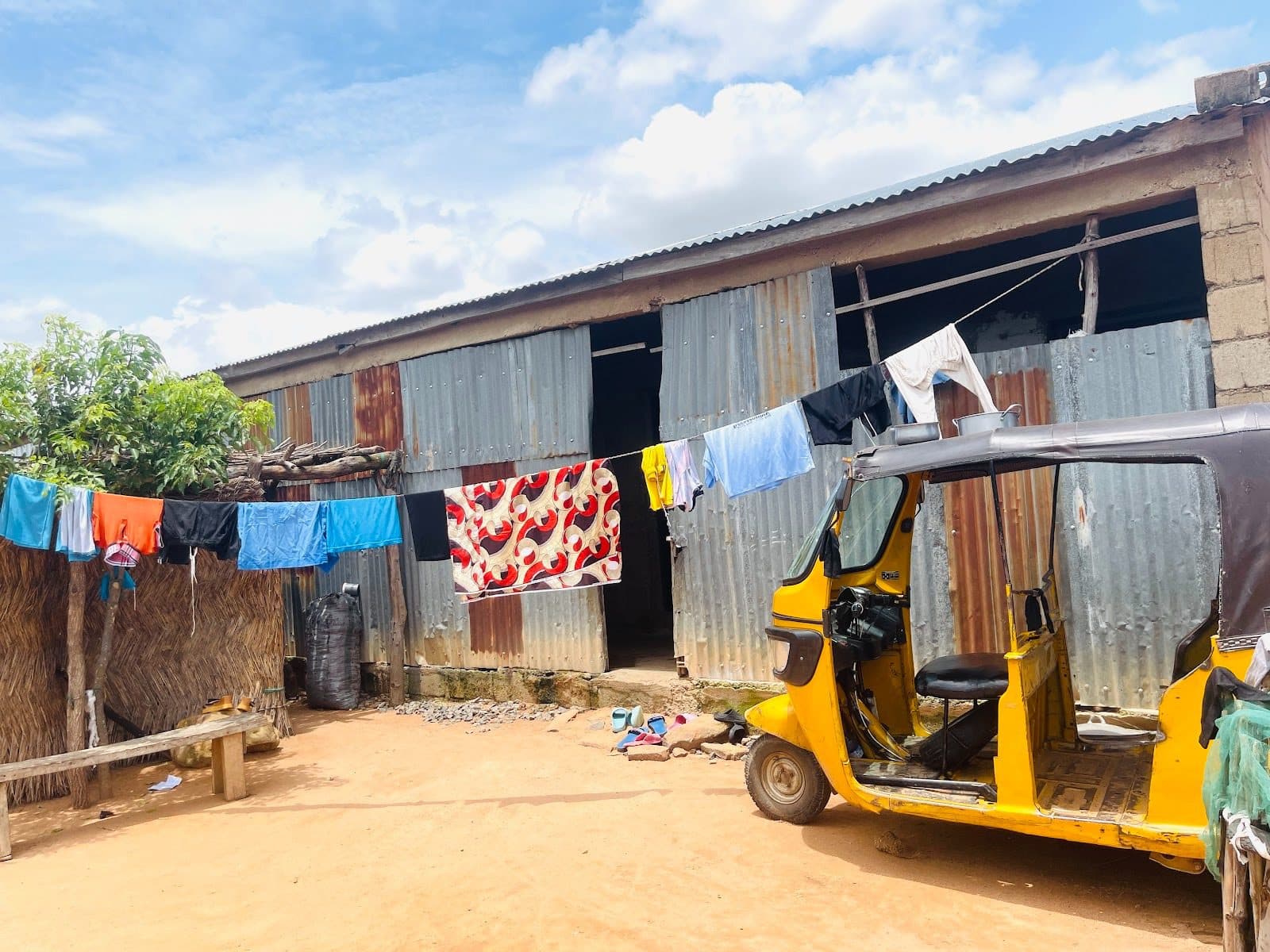
At the end of every farming season, farmers across Kwapre, an agrarian community in Hong Local Government Area (LGA) of Adamawa State in northeastern Nigeria, come together to mark an annual event. Known for their guinea corn farming, the men in Kwapre take turns harvesting each other’s farms. A date is fixed for each farmer, and the rest join him on the farm. While the men work, a set of drummers line up behind them, and the women scatter across the field, singing and dancing to the melody of the talking drum.
Harvest season here was always a farming festival that held the community together for generations. It was the celebration of a bountiful harvest, and after every farmer’s crop had been harvested, the whole community came together to drink and make merry. The festival, however, would later stop as insurgency and violence steadily eroded the safety and cohesion of the community.
Buba Baba, a farmer who used to live in Kwapre, remembers the festival with nostalgia.
“We were living well. We had an abundant food supply, and our families were well taken care of,” he recounted.
Everything changed in 2014. The insurgency in the region intensified. The Boko Haram terror group peaked and began spreading its influence across Borno State through sustained attacks and by asserting control over captured communities. From Bama in Borno to Sambisa Forest, the group pushed into hinterland settlements, imposing its rule in areas under its control while terrorising those beyond it.
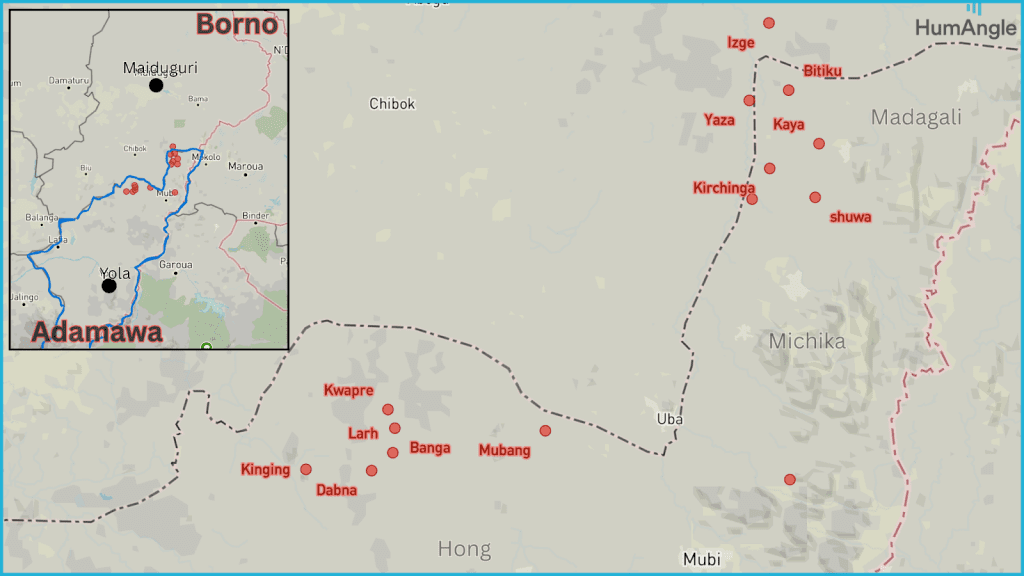
This influence extended across border communities, cutting through the edges of Borno and spilling into northern Adamawa. Violence moved easily through these indistinguishable boundaries, reaching rural communities in Adamawa. Places like Kwapre, Shuwari, Kaya, and several localities across Madagali, Hong, and Michika LGAs fell within the terror group’s reach. Across these local governments, communities faced the threat of displacement from their land and the loss of their ancestral culture, a fate that soon reached Kwapre.
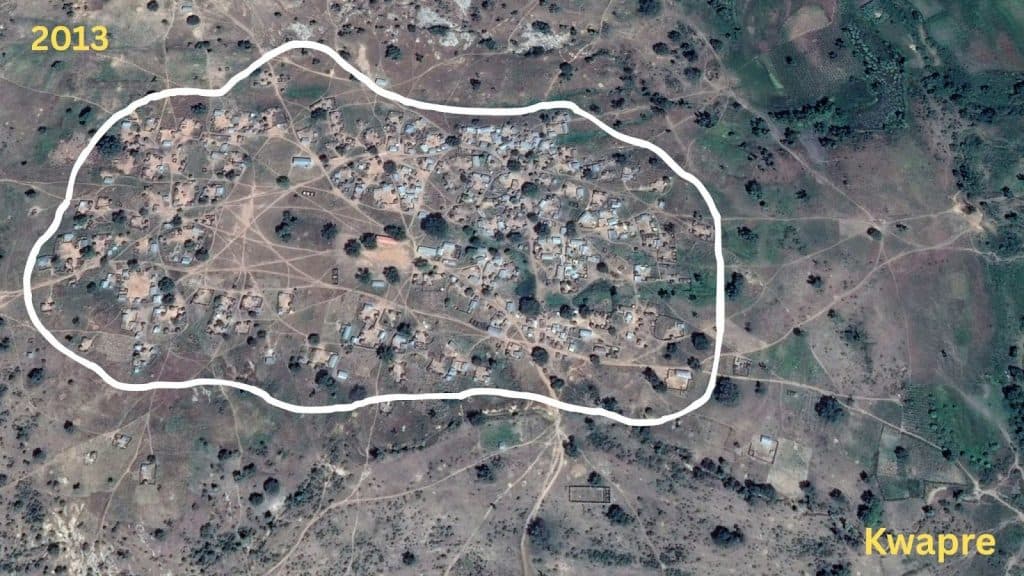
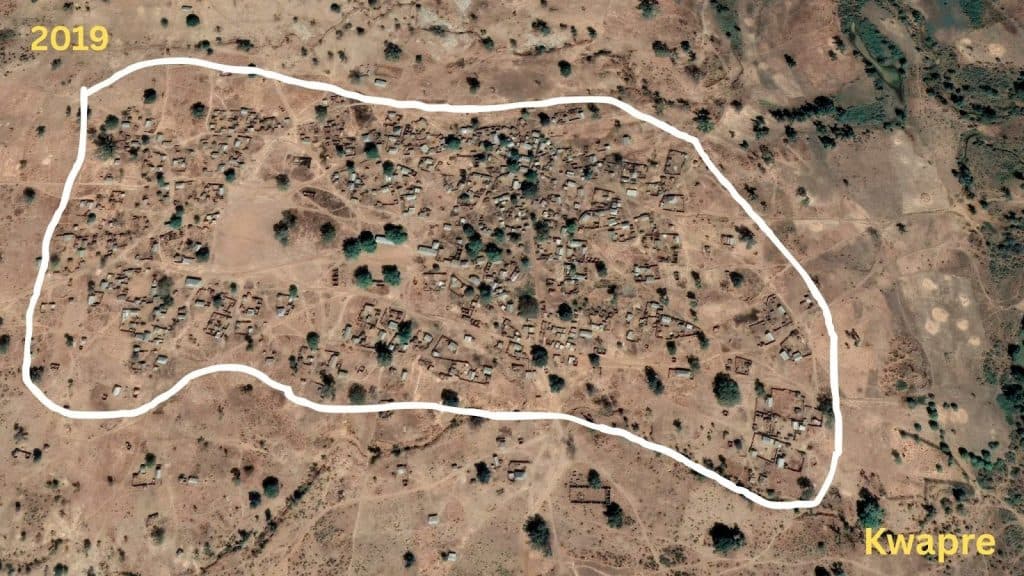
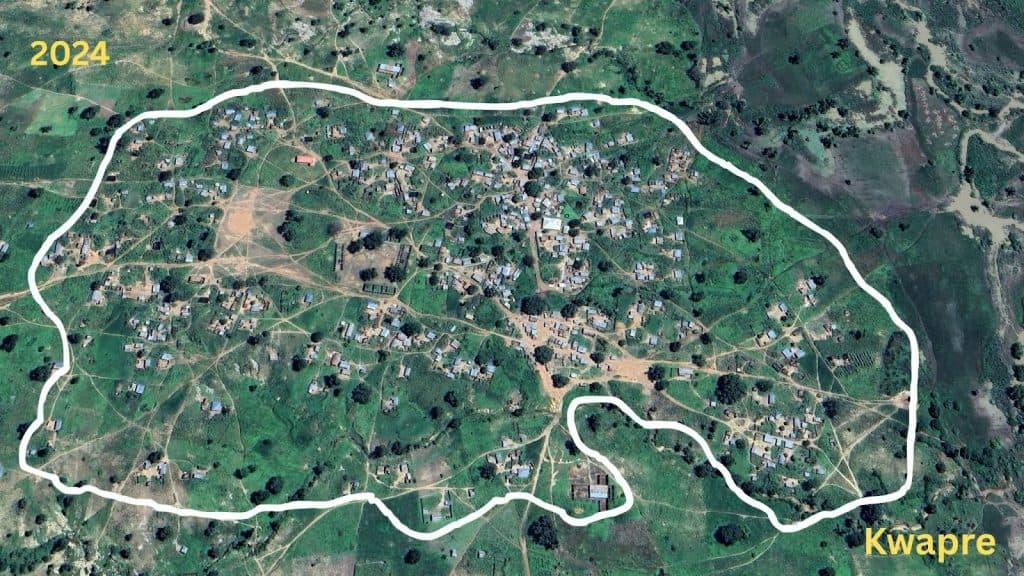
That same year, terrorists invaded the community. The annual farming festival became inconsistent over the years and eventually stopped when the once-vibrant area was finally completely abandoned in 2025.
The violence that broke ties
Buba is among the over 200,000 persons who have been displaced by Boko Haram in Adamawa State, with most of them from Michika and Madagali local government areas.
He told HumAngle that Boko Haram first attacked his community in 2014, and residents fled the area. After a year, the locals returned, but the terrorists kept storming the area at intervals. Some left for good, while others, like Buba, stayed behind, clinging to their ancestral inheritance and hoping that the violence would end.
“We go back when everything is calm and flee when the conflict starts again, but by 2025, we have all left, and there is currently no one in Kwapre,” Buba said.
Boko Haram has been displacing residents in Adamawa since 2014. About 40 people werekilled after the terrorists attacked seven villages in Michika and its environs in 2014. In 2016, the group invaded the Kuda Kaya village of Madagali LGA and killed 24 people during indiscriminate shooting.
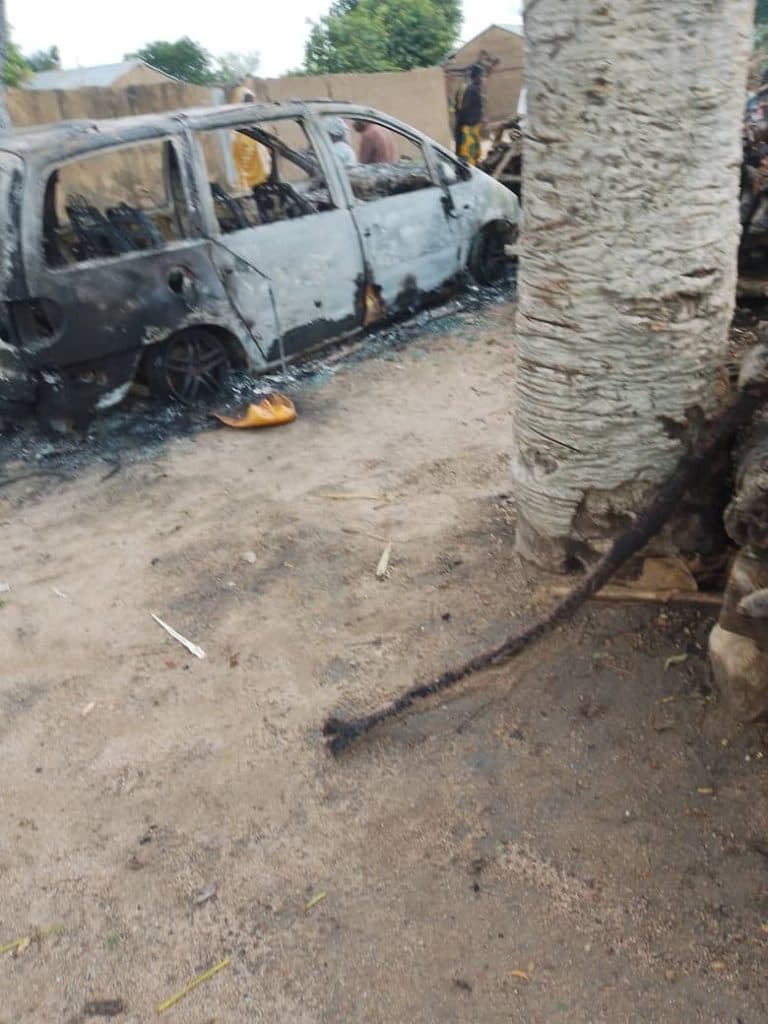
In 2019, Boko Haramstruck again, but some of them were killed in Madagali after they tried to infiltrate a military camp. However, one soldier and a civilian were killed. In 2020, Kirchinga village in Madagali wasattacked after the insurgents stormed the area. Houses were razed and shops looted, causing residents to flee.
Other attacks were unreported. Data from the International Organisation for Migration (IOM)shows that a total of 665 individuals from 133 households were displaced from their communities in Madagali by a non-state armed group in June 2022.
Chinapi Agara, a resident of Garaha, another community in Hong, told HumAngle that when the Islamic State West Africa Province (ISWAP), a Boko Haram breakaway group, attacked a military base in the area in February, communities within Garaha had experienced a surge in kidnappings in the last few years, which had forced many to flee.
“Lots of communities like Kwapre, Gabba, and Lar have been completely displaced,” he said. Chinapi’s relative died from a stray bullet during the attack.
Shuwari in Kirchinga, under the Madagali LGA of Adamawa State, is one community that has been deserted following insurgents’ attacks in the area. Despite the recurring attacks in the last decade, locals stayed back, but in February, the entire village was deserted after Boko Haram stormed the area and opened fire on locals. HumAngle learned that 21 people were killed, including the Shuwari community leader.
Bitrus Peter, a resident of Kirchinga, told HumAngle that this was not the first Boko Haram attack in the area. “Since we came back from displacement in 2015, we have been facing this challenge. Sometimes, they give a break of a year or two and then return,” he said.
Gambo Stephen, a survivor of the February attack in Shuwari who has since fled the area, told HumAngle that residents have now been scattered across various places.
Back in Shuwari, Gambo owned a barbing salon that brought in a modest income to support his wife and four children. “I opened the shop immediately after I was done with my tertiary education, and for years, it helped me to provide for my family,” he noted.
On February 24, when Boko Haram raided Shuwari, Gambo’s salon was burnt to the ground alongside other houses and properties in the area. “I narrowly escaped because five people who were running with me were all shot dead,” Gambo said.
‘Geographically threatened’
These localities around Kirchinga are geographically at risk of cultural loss.
Kirchinga town itself is a border settlement between Adamawa and Borno states. It lies along the banks of a large river that sustains a livelihood built around fishing. Even with seasonal drying of the water, satellite imagery shows stretches of low-lying land between the levelled terrain, supporting farming during the dry season.
Beyond this, the area serves as a pathway between Borno and Adamawa, with a road tracing the river’s path and linking a chain of localities. Agricultural fields, water sources, and this road network connect these settlements across the local government area through markets and other primary commercial activities.
The land around the settlement dwarfs it. The road sustains movement and exchange, but along that same path is the spread of insurgent influence.
Zooming out from Kirchinga through satellite imagery reveals the other settlements facing similar patterns of displacement and abandonment. To the north lies Bikiti. While its layout differs from Kirchinga, the parallels are clear in the vast cultivation fields surrounding the settlement. Alongside these are a mix of swampy wetlands and local streams, supporting a range of ecosystem services, from farming to aquatic life and small game.
Beyond this lies a large stretch of uninhabited land, many times larger than the settlement itself, composed almost entirely of cultivated fields. Further out, this landscape opens into forested areas that connect toward Sambisa Forest, long associated with insurgent strongholds.
Though these places differ in their satellite layouts, their cultural identities are evident from above. Whether through farming, fishing, hunting or trade, the patterns on the land reflect the life of the people who lived there. These are the same patterns that begin to disappear as displacement takes hold.
Kuda Kaya, another such settlement, offers another case in point. Located northeast of Kirchinga, it has become known for both attacks and displacement.
It is a small settlement, easy to miss at a wider satellite scale. Within its tight layout are key structures: a primary school, a health post, and an administrative building, surrounded by clusters of homes. The settlement itself is heavily vegetated, with tree cover rising to roof level. Beyond this, shorter grasslands spread into cultivated fields, intersected by small streams. While hunting may not be the dominant activity, the landscape supports tree crops and grain farming.
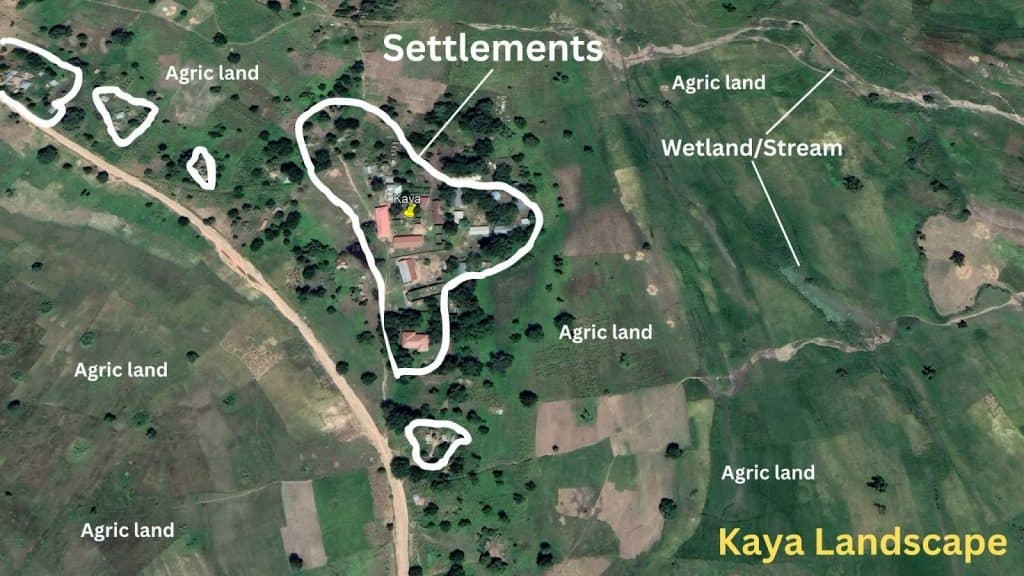
The intent behind settlement patterns becomes clear when looking at historical imagery, even as far back as 2004, available on Google Earth. The ancestral communities chose flat terrain near rivers or streams, or large forest areas, settling in compact clusters while using the surrounding land for food production.
At present, signs of abandonment are not always as obvious as in parts of Borno or Benue in the country’s North Central. Some of these communities endured repeated attacks, with residents returning each time. But over time, the strain of persistent insecurity led to wider displacement and, in most recent cases, total abandonment.
In a few years, many of these buildings will begin to collapse. Roofs will give way, and some structures will be burned, patterns already observed across abandoned communities affected by insurgency in Nigeria. What will also become visible is the absence of farming. Recent imagery already shows early signs of neglect across what were once actively cultivated lands.
The same likely extends to the rivers. While satellite imagery cannot fully capture changes in aquatic life, the absence of regular human activity around these waters will affect both the ecosystem and the human systems tied to it, similar to what has been observed in parts of the Lake Chad region.
Zooming further out shows northern Adamawa marked by these border communities, many of which are now within displacement hotspots.
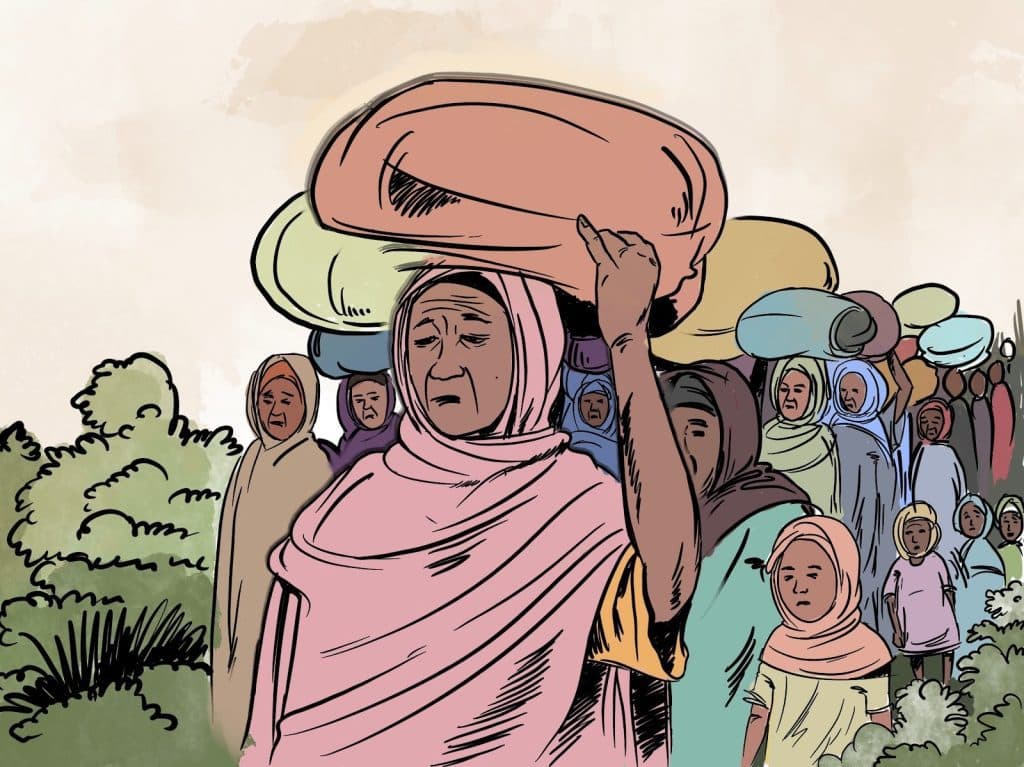
Today, many of their residents live in resettled communities and displacement camps still active across the region, some farther away, removed from the cultural heritage their ancestral lands once provided. They adapt to the host communities, the only available way for them. They can no longer point to land and trace ownership or inheritance. Even when they take up familiar activities like farming, fishing, or hunting, they remain outsiders for a time.
The geographic shift may not always be extreme, but the separation from their roots is. The connection is severed, even when practices are carried into new environments. For those displaced, especially across generations or into prolonged uncertainty, that break becomes harder to repair. It is reinforced by the trauma of the violence that forced them out.
Some still hold on to the hope of return. Others are already preparing to move on, regardless of what becomes of home.
Resettlement
When the terrorists returned to Kwapre in 2025, Buba faced a near-death experience, and that was the last straw. He fled with his wife and five children alongside other community members when the village was being set ablaze.
“I left home empty,” he stated, adding that his family didn’t flee with any belongings.
Buba moved into Hong town, where he settled with his family. With each passing day, he remembered home, but he knew it would be unwise to return. It’s been about a year since Buba resettled in Hong town. He describes the last couple of months as hell.
“We are suffering, and since I was born, I have never suffered like this,” he said. Buba is unsure of his exact age, but is estimated to be in his 50s. “We have to pay for house rent, and there is no money to do so. We are always pleading with the landlord. We are also managing food supply,” he lamented.
Back at Kwapre, Buba had his own house. As a full-time farmer, he said his harvest was always bountiful, and his family was always cared for, but now, they even struggle to feed themselves. He currently works as a labourer on a construction site. His task is to fill up trucks with sand and transport them, but the wage barely covers his family’s needs. Since he has been a farmer all his life, Buba acquired a plot of land in his new area so he could cultivate crops, keep some, and sell the rest to augment his income from his labouring job.
“I cultivated last year, but it was destroyed by cattle, and I couldn’t get even a bag of maize during the harvest,” he said.
While he considers himself lucky to be alive, Buba says life has taken a difficult turn. “I can’t even pay my children’s school fees. I registered them in a school here in Hong town but they have just been sent back home,” he said.
After making it out of Shuwari, Gambo travelled to Yola, the capital of Adamawa State, and settled in an old secondary school in Saminaka, a neighbourhood in the city.
“I didn’t leave with anything because they burnt everything, so someone gave me a student mattress to lie on,” he said.
After taking shelter at the school, he was able to phone his wife, who had made it out safely with his four children.
“They are currently staying with her relatives in Madagali town,” he said.
Gambo feels his family is better off without him because he has nothing to offer them.
“Thank God for relatives because they do buy things and give them, and also some friends. If I had left home with some of my valuables, I would have started a business, but I don’t have anything on me. They (Boko Haram) also burnt my farm produce, slaughtered all my cattle alongside others in the village,” he said.
If the violence ever ceases and peace is permanently restored, Gambo said he would never return to Shuwari, for he had seen enough.
“My friends died there, and it’s only God that protected me, especially my wife and children,” he said.
Gambo told HumAngle that the community is completely deserted and that his main concern right now is raising capital to start a business at his new location in Saminaka. If things somehow get better, he would send for his family to join him.
In 2025, HumAngle reported how many displaced persons from Adamawa are stuck in displacement camps for about a decade because their hometowns remain unsafe.
Ghost towns
While he has not kept in touch with anyone from his community since he fled, Buba fears that the name ‘Kwapre’ will be erased from history, as the once-lively village now lies empty and silent. He wished things were different. He dreams of a time when the terrorists will stop invading the area, and his people will return and carry on with their regular lives. He looks forward to the annual harvest festival, but he believes his aspirations are not enough to hold water.
“People from Kwapre have been scattered across different regions. It’s even difficult to keep in touch with close relatives,” Buba said.
But if the violence ceases and peace is permanently restored, Buba said he will return home even if it means he will be the only one living there. At least, he’ll have his house, his large farmlands and grains filled in his store. His children won’t go hungry, and he won’t have to labour day and night.
However, some questions linger in his mind: When will the violence end, and even if it does, will Kwapre be the same again?
According to Gambo, the fact that he misses Shuwari can’t be denied. It was the only home he had known all his life. “We used to celebrate together when we were in the village. We lived peacefully, but when the insurgency started, everything crumbled,” he said.
While he misses the community that has stood by him his whole life, Gambo has made up his mind: he is done with Shuwari.
“I won’t go back because the village is on the border of Sambisa Forest,” he said.
Studies have shown that the Boko Haram insurgency in Adamawa, which targets communities near the Sambisa Forest, has caused several communities within the Northern Senatorial District of the state to vanish. Madagali, Michika and Hong local governments specifically have the highest number of abandoned communities as attacks continue to intensify. From 2023 to 2025, villages in Kwapre, Zah, Kinging, Mubang, and Dabna in the Hong local government, with a combined population of over 10,000, were said to have been massively displaced, with many residents fleeing to safer towns.
Sini Peter, the youth leader of Kirchinga community in Madagali, told HumAngle that a lot of cultural festivals have stopped due to Boko Haram’s consistent attacks in the area.
The Yawal festival, the most popular cultural event in the area, was held annually in the middle of the year and is no longer held.
“A grass would be tied to a guinea corn stem, which is a year old, and we would go out early in the morning, around 3 a.m., to chant,” Sini recalls how the festival used to be held.
The Yawal festival was so significant to the Kirchinga people that the ritual had to be completed before locals could carry out their daily activities. The chants were traditional songs believed to ward off death from the community and were sung every morning on the day of the festival. Locals were always eager to participate in the ritual and sing the song until terrorists started invading the area.
However, they no longer believe in the ritual’s efficacy or mark the festival, according to Sini. “Boko Haram attacks made death a normal thing to us today,” he said.
According to the youth leader, the February attack on Shuwari, which had caused residents to flee the area completely, shows a broader displacement pattern across Madagali communities that have been affected in the area.
“Villages like Imirsa, Madukufam, Balgi and Yafa, which are bordering Kirchinga, are empty due to the Boko Haram issues,” he said, adding that the terrorists have been looting properties like roofing sheets in some of these communities from time to time.
While many have deserted these areas for good, including Kirchinga town, Sini is among those who stayed behind. “I know that wherever a Marghi man goes, he will remember home because he will not enjoy anywhere like home. Even with the killings, we don’t have anywhere like Kirchinga,” he stated.
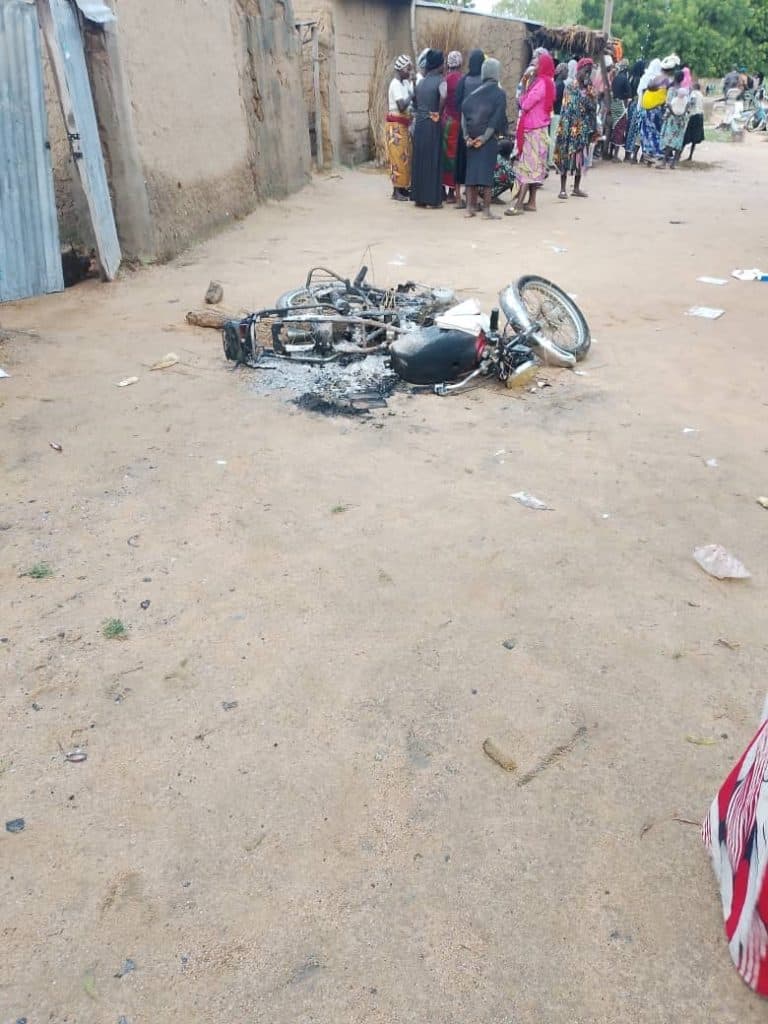
Speaking on the security situation in the area, he noted that the security architecture in Kirchinga is very poor. “What should be done is not done because fear is all over us, including the security personnel,” he said.
When Ahmadu Fintiri, the governor of Adamawa State, visited the area following the attack in Shuwari, he vowed to secure the area, but Sini fears the promise will not translate into action.
“There are people trained now; they are called Forest Guards, and when the attacks happen, they do not have arms, but after the governor left, they were given AK-47s, but when they want to go for duty, they have to go to Shuwa to get the arms and return them after duty,” Sini said.
He explained that this strategy might not work, as the forest guards spend over ₦1,000 daily to obtain and return arms in Shuwa, as protocol demands.
It’s been a month since people treaded the Shuwari path, and with the community now completely deserted, Gambo fears that his children might never know their ancestral homes or experience the cultural heritage that once united their people.
What’s left of the ghost towns?
The analysis of satellite imagery from 2013 to 2025 across 14 communities in Adamawa State, using specialised satellite sensors (Landsat/Sentinel), shows environmental change linked to abandonment and displacement. When fields are left uncultivated, the land does not simply freeze in time. In some areas, weeds overtake cultivation, while in others, the soil and greenery collapse, leaving the land barren.
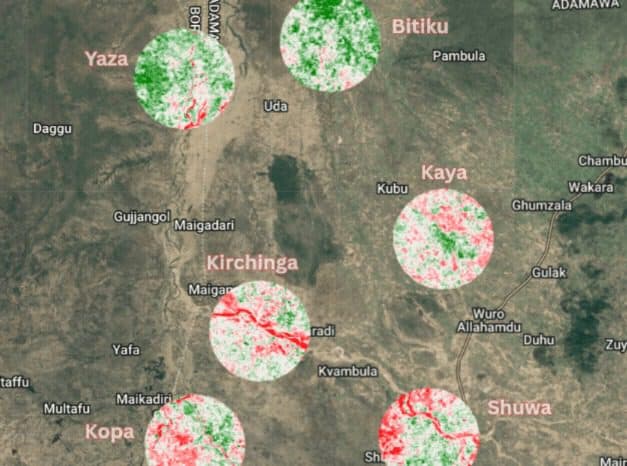
In communities like Larh and Dabna, the data shows a steady increase in shrubs and bushes. In recent times, peak vegetation values in Larh have risen by nearly 12 per cent, as weeds are left unattended in places where farmlands used to be.
The seasonal variation has also increased, indicating that the lands now support vegetation growth in response to rainfall rather than following a stable, cultivated rhythm. Mubang and Banga show similar trends, with significant growth in peak farmland weed growth over the same period. The land is reclaiming itself in a chaotic, unregulated way, with invasive, fast-growing plants dominating.
On the other hand, several communities tell a different story. Kirchinga and Kopa have experienced dramatic declines in greenness, with vegetation dropping by 27 per cent and 23 per cent, respectively. These are areas where abandonment appears to have compounded other pressures, such as erosion, burning, or neglect, leaving the soil exposed and vulnerable.
Shuwari and Yaza have also lost nearly one-fifth of their peak greenness over the same period. Unlike Larh or Dabna, these communities are not witnessing vigorous shrub growth. Instead, the land shows signs of degradation, with both peak greenness and seasonal variability shrinking, suggesting that vegetation’s capacity to recover is weakening.
This has long-term implications for returnees. The data highlights a dual response to abandonment. In some areas, the absence of farming has allowed nature to fill the gaps, though not always in ways that benefit local livelihoods. In others, the land deteriorates quickly once cultivation stops, leaving behind increasingly unproductive expanses.
These two observed outcomes will shape the future of the homes should locals return.
Support Our Journalism
There are millions of ordinary people affected by conflict in Africa whose stories are missing in the mainstream media. HumAngle is determined to tell those challenging and under-reported stories, hoping that the people impacted by these conflicts will find the safety and security they deserve.
To ensure that we continue to provide public service coverage, we have a small favour to ask you. We want you to be part of our journalistic endeavour by contributing a token to us.
Your donation will further promote a robust, free, and independent media.
Comments
2 comments
Aurelien Mboumba
28 Jul 2026, 10:15
Good piece — very moving and informative. Do you know if any local or international groups are helping displaced farmers return with security guarantees or support for restarting harvests? Also, are there recent maps or data showing which villages remain abandoned? Thank you.
이천출장마사지
22 Apr 2026, 17:50
이천출장안마
Sign in to join the discussion.
Of course, we want our exclusive stories to reach as many people as possible and would appreciate it if you republish them. We only ask that you properly attribute to HumAngle, generally including the author's name, a link to the publication and a line of acknowledgement.