How Nigeria Escaped Trump’s Crosshairs
Inside the quiet campaign coordinated by the National Security Adviser that pulled Nigeria from a diplomatic disaster.
Listen to this story

19 May 2026
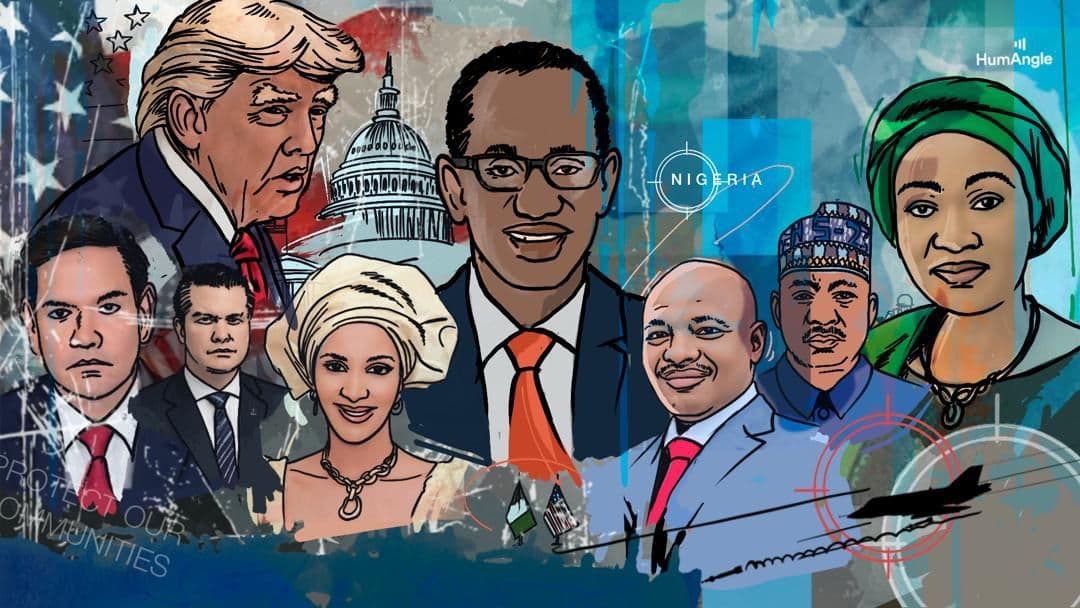
There are moments when nations move dangerously close to collapse before the public fully realises it. It begins with carefully framed messages that conceal or even deny a storm, then the country is described as dangerous, lawless, and extremist-tolerant. By the time formal consequences arrive, the political judgment has often already been made. By late 2025, Nigeria was approaching that threshold in Washington DC, the United States’ capital.
Donald Trump was accusing the Nigerian state of failing Christians, and Republican lawmakers were describing the country as one of the world’s deadliest countries for Christians. Evangelical organisations in the United States were also mobilising around massacre narratives from Benue, Plateau, Southern Kaduna, and parts of the North Central region. These led to congressional pressure, visa restrictions, and discussions of sanctions. Later, Trump threatened military action and warned that the United States could move into Nigeria “guns-a-blazing” if the killings continued.
Inside sections of conservative American politics, Nigeria was no longer merely a troubled African country but was becoming a pariah state, a symbol of global Christian persecution, failed governance, Islamist expansion, and state weakness.
Then, the trajectory shifted. Within months, the same Trump administration that had threatened consequences against Nigeria began working with Abuja on counterterrorism cooperation. American intelligence support deepened, and US military involvement expanded, leading to widely criticised (for their lack of any real impact) airstrikes targeting Islamic State-linked and Lakurawa positions in northwestern Nigeria in December 2025. However, in May 2026, Trump publicly celebrated a successful joint Nigerian and American operation that killed Abu Bilal al-Minuki, described in both countries’ security circles as one of the most important Islamic State figures operating across Africa.
Nigeria had moved from an accused state to an operational partner, even though many have wondered what the cost might have been or continues to be. Behind that dramatic transition was one of the most consequential diplomatic-security campaigns mounted by Abuja in recent years. It involved diplomats, intelligence officials, military officers, embassy staff, policy advisers, lobbyists, diaspora actors, civil society networks, and security partners.
At the centre of this coordination stood National Security Adviser (NSA) Nuhu Ribadu, the coordinating figure who pulled the necessary elements together: the presidency’s political authority, the security establishment’s operational credibility, the embassy’s diplomatic access, the military’s counterterror capacity, policy networks in Washington, and a message that American officials could not easily dismiss.
Working with figures including a senior Nigerian career diplomat in DC, an influential woman at the NSA’s secretariat, senior defence and intelligence officials, foreign affairs officials, and other intermediaries, Ribadu helped steer Nigeria away from a potentially disastrous confrontation with Washington, DC.
The crisis Abuja could not treat as routine
Nigeria has faced criticism from the United States before on corruption, election disputes, human rights abuses, military excesses, and oil theft — all governance failures. None of those carried the same immediate danger as the late-2025 escalation. This crisis was different because it had moved beyond policy disagreement into moral accusation. The phrase “Christian genocide” changed the stakes.
Inside conservative American evangelical circles, Nigeria had already become symbolic before Trump’s escalation. Reports from groups such as Open Doors, International Christian Concern, Aid to the Church in Need, and Nigerian Christian advocacy organisations had repeatedly described Nigeria as one of the world’s deadliest places for Christians. Killings in Adamawa, Benue, Plateau, Southern Kaduna, parts of Niger State, and other flashpoints circulated widely through American church networks.
Nigeria’s First Lady, Pastor Remi Tinubu, also operated far beyond the ceremonial margins. Using her deep evangelical and clerical networks, she became a decisive force in breaking resistance, opening doors that formal diplomacy and security channels could not. Her interventions softened hardened positions, clearing the path for diplomatic and security engagement to gain some traction.
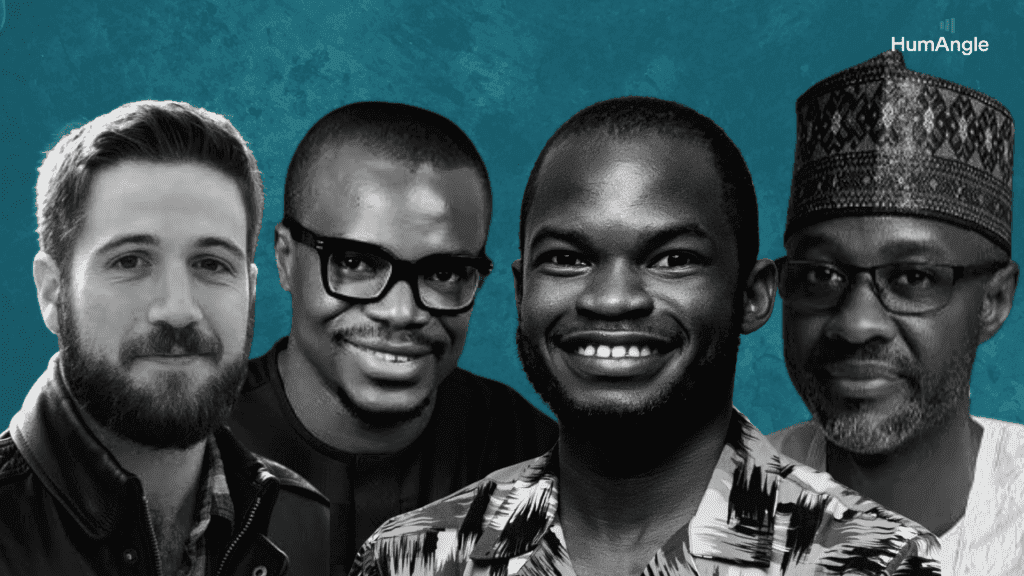
“Nigeria is facing a complex security crisis that has sustained for over two decades and has currently metastasised into several violent crimes, including active insurgencies, farmer-herder violence, armed groups, gang violence, ethnic militias, and vigilantism, among several others,” Managing Director of Beacon Intelligence Consulting, Dr Kabiru Adamu, told HumAngle.
“While the triggers of the violence sometimes include identity such as ethnicity and religion, other factors, including socio-economic, political and environmental causes, are behind the violence.”
Amara Nwankpa, Director General, Shehu Musa Yar’Adua Foundation, argued that acknowledging complexity should not become a shield against responsibility.
“Nigeria is facing a complex security collapse,” he agreed. “But saying the crisis is ‘complex’ should not become a way to avoid the harder question of why some communities consistently suffer more than others.”
“The Nigerian state is weak. In many places, it genuinely struggles to protect people because of overstretched security forces, corruption, political fragmentation, and poor state capacity. That matters. A state that cannot protect is different from a state that deliberately chooses not to. But that distinction does not remove responsibility,” he told HumAngle.
“The mistake of the ‘Christian genocide’ framing is that it treats all the violence as one coordinated religious project,” he said. “The mistake of the ‘it’s complicated’ response is that it sometimes uses complexity as an excuse for inaction.”
Johnstone Kpilaakaa, an award-winning journalist who has closely followed the Middle Belt crisis, submits that the violence cannot be separated from the collapse of state protection across rural Nigeria. “Overall, the crisis reflects the broader failure of the Nigerian state to provide protection for its citizens,” he said. “Rural communities in the Middle Belt, many of which already experience a near-total absence of state presence, even in basic social services, have become especially vulnerable to terror attacks and organised violence.”
According to Kpilaakaa, the genocide narrative gained traction in the Middle Belt partly because many of the most devastated communities were Christian. “Historical memory also plays a role. The legacy of the 19th-century Sokoto Jihad, which faced resistance in parts of the region, continues to shape perceptions and fears today.” Children, he added, are raised with those stories, and those inherited fears continue to shape how violence is interpreted.
James Barnett, a fellow at the Hudson Institute, framed the crisis more as systemic collapse than coordinated extermination. “Nigeria is experiencing something more like a nationwide security crisis than a specific campaign targeted at one group,” Barnett said. “This is a collapse of state capacity that is felt in all corners of the country to different degrees, and it’s allowed militant and criminal groups of various stripes to kill, loot, and take over communities with significant impunity.”
He acknowledged that some armed actors operate with religious motivations. But much of the violence, he argued, is driven by opportunism, local disputes, criminal economies, and governance breakdown. That complexity became Abuja’s central diplomatic argument later in Washington.
The conservative machinery turns against Nigeria
Several American political actors helped turn the issue into a Washington crisis. Senator Ted Cruz became one of the strongest congressional voices accusing Nigeria of systemic anti-Christian violence. He introduced the Nigeria Religious Freedom Accountability Act of 2025 and repeatedly cited casualty figures involving Christians killed, churches destroyed, and communities displaced.
Congressman Riley Moore also became a central figure in the pressure campaign. He pushed the White House towards stronger action and publicly accused the Nigerian state of failing to protect persecuted Christians. But the deeper force came from evangelical networks. American evangelical activism is not simply moral advocacy but also an organised political ecosystem. It has media platforms, donor structures, church mobilisation capacity, congressional access, lobbying relationships, legal advocacy groups, and influence inside Republican politics.
Pastors, televangelists, diaspora activists, advocacy groups, conservative influencers, and social media personalities amplified reports from Nigeria, often portraying the country as the global epicentre of anti-Christian violence. Prayer campaigns followed. At the same time, misinformation and disinformation flooded digital spaces, blurring the line between verified atrocities and fabricated claims. Across Telegram channels, Facebook pages, WhatsApp broadcasts, podcasts, YouTube ministries, and conservative media networks, emotionally charged narratives circulated with little scrutiny, shaping international perceptions of Nigeria’s security crisis.
Yet even some analysts sympathetic to Christian suffering warned that the narrative was becoming distorted. “In attempting to draw global attention to the suffering of communities in the Middle Belt, some evangelical advocacy networks and social media actors have also oversimplified the crisis,” Kpilaakaa said.
“In certain cases, this has involved the circulation of half-truths, selective reporting, or sensationalised accounts that do not fully capture the complexity of the situation.” He stressed that multiple forms of violence were being collapsed into a single frame. “Beyond terrorist violence, the Middle Belt also faces attacks carried out by local militia groups and criminal networks, particularly in states such as Benue,” he said.
“Unfortunately, many of these distinct forms of violence are often merged into a single narrative of religious persecution, which can make the crisis more difficult to properly understand, analyse, and address.”
Nwankpa reached a similar conclusion, though he warned against dismissing the suffering that fuels those narratives.
“Some evangelical networks and social media platforms have distorted global understanding of the violence, but not by inventing suffering,” he said. “The suffering is real. Many Christian communities, especially in parts of the North and Middle Belt, have experienced terrible violence.”
According to him, the distortion emerges when an entire national security collapse is reduced to a single religious explanation.
“Incentives also drive that simplification. In the US, persecution narratives mobilise donors and audiences very effectively. Clear stories raise more money than messy realities.”
He added that diaspora activism had amplified simplified narratives globally, often detached from the wider context of Nigeria’s security breakdown.
Kabiru Adamu was direct. “Yes,” he said when asked whether evangelical networks and social media had distorted international understanding of Nigeria’s violence. “Their narrative of Christian genocide and the bandying of falsified figures contributed to the Trump administration’s earlier stance.”
Still, he warned against swinging to denial. “This is not to say Christians are not being killed. They are. But so too are Muslims.”
Christians had been killed, churches attacked, villages emptied, and priests abducted. But Muslims are also dying in larger numbers as Nigeria’s conflicts defy simple religious labels. Islamic State affiliates targeted Muslim communities, soldiers, traders, aid workers, schools, and transport routes. Armed groups kidnapped indiscriminately. Farmer-herder conflict, jihadist expansion, criminal economies, land pressure, governance failure, and communal grievances all overlapped. The genocide frame compressed those realities into one dangerous explanation.
Trump turns pressure into a state crisis
In late 2025, Trump’s administration escalated pressure against Nigeria under international religious freedom frameworks, including the Country of Particular Concern designation. He accused Nigeria of allowing Christians to be killed by “Radical Islamists” and threatened possible military action.
For Abuja, the implications were dire. They could bring about diplomatic isolation, damage to intelligence and security cooperation, and investor panic in an already fragile economy. This was where Ribadu’s office became central. The National Security Adviser understood that Nigeria could not defeat the pressure campaign through blunt denial.
So, Abuja adopted a more difficult strategy that involved acknowledging the insecurity while rejecting the genocide label and repositioning the crisis as part of a broader counterterror and state fragility problem.
Kpilaakaa argued that, “The absence of proactive state action, credible investigations, and timely justice creates space for speculation and mistrust, while trauma inevitably shapes the perceptions and judgment of survivors.”
The Nigerian response, therefore, focused less on arguing morality and more on changing strategic calculations in Washington. The message became simple: weakening Nigeria would strengthen the so-called Islamic State.
Nwankpa believes Ribadu’s intervention succeeded not because it resolved the crisis, but because it changed how Washington interpreted it.
“Ribadu did not solve the crisis,” he said. “What he did was change the diplomatic framing, and he did it very effectively. He shifted the conversation from ‘Nigeria is allowing Christians to be killed’ to ‘Nigeria and the US are facing a shared terrorism problem.’ That helped cool tensions with Washington and turned pressure into cooperation.”
But he warned that the strategic success came with consequences.
“Once the relationship became centred on counterterrorism, the space for human rights and accountability pressure became smaller,” Nwankpa said. “The focus moved from protecting vulnerable communities to fighting shared threats. In that sense, the deeper issue of impunity remained unresolved. It was postponed.”
Ribadu’s reframing strategy
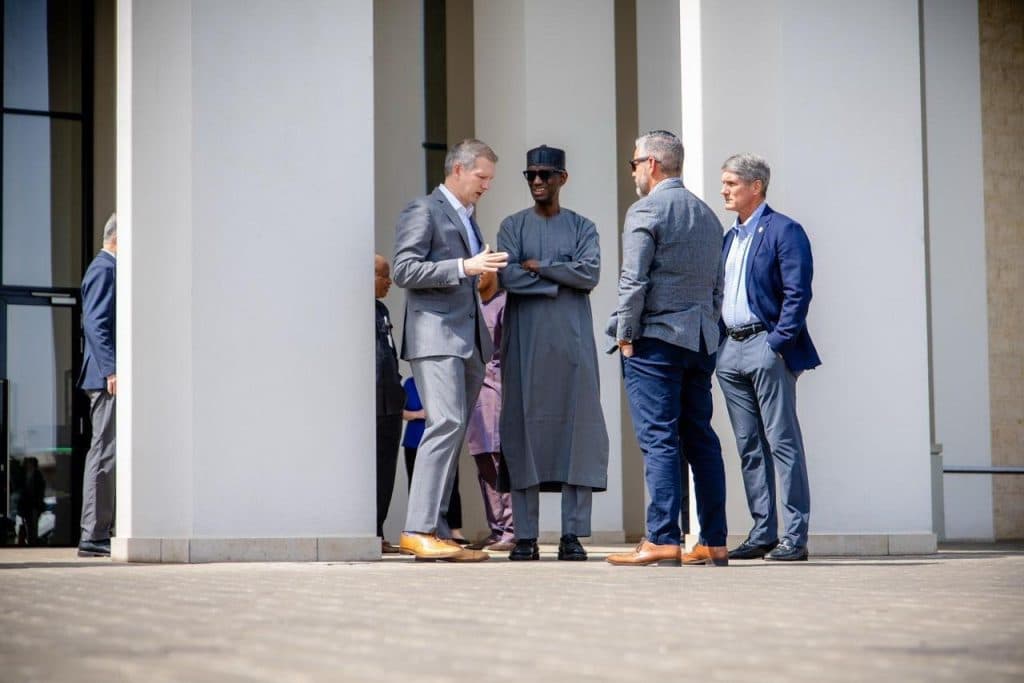
Ribadu’s role with coordination happened because many parts needed to move in specific directions. For example, the presidency had to provide political authority, the military had to provide operational credibility, diplomats had to reopen channels in Washington, intelligence officials had to frame the regional threat, lobbyists and intermediaries had to reach spaces formal diplomacy could not easily penetrate, and the central message itself had to remain consistent.
Nigeria was a battered state confronting overlapping extremist, criminal, communal, and regional threats, and if the state weakened further, Boko Haram and a confluence of other terror groups across the country would benefit.
Kabiru Adamu believes Ribadu deserves significant credit for the diplomatic de-escalation. “The NSA Nuhu Ribadu can be credited for de-escalating the earlier US stance when the Trump Administration, after designating Nigeria a country of particular concern due to perceived religious persecution and Trump’s threat to come ‘guns a blazing,’” he said. “Ribadu led a high-level delegation to the US and followed through with engagements that led to the creation of a joint working group between the two countries as well as deeper defence engagement.”
Barnett reached a similar conclusion. “The Nigerian government has responded pretty effectively on the diplomatic front so far,” he said. “After initially being caught unprepared for the Country of Particular Concern designation, it realised that it wouldn’t get very far by publicly protesting Trump’s narrative and instead sought to leverage Washington’s focus on Nigeria to secure new security cooperation.”
That recalibration reshaped the relationship because even though the United States still publicly raised concerns about religious freedom, Nigeria became increasingly valuable as a regional counterterror partner. Barnett noted that the new working relationship also elevated Ribadu internationally. “The US-Nigeria working group has boosted Ribadu’s profile internationally,” he said.
Kpilaakaa observed that Abuja’s strategy prevented a deeper rupture. “Despite recent joint military operations in Metele, Borno State, which reportedly led to the death of a senior ISWAP leader, some influential American politicians continue to frame US involvement as part of an effort to stop what they describe as a genocide against Christians in Nigeria only,” he said.
“That suggests the National Security Adviser has not fully succeeded in reshaping the narrative.” Even so, he argued that the cooperation itself remained strategically necessary. “Beyond the competing narratives, effective counterterrorism operations remain in Nigeria’s national interest,” he said. “If military cooperation is conducted professionally, ethically, and strategically, the outcome should contribute to greater security and stability for all Nigerians, regardless of religion or ethnicity.”
Why Trump changed course
Trump’s shift appeared dramatic from Abuja. One moment, he was threatening Nigeria. Months later, he was celebrating joint counterterror operations with Nigerian forces. But analysts say this logic was less ideological than transactional. “The change in stance by the Trump administration from declared hostility to now engagement is mainly because of the diplomatic engagements by Nigeria, including Ribadu’s engagements,” Adamu said. “There is also the lobby group contracted by the Federal Government that may have played a role in supporting a de-escalation,” he added.
Barnett believes Nigeria itself was never central to Trump’s broader worldview. “Nigeria is not actually a foreign policy priority for Trump, despite how much it might feel to Nigerians like he is now a looming presence in their politics,” he said.
“The US government has dedicated much more time and resources to its Venezuela and Iran policies, for example, than it has to Africa. When Trump threatened to go into Nigeria ‘guns a blazing’ last year, he was essentially calling on the US national security bureaucracy to come up with ideas to ‘do something’ in Nigeria that would look impressive but not consume significant energy and resources or entail political risk.”
The solution Washington eventually settled on was a partnership rather than confrontation. “The US military, for its part, would always prefer to fight jihadists with the help of a capable local partner rather than opposition from the host government,” Barnett explained.
“So, when the Nigerian government signalled it was willing to work with the US military, that gave the Trump administration an opening to show its supporters that it was fighting terrorists, supposedly in defence of Christians overseas, without engaging in a messy humanitarian intervention or state-building exercise.”
Nwankpa argued that the political logic behind Trump’s shift reflected both American strategic interests and Nigerian sensitivity to external pressure.
“Trump changed position because the political framing changed,” he said. “Threatening Nigeria appealed to parts of his evangelical and religious freedom base. Working with Nigeria appealed to American security interests. Once Abuja accepted the counterterrorism framing, Trump no longer needed a public confrontation.”
But he also pointed to a deeper Nigerian calculation.
“Most Nigerians want stronger security responses, but very few want foreign powers taking over the process,” Nwankpa said. “There is a strong sovereignty instinct in Nigeria. External pressure that appears paternalistic often collapses domestic coalition support, even among people who agree with the underlying criticism… Ribadu’s approach worked partly because it allowed Nigeria to engage America as a partner, not as a country being lectured or managed from outside.”
Kpilaakaa argued that Trump never completely abandoned the persecution narrative. “I do not believe there has been a complete shift in position,” he said. “Even recently, Trump shared material on Truth Social that reinforced the same narrative that frames every attack as religious persecution targeting Christians alone.”
He added that religious framing remains deeply embedded in Trump-era politics. “The use of religion, in this case Christianity, as a framework for discussing political and security issues is synonymous with the Trump administration,” he said.
Yet, Abuja avoided turning the disagreement into a public confrontation.
“It is also significant that Nigerian authorities have largely avoided engaging in public confrontation with Trump or his allies,” Kpilaakaa said. “Instead, they have focused on maintaining cooperation around the shared objective of combating terrorism and protecting lives, irrespective of religion or ethnicity.”
The Sahel and Nigeria’s strategic value
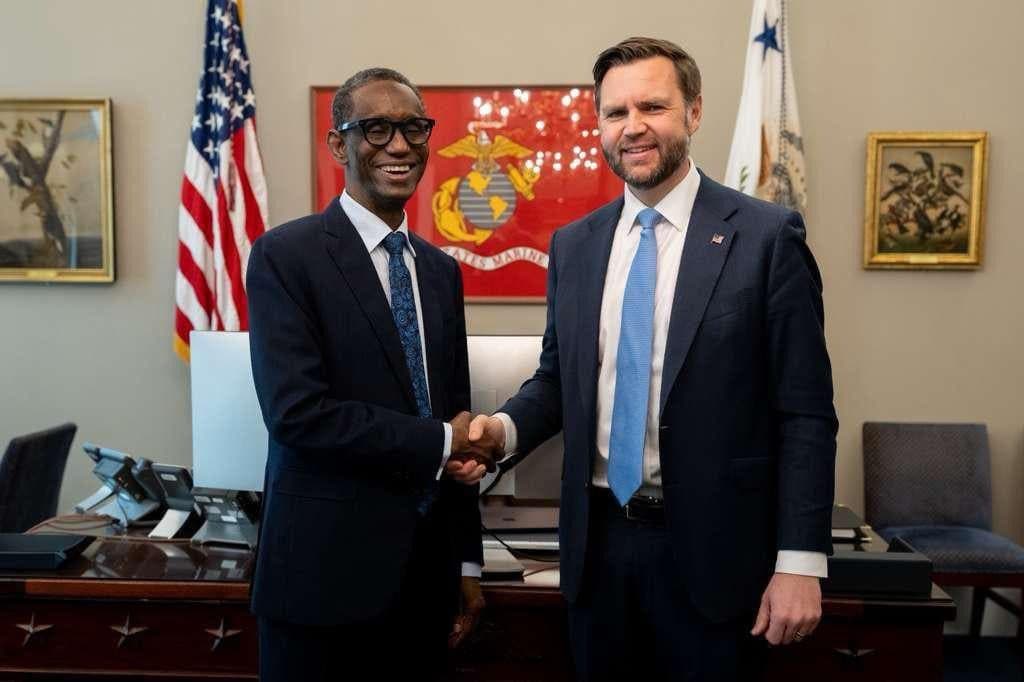
Regional realities strengthened Abuja’s hand. The Sahel was deteriorating rapidly; Mali had drifted away from Western influence, Burkina Faso remained unstable, Niger’s political upheaval disrupted Western security architecture, and Russian-linked actors expanded across the region.
Washington needed a capable African partner, and Nigeria’s geography, population, intelligence infrastructure, military size, and position between multiple conflict systems made it indispensable. Ribadu’s team aggressively leveraged that reality.
Weakening Nigeria, they argued, would not save Christians. It would strengthen the very extremist groups killing Christians and Muslims alike. That logic resonated strongly inside American security circles because it aligned humanitarian concern with strategic necessity.
The limits of the recovery
None of this erased the suffering that produced the controversy. Benue, Plateau, and Southern Kaduna still bleed. Communities across Niger State, Borno, Sokoto, Zamfara, Katsina, Yobe, and Adamawa continue to experience displacement, extortion, killings, and fear.
The average Nigerian, irrespective of their faith and ethnicity, genuinely believes the Nigerian state has failed them and the state must do more, not only to save lives, but to regain their trust in governance. The deeper question now is whether security cooperation alone can sustain the diplomatic recovery if the violence continues unresolved.
Kpilaakaa warned that “military cooperation alone will not resolve the deeper structural issues driving instability in the Middle Belt.” “Addressing land disputes, prolonged displacement, impunity, and the absence of justice remains critical,” he said.
He pointed to one grievance. “One of the most persistent grievances among affected communities is that many victims have spent more than a decade in displacement, with little accountability for the violence they endured. Without credible justice, reconstruction, and long-term conflict resolution, security cooperation may contain the violence temporarily, but it will not produce lasting peace or stability.”
“No,” Adamu said when asked whether security cooperation could survive if killings and impunity continue. “Evangelical groups will continue to mount domestic pressure on the Trump administration should the killings continue.”
Barnett also cautioned that Abuja should not assume permanent stability in the relationship. “You can’t be too certain where things go from here as Trump is notoriously unpredictable,” he said.
“He might be satisfied with periodic strikes against the Islamic State that make for good Fox News content while the militaries engage in more routine behind-the-scenes coordination and training.”
But the pressure networks inside American politics remain active. “There is also a vocal American constituency on this issue,” Barnett warned. “Those folks can be highly critical of the Tinubu government, and they are likely to perceive any continued violence, particularly in the Middle Belt, as justification for sanctions or even more radical forms of intervention.”
His conclusion was stark. “Tinubu can’t be certain he’s out of the woods just yet.” That is the reality beneath Nigeria’s diplomatic recovery. Abuja escaped one dangerous moment in Washington, but it has not solved the crisis that created it.
Back in Abuja, Ribadu remains trapped in a far more complicated war. His growing influence has unsettled opposition figures, threatened entrenched interests within the ruling party, and fuelled quiet anxieties about his long-term political ambition, multiple sources within Abuja policy networks implied. “If Ribadu misreads that terrain, his ambition could become his greatest vulnerability.”
Support Our Journalism
There are millions of ordinary people affected by conflict in Africa whose stories are missing in the mainstream media. HumAngle is determined to tell those challenging and under-reported stories, hoping that the people impacted by these conflicts will find the safety and security they deserve.
To ensure that we continue to provide public service coverage, we have a small favour to ask you. We want you to be part of our journalistic endeavour by contributing a token to us.
Your donation will further promote a robust, free, and independent media.
Comments
1 comment
Abu
20 May 2026, 11:27
Salkida is a well known name in security consultancy forums
Sign in to join the discussion.
Of course, we want our exclusive stories to reach as many people as possible and would appreciate it if you republish them. We only ask that you properly attribute to HumAngle, generally including the author's name, a link to the publication and a line of acknowledgement.