School Abductions in Oyo and Borno Spark New Terror Wave in Nigeria
In Mussa, a remote farming community in southern Borno, a new school term ended in another school abduction that reopened old fears about education and safety. In Oyo State, a similar abduction of schoolchildren occurred on the same day. Both happened within a few hours of each other in two regions within Nigeria, a country that has the highest recorded number of mass school abductions globally.
Listen to this story


18 May 2026
Before sunrise, Kellu Habila had risen from her mat in Mussa, northeastern Nigeria, and stepped into the kitchen, moving carefully in the dim light while the rest of the house slept. Outside, the dry-season dust had disappeared, replaced by the heavy stillness that precedes the rains in southern Borno. She prepared breakfast, then woke her four children one after the other: three boys and the youngest, a girl named Rifkatu.
It was early in the third term of the 2025/2026 academic session.
Unlike her brothers, who had resumed nearly a month earlier, Rifkatu was returning to school that morning for the first time because her old uniform was too worn to use. It was only the previous day that her parents had managed to buy another one.
“She was very happy,” Kellu recalled.
Four-year-old Rifkatu Habila and her friend, Alheri Olu, were both in Nursery One at Central Primary School, Mussa, a remote farming community in Lassa town, Askira Uba Local Government Area, Borno State. “The two girls were inseparable,” Kellu said. They played together, walked together, and often sat beside each other in class.
After the children left for school that Friday morning on May 15, Kellu headed to her farm on the outskirts of town. The farming season had begun, and like many residents of Mussa, she was trying to make use of the early morning before the sun hit hard.
Then the gunshots started.
“I hid inside a nearby stream when I heard them,” she told HumAngle. “It was a few minutes past 8 a.m.”
For a while, she remained there, crouched and listening. When the shooting eased, she ran back home.
By then, panic had already spread across Mussa. Parents were rushing toward the school. Some shouted their children’s names, while others disappeared into nearby bushes, searching for them. The gunshots, residents realised, had come from Central Primary School.
“We were told the children had been taken,” Kellu said. “So we started searching.”
She found her three sons hiding inside a nearby bush. But Rifkatu was nowhere to be found. Her voice broke when she spoke about what happened next.
“We kept searching. Later, her father and some men found children’s footwear outside town where the attackers had passed. He recognised hers.”
That was how they knew. Rifkatu and Alheri had been abducted together. That day, Friday, May 15, terrorists attacked Central Primary School, Mussa, abducting dozens of pupils. The exact number remains unclear. “Community leaders told us 43 children were taken,” Kellu recounted. But she believes the number may be higher. An official register recorded 40 confirmed names.
A pattern of attacks
Residents say the terrorists entered Mussa on motorcycles.
“Farmers running from the direction they came from said they also saw two Hilux vehicles parked outside town,” Emmanuel Hyarawa, Rifkatu’s uncle, said. “That was what they used to take the children away.”
No group has claimed responsibility, and no ransom demand had been made at the time this report was filed. But residents say the terrorists may be fighters from the Islamic State West Africa Province (ISWAP), a group that has repeatedly attacked communities along the southern Borno axis in recent years.
“They are the same people who attack soldiers here and abduct farmers,” Kellu said. “We recognised the way they dressed and moved.”
This was the fourth attack on Mussa within two months, according to residents.
“Occasionally, they would attack the town, often focusing on the military. They would burn buildings, loot shops, and cart away military vehicles and equipment,” Emmanuel said. “They had come in early April and attacked the military. They killed four soldiers and a civilian.” A week before the Friday abduction, “They had attacked, looted shops, and carted away six cattle,” Kellu added. In November 2025, Nigerian troops rescued 12 teenage girls abducted while working on farmlands in the area.
But no school had been attacked before. “This is the first time,” Emmanuel said.
The gunshots from Friday’s attack were heard as far away as Lassa, a town nearly 20 kilometres from Mussa. “We heard them around 8:30 that morning,” Andrew Adamu, a resident of Lassa, said.
The two communities are separated only by a smaller village called Kelle. According to Kellu, the attackers arrived through the Damboa axis on nearly 40 motorcycles, each carrying at least two armed men.
There is a military presence in Mussa, but residents say the soldiers are few.
“They are not up to 30,” Emmanuel said. “And usually, they are outnumbered.” “When the terrorists entered, they used the pupils as shields. So, the military could not engage them,” he added.
Kellu said part of the school itself now serves as a military armoury. “The soldiers stay there during the day,” she said. “They have been using part of the school for years.”
Residents believe the timing of the attack was deliberate.
After the April assault that killed soldiers, reinforcements had arrived from Askira, the LGA headquarters, and remained in the community for more than two weeks. But on Friday morning, according to Emmanuel, the troops had only recently withdrawn.
“It was less than an hour after they left that the terrorists came,” he said.
When the shots were heard in Lassa, residents said security forces left the town immediately. “I didn’t see them leaving myself, but I saw their return in the evening,” Andrew said. “Often, when something like this occurs, reinforcement is sent from here, Lassa, or Dille, another village not far away, Askira, the local government headquarters, or Uba, another major town,” Andrew added.
However, as of the time this report was compiled, residents of Mussa said no reinforcements had returned to the community.
A police constable based in Askira, who asked not to be named because he was not authorised to speak, said, “Although Mussa is a Borno community, it is not under our coverage because of proximity. They are closer to Adamawa and, therefore, Adamawa forces are often the ones responding to situations there. We received a red alert about the abduction moments after it happened. However, on our end, no reinforcement was issued because it is not under our protection. Maybe the military went.”
Over 40 pupils and teachers abducted in Oyo
On the same day as the Mussa school abduction, terrorists, also on motorcycles, stormed three schools and kidnapped schoolchildren and staff in the Oriire Local Government Area of Oyo State, South West Nigeria. It was a coordinated attack across the three schools in Ahoro-Esinle, a community in the LGA.
In the early hours of May 15, motorcycle-riding attackers invaded Baptist Nursery and Primary School, Yawota, near Alawusa, as well as Community Grammar School and the L.A Primary School in Esiele, all in the Ogbomoso axis of the state.
No armed group has claimed responsibility for the attack, but the invaders operated in a coordinated manner that suggests they belong to a terrorist syndicate. There had been no such mass abduction in the area before now, as locals describe the remote area as peaceful until recently. Witnesses said the terrorists spoke Yoruba, Hausa, and Nigerian Pidgin as they invaded the schools, abducting over 40 pupils swiftly in a matter of minutes.
The principal of the Community High School, Alamu Folawe, was also abducted alongside the pupils, while two teachers were killed during the early morning operation. Locals in Ogbomosho town told HumAngle that the area has recently been experiencing attacks, which have been largely unreported in the mainstream media.

The terrorists marched the abducted pupils and teachers towards the Old Oyo National Park, causing a hail of pandemonium and panic for residents. “The axis is actually underdeveloped and is quite far from town,” said Qosim Suleiman, a resident of Ogbomosho. “They have no electricity, and no paved road networks.”
Alamu had only been redeployed to one of the schools recently, sources said. Most teachers are deployed to the community schools on a rotational basis from Ogbomosho town because “no one wants to stay permanently in the satellite villages with very poor government control.”
Following the attack, however, the Oyo State Universal Basic Education Board (OYOSUBEB) has ordered the shutdown of schools in Oriire LGA due to fears of a possible recurrence of such incidents. In a statement obtained by HumAngle, OYOSUBEB also directed all primary schools in neighbouring communities, including Surulere, Oyo East, and Olorunsogo LGAs, to vacate their premises until further notice.
“This is a dark and painful moment for our education family in Oyo State, and our hearts are with the affected parents, teachers and the entire community,” said Nureni Adenira, the OYOSUBEB chairperson.
“We understand the fear and anxiety this situation has caused, and we want to assure our parents and stakeholders that the safety of our children remains our utmost priority.”
The Oyo Global Forum, a group of professionals in the state, condemned the attack, charging the government to rescue the abducted pupils and teachers from the hands of the armed assailants. The group said in a statement sent to HumAngle that “every hour of slow response emboldens these armed criminal groups and increases the risk of further attacks across vulnerable communities and adjoining forest corridors linked to Kwara and Niger states.”
“This must not be treated as an isolated incident. It is a clear national security threat requiring sustained military, intelligence, and community-based security operations,” said Taiwo-Hassan Adebayo, the chairperson of the group.
“Beyond the immediate rescue efforts, the government must urgently establish a preventive security framework across the affected axis, including strengthened rural policing, coordinated forest surveillance, and a functional early warning and rapid response system developed in partnership with local communities.”
The Oyo State Commissioner for Information and Civic Orientation, Dotun Oyelade, announced in a statement on May 16 that the government has taken security measures to prevent the attackers from moving beyond the national park before they are accosted. He said security operatives have commenced a rescue operation in the axis, stressing that suspects’ movements have been restricted.
“Patrol operations also commenced this morning after intelligence indicated the suspects remained within the National Park in Oyo State,” Dotun said. “Three separate patrol teams, comprising Amotekun operatives and hunters drawn from seven local government areas in Oke-Ogun, were deployed through Igbeti towards Oloka and adjoining communities,” he added.
Amid the ongoing search for the missing pupils and teachers, footage of some of the abductees has surfaced. In one of the clips, Racheal Alamu, the Community High School principal, is seen speaking from captivity, pleading with Nigerians and the government to rescue them.
“I’m doing this video to ask for help from everyone, starting from the Federal Republic of Nigeria, the Oyo State government, the Christian Association of Nigeria and all well-meaning Nigerians, that they should come to our aid and settle this thing peacefully so that our lives will not be lost,” she said.
Another abductee, a woman with a baby strapped to her back, weeps heavily while asking for the government’s intervention. “We need your help so that these people will release us. Please help us,” she wailed.
HumAngle has also exclusively obtained the names of the abductees, including seven teachers and 39 pupils.
Names of Schoolchildren and Teachers Abducted During the May 15 School Attacks in Oriire LGA, Oyo State, South West, Nigeria
The lingering memories of school abductions
For many families in southern Borno and, now, in some parts of Oyo State, schooling has become entangled with fear. Any attack involving schoolchildren in Borno, particularly, inevitably revives memories of the Chibok schoolgirls’ kidnapping, where 276 girls were abducted by Boko Haram from their dormitories in April 2014.
More than a decade later, some of the girls are still missing.
The abduction drew global attention to attacks on education in Nigeria, but it also marked the beginning of a broader wave of school-targeted kidnappings across the country.
Even the Nigerian government’s multimillion-dollar Safe School Initiative, launched after the Chibok abduction to strengthen school security, has struggled to achieve its objectives and has been dogged by allegations of corruption, poor implementation, and inadequate protection for vulnerable communities.
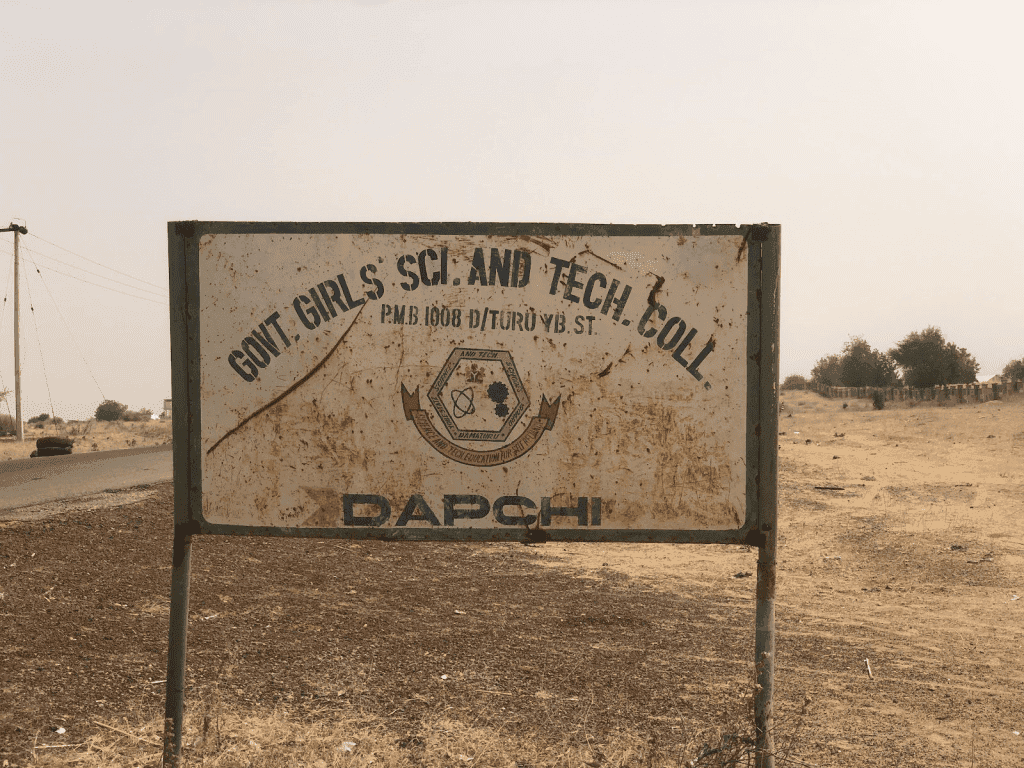
In 2018, 110 girls were abducted in Dapchi, Yobe State. Two years later, hundreds of students were kidnapped in Kankara, Katsina State. Then came Jangebe in Zamfara, and later Kuriga in Kaduna State, where more than 200 pupils were abducted earlier in 2024. Subsequently, in November 2025, more than 300 schoolchildren and staff were abducted from St Mary’s School in Papiri, Niger State, in the North Central region. Some were later released in December, while others remain in captivity.
What began in the North East gradually spread into the North West and other regions, where armed groups increasingly adopted mass kidnappings for ransom and leverage. Over time, these attacks altered something less visible: the way families think about education itself.
In 2021, UNICEF warned that attacks on schools and kidnappings “discourage parents from sending their children to school and leave children traumatised and fearful of going to classrooms to learn.” That fear now shapes daily life in places like Mussa. “My boys will not return to school anytime soon,” Kellu said. “I don’t want to lose them, too.” The incident had left her devastated, Emmanuel said. “The three boys are in my house,” he added.
Mussa itself was once emptied under the weight of conflict. Residents fled in 2015 as insurgent violence intensified across southern Borno. Many only returned the following year. “When we first came back, we could farm far outside town,” Emmanuel said. “Now, we barely go beyond one kilometre.”
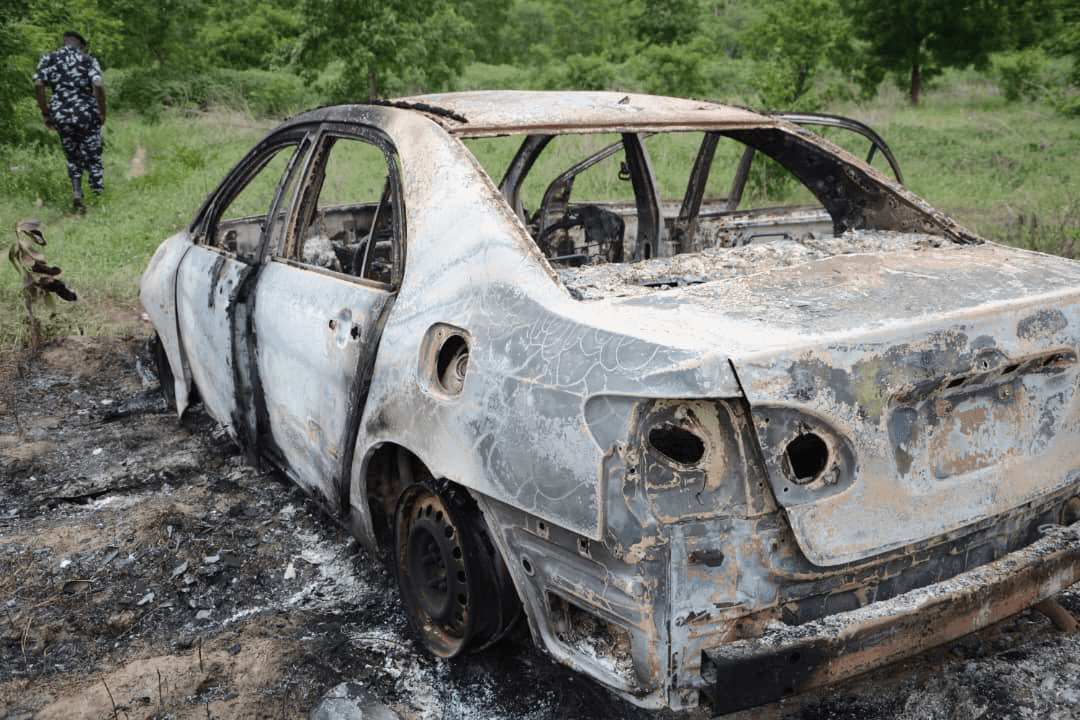
Even nearby communities remain tense. In Lassa, residents had already panicked before Friday’s attack fully became clear. The previous day, according to Andrew, gunmen had abducted a logger near the town, killed five others, and burned their vehicle.
Amid all this, schools still reopen every term.
Support Our Journalism
There are millions of ordinary people affected by conflict in Africa whose stories are missing in the mainstream media. HumAngle is determined to tell those challenging and under-reported stories, hoping that the people impacted by these conflicts will find the safety and security they deserve.
To ensure that we continue to provide public service coverage, we have a small favour to ask you. We want you to be part of our journalistic endeavour by contributing a token to us.
Your donation will further promote a robust, free, and independent media.
Comments
0 comments
No comments yet.
Sign in to join the discussion.
Of course, we want our exclusive stories to reach as many people as possible and would appreciate it if you republish them. We only ask that you properly attribute to HumAngle, generally including the author's name, a link to the publication and a line of acknowledgement.