The Making of the Boko Haram Army
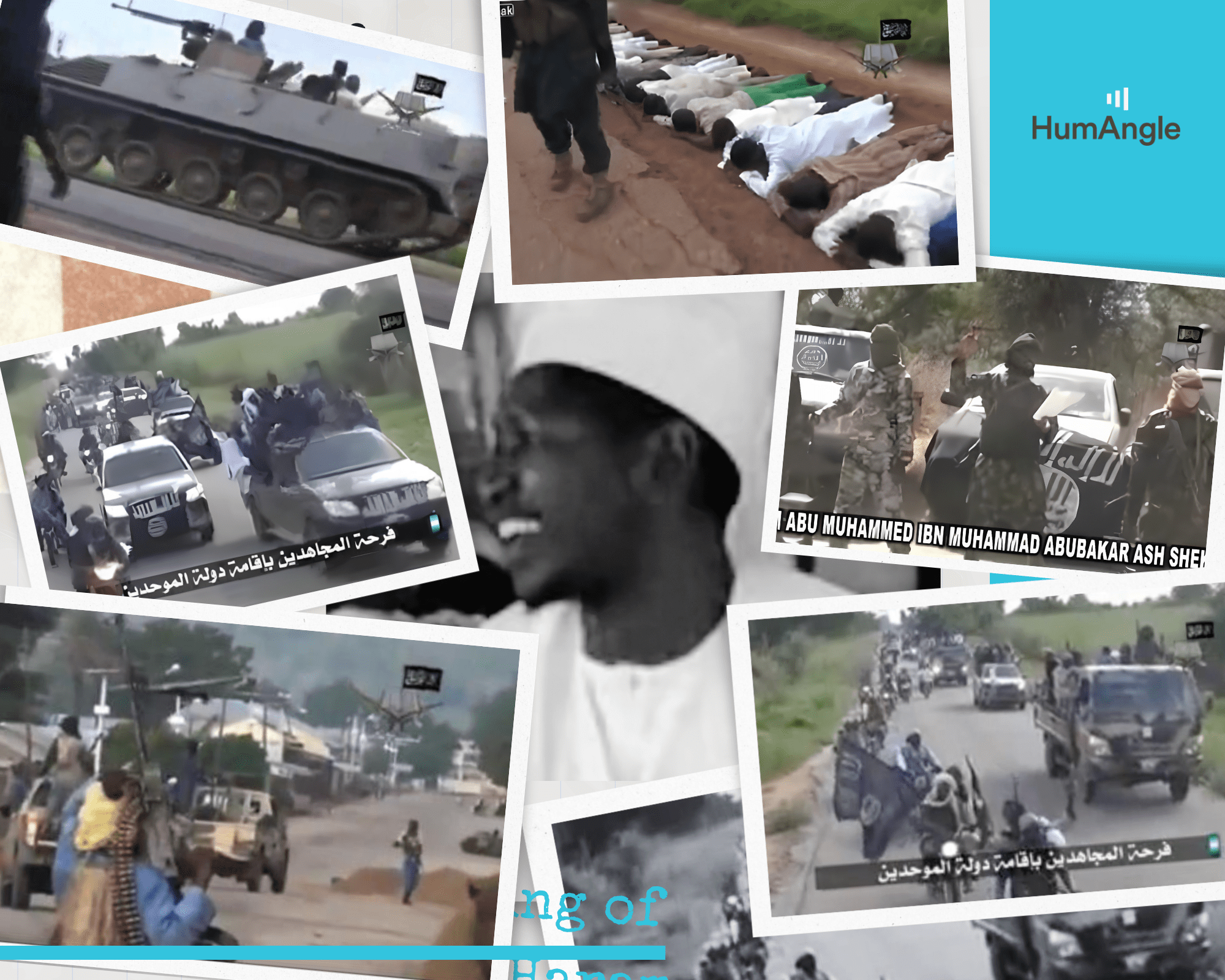
In 2007, Mohammed Yusuf, founder of the Boko Haram terror group, heightened preparations to wage war against the Nigerian state and began assembling what would later become an army. This army would go on to cause the death of over 350,000 people and displace over three million more. This report documents the strategy that made that army possible.
Listen to this story

6 May 2026
On a hauntingly cold night in 2008, a 28-year-old impressionable fan of Mohammed Yusuf sat in the latter’s compound in the London Ciki area of Maiduguri, northeastern Nigeria, at 1 a.m., placed his hand in his, and swore to give his life for Boko Haram. He would advance to become a top commander in the terror group.
That night, the Man was accompanied by a few trusted friends, all of whom pledged their allegiance to the cause. Yusuf started by reciting eight commandments to the small group and asking that they swear to abide by them. He made it clear they could refuse to join the army, in which case, they were not to disclose any of the things that happened that night to another living soul.
Many of them would die in battle in the years that followed, and Yusuf himself would be killed in a matter of months, but the Man would survive. He had been led there by his friend, who had also been led there by his own friend.
Mohammed Yusuf, the founder of the Boko Haram terror group, was preparing to wage war against the Nigerian state and was assembling what would later become an army. This army would go on to kill over 35,000 people between 2009 and 2020, indirectly lead to the death of over 300,000 others, and displace over two million more. Through fieldwork involving extensive interviews with a few first-generation members of the terror group who are still alive, victims, and a review of nearly 100 archival materials, such as newspapers and videos, this report documents the strategy that made that army possible.
Since his preaching was still largely peaceful at the time, Yusuf recruited men covertly, so as not to alert the government to the war he was planning.
But the story of the Man’s radicalisation began long before that night. As far back as 1995 and 1996, the Man, then merely a boy, had begun to listen to Mohammed Yusuf’s preaching, agreeing with a lot of the things he was hearing. But beyond Yusuf, the Man was also an ardent follower of Sheikh Jafar Mahmud, who had been schooled at the University of Madina, Saudi Arabia, a feat he found astonishing.
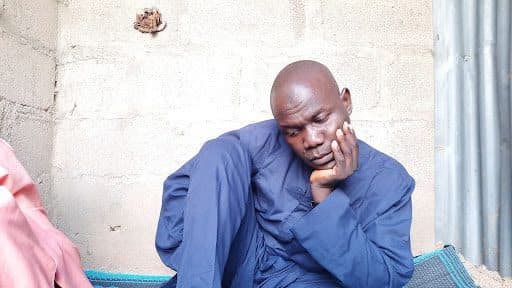
“That time, I was impressed with the way Malam [Mohammed Yusuf] was. He was a young man like me–he was just a bit older than me. But he was so educated, and that was my dream, too. To become so knowledgeable about the religion,” the Man told me one October afternoon in 2025 in northeastern Nigeria. We were sitting on a mat just outside a rafia hut.
“He had started becoming popular among the Izala and the Abba Aji students, just like how the likes of Gambo Kyari, Bukar Mustapha, Umoru Mustapha, and the rest were popular then. Like Malam Ibrahim Gomari, Bashir Kashara, who was killed, and so on. He [Mohammed Yusuf] was their peer when it came to Islamic scholarship.”
His ideologies aligned with those of scholars like Sheikh Jafar, who was based in Kano but was preaching regularly at and leading prayers at the Indimi mosque every Ramadan in Maiduguri. In 1999, Yusuf’s fame began to rise beyond his immediate community, his words taking root in the minds of young men and women all across Borno State. The support and fandom were massive. The Man thinks this was due to two things.
“One, he was very young then. Two, he used to preach in both Hausa and Kanuri.” This enabled him to reach a wider audience without a language barrier, as these were among the most widely spoken languages in Borno State.
Over time, around 2000 and 2002, his preaching began to diverge from that of the likes of Sheikh Jafar and other revered scholars popular at the time. He began to speak against Western education, voting, democracy, and modern science and civilisation. He preached about a radical form of religion that had total government control over the people’s private and public lives.
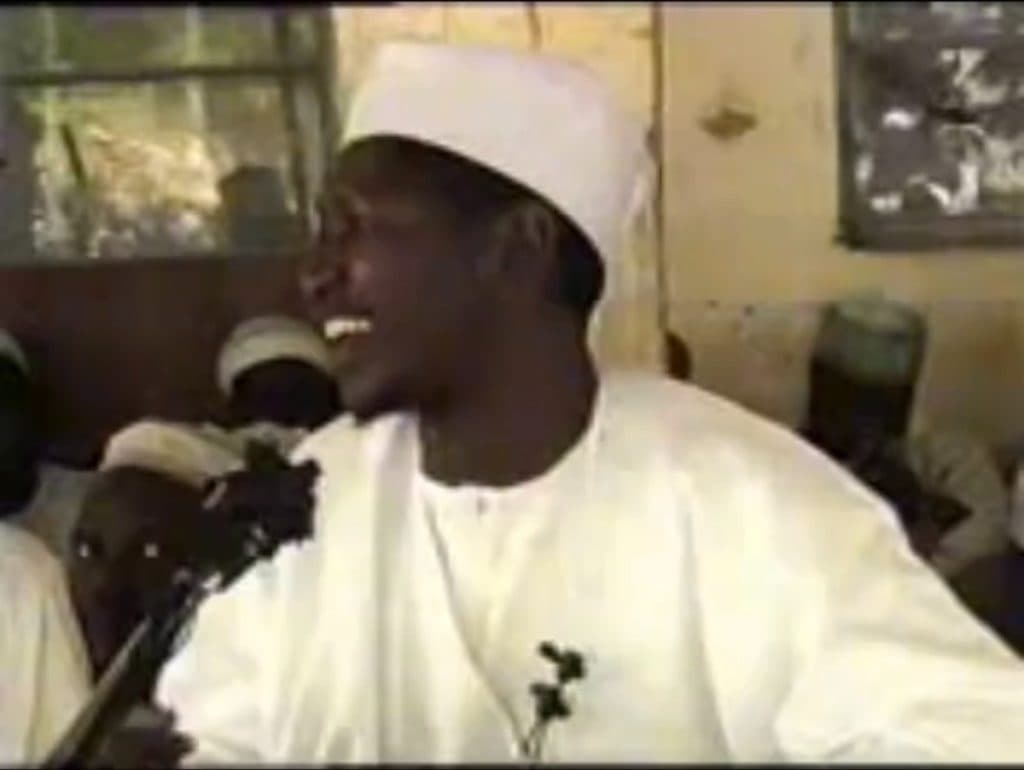
In about 60 videos of him around this time that HumAngle reviewed, each 3-6 minutes long, he can be seen preaching against democracy and the West. “The thing the West brought is apostasy,” he said in one of them. “We reject it. This democracy is not good. These soldiers are not genuine soldiers–they do not protect the religion of Islam… God said we should kill them. Allah said in the Qur’an that he would humiliate the enemy by our hand. Did you think he meant our hands holding prayer beads?” and here he chuckles. “Of course not,” he answered himself to the ecstatic screams of his congregation. “He was referring to our hands wielding guns.”
At this time, many of the scholars he used to be known with began to withdraw from him. Rather than see this as the alarm that the larger public saw it as, the Man and many young people like him saw it as a sign of legitimacy. They saw Yusuf as brave, courageous, and unwavering.
“We believed what he was preaching was the truth because what he was saying regarding the government, jihad, correlated with Qur’an verses and hadiths,” he said. He quoted verses from Chapters Ahzab and Taubah to back up his claim, saying that the scriptures had already said that nothing could change the world if not jihad, which he personally interpreted as war.
Islamic scholars have long disproved this interpretation of scripture and the word ‘jihad’. HumAngle shared the Man’s interpretation of the verses in Ahzab and Taubah with a prominent Islamic scholar, Prof. Ibrahim Maqari, who currently serves as the Chief Imam at the central mosque in Abuja, the federal capital. He said the interpretation was inaccurate.
“Those verses have been taken out of context. Islam is very clear on there not being compulsion in religion,” he said. “Islam allows war only when war is brought upon you. In that sense, you have a responsibility to fight back in order to protect yourself. There are laws on how warring parties must treat even animals and trees–how can the same religion be used as an excuse to slaughter innocent, unarmed populations, if even animals and trees are expected to be protected even in times of war?”
He also offered an additional, but often ignored, definition of the word: restraint, whether emotional or mental.
“To stay away from what one craves but has been outlawed by Islam could also be a form of jihad.”
The Boko Haram group views it differently. “Jihad means blood must be spilt,” the Man said.
Following his split with Sheikh Jafar, Yusuf stopped preaching at the Indimi mosque and began preaching in his home, then at the Al’amin Daggash Mosque for several months before he was kicked out again, before eventually establishing the Markaz (Ibn Taimiyya) mosque.
“Only about 40-50 of us went with him then. That was 2002–2003. With the help of Allah, after like two years, Markaz couldn’t even contain people; we could not even count the number of students anymore.”
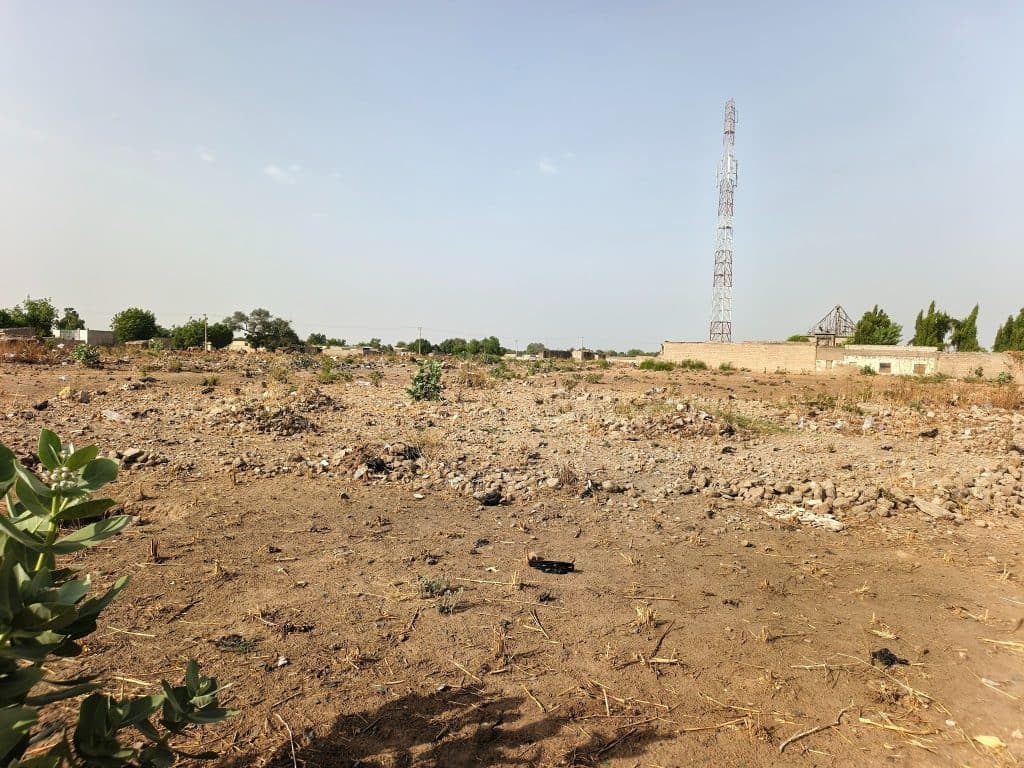
There were very few journalists or researchers at the time who were able to accurately document this sociological (and religious) revolution. One of them was Ahmad Salkida, who dispatched the first-ever news article on Mohammed Yusuf in 2006 and was the first to alert the public to what was brewing. He observed in one report that Yusuf enjoyed wide acceptance from young people at the time because of the effects of bad governance and the resulting socioeconomic inequalities—corruption, rampant inequality, lack of education.
By appealing to a shared victimhood philosophy, he created an Us (victims) Vs Them (the government/the oppressor) dichotomy and garnered a large following. The weaponisation of a sense of community to further genocidal violence is a tactic that is recurring in speeches of warlords or leaders of violent movements. It was apparent in the popular 1943 speech made by Heinrich Himmler, one of the key military leaders who executed the Holocaust. In it, he frames the killing of jews as a moral obligation, while making the Nazis out to be the victims. “We have a moral right, we had the duty to our people to do it, to kill [some use the word ‘destroy’ here as the original speech was in German] these people who would kill us… We have carried out this most difficult of tasks in a spirit of love for our people,” he said in the speech.
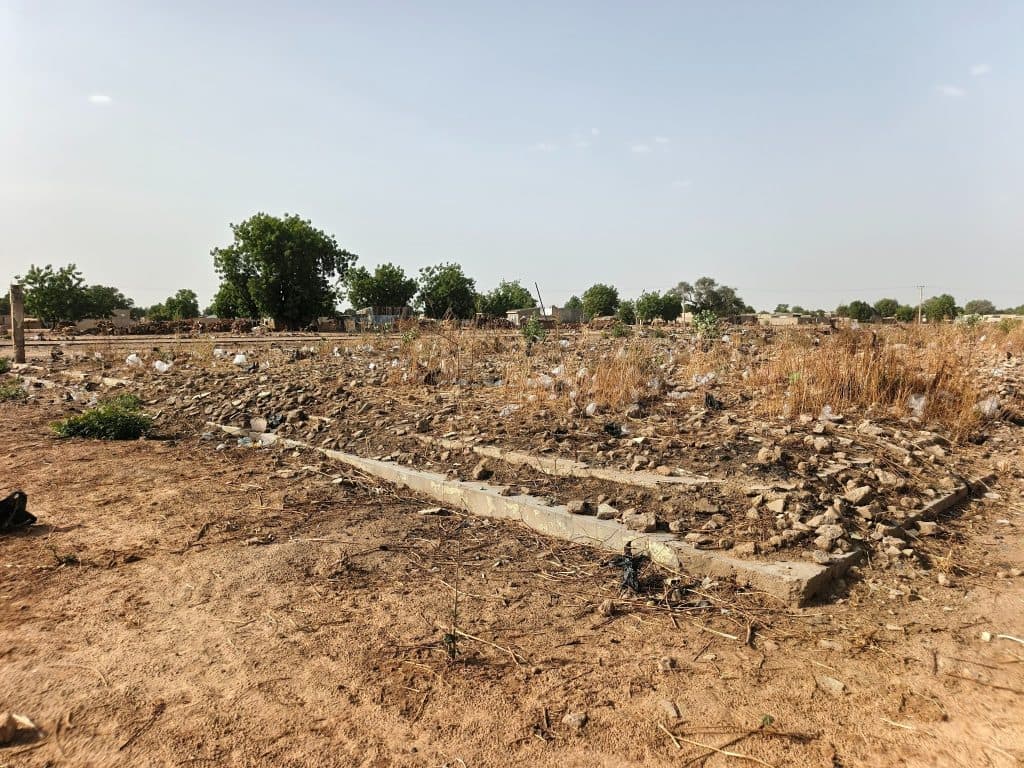
As the number of his students and followers began to increase, Yusuf decided it was time to take his message beyond his house and Maiduguri. He began to travel to Konduga, Bama, and Gwoza. He soon went beyond Borno State into Yobe State, to places like Potiskum, Gashua, Geidam, and others. He also went to Bauchi.
“We started getting senior students like Abu Mohammed Bauchi, Abu Maryam, etc. It later crossed to Kano, and there, we got senior scholars, even though they later withdrew.”
It was at this time, when his preaching became regular in Bama, that Fatima, another first-generation member of the group, began to attend. Alongside her entire family, she became a loyal follower of Yusuf. She took the bay’ah in a way that resembled what the Man described.
“We were gathered around 4 p.m. and then separated into men and women, then took the oath,” she recalled. At this time, the preaching was mainly that the government did not have their best interest at heart, and did not care about Islam. Fatima went alongside her parents and husband. She remembers being told that the Nigerian constitution was forbidden for them to follow or abide by. They also told them that they might be killed, but they should rest assured that they would go straight to paradise if that happened.
“There are people, these days, who claim that the drinking of blood is somehow part of the oath-taking process. This is not true. At least, not during our time,” she said.
The preachings, at this time, had started to grow more and more radical and inciting.
“This caused some people to lose their wives, some their parents, some their trading partners, and some to destroy their school certificates,” the Man said. Young people, in compliance with the very foundation of Boko Haram, which directly translates to “Western education is forbidden”, began to publicly burn school certificates that they had already acquired before they became radicalised.
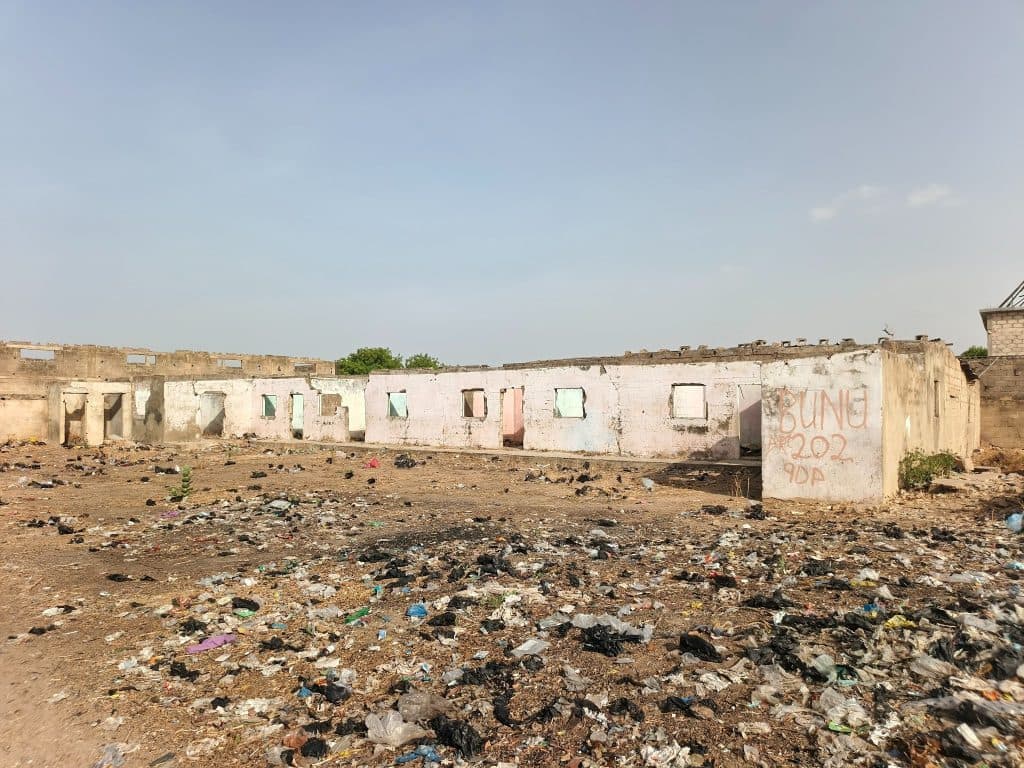
“We all knew this was going to happen; it wasn’t a secret,” the Man said of the eventual uprising. “There are scholars who would preach saying we have to shed blood in this country, but once they are done preaching, you will see them with the same government they are criticising in their houses, with cars given to them. But Malam was never like that. He was never in cahoots with the government, so we all believed in him and that he was going to carry out what he had intended–the war.”
The early army
The Man claimed that Yusuf first appointed 11 close friends, whom he termed his commanders. They were the first members of the Boko Haram army. He sat with these 11 and explained the reason for the war, assuring them it would happen soon. He told them they each must be willing to sacrifice their lives if it came to that, and also bring men who believed in the cause and would be willing to do the same.
He trained them for an initial period of nine months. Some CDs were played for them on war preparation. There were long periods of preaching and indoctrination.
“Some of these men are in prison, but most of them have died. The only person who is not in prison and is alive was released from prison two years ago: Mohammed Idris. He was imprisoned in 2009. There is Usman Sidi in the Malam Sidi deradicalisation centre in Gombe, and Ibrahim Agaji, who is still in prison. And so on.”
It was one of these first 11 commanders who reached out to the Man, inviting him to join the army. Yusuf had mandated that each of them come with three trusted men who could join. This was not as easy as it sounded, especially because speaking to the wrong person could jeopardise the entire plan if they chose to go to the authorities with what they knew. When the commander reached out to the Man, he explained this, adding that he himself did not know up to three people he could trust, only the Man. He asked the Man to bring the other two. He, too, only trusted one person and asked that person to bring one person as well. In that way, the commander fulfilled his assigned quota of three. Soon, the 11 commanders and their individual recruits totalled 40. Together, they formed the first version of the army, gathering in Yusuf’s house that night in the London Ciki area of Maiduguri and taking the bay’ah after listening to the commandments.
“The first commandment was that we must agree to give our lives if it came to it; then, seeking Islamic knowledge to understand our ancestors; we must also not do things except as stated in the books, whether we like it or not; then, there was confidentiality. I have forgotten most of the conditions. There were like eight conditions. If you agree to them, Malam would take your hand and hold it as you took the bay’ah. You would promise never to discuss it with anyone. If you do, it’s like you have betrayed the religion.”
After that night, they proceeded to undergo a four-month intensive period of prayer and training. They had access to one man, Habib, who used to be a sergeant in the Nigerian Army but whom Yusuf had won over with his preachings. He trained them in combat. Yusuf had also won over one medical doctor, a prominent consultant from Yola known as Abu Adam. He equipped them with basic medical skills, including how to remove a bullet lodged in a wound and how to stitch a wound.
“To this day, whenever my kids get sick, I am able to administer injections for them once they are prescribed and I buy them, because of the skills I learned from that doctor,” the Man said.
The initial group of 40 was also mandated to come with recruits – some were mandated to come with up to 10 recruits each, others were mandated to come with only three – and in that way, the army expanded little by little. Once they were in their hundreds, Yusuf broke them into battalions and named each battalion after an Islamic historical figure. The Man was under the Zubair Ibn Awwam battalion. Those who later moved to the Timbuktu triangle were named after Umar Farouk. Each of the 11 commanders was also assigned four sub-commanders known as Munzir. The Man was a Munzir at this time. Each Munzir was in charge of about 70–100 people. The Munzirs, in turn, appointed people they called the Naqeeb, each of whom had 25 people under their care. This system made organising easier.
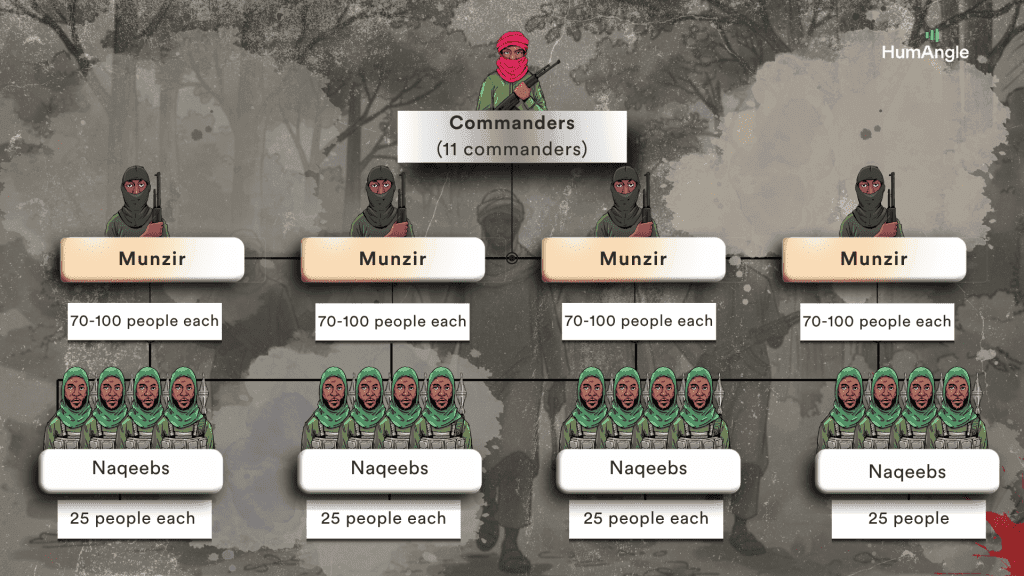
“Whenever Mohammed Yusuf says to the leader of Zubair Ibn Awwam battalion, ‘I want you to gather your people for me,’ the leader would look for other Munzirs and me. At that time, four of us were Munzirs under that battalion: Mohammed Sani Tela, Bako Mai Madara, Abdullahi, and me. So, when Malam says to our commander, ‘Gather your people for me,’ he would just call us (the Munzirs) and say, ‘Gather your people.’ If, for example, I have 100 people under my care, how would I reach them? They’re too much for me, so I would call my Naqeeb and tell them to each bring the 25 people under their individual care. You see, this way it is easier for both me and my superior because 25 people are not a lot to gather.”
“That time, we had not yet relocated to the forest. This all happened in Maiduguri,” he clarified.
There were several locations used for training in Bauchi and Biu in Borno. As things began to heat up, with preparation for the war being heavily underway, Yusuf got word that the government suspected a war was brewing and planned to attack him and his followers. He was invited multiple times by the DSS and the police in both Maiduguri and Abuja, where he was detained briefly and interrogated over those allegations. He denied arming or preparing for war.
“Since they were planning to attack us, we were supposed to also get ready for them. Before they attack us, let’s attack them. We should just be prepared. So we got ready as much as we could. We got our war arms–Malam and a few people had been getting the arms ready all this time with the help of the former sergeant in the Nigerian Army.”
Just then, they began to face some logistical challenges. Some members of the group who had been entrusted with guns in the past few months of preparation and had been told to bury them for safekeeping suddenly said they no longer remembered where they had buried the guns. This caused a setback with planning, and Yusuf, at first, found it puzzling.
“But he later said we are going to be optimistic, whether they did not buy it, whether they cheated, or they did buy it and truly couldn’t find the place they buried it, it was still amusing. But he said we will not dwell on this, we will just seek Allah’s help with what we have with us.”
According to another source, another setback in the arms gathering department involved a man known as Aliu Tashaku, whom Yusuf met and presumably radicalised during one of his detentions at the Police headquarters in Abuja. Tashaku was later accused by Yusuf and several Boko Haram leaders of defrauding the group. They say he collected millions of naira with a promise to deliver dozens of AK-47 rifles, which he never fulfilled.
Still, plans continued. From Friday to Sunday, dawn till dusk, they were trained to use the guns they did procure: how to cock and shoot them. “Only a few of us were taught how to wield guns. Just the leaders. Not everyone.”
Finally, on that fateful day in June 2009, the ‘helmet’ incident happened. The incident has since been regarded as the beginning of the war. Some even say it was what caused it.
“I need you to understand,” the Man said, “that the helmet incident was not what led to the war. We had already assembled the army, gathered arms and supplies, and put the structure in place.”
What the incident did was accelerate the inevitable.
The helmet incident
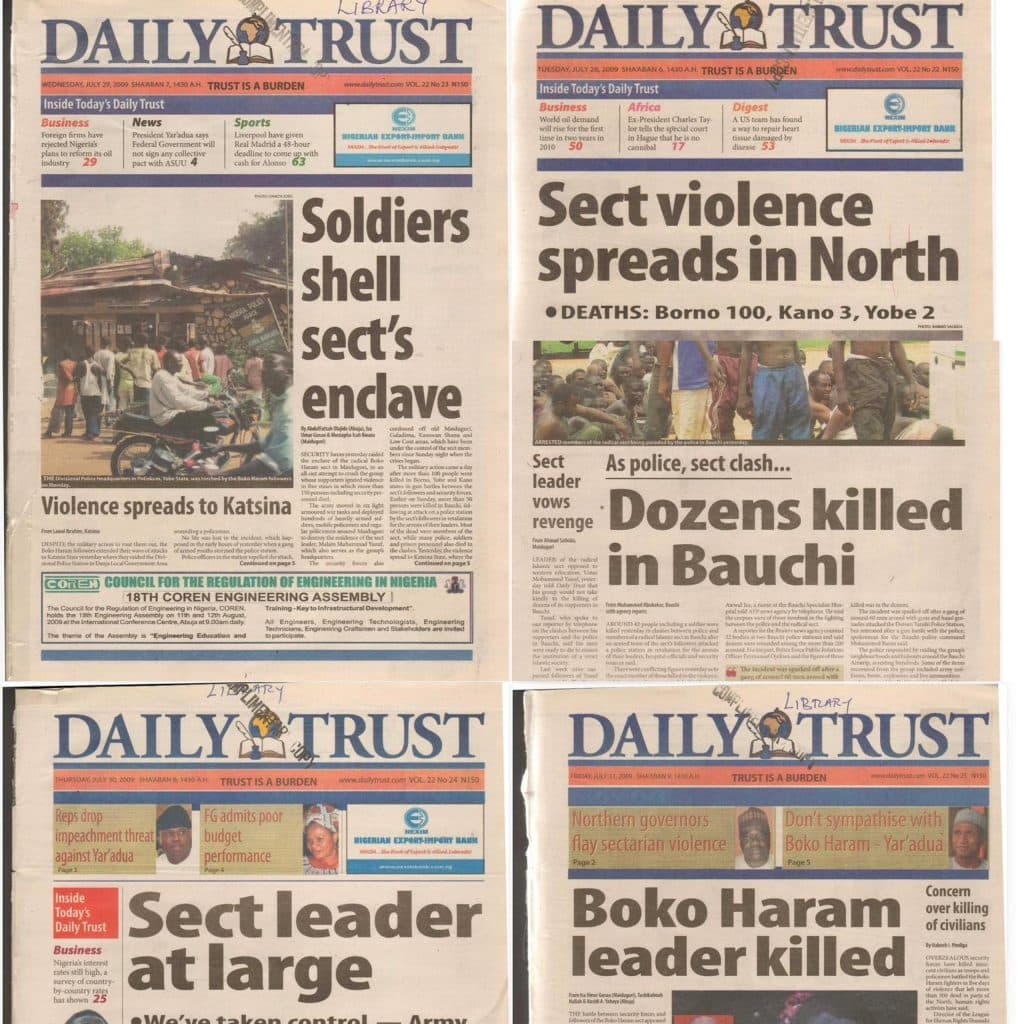
In January 2009, authorities in Borno announced that anyone wishing to ride a bike in Maiduguri must wear a helmet as a safety precaution. The Boko Haram group did not agree with the rule (“how dare an illegitimate body tell us what to do?”). And so on that fateful day in June 2009, they came out en masse to bury four members who had died in a motor crash, flooding major roads. Many of them rode on bikes, and there was not a single helmet in sight. The police formed a blockade and refused to let them through, daring them to cross a particular line. They crossed the line, literally, and the police opened fire on the unarmed crowd. It was an act of extrajudicial violence, but for a people who already fancied themselves a parallel and legitimate government, the sect saw it as an act of war. And so they responded, warring for five days and killing indiscriminately across Borno, Yobe, and Kano. A review of Daily Trust newspapers during the whole week showed that the war dominated its front pages from July 27 to July 31 2009. Reports say that up to 800 people were killed. Abubakar Shekau, who was second-in-command at the time and would later lead the violent group after Yusuf, was wounded.
Yusuf himself was in Kaduna, northwestern Nigeria, on the day of the helmet incident. Sources say he flew into a rage when he learned of it. It was when he returned that he became more public and explicit about the war that must be fought, since the state, he said, had drawn first blood.
“He preached that if we didn’t do anything about these soldiers talking about helmets, there wouldn’t be peace, so at that time, he had not yet been captured. It wasn’t long after that the war happened in July, when everything became messy in Markaz. He spoke during evening prayers that this war was beyond us. For three days, it was like victory was on our side, but now security forces were well prepared, planning to attack us, and the little we had was already finished, and our senior commanders were all dead, so he said everyone should just find their way. That was when we went out, that was when he was arrested.”
The last time the Man saw Yusuf, they were trying to escape from their location as authorities advanced. One of his students insisted that Yusuf hop in his car so they could leave together, but Yusuf refused. By this time, he had sustained a bullet wound to the arm. And so when news of his capture and eventual summary execution arrived, it did not come entirely as a shock to the Man.
Ahmad Salkida, who was being held in a cell at the police headquarters at the time Yusuf was killed there, wrote that over 50 policemen emptied bullets into his body, making sure to avoid his head so that his identity could never be disputed.
In a video of Yusuf’s remains that HumAngle obtained, there were tens of bullet wounds, his body mangled as though slashed open repeatedly, the inner bloody flesh hanging out in several places. The only body part that remained unwounded was his head. His eyes remained open, as though staring straight ahead. In the background, voices could be heard worrying about the stench. In another video I reviewed, this time of Yusuf being interrogated after he was arrested, he was questioned about medical supplies and arms being found in his home. This corroborates the Man’s accounts about medical supplies and arms having already been gathered.
Later, the government claimed he had been trying to escape when he was shot and killed. The execution drew nationwide condemnation, and the then-President Umaru Musa Yar’adua ordered a probe into the officers responsible.
In the immediate aftermath, authorities went on a hunt for all members of the group. So the premature army and other followers of the group dispersed, and the Man himself relocated to Gwagwalada in Nigeria’s federal capital, Abuja.
He lived there for about two years with his wives and children, until one day, when former associates found him. Abubakar Shekau had healed, emerged from hibernation, and was ready to lead the army into war, the associates told him. He had sent them to him to deliver the message, and they would do so to as many key members of the army as they could find. They put him in touch with Shekau on the phone.
“We spoke, and he said he was in good health, and he tasked me with gathering the people from my battalion and to lead them since our leader, as I told you, got captured and was only released last year. That was when I felt the weight of the world on my head because we were in hiding, and now we were being told we were to continue with operations.”
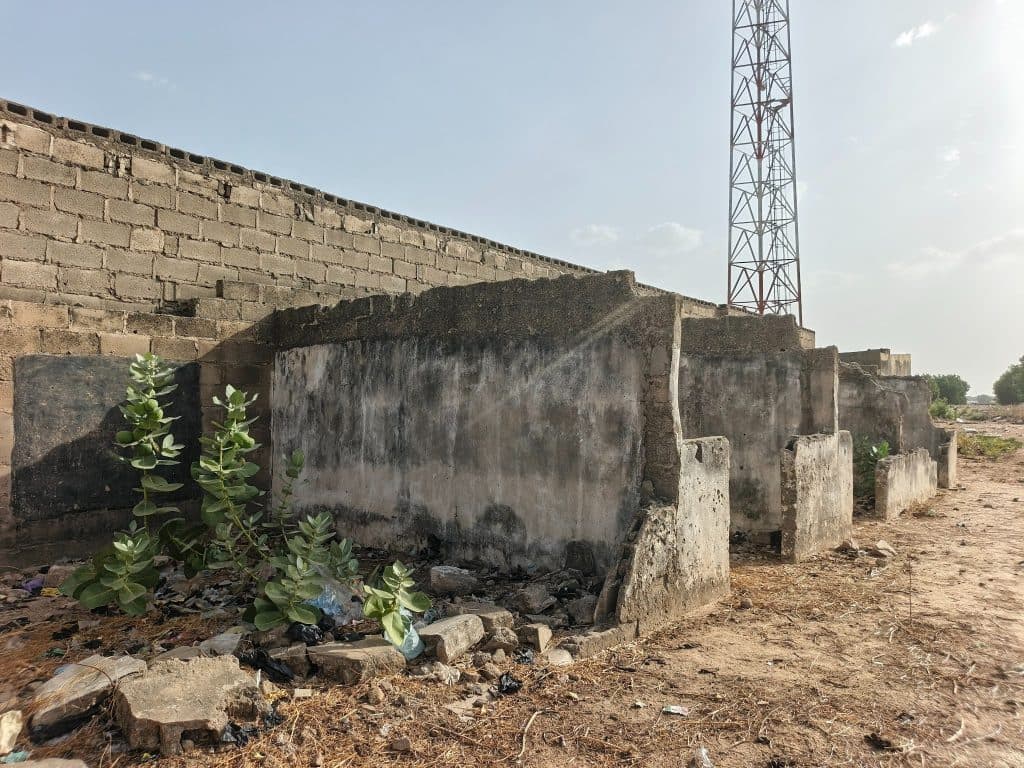
And so the work of regrouping commenced. The structure that Yusuf had put in place helped in this process. Each commander searched for his Munzirs, and each Munzir searched for his Naqeebs. It was not as easy as it would have been were they all still in Maiduguri and not in hiding, because now they were scattered everywhere, and some people had even died.
HumAngle gathered that at this time, several members whom Yusuf facilitated in their travels to North Africa for arms training and other terrorism-related operations, a clear signal that preparations for war were underway long before the July 2009 ma’araka, returned to boost the army Shekau was assembling. Many of them were unable to return by the time the conflict erupted.
Once they had regrouped, the strategic efforts to topple the Nigerian government and establish what they believed to be an Islamic state started. This strategy, mainly, had to do with bombings, abductions, assassinations, and taking control of certain villages and towns to be able to forcefully radicalise and loot.
“We bombed towns, mosques, markets, and churches, too. We were the ones who put everything together. We later realised staying in town would not work because they started arresting our people. So we went to the forest.”
When the group migrated to Sambisa Forest, they turned it into their daulah – the “sovereign territory” – and operated fully from there. But this, in no way, lessened the brutality of the operations. This brutality was due, in part, to the fact that they had run out of supplies and money and were frantic. The Man had sold the lands he owned and used the money to purchase arms, and so had many others. Yusuf’s death had decimated a lot of plans. So they began to take villages.
On the surface, when villages fell to them, it was because they wanted to recruit or radicalise. But they were aware that no village or town could stay in their grip for long, as the Nigerian Army would eventually take it back. So, the more urgent reason was to loot the banks in the villages as soon as they took possession.
“We held towns for months, except for places like Mubi, which wasn’t held for long but which still yielded us a lot of money because it had like nine to ten banks then. Only three banks were looted before the soldiers came and took over the town. So we started using the money, though a jet came and burnt down the money later on.”
HumAngle has interviewed dozens of people who were stuck in villages like Bama, Kirawa, Gwoza, Kumshe, Boboshe, Andara, and many others, during the periods when Boko Haram held the villages hostage. They described a heavily militarised setting, with people being killed on often unfounded allegations of spying. Baana Alhaji Ali, a man who used to be a trader in Andara before it fell to Boko Haram, told me that many of the laws sought to take complete control of their lives. “They refused to let us go out of the village; they imposed their laws on us; they said we shouldn’t allow our women to fetch water, gather firewood, and that we should be doing all that for them. Our women were never to be seen publicly. They took foodstuff away from us.”
During this time, the government was announcing on the radio that if anyone was brave enough to escape the villages and make it to Maiduguri, the capital city, they would be safely accepted and put into Internally Displaced Persons (IDP) camps. Thousands of people took the risk. Some were caught by the terrorists and brutally killed, but others made it out safely. Tragically, many of them were intercepted on the road and profiled by the Nigerian Army as members of the terror group. They went on to be detained without trial at detention centres like Giwa barracks, Borno Maximum Security prison, and Wawa military cantonment for about a decade. Some of them died. Others disappeared and have never been seen again. Baana and his family made it to Cameroon, where the local army transferred them into the hands of the Nigerian Army in Banki, a border town. While his wife and children were allowed to go, Baana was detained on allegations of being part of the terror group and held for seven years in conditions that bring tears to his eyes to recount.
“We didn’t get enough water … some people died of thirst,” he said. “There were about 400 people in one cell, and people died from the heat … We didn’t have proper toilets at first, just plastic buckets to urinate and defecate. People would take them out when they were full and empty them.”
Amid all these, when taking villages became no longer sustainable, the Man said, they began to abduct for money. Though the Chibok abduction of 276 schoolgirls, as has already been extensively reported, was not planned but executed by lower Boko Haram members on their way back from a different assignment, it turned out to be one of their most successful money-making attempts. The Man says up to ₦300 million was paid as ransom for each girl who was released. Reports show that between 2016 and 2018, 103 girls were released, with the BBC reporting that $3.3 million was paid for them. The government, officially, insists that no ransom was paid.
“Abducting the Chibok girls became a blessing for us all in the forest because it touched the whole world. We got a lot of money. Money was made that time! At the time, the group was already facing financial difficulties. You know, when we first migrated to the forest, we would go and break into a shop and steal money, or steal cows and sell. We were struggling financially.”
The Man lived in Sambisa for over a decade with his three wives and nine children. He held numerous positions, including commander, judge, and, later, member of the Shura council.
Once in Sambisa, under the heavy-handedness of Shekau, he began to find ideological differences between what Shekau was doing and what he himself believed the scriptures said to do. This is a popular complaint among members of the group. Shekau believed deeply in violence and had no patience for negotiations. He believed that anyone who did not live in the daulah deserved to be killed. Hence, the bombing of markets, motor parks, mosques, churches, and other public places within state-controlled territories.
“We, on the other hand, believed our target was the Nigerian security forces and those who deserved it. We all agreed on that, but carrying out attacks on mosques, churches, motor parks, and killing children? We were not in support of Shekau doing that,” the Man said of himself and a growing group that had begun to plan to rebel.
“With Shekau, anybody that does not live within those forests, even if he prays, even if he goes to the Holy Ka’abah in Saudi Arabia to pray, then comes back every day, he sees him as a non-believer. He can be killed, and his money or belongings can be collected.”
There were also allegations of witchcraft against some elderly women in the group, who would then be stoned to death and sometimes beheaded. According to Fatima, the follower from Bama, things escalated wildly during that time and caused many people to fear.
And so in 2016, a faction led by Mamman Nur, another high-ranking member, decided to break away into what is now known as the Islamic State West Africa Province (ISWAP), linked to the global Islamic State (IS) group.
ISWAP, at the time and perhaps even now, fancied itself purer and less violent than the Shekau-led sect. Still, over time, the Man began to feel as though even they were “not honest about the work they were doing.”
As he spoke, it became clear to me that though he was no longer part of the group, he still believed in the cause and thought there was an “honest” or “right” way to do it. And so I asked: Why did he leave the terror group and return to state-controlled territories?
He paused for a moment, then asked, “Are you a Muslim?”
I said yes.
“So you know about the Islamic Khalifs?” he enquired.
“Yes, Ali, Umar Ibn Khattab, Usman Ibn Affan and the rest?”
He nodded in satisfaction. “Those people you mentioned were among the Prophet’s most knowledgeable and trusted advisors. So, whenever they spoke or offered counsel during that time, they were listened to and taken seriously. We were supposed to be that for ISWAP, but whenever we spoke up against things that were wrong, nobody listened to us. It was made as though we were the ones spoiling people, even when all we were doing was finding them ease.”
He explained that his decision to leave was the culmination of many things, not just one, but the refusal to listen to him and his peers made it clear that the original cause, which he believed in and was once prepared to lay down his life for, no longer existed.
Leaving was risky because he was very high-ranking, he said. It meant that he could never just change his mind and decide to go back because he would be executed. It meant he would leave behind all the wealth he had acquired over the past decade. It also meant he would leave behind a life of status and comfort and take on an uncertain future, doubtless filled with hardship.
Finally, in 2024, less than two full years ago, he defected with his entire family and surrendered to the Nigerian state. He underwent the Borno state-modelled deradicalisation programme – which is different from Operation Safe Corridor – and offered up his services to the state to aid its fight against the insurgency. He provides regular high-level intel to the government, remains a law-abiding citizen, and in return, the state pays his house rent.
“They paid last year, and they just renewed it this year,” he said.
Towards the end of our interview, I asked what he would do if a young man came to him today seeking guidance on how to join Boko Haram.
“Kai. I’ll stop him!” he said immediately. “I can’t tell anyone to go, I am even trying to tell those there to come back. I won’t advise anyone to go because if that’s the case, I wouldn’t have come back.”
His own children now go to school. I ask what has changed to make him agree to them going to school, especially since the very foundation of the insurgency was that school was forbidden.
“There were a lot of mistakes I made from the start, and I admit this without shame. One thing we didn’t understand then was that, despite our fears about the ills of Western education, it was still useful. Now, I have come to understand that I only need to arm my children with a good upbringing at home and Islamic knowledge, so that when they come across any harmful teachings in school, they would have the sense to not take them to heart… I have a daughter who has graduated from secondary school, a son who is now in SS1 and another who is going to JSS1 soon.”
I spoke to several other former members whose children are now in school and who now share the same line of thinking.
The Man is now engaged in efforts to deradicalise young people at risk of falling into the same errors he made many years ago. Sometimes, he posts videos on TikTok, countering violent extremism and challenging violent interpretations of scripture.
Researchers insist that accepting surrenders from people like the Man has always been integral to counter-terrorism efforts worldwide. But many Nigerians, especially those who have lost loved ones, feel differently, because there is still so much suffering, there is little justice and chance of reparations to those who have been wronged, and the institutional failures that led those young boys to Yusuf’s house that cold night in 2008 to take the bay’ah still remain.
Before the war, Baana Alhaji Ali, the man who fled with his family when Boko Haram attacked his village and was subsequently held for seven years in detention, was a trader who lived peacefully with his family. Now, he lives in a tarpaulin tent in Nguro Soye, cramped with his family, with no access to education, healthcare, or basic amenities. The past decade has seen him in prison, in a camp for internally displaced persons, and now in a resettlement site.
When I talked to his wife about their feelings about former combatants being allowed back into the community, she was angered.
“All I can say is that we have been cheated, we have been violated, and we have been dehumanised.”
HumAngle has chosen to use the phrase “the Man” to anonymise the central source for this story in order to protect him from harm.
Support Our Journalism
There are millions of ordinary people affected by conflict in Africa whose stories are missing in the mainstream media. HumAngle is determined to tell those challenging and under-reported stories, hoping that the people impacted by these conflicts will find the safety and security they deserve.
To ensure that we continue to provide public service coverage, we have a small favour to ask you. We want you to be part of our journalistic endeavour by contributing a token to us.
Your donation will further promote a robust, free, and independent media.
Comments
15 comments
Akaso Mujeeb
14 May 2026, 15:37
Really excellent and enriching piece.. I am very skeptical about the deradicalisation program though
Adeel Shareef
9 May 2026, 8:12
Reading this article made me truly emotional. I left Nigeria sometime in September of 2009 just after the conflict began to become a regular headline in the news cycles at the time. I remember the horror in the voice of my friend’s mother when I called to “greet her” and she said she couldn’t talk as they had to evacuate Mubi as the terrorists were closing in on the town. I also remember the Nigeria that I called home from 1990-2009 and how safe I felt and it hurts me now that I am scared beyond anything to even think of returning to visit my childhood home, friends and community. Excellent writing and storytelling, thank you for this!
Zauna Ilimin
9 May 2026, 5:43
The story of Boko Haram Yusuf will not be complete without mentioning Professor Jerry Gana who freed him from prison at the early time of BH Saga
Surajo Teete
8 May 2026, 23:30
So much to learn, recall from the events, years passed. The tragic people experience, the terror Northern Nigeria passed through is unmeasurable. The purpose behind his plan to create a new government, his strategic management is something worth studying.
Aishah Oyindamola Labaika
8 May 2026, 16:59
A well researched piece, right from the cause, processes, the results, it’s current situations and guilts shown. I really grasped and learned a lot through this article, well done . And I like the fact that you went extra mile to get old library materials to back up the news.
Abiodun babatunde
8 May 2026, 12:34
The holy prophet Muhammad pbuh made knowledge mandatory upon every Muslims he believes with knowledge you can fight ignorance. Muhammad Yusuf were able to tap into the ignorance roaming in the midst of his people, with this he was able to manipulate their mind. Moreover the holy prophet once said; he who ever commands people on what he didn’t say about him, that person should carry along to his grave the stood he’s going to use in sitting in hell fire. Every souls lost at the hands of his disciples he’s going to be responsible for it as a sadaqat jariah, may God forgive the shortcomings of the innocent souls lost and provide guidance to the authorities on how to put end to Boko Haram insurgency ameen. Jummat Mubarak
Mr Muhammed B.
7 May 2026, 13:39
This is happening again with the Fulani banditry, I watched a video that explained how it happened and I realized it’s all comes down to to a case of a cancer that is being ignored until it becomes terminal. The North and South have shown this with groups like BH and Biafra, all stem from the same issue and we need to start listening to the people at the heart of this. We have fought the civil war because of having this issue with the South and now we are fighting another war with the North, when will this nation learn??
Mr. Zangs
7 May 2026, 10:26
Highly balance and objective piece. My prayer is that the institutional failure of the state that provided a breeding ground for this thing yo happen be taken seriously and addressed so Nigeria will be a better place.
OLAPADE Sabit Tayo
6 May 2026, 23:39
This is indepth. The authority should strike a balance: both ex-boko-haram and their victims should be treated as kings
Fadeelatuu
6 May 2026, 18:23
“Repentant and de-radicalized Boko Haram member” This tag will forever not be palatable to anyone who has directly lived through the catastrophe Boko Haram wrecked on Northeastern Nigeria.
Moses Benseth
6 May 2026, 16:32
So, the “repentants” are catered for while the real victims are ignored. Welcome to the farce called Nigeria. This is why you keep seeing Brigadier Generals dying by bokoharam. Sabotage 101.
Hauwau Shehu Maikeffi
6 May 2026, 15:39
This piece unsettles you in the quietest way possible—it strips Boko Haram of the easy label of chaos and reveals something far more dangerous: intention, structure, and belief patiently built over time. What lingers isn’t just the violence, but the realisation that this “army” did not appear out of nowhere; it was nurtured in spaces of neglect, bonded through trust, and strengthened by systems that failed long before the first shot was fired. It forces an uncomfortable truth—if the conditions remain, the blueprint remains.
Ahmad Muhammad Legba
6 May 2026, 15:14
I kept asking myself about who brought about this Boko Haram of a thing, and now Praise Be To The Almighty my questions have been answered. Kudos to the Researchers
Ameh
6 May 2026, 12:11
I personally feel ‘The Man’ only left the sect cause he didn’t have as much influence as before and not just because he was dis-illusioned with the group’s methods. If Yusuf (founder) was still alive, would he (‘The Man’) still be amongst the ranks of Boko Haram?An enlightening piece still. Kudos to the researchers. It’s a very delicate situation dealing with former members of Boko Haram. They feel sorry for what they did when younger but can feeling sorry replace the thousands of lives lost ? How bout the victims families and the thousands of lives destroyed ?. I too questioned the purpose of the de-radicalization programs and their effectiveness but it’s clear they are somewhat working. However, what’s the criteria to show that someone has really been de-radicalized and isn’t just faking it ? I know that the kinetic approach that was wholly employed by the Nigerian Armed Forces didn’t solve the root issues but how do we soothe the wounds caused by these men. But Big ups to the researchers. A thorough job well done
Damags
6 May 2026, 10:19
So much to learn and unlearn. Thank you Hauwa. BH war was inevitable regardless of the helmet and extrajudicial summary execution of M Yusuf. A heart excruciating takeaway: “…and the institutional failures that led those young boys to Yusuf’s house that cold night in 2008 to take the bay’ah still remain.“
Sign in to join the discussion.
Of course, we want our exclusive stories to reach as many people as possible and would appreciate it if you republish them. We only ask that you properly attribute to HumAngle, generally including the author's name, a link to the publication and a line of acknowledgement.