Women in Maiduguri Turn Waste into Cooking Fuel
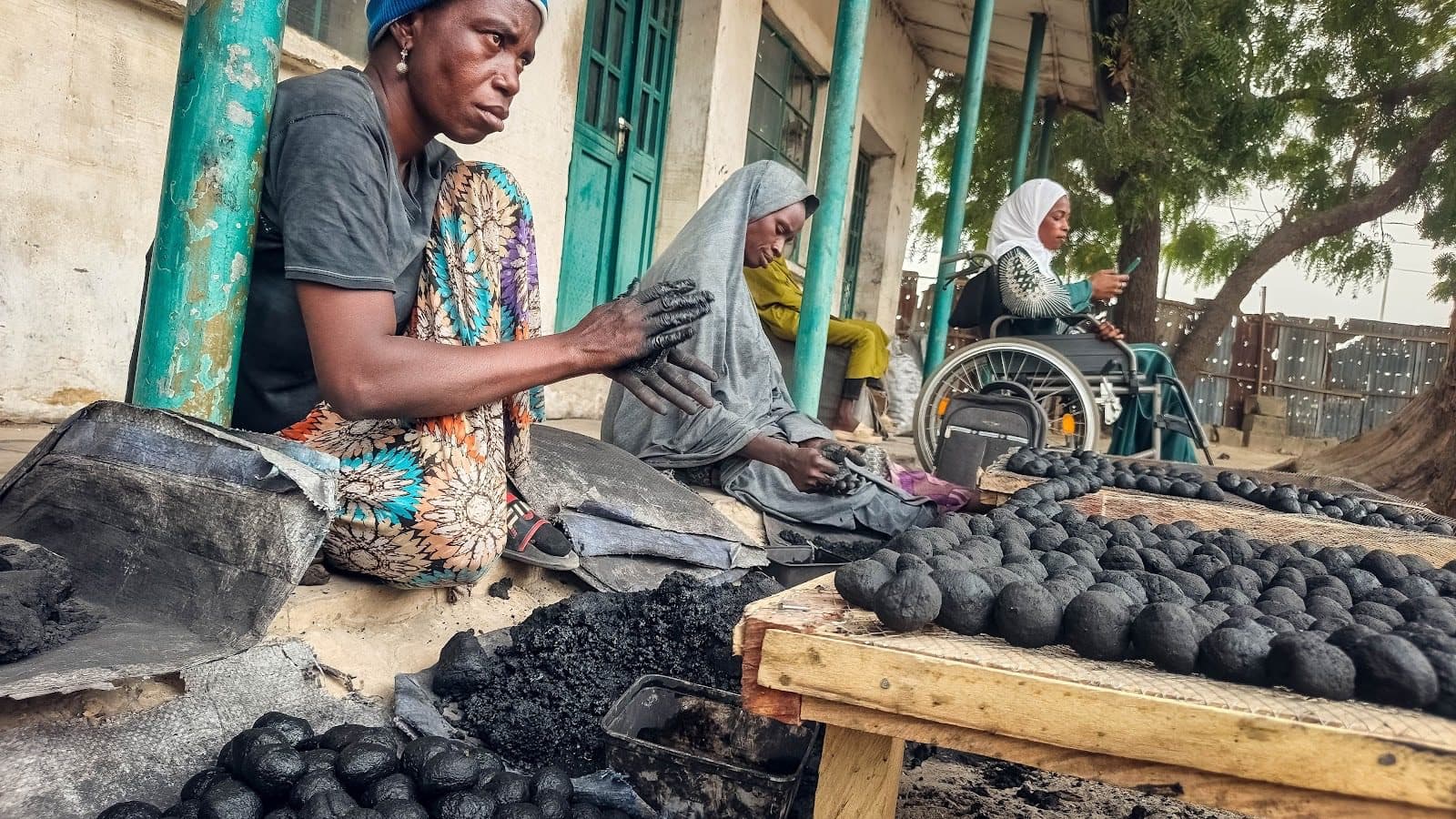
After the Maiduguri flood washed away cooking fuel, a young innovator found a cleaner alternative. In Maiduguri, northeastern Nigeria, the young woman began producing biochar briquettes, a solution that is now helping others, including people with disabilities, cook safely while reducing reliance on forest resources.
Listen to this story

27 Apr 2026
September 2024 came with water. It moved through Maiduguri, in Nigeria’s North East, in fast, stubborn currents, destroying homes and property, and displacing thousands.
In many affected areas, like London Ciki, where Khadija Usman lives, it washed away firewood and charcoal, a critical source of cooking fuel for many homes. She was home alone one afternoon when that absence settled into something practical. Khadija wanted to cook, but there was nothing to burn.
“The water destroyed almost everything,” she said. “It became difficult to find firewood and charcoal.” Moving out to search for fuel was not easy, as she uses a wheelchair. And like for most people here, the expectation did not shift with the flood. Meals still had to be prepared.
So, Khadija turned her attention to what was left behind: charcoal residue, bits of waste, and a technique she had once seen. “I decided to come up with a solution,” she stated. She gathered what she could, shaping it into compact pieces that might hold a flame. When it finally caught, it was small, steady, and enough.
Not yet a long-term solution, but a way through that day.
In the weeks that followed, that small flame evolved into something more substantial. The turning point came when she visited a friend, Zara Tijjani, who also has a disability and was cooking over firewood. The smoke stung Zara’s eyes as she struggled to keep the fire alive. Inspired, Khadija went home, made briquettes, and then returned to show her friend how to make them as well.
From there, the knowledge began to spread among women, particularly those for whom gathering firewood posed significant risks or challenges. What Khadija started in the aftermath of the flood has since contributed to a broader shift in Borno, where biochar is gradually being adopted. However, her focus remains shaped by those around her: women navigating limited mobility, daily cooking demands, the risks of gathering firewood in terror-controlled territories, and a changing climate.
When cooking depends on the forest
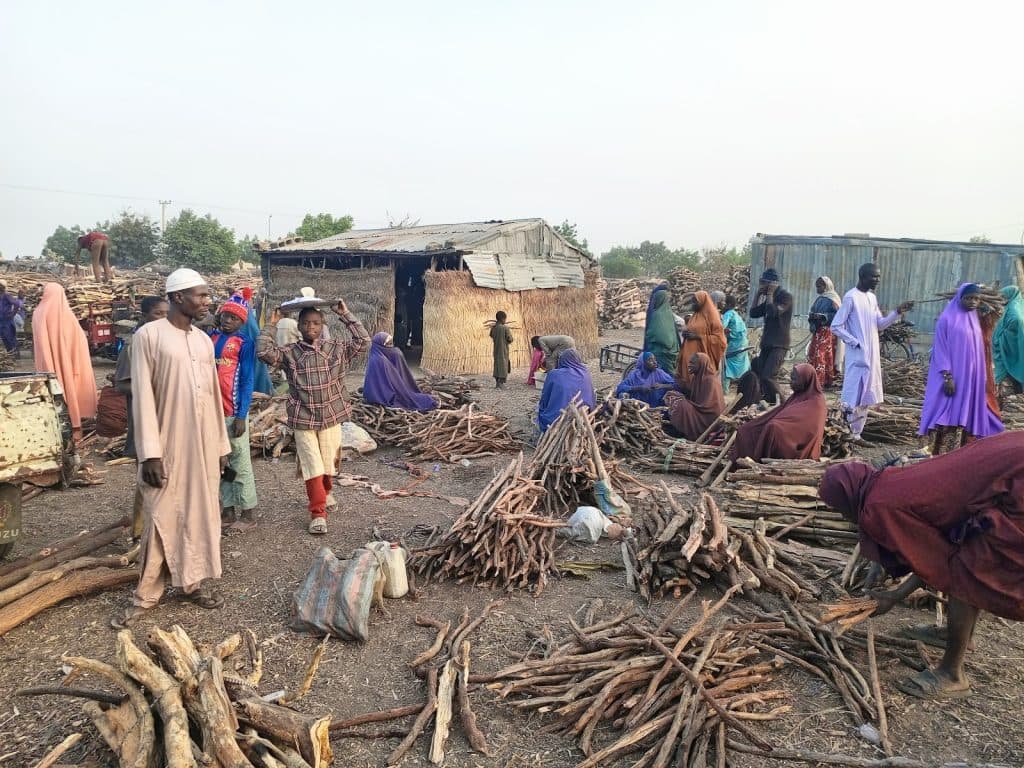
Across Maiduguri and much of northeastern Nigeria, cooking still depends heavily on firewood and charcoal. For many households, especially in low-income and displaced communities, these remain the most accessible and affordable sources of energy.
National data reflects this dependence. The 2024 Nigeria Residential Energy Demand-Side Survey by the National Bureau of Statistics (NBS) shows that about 67 per cent of households rely on firewood, 22 per cent on charcoal, and only 19.4 per cent on liquefied petroleum gas (LPG). In the North East, the pattern is even more pronounced.
The report shows that wood use rises to 93.4 per cent in the region, the highest in the country, while LPG remains limited, particularly outside urban centres. Electricity and kerosene play only marginal roles in cooking.
In Borno State, reliance is near-total. A 2019 joint assessment by the Food and Agriculture Organisation (FAO), the United Nations High Commissioner for Refugees (UNHCR), and the World Food Programme (WFP) found that 98.7 per cent of households rely on firewood and charcoal, with only a small fraction using cleaner fuels. Even access to these traditional sources is constrained. Many households purchase firewood rather than gather it, reflecting both scarcity and restrictions on movement in conflict-affected areas. This aligns with humanitarian reporting that “firewood is the primary source of cooking energy” in Borno.
This dependence carries layered costs. Trees are cut steadily to meet demand, placing pressure on already fragile ecosystems. For women in these communities, who are primarily responsible for cooking, the burden extends beyond the home. Finding fuel often means travelling to the outskirts of town or into nearby bush areas, where risks of harassment and violence persist.
The September 2024 flooding deepened these pressures. Supply chains were disrupted, stored firewood was washed away, and charcoal became scarce and more expensive. In homes already navigating scarcity, cooking became uncertain.
Beyond immediate access, the environmental toll is significant. The NBS 2024 General Household Survey shows that Nigeria consumes an estimated 30 billion kilogrammes of fuelwood annually, driving deforestation. In regions like Borno, where vegetation is already sparse, this accelerates land degradation and desertification, reinforcing a cycle of environmental stress and energy poverty.
Health and safety risks are also closely tied to this dependence. Smoke from firewood and charcoal contributes to indoor air pollution, which is linked to respiratory illnesses, particularly among women and children. In the North East, these risks extend further. Women who gather firewood often face threats of harassment, violence, and abduction, making the simple act of cooking fuel collection a dangerous task.
Within this system, energy, environment, and security are tightly bound. It is this reality that shapes both the problem Khadija is responding to and the limits of the solutions emerging around it.
Improvising in the aftermath of the flood
Khadija’s first attempts were small, almost tentative, as though she was testing not just the materials in her hands but the possibility that something useful could still be made from what the flood had left behind.
Without equipment or formal training, she worked with what was available: charcoal residue, scraps of household waste, fragments others might have discarded without a second thought. She burned them, pressed them, broke them apart again when they failed — testing what held, what crumbled, and what caught fire and stayed lit. The process was slow.
There was no machine then. No structured method. Only a need that could not be postponed.
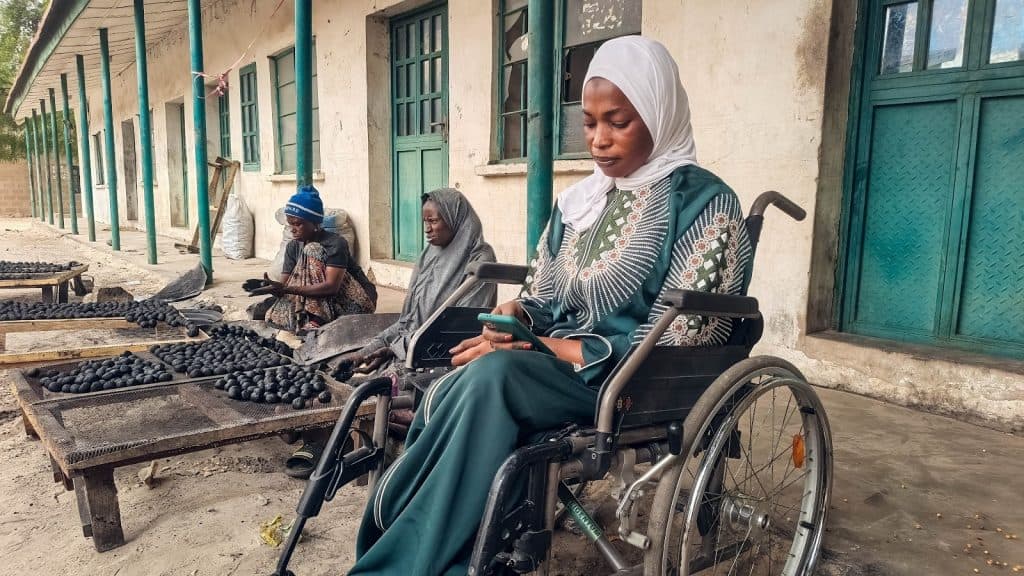
The knowledge has since gone from one woman to another: Women with limited mobility. Women navigating spaces where stepping out to collect fuel is not always safe.
Within the disability community, the effort did not go unnoticed.
“We rallied behind her,” said Hassana Mohammed Bunu, women’s leader of the Association of Persons with Physical Disabilities in Borno State.
“I have stopped using charcoal and firewood ever since I began using her briquettes,” Zara said. Although Zara has been taught how to make them, she prefers to buy them from Khadija. “She uses a machine to make them. And they are more compressed than handmade,” she added. “It is smokeless, and they burn longer.”
Climate shocks uniquely affect persons with disabilities in Nigeria and other parts of the world. These disasters deepen already existing barriers. Mobility becomes more difficult. Access to resources narrows. In conflict-affected settings like Borno and much of the North East, those constraints are often sharper, less visible, and rarely addressed directly.
In energy access, the gaps are even more pronounced. Clean cooking programmes, where they exist, are not always designed with accessibility in mind. Physical barriers, cost, and social exclusion often limit participation. Nigeria’s legal framework, including the Discrimination Against Persons with Disabilities (Prohibition) Act, exists, but its translation into everyday interventions, particularly in climate and energy responses, remains uneven.
Scaling a local idea
To sustain what she had started, Khadija began to think bigger.
She raised her first capital in small, deliberate ways, selling caps and setting aside the earnings. With that, she bought sawdust, Arabic gum, and starch, enough to stabilise her production and move from improvisation to something more consistent. What began at home remained modest but steady, supported by family, friends, and members of the disability community who saw the value in what she was building.
In 2025, her work drew the attention of the United Nations Development Programme (UNDP). After three months of training at the Abdul Samad Rabiu Centre for Innovation and Entrepreneurship at the University of Maiduguri, she received a grant that marked a turning point. With it, she purchased a briquette-making machine.
With the machine, she could produce up to 100 bags of briquettes per day, each sold at ₦6,500.
To deepen her technical knowledge, she partnered with Faaby Global Services, a Maiduguri-based environmental organisation, where she now works closely with a production team. There, she contributes not only as a learner but as a practitioner.
“She shares her ideas in production and on tackling some challenges,” said Heriju Samuel John, an assistant manager at the organisation. “She is also a native of this town, so she helps us in sourcing raw materials.”
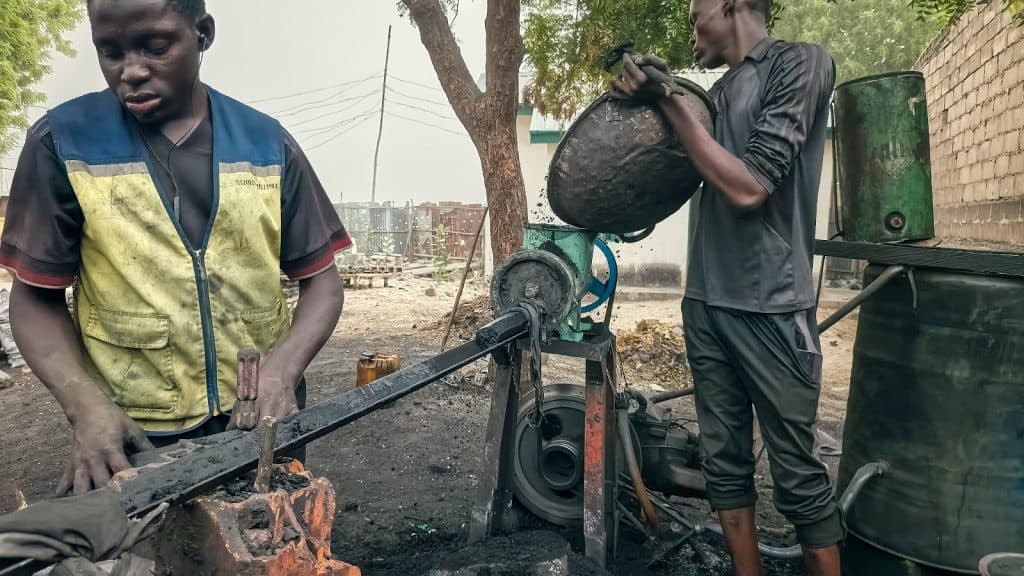
Her machine is now one of three in the facility, a small but significant marker of how far the work has moved from its starting point.
Yet, the broader briquette ecosystem in the region remains uneven. Programmes led by organisations such as FAO have introduced briquettes and fuel-efficient stoves to thousands of households across Borno, Adamawa, and Yobe, often linking energy access to protection concerns.
But outside these interventions, the market is still thin. Production is limited. Adoption is inconsistent. Many initiatives remain tied to donor funding rather than sustained commercial demand.
In that landscape, Khadija’s work sits somewhere in between, not fully independent of institutional support, but not entirely defined by it either.
Can briquettes change the equation?
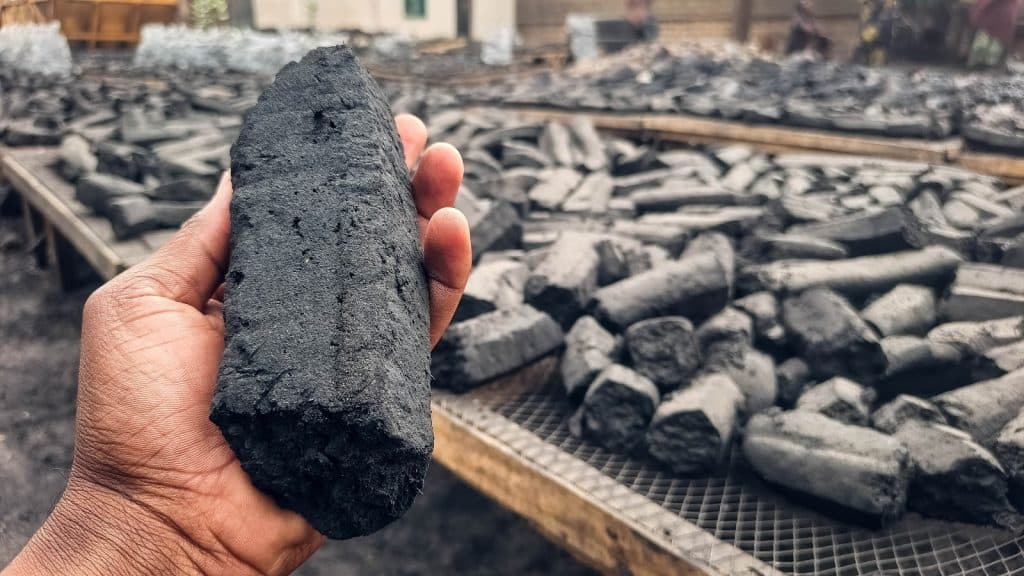
The briquettes Khadija produces are made largely from what others leave behind. Charcoal residue. Sawdust. Rice husks. Groundnut stalks. Agricultural waste is sourced from farmers and traders who would otherwise discard it. Coconut shells, when available, add density, though they are harder to find in places like Maiduguri and are more expensive.
The materials are burned in a low-oxygen environment, then converted into biochar, and finally ground into fine particles and bound together using eco-friendly binders such as gum arabic or starch. What emerges is a compact fuel that holds its shape and, according to Khadija, burns longer and with less smoke.
“We are recycling,” she said, describing a system that pulls from multiple points in the local economy.
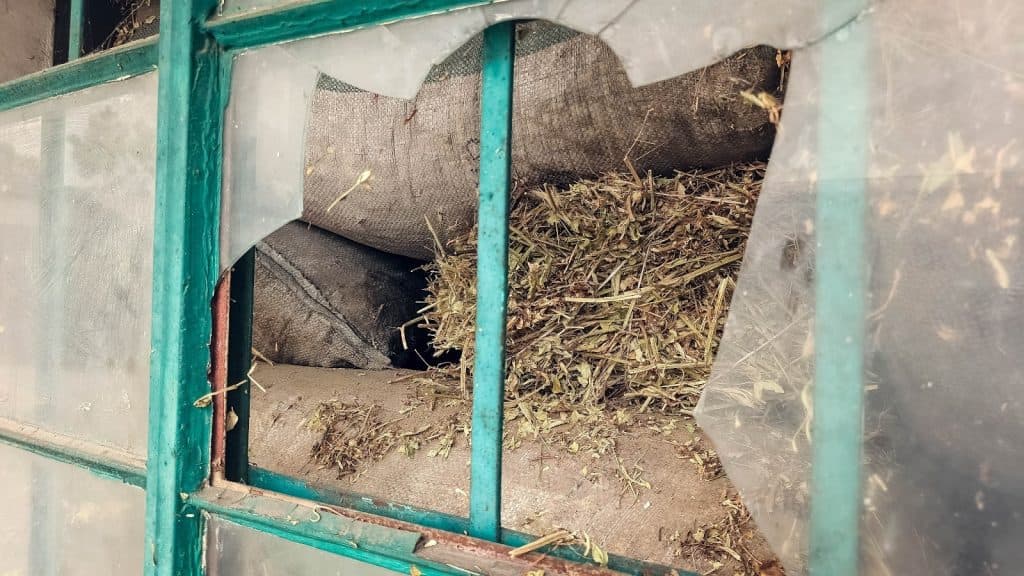
Farmers sell their waste. They also source leftover charcoal and firewood particles from traders. Additionally, waste management actors like the Borno State Environmental Protection Agency (BOSEPA) deliver degradable materials.
To manage fluctuations, especially during the rainy season when materials become scarce, Khadija stores raw inputs in bulk in a rented facility in the Abbaganaram area of Maiduguri.
Her briquettes now move through different layers of the market; restaurants, bakeries, and roadside food vendors buy in bulk. Households purchase for daily use. Some consignments travel beyond Maiduguri, to nearby towns like Bama, and even across borders into Cameroon, with up to two trucks dispatched weekly.
For women, particularly those with disabilities, the impact is measured less in scale than in use. Khadija sells at discounted rates within the community and has trained more than 20 women to produce their own briquettes. “She taught some of our members,” Hassana said.
In some households, Khadija told HumAngle, the shift is already complete. Firewood has been replaced. “This gives me joy,” she said, adding that the transition could extend further. “If people fully understand the benefits, they would stop using charcoal and firewood.”
But the shift is not without constraints.
Raw materials fluctuate. Storage remains limited. Transport is still a challenge. And beyond logistics, there are social barriers that do not disappear with production. “People say I am doing what able-bodied people should be doing,” she said. “Being a woman makes it even worse.”
Still, she continues to plan, looking toward a larger production facility that could employ more women and stabilise supply.
Support Our Journalism
There are millions of ordinary people affected by conflict in Africa whose stories are missing in the mainstream media. HumAngle is determined to tell those challenging and under-reported stories, hoping that the people impacted by these conflicts will find the safety and security they deserve.
To ensure that we continue to provide public service coverage, we have a small favour to ask you. We want you to be part of our journalistic endeavour by contributing a token to us.
Your donation will further promote a robust, free, and independent media.
Comments
0 comments
No comments yet.
Sign in to join the discussion.
Of course, we want our exclusive stories to reach as many people as possible and would appreciate it if you republish them. We only ask that you properly attribute to HumAngle, generally including the author's name, a link to the publication and a line of acknowledgement.