Should Journalists Financially Support Their Sources? HumAngle X Spaces Explores the Debate
Several reporters and editors from various media organisations joined an X Spaces session hosted by HumAngle on Saturday, May 9, to discuss the ethical dilemma that conflict reporters in Nigeria and across Africa face when deciding whether to provide financial support to their vulnerable sources.

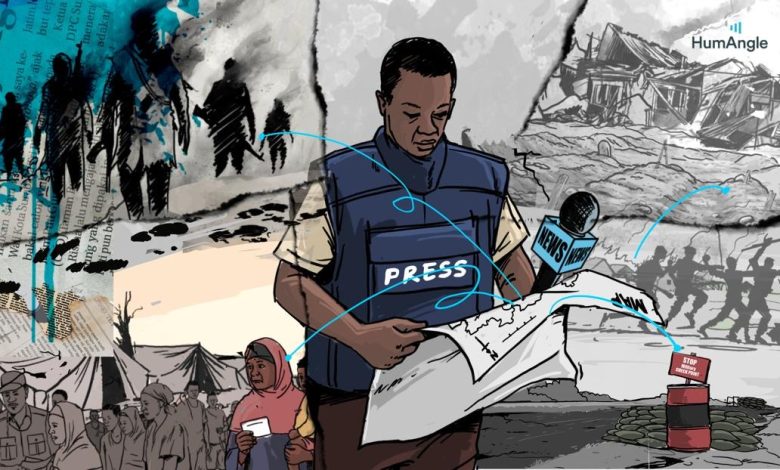
HumAngle Media, a Pan-African publication covering conflict, humanitarian, and development issues, held an X Spaces on Saturday, May 9, to discuss ethical dilemmas surrounding financial assistance to vulnerable sources, especially for journalists reporting from conflict zones and areas affected by humanitarian crises.
The conversation was inspired by a recent HumAngle analysis examining the issue. Ahmad Salkida, HumAngle’s Editor-in-Chief and a veteran journalist who authored the article, argued that “in theory, [journalism] is expected to observe some emotional distance from its sources and the stories they tell. However, that model is inoperable in conflict-affected regions of northern Nigeria and the Sahel.”
The article sparked widespread debate, particularly among journalists and media educators. While some argued that reporters should remain strictly bound by professional ethics, others contended that it is difficult not to extend a helping hand, especially when the source is struggling with basic needs like food and water.
Hauwa Shaffii Nuhu, HumAngle’s Managing Editor, who moderated the X Spaces, opened the conversation with the story of Kevin Carter, a South African journalist who died by suicide three and a half months after being awarded the Pulitzer Prize for feature photography. The award-winning image showed a visibly malnourished child in Sudan who collapsed to the ground while a vulture lurked in the background.
In his suicide note, Kevin said, “I am haunted by the vivid memories … of starving or wounded children”. Hauwa noted that Kevin’s experience shows that the conversation about offering support to vulnerable sources in conflict-affected or humanitarian crisis-hit regions has serious emotional and ethical real-world consequences.
The conversation was enriched with insights from other speakers, including Lami Sadiq, a data and investigative journalist; Daniel Ojukwu, an investigative journalist with Foundation for Investigative Journalism; and Ibrahim Adeyemi, HumAngle’s Investigations Editor.
The speakers shared instances in which they felt compelled to offer bags of water, food, and sometimes money to people who were evidently struggling. They agreed that being a journalist does not excuse one from basic human decency and empathy.
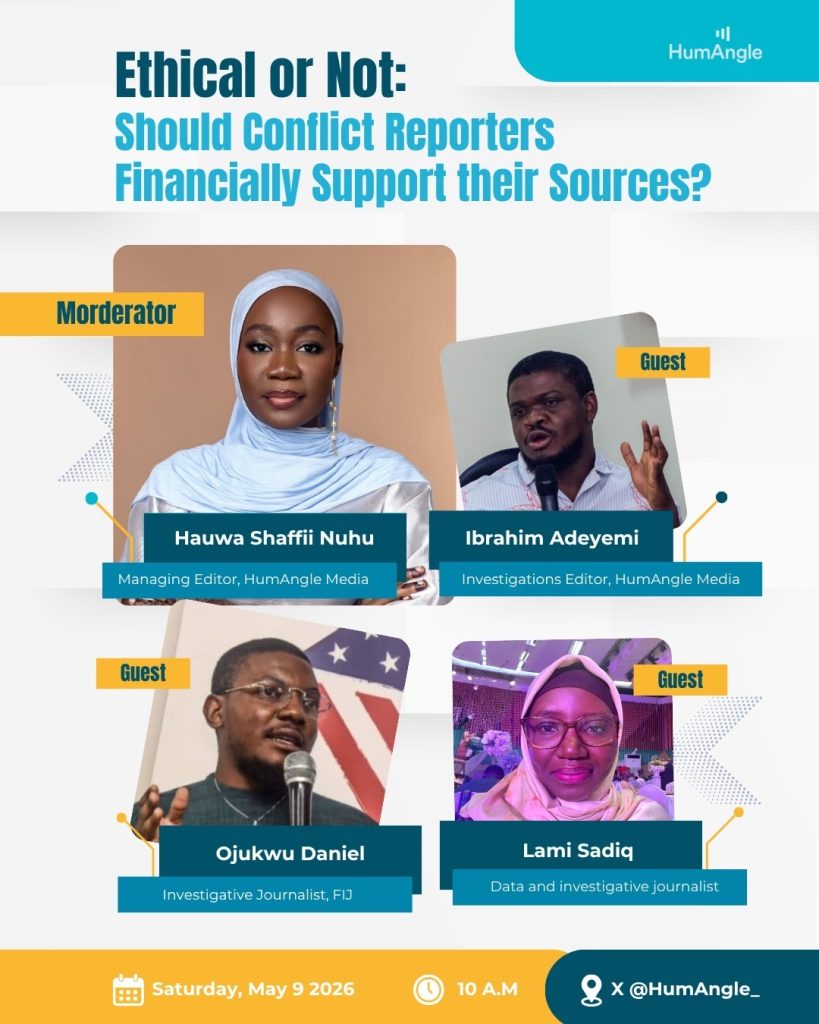
Lami stressed that it is important to distinguish between support offered out of humanity and responsibilities carried out in a professional journalistic capacity. She emphasised that when the source outrightly demands payment at the start of an interview, journalists should not only not pay the source but also seek other sources to replace them, to maintain credibility.
“It makes everything transactional, and that affects the credibility of the journalists and the report in question,” she said.
While it is sometimes difficult to deal with sources who are used to getting humanitarian aid in exchange for information, Lami said journalists must stand their ground and use other sources, especially if the issues to be reported are not exclusive.
Hauwa emphasised that helping vulnerable sources to understand that telling their story is in their best interest will help address issues such as financial compensation, especially when dealing with sources who can be very demanding.
While speaking on the risks of financially supporting sources, Daniel urged journalists to be mindful of directly supporting sources, as doing so might incriminate them if the sources are later engaged or are linked to criminal networks.
“If a source you once offered money to is later linked with criminal activity, it could look really bad on you. In Nigeria, you might even be dubbed a terrorist financier when all you are doing is your job as a journalist. We have seen this happen many times in Nigeria,” he said.
Daniel added, “When I interact with sources or with fixers, I have to profile everyone I’m interacting with. Sometimes, I have to withdraw from sources or fixers because of the manner in which they approach matters.”
While paying for information remains unethical in principle, there are distinct instances in which journalists say they must step in to provide financial aid.
Drawing on his field experience, Ibrahim recounted a time when he had to assist a source in taking her child to the hospital due to a medical emergency. He paid for the medical bills, and when the doctor said the child might have died if they had shown up an hour later, Ibrahim said he was glad he had helped.
“Acting first as a human is at the core of humanitarian journalism,” Ibrahim stated.
However, he stressed that moments requiring urgent humanitarian intervention should not blur ethical boundaries in reporting. Ibrahim further called on editors to educate reporters on the challenges they might face when dealing with sources who require monetary compensation for information.
“They [reporters] should always look for ethical alternatives rather than compromising their standards just to get the stories,” he said.
The speakers also urged journalists to be mindful when dealing with displaced persons or vulnerable communities, as they may exaggerate their situation to generate sympathy, believing it might lead to aid. For journalists, this makes verification especially important, even in highly emotional reporting environments.
That same need to maintain professional boundaries also came up in discussions about interviewing experts. Daniel, when asked whether experts should be paid for granting interviews, stated: “Never do so.” Instead, he stressed that building rapport with experts before they are needed helps address such issues.
HumAngle Media held a discussion on the ethical challenges journalists face when considering financial assistance to sources in conflict zones. Inspired by an article from Ahmad Salkida, the conversation highlighted contrasting views from journalists and media educators on maintaining professional ethics versus offering help when sources struggle with basic necessities. The discussion underscored the emotional and ethical implications such dilemmas pose, referencing historical instances like Kevin Carter's Pulitzer-winning yet haunting experience.
Speakers emphasized the importance of drawing a line between humanitarian gestures and journalistic integrity. While reporting, journalists sometimes intervene out of humanity, as shared by Ibrahim Adeyemi, who recounted assisting a source with medical bills. However, reliance on payments for information remains unethical, as stressed by speakers like Lami Sadiq, who advised against paying sources to preserve credibility. The event concluded with a call for journalists to verify information from vulnerable communities and avoid monetary transactions with experts to maintain professional boundaries.
Support Our Journalism
There are millions of ordinary people affected by conflict in Africa whose stories are missing in the mainstream media. HumAngle is determined to tell those challenging and under-reported stories, hoping that the people impacted by these conflicts will find the safety and security they deserve.
To ensure that we continue to provide public service coverage, we have a small favour to ask you. We want you to be part of our journalistic endeavour by contributing a token to us.
Your donation will further promote a robust, free, and independent media.
Donate HereStay Closer To The Stories That Matter