Terror Attacks Intensify in Southern Taraba Communities
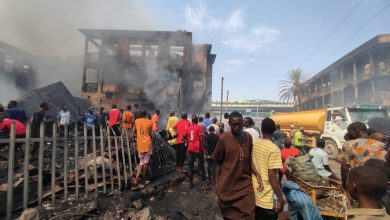
Communities in southern Taraba, northeastern Nigeria, are facing escalating terror attacks, mass displacement, and food shortages as violence continues unabated.

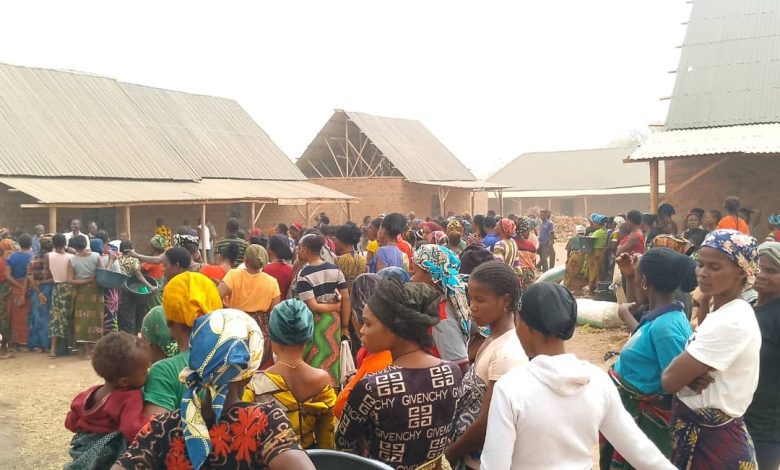
Fifty-five-year-old Tabitha Iorchon used to work as a nanny at a rural primary school in her community, Demevaa, in Chanchanji District of Takum Local Government Area, in Taraba State, northeastern Nigeria. The job provided her with a steady income which she used to support her children and grandchildren who lived with her. She supplemented her earnings with farming.
Tabitha loved her job and was very fond of the children she cared for.
But that life has been snatched from her.
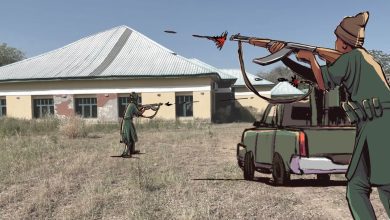
In September 2025, terrorists invaded Demevaa and surrounding communities in Chanchanji District. “They killed pregnant women and ripped their babies out of their bellies. They slaughtered men and cut off the hands of many people,” she recounted.
Tabitha is among those who escaped that night of terror. She, alongside other residents, fled to reach Chanchanji town, where they are now living in displacement. Her parents, who lived in a different neighbourhood and were weak and vulnerable, were left behind, but fortunately, they survived the attacks.
The genesis of violence
This is not the first time communities in southern Taraba have come under attack. However, locals say that early September last year was when the wave of violence reached Chanchanji District. It began with the discovery of two farmers dead on their farms. Before residents could make sense of the incident, more farmers were attacked and killed. The weeks that followed saw communities like Demevaa and Amadu raided.
Over the years, Taraba communities, such as those within Takum bordering Benue, have experienced attacks often described as farmers-herders clashes or carried out by local militia gangs. One of the most notorious figures linked to violence in the region was Terwase Akwaza, alias Gana, who, before his death, claimed that terrorists disguised as herders contacted him to carry out attacks in “about three states they want to [capture], being Plateau, Taraba, Benue…”.
Since the Nigerian Army killed Gana in September 2020, his once-cohesive network has fractured into rival factions, with groups led by criminals such as Fullfire and Chen now operating independently and often violently in border areas.
Residents in Chanchanji told HumAngle that herders often come to graze in the area during the dry season, but clashes have never occurred. HumAngle contacted Lashen James, the Taraba State Police Command spokesperson, but he did not respond.
Life in displacement
In the wake of the attacks, several displacement camps were established by non-government and faith-based organisations in Chanchanji town, an urban area in Takum to accommodate people fleeing the violence in Demevaa, Amadu, Tse-Bawa, Tse-Tseve, and other affected communities within the district.
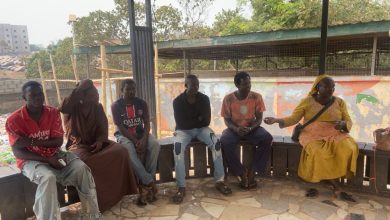
Tabitha and several other displaced persons sought refuge at one of the camps. There, they rely on humanitarian organisations for survival. Although the food supplies are inconsistent, she said they felt somewhat safer there.
“Old people and children were dying because there was insufficient food,” she noted. “Our yams, guinea corn, millet and cassava were all destroyed and burnt by the terrorists who attacked our people.”
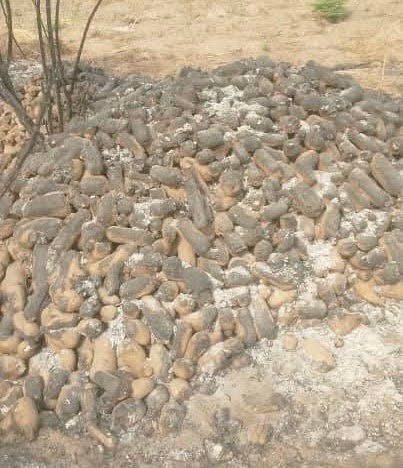
Tabitha said that even the tents in the camp are not sufficient and the available ones are always overcrowded. “We just spread our wrappers on the floor to sleep,” she said.
Despite the difficulties in the camp, the displaced persons persevered, hoping peace would eventually be restored. However, another wave of terror erupted on February 8, when terrorists attacked Chanchanji district and raided several villages. Locals said the terrorists returned the next day and unleashed more havoc.
No terror group has claimed responsibility for the attacks.
Avangwa Emmanuel, a resident of Tse-Bawa, told HumAngle that his father and three uncles were killed during the February incident. He noted that many others were killed in their homes that day. “They [terrorists] were heavily armed,” he added.
Avangwa and others from his village are currently taking shelter at a secondary school that has been converted into a temporary camp.
“No water, no food, nothing. Everybody is just struggling. Our major problem here is food. Also, what we need is peace. If there’s anything the government can do to restore peace so that we can return to our homes and continue our work, that is all,” he said.
Amadu, another community in Chanchanji District, was among the hardest hit. Terkuma Moses, the community leader, said scores were killed, and locals have fled to displacement camps. HumAngle could not independently confirm the figures as the police authorities did not respond to enquiries.
“The attackers come here daily. We’ve been living in perpetual fear. There have been many rape occurrences during these attacks,” Abraham Nyingi, a resident of Amadu, told HumAngle. He noted that no government official had been dispatched to assess the displaced persons’ situation. “We are at the mercy of humanitarian organisations. If the government really wants to help us, we would be very grateful,” he said.
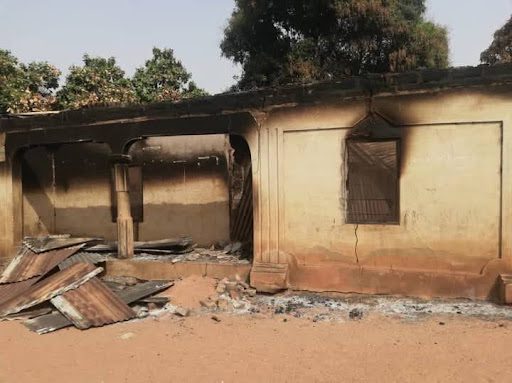
“The environmental conditions are very harsh. Our children can’t go to school. We lack medical care,” he lamented.
In recent months, the worsening hunger has compelled some displaced persons to return to their communities. Tabitha said that none of those who left made it back. “They got killed,” she said. “Their bodies were found in the bushes.”
Life at a standstill
The school where Tabitha once worked has remained closed since the crisis began. She has lost not only her livelihood, but also her sense of independence, as she cannot return home or secure alternative work. She continues to fear for her elderly parents, who remain in the village. She sometimes reaches them by phone, and they tell her they are also experiencing food shortages, as their barns were burnt during the attacks.
Tabitha described the displacement as the worst experience of her lifetime.
“We lack basic things like food and we buy water since the camp doesn’t have a water supply. The harmattan season is still here, and many of us are still sleeping outside because all the rooms are overcrowded,” Tabitha said.
With the new arrivals following the February 8 attacks, she said the struggle for survival has intensified.
“I can’t further my education now. I can’t do any business. I’m just stuck here,” said Veronica Iorchan, a 22-year-old resident of Demevaa.
When the attacks began in September, she was in her final year at the Taraba State Polytechnic in Suntai. By the time she completed her studies in October, instead of returning home to a joyous celebration, Veronica was informed that her community was deserted. The rest of her family had moved to the Abaya IDP camp.
“I came straight to the camp from school,” she said, adding that she lost two of her uncles in the attack.
While the camp provides them with accommodation and food, Veronica said they must fend for themselves when it comes to obtaining hygiene products and toiletries, such as sanitary pads. Even though she is determined to seek employment in the host community, she feels unsafe whenever she leaves the camp. She dreams of a time when she can return home and make plans for her future.
A cry for peace
Tabitha looks forward to a time when she can return to her community, re-unite with her parents, resume her job as a nanny, and supplement her income with farming.
“That will only happen if there is peace,” she said.
While Avangwa is still grappling with the loss of his father and three uncles, he says the hardship at the makeshift camp intensifies with each passing day. He noted that Tse-Bawa is an agrarian community, and the crisis, which has persisted for about five months, has severely disrupted farming activities, as locals can no longer access their farms. Several farmlands and barns were also set ablaze in the attacks.
“So if we can have peace, then we can go back to our places and settle. All we need is just peace and nothing more,” he said.
Abraham calls on the government to urgently look into the crisis. “Our people do not really need much from the government,” he said. “Just secure us.”
Residents say the government’s lack of concern for their plight has been deeply shattering. Recently, religious leaders affiliated with the Catholic Church led a peaceful protest in Jalingo, the state capital, calling on the government to extend security interventions to the southern Taraba area, which includes Takum and Donga Local Government Areas.
“As a matter of urgency, adequate security personnel should be mobilised and deployed to the hinterlands, where this carnage is taking place unabated,” James Yaro, a priest and Vicar Pastoral of Taraba’s Catholic Diocese of Wukari, told journalists.
“The government at all levels must be deliberate in ensuring security guarantees and bringing enablers and perpetrators of these dastardly acts, or heinous crimes against humanity, to justice through their immediate arrest and prosecution, irrespective of their ethnic, political, and religious affiliations.” He added that, “IDPs require immediate intervention by the government.”
HumAngle wrote to the Taraba State Ministry of Special Duties and Humanitarian Affairs for comments but received no response at the time of filing this report.
Tabitha Iorchon, a former nanny in Taraba State, Nigeria, lost her job and livelihood after terrorists invaded her community, displacing many residents who now live in camps reliant on inconsistent humanitarian aid. The violence in Chanchanji District, which intensified in September 2025, follows a history of farmer-herder clashes and militia attacks, exacerbated by the death of terror leader Terwase Akwaza. Displacement camps like those where Tabitha and others reside struggle with overcrowding, insufficient food, and lack of basic provisions.
Residents lament the severe disruption to their lives, including the closure of schools and burnt farmlands, while government response remains lacking. Individuals like Tabitha and Veronica Iorchan express hope for peace that would allow them to return to their communities. Local leaders and residents call for government intervention and security to stabilize the region and enable displaced persons to resume their normal lives.
Support Our Journalism
There are millions of ordinary people affected by conflict in Africa whose stories are missing in the mainstream media. HumAngle is determined to tell those challenging and under-reported stories, hoping that the people impacted by these conflicts will find the safety and security they deserve.
To ensure that we continue to provide public service coverage, we have a small favour to ask you. We want you to be part of our journalistic endeavour by contributing a token to us.
Your donation will further promote a robust, free, and independent media.
Donate HereStay Closer To The Stories That Matter