Recent Terror Attacks in Borno Have Targeted Military Bases and Weapons
In recent months, a wave of attacks on military bases, convoys, and resettled communities across Borno State has allowed terrorists to capture weapons and strain security positions in rural areas, pushing forces closer to Maiduguri, the state capital.

“If they rebuild and you return, we will kill you.”
That was the threat Abubakar Dalwa received before fleeing to Maiduguri, Borno State’s capital in northeastern Nigeria, on the night of March 8. Abubakar was sitting in the compound of his home in Dalwa, a recently resettled community in Konduga, a few kilometres from Maiduguri, with his children and wife. The children slept curled together on a plastic mat while his wife tended a pot over the fire. It was during Ramadan, the Islamic month of fasting, and she was preparing the meal they would eat before dawn.
Then the gunfire came in rapid succession around 10:20 p.m. The children woke up as Abubakar and his wife rushed them inside the room. Moments later, someone began knocking impatiently on the door.
“Open this door,” the person shouted. Abubakar’s wife clung tightly to him. He stepped outside and opened the door. About ten armed men stood in the darkness. Most wore military camouflage. Others were dressed in black uniforms. Belts of ammunition hung across their shoulders, some trailing toward the ground.
“They told me, ‘Get out and leave for Yerwa [Maiduguri],’” Abubakar recalled. The terrorists said they had come to burn the buildings. “They told me the buildings belonged to the government,” he added. “They said their fight was with the government, not us.”
Abubakar did not argue. By then, it was nearly midnight. He gathered his wife and children and fled into the darkness. “We left without taking anything,” he said.
Behind them, the town burned, and three people were killed: a man, a woman, and her baby. The man’s daughter survived but was shot in the leg. She was later taken to the Maimalari Cantonment Hospital in Maiduguri.
By 2 a.m., Abubakar and his family had reached the city. Soldiers received them at a military checkpoint. They were displaced again.
The assault on Dalwa was not an isolated raid. On the same night, another attack was unfolding hundreds of kilometres away in Kukawa. A member of the Civilian Joint Task Force (CJTF) stationed there said the terrorists attacked around midnight.
“They killed our men, including our Commanding Officer, carted away weapons and vehicles, burnt one building,” he said.
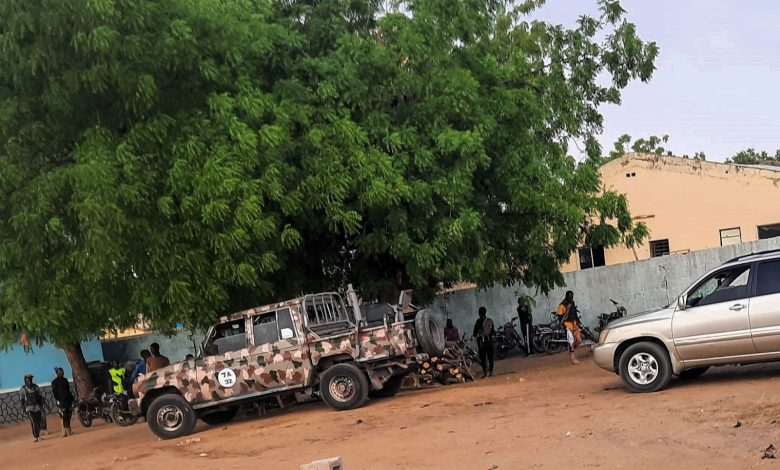
The seizure of weapons and vehicles during these attacks has become a recurring feature of recent raids across Borno, weakening security formations in rural areas and forcing some forces to consolidate around larger bases closer to Maiduguri.
How the attacks unfolded
In Dalwa, the attack lasted about an hour. A frontline member of the NFSS said the terrorists entered the town after overpowering the security units stationed there. “We knew they would overpower us from the first sounds of their gunfire,” he said.
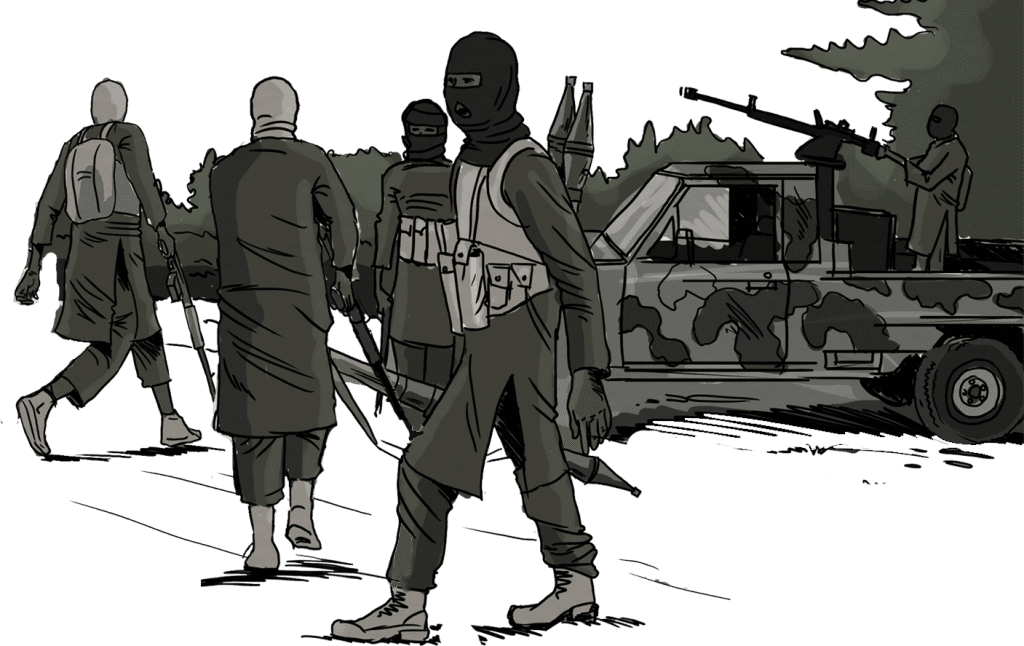
Many of the terrorists carried heavy weapons, including PKT machine guns capable of sustaining rapid fire; others carried rocket-propelled grenades (RPGs).
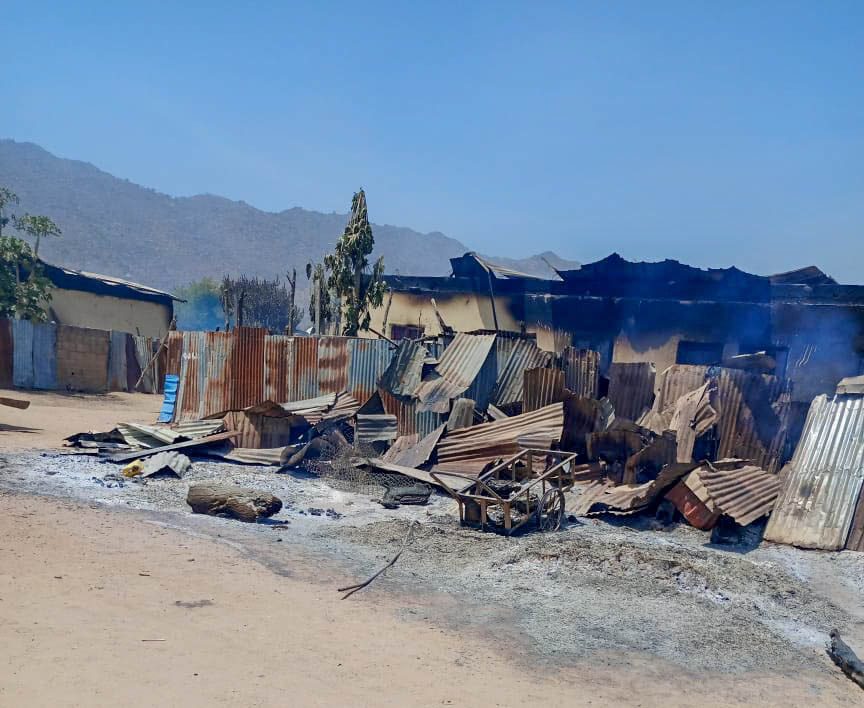
The terrorists strategically positioned themselves in Dalwa. “They went from house to house,” the NFSS member said. “They ordered residents to leave the town.” Then they began setting buildings on fire.
Security officers attempted to resist the attack. They sought reinforcements from Maiduguri, but the vehicles sent to support them ran into buried landmines. Two soldiers were killed in the explosions. “And so we retreated,” the NFSS member said.
According to the volunteer security operative, the attackers approached Dalwa in coordinated groups. One group blocked the road leading to Damboa. Another positioned itself at the entrance of the town near a cemetery on the outskirts. A third group advanced directly into the town to engage the security forces.
“They came through the eastern side,” he said. “That used to be the original Dalwa before the first displacement.”
The security volunteers estimated the number of attackers to be between 80 and 100. Most of them arrived on foot, while others rode on motorcycles, they said.
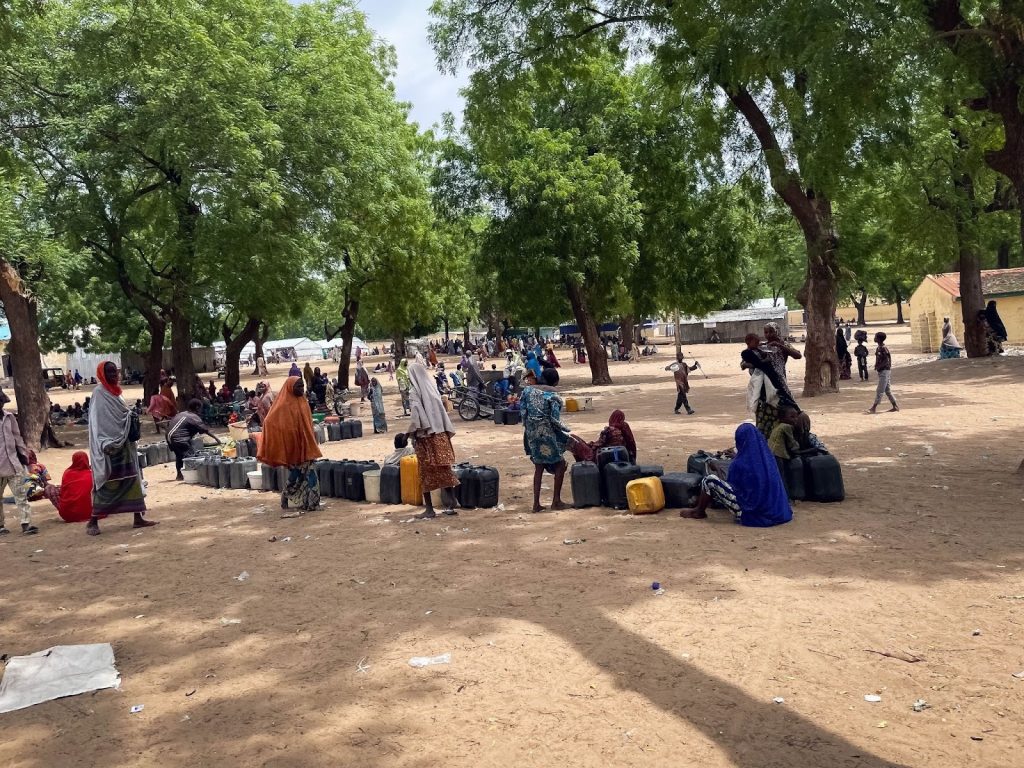
During the March 8 attack, only about 20 soldiers were stationed in the town. Volunteer forces, including members of the NFSS, CJTF, and repentant terrorists known locally as “the hybrid”, numbered fewer than 100. Five days before the raid, surveillance drones had spotted terrorists gathering in nearby areas. “We anticipated the attack,” the NFSS member said.
But anticipation did not stop it. “The attacks keep increasing,” he added. “More than the previous year.”
In Kukawa, the insurgents used similar tactics. A CJTF member stationed there said the attackers arrived in three coordinated groups. One advanced toward the military base. Another waited on the outskirts of the town. A third group positioned itself along the road leading to Cross Kauwa to ambush reinforcements. He claimed that more than 200 fighters participated in the assault.
“They came mostly on foot,” he said. “They were all wearing military camouflage.”
The fighting lasted about three hours. After the terrorists withdrew, the commanding officer of the base, Umar Farouq, pursued them with a convoy, which was later ambushed, and most of his men were killed.
A pattern of attacks on rural security
The recent attacks on Dalwa and Kukawa are part of a broader pattern. Across Borno State, terrorists have increasingly targeted military bases, convoys, and resettled communities, often ambushing reinforcements and seizing weapons and vehicles during the attacks. Security volunteers say these raids are gradually weakening smaller rural security formations and concentrating forces around larger garrison towns closer to Maiduguri, leaving many outlying communities increasingly exposed.
The incidents suggest a deliberate campaign by terrorist groups, particularly the Islamic State West Africa Province (ISWAP). Their strategy appears to involve weakening security forces, isolating rural communities, and driving civilians out of resettled towns. These attacks are occurring against the backdrop of a significant government policy.
Over the past years, the Borno State government has implemented a resettlement programme to close camps for internally displaced persons and return families to their hometowns.
The resettlement schemes started in 2020 when the state government began rebuilding homes, schools, clinics, and public facilities in previously abandoned communities as part of what was described as a transition toward a “post-conflict recovery phase”. Thousands of displaced residents have been moved out of camps in Maiduguri and returned either to their original communities or to nearby host settlements considered relatively secure.
But the recovery effort depends heavily on movement. Contractors, labourers, and materials must travel from Maiduguri into rural areas. That movement has increasingly become a point of vulnerability. Roads leading to resettled communities have suffered damage or been mined, isolating towns and delaying military reinforcements. When security forces attempt to respond, they often encounter roadside bombs or ambushes along the routes connecting rural communities to larger bases. Military installations themselves have also become targets. Such attacks on bases allow terrorists to seize weapons, vehicles, and ammunition that can be used in subsequent operations while weakening already thinly stretched security formations in rural areas.
On March 5, terrorists attacked a military base in Konduga, burning several buildings. A member of the Nigerian Forest Security Service (NFSS) told HumAngle that several soldiers were killed, and vehicles and weapons were stolen. Two days earlier, on March 3, the insurgents attacked Ngoshe, a town under the Gwoza Local Government Area (LGA) that had been resettled since 2020. The attackers first targeted a military base before spreading through the town and setting houses ablaze. Local sources and survivors said the attack lasted several hours and forced thousands to flee. Nigeria’s President, Bola Tinubu, condemned the attack on March 6, describing it as a “heartless assault on helpless citizens” and directing security agencies to rescue those abducted.
Earlier attacks followed a similar pattern.
On Feb. 14, terrorists attacked a military base in Pulka, about ten kilometres from Ngoshe. On Feb. 5, another attack targeted a base in Auno along the Maiduguri-Damaturu road, according to a military source who asked not to be named. Several soldiers were killed, and vehicles were taken.
On Jan. 28, about 30 construction workers were killed in Sabon Gari in Damboa. The same day, terrorists attacked an army base in the town, killing nine soldiers and two members of the CJTF. A military base in Damasak was also overrun by terrorists, who killed seven soldiers, captured 13 others, including their commanding officer.
Earlier incidents also targeted reconstruction efforts and security infrastructure. On Dec. 25, 2025, a suicide bomber detonated at a mosque in the Gamboru Market area of Maiduguri. Five people were killed, and 35 others were injured. On Nov. 17 of the same year, workers fled after terrorists stormed a construction site in the Mayanti area of Bama. In the same town, terrorists attacked the Darajamal community in September last year, killing at least 63 people, including five soldiers, and burning about 24 houses.
On Nov. 20, the attackers invaded a CJTF base in Warabe, killing eight people and leaving three others missing. On Nov. 14, terrorists ambushed a military convoy along the Damboa-Biu road. Two soldiers and two CJTF members were killed. Brigadier General M. Uba, the Brigade Commander of the 25 Task Force Brigade, was abducted and later killed.
HumAngle has previously reported that terror groups have undergone several technological shifts that have expanded their attacks and operations, including the use of drones. Despite the violence, the resettlement programme continues. On Jan. 28, the Borno State government received about 300 Nigerian refugees from Cameroon and resettled them in Pulka. The government later received 680 more refugees on Feb. 8.
Why are the attacks happening?
Umara Ibrahim, a professor of International Relations and Strategic Studies at the University of Maiduguri, said the attacks may be aimed at constraining the government’s resettlement efforts.
“Because their movements are observed and monitored, and perhaps challenged, it is not in their interest for resettlement to proliferate,” he told HumAngle during a February interview.
The attacks also serve a logistical purpose.
“Some of their tactics include ambushing and carting away weapons and supplies from peripheral bases in unfortified areas,” the professor said. “It also includes attacks on bases, especially in places where backup might take time to arrive.”
As attacks on rural bases continue, residents and volunteer security operatives say the shrinking presence of security forces in some outlying communities is raising fears that large parts of rural Borno may again become vulnerable.
Many of these families, now fleeing towns like Dalwa, had already experienced displacement. Some years ago, insurgent violence forced them to abandon their homes and seek refuge in camps around Maiduguri. When the government announced resettlement plans, they returned. They rebuilt their lives slowly. Children went back to school. Farmers returned to their fields.
Now they are running again, and the promise of returning home is once again slipping out of reach.
Abubakar Dalwa and his family fled Dalwa town in northeastern Nigeria on March 8 following threats and an attack by armed terrorists who targeted the community.
The attack, characterized by gunfire and buildings set ablaze, resulted in casualties, including a family killed and wounded. This assault was part of a broader pattern of attacks by terrorist groups like the Islamic State West Africa Province (ISWAP), which have increasingly targeted military bases and communities in Borno State, seizing weapons and displacing residents to hinder government resettlement efforts.
Local security forces, despite anticipating the attack through drone surveillance, were overpowered due to a limited number of soldiers and challenges in swift reinforcement due to landmines and ambushes. Similar tactics were used in another simultaneous attack on Kukawa, highlighting the strategic coordination among terrorist groups to weaken security infrastructures and resettle communities' attempts.
These recurring threats have hindered Borno State's resettlement initiative aimed at restoring displaced populations, effectively reversing community recovery efforts and perpetuating fear and instability in rural regions.
Support Our Journalism
There are millions of ordinary people affected by conflict in Africa whose stories are missing in the mainstream media. HumAngle is determined to tell those challenging and under-reported stories, hoping that the people impacted by these conflicts will find the safety and security they deserve.
To ensure that we continue to provide public service coverage, we have a small favour to ask you. We want you to be part of our journalistic endeavour by contributing a token to us.
Your donation will further promote a robust, free, and independent media.
Donate HereStay Closer To The Stories That Matter