The People Left Behind After Kaduna Church Abductions
Kurmin Wali, a village in Kaduna State that has suffered multiple similar attacks, has been thrown into mourning again after terrorists stormed three churches and kidnapped over 100 worshippers. HumAngle spoke to some of the survivors.

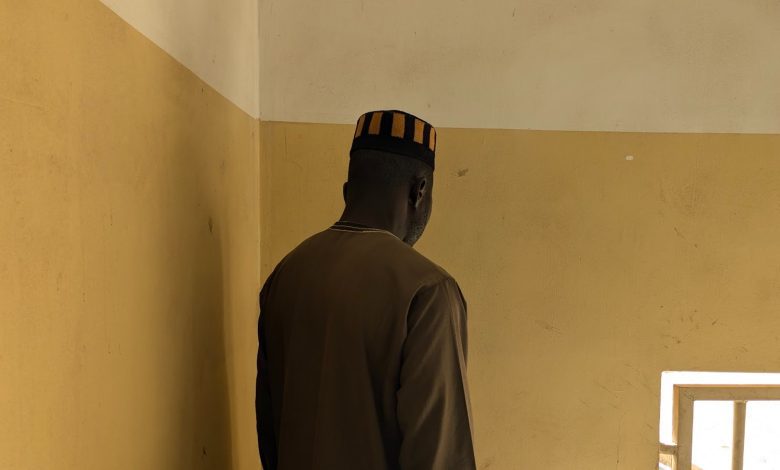
A bowl of leftover pap saved Audu Gimba* from being abducted, but his wife, children, and relatives were not as fortunate.
On Jan. 18, Audu’s family found their way to the Cherubim & Seraphim (C&S) Movement Church, Number 2, Kurmin Wali, Kaduna State, northwestern Nigeria, like they do every Sunday morning. Around 10:30 a.m., warning cries interrupted their service.
Terrorists had surrounded Kurmin Wali from all angles, unleashing their horrors on the worshippers of C & S 1 and 2 and the Evangelical Church Winning All (ECWA) Church in the same community. They would later make away with 177 people in total, according to Audu and some media reports.
“We tried to run out but discovered we were surrounded. Even if you run, they chase you down,” he recalled the horrors of that morning. He said the terrorists were also collecting phones and cash from the victims. Before they got to him, he threw his phone into the bushes, planning to retrieve it after he escaped.
The terrorists divided the captives into batches, with Audu and four others placed at the front.
“As we were walking, I saw one of my brothers being beaten by the terrorists. They demanded that he get them food from his house. He told them he only had leftover pap, and when he brought it to them, their attention shifted to it, including the terrorists holding us hostage. When I noticed that, I used that opportunity to run and hide, but the rest were taken into the forest,” he told HumAngle.
From his hiding spot, Audu watched as the terrorists brought out the remaining church members who had been hiding, made them lie on the ground, and then herded them into the forest.
“The terrorists were holding guns, which were similar to the ones soldiers use,” he told HumAngle. “All of them had weapons. They came out through three angles; even if you run, you will run into them from all angles.” Although no one was shot, the presence of the firearms and the terrorists’ known ruthlessness were enough to force the villagers into submission. They wore no masks, and the survivors who spoke to HumAngle said they did not recognise them as familiar faces.
They came in through the forest and returned through the same path, this time with unwilling villagers, leaving behind a trail of fear and heartbreak.
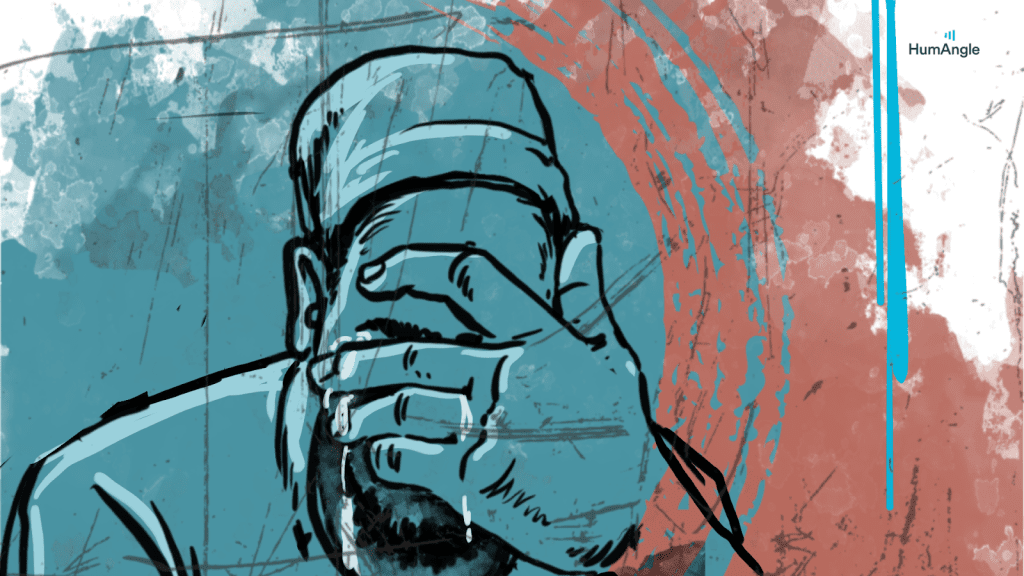
“My in-laws and two other women were heavily pregnant. My second wife and another in-law had daughters under two years old. My daughter was one year and two months old, and my three sons and their wives were all taken away into the forest. The children are not even old enough to walk on their own,” his voice cracked as he named his losses.
He admitted that revisiting the events of that day makes him want to break down and cry.
It wasn’t just his losses, he said, but also the reaction of the military, those meant to protect them, that further pushed him into despair.
“The day the soldiers arrived, we told them the path they followed. When one of my brothers insisted on showing them the way, one of the soldiers even threatened to slap him. I don’t think any soldiers walked for 10 minutes between the village and the forest. They just stood there watching us,” he lamented.
Security officials first dismissed the attack as a falsehood spread to cause chaos, only to later confirm it. The Kaduna State Governor, Uba Sani, said the reason for the denial was “to confirm details first before making any statements”.
“We need help,” Audu cried. “We don’t have anything to do unless the government helps us. What can I possibly do to help them come out? It’s just my wife and me; they have taken everyone else away.”
A recurring problem
For the people of Kurmin Wali, this is not the first of such attacks. Eight days earlier, on Jan. 11, another mass abduction of about 21 people occurred. The people were released four days later, only after a ransom of ₦2.6 million was paid, according to another villager, Moses Noma*.
Attacks on the village remain largely underreported. Online searches for Kurmin Wali mostly return reports of the most recent abduction, belatedly drawing attention to yet another community Nigeria has failed to protect.
Moses escaped the latest attack, but his family had been directly affected by the previous one. The incident occurred at night.
“They entered my house and my brother’s house,” he recounted. “Twelve people from my family were kidnapped. I barely escaped with my wife. When I returned, I heard my mum crying. She had been badly beaten with metal and was injured. I picked her up along with my injured uncle and took them to the hospital.”
When Moses arrived, his mother was in a pool of her blood. He thinks the kidnappers must have assumed she died due to how badly she was bleeding. Even when he heard her cries, he hid until he was sure the terrorists had gone before he went to her side. Fortunately, her injuries were treatable, and she was able to return to her family.
Usually, when attacks like this occur, residents say they report them to military personnel stationed along nearby roads. However, soldiers often arrive late, if at all, and little is done until kidnappers demand ransom and eventually release victims on their own. In some cases, soldiers show up a day after the attack, claiming they did not receive permission to respond earlier, residents said.
“Even as we speak, we are currently patrolling the streets because no security forces have been dispatched,” the 30-year-old man explained a week after the attack, despite the governor’s visit four days earlier.
According to Moses, the village has been under constant threats and attacks for about three years. “Even in February last year, they came and kidnapped people,” he noted.
After such attacks, some residents flee to other parts of Kaduna, such as Marraraban Kajuru, Kasuwan Magani, and neighbouring towns, and return after some time. Moses, like others, usually finds his way back home, but the terror never stops.
Government intervention?
James Kura* says it was the stars that guided him home that night.
“We were in church. We stationed some people outside to ensure security. When they saw them coming, they raised an alarm. We ran out, but soon discovered they had circled us. They put us together and collected all our money and phones in front of the church. Then they started to march us into the forest,” he narrated.
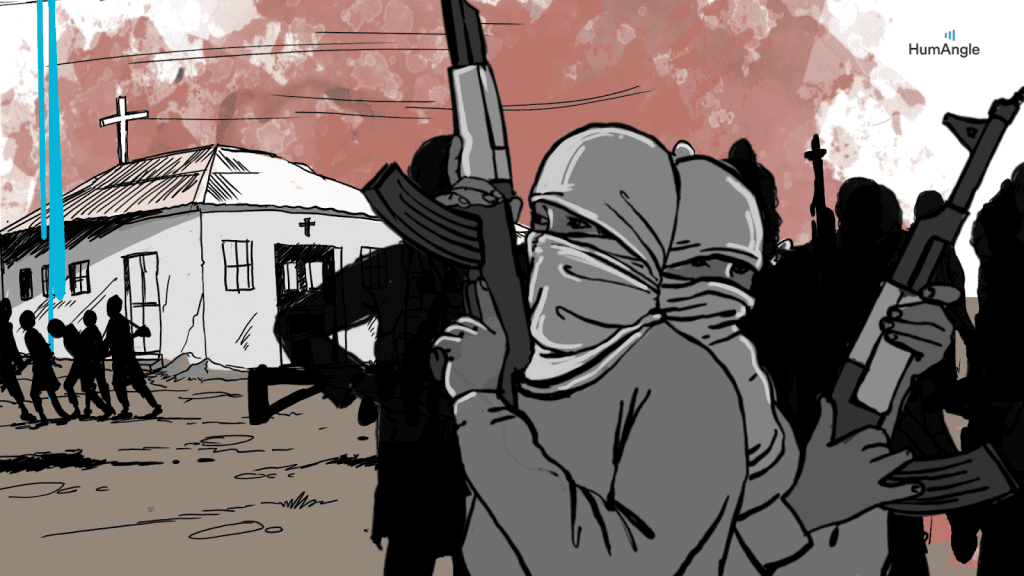
At one point, the terrorists stopped and started to beat them heavily with sticks before continuing with the march. James was injured during the assault.
They later arrived at Sabon Gida, a nearby village that has been deserted due to the constant terror attacks, one of the many ghost communities in Kaduna State. Some captives managed to escape there. But it was much later that James found the chance.
“I noticed I was lagging behind and the kidnappers were distracted, so I used that opportunity to hide somewhere in the bushes until they left. I started to walk into the forest and eventually found my way home by following the stars,” he recalled. James got home around 9 p.m. that night.
Despite his escape, many of his relatives and friends remain in captivity.
James and ten other escapees were taken to Barau Dikko Teaching Hospital in Kaduna town on Jan. 23, following the governor’s visit. Before then, James had tried to treat his injuries at a chemist’s shop in the village.
The hospital’s Chief Medical Director, Abdulqadir Musa, said the victims would receive maximum care and attention and would “leave the hospital smiling”.
Even so, this was not the first time James had been kidnapped. In 2021, he was abducted from his home and held captive for days, and the horrors of that experience fueled his determination to escape repeating it.
“They demanded a ransom of ₦1 million then, and they demanded other items like phones, which amounted to almost ₦200,000 extra,” he recalled.
Although the current ransom demand has not been formally communicated, James told HumAngle that the kidnappers are demanding 17 motorcycles, which they claimed were left behind after the attack. Residents say only three were found, some of them already stripped of parts such as headlights.
A separate report corroborates James’ account, adding that ₦250 million and three more motorcycles, bringing the total to 20, have been demanded by the terrorists.
For a community already struggling to survive, residents say such demands are difficult to meet. The Kaduna State government has said it will work with security operatives to ensure the victims are rescued unhurt.
“We have been collaborating with the relevant security agencies, both the military, the DSS, the police, and the Office of National Security Adviser, to ensure the quick return and recovery of our people that were abducted in this very important community,’’ Uba Sani said during his visit to Kurmin Wali.
The fear of the future
Survivors like James are worried and concerned about their future security, the fate of their loved ones who are still in captivity, and the ransoms they may be forced to pay.
Nigeria has criminalised ransom payments, with violators facing at least 15 years in prison. Yet kidnapping continues to surge nationwide, with few successful rescue operations, leaving families with little choice.
On social media, people, including former top government officials, have crowdfunded for ransom. About ₦2.23 trillion in ransom payments was made between May 2023 and April 2024 in Nigeria, according to the National Bureau of Statistics.
“When the governor visited, he promised he would bring us security. The government is taking care of our hospital bills and feeding. But in addition to that, the most important thing we need now is financial support because we know we would have to pay ransom,” he added.
As for tightened security in the village, Audu said some military officials were stationed in front of their church during their morning service on Jan. 25. However, they are unaware of any action or movement to retrieve their loved ones, whose situation remains unknown.
*Names marked with an asterisk are pseudonyms we’ve used to protect the identities of those interviewed.
On January 18, a violent attack by armed terrorists occurred in Kurmin Wali, Kaduna State, leading to the abduction of 177 churchgoers.
Audu Gimba narrowly escaped due to a distraction caused by leftover pap, but his family and others were taken. The terrorists, equipped with firearms, came from three sides, engaging in acts of theft and brutalizing some captives, before herding them into the forest.
Despite previous attacks, such as the January 11 abduction where 21 people were ransomed for ₦2.6 million, these incidents in the village remain underreported.
Survivors express frustration over inadequate military response and fear for the future, as government denial has sometimes delayed action. Efforts to secure release through hefty ransom demands, including 17 motorcycles and ₦250 million, highlight the community's financial struggles. While official intervention promises safety and medical care, there is significant concern over ongoing security and potential ransom payments, particularly as contributing to a ransom might result in legal ramifications due to recent laws criminalizing such payments.
Support Our Journalism
There are millions of ordinary people affected by conflict in Africa whose stories are missing in the mainstream media. HumAngle is determined to tell those challenging and under-reported stories, hoping that the people impacted by these conflicts will find the safety and security they deserve.
To ensure that we continue to provide public service coverage, we have a small favour to ask you. We want you to be part of our journalistic endeavour by contributing a token to us.
Your donation will further promote a robust, free, and independent media.
Donate HereStay Closer To The Stories That Matter