Mass Displacement Looms in Northwest Nigeria Following US Airstrikes, Misinformation
The Dec. 25 US strikes against terrorists in Sokoto State, northwestern Nigeria, have left villages rattled and wanting to flee, as waves of misinformation spread more fear and push many residents to abandon their homes.


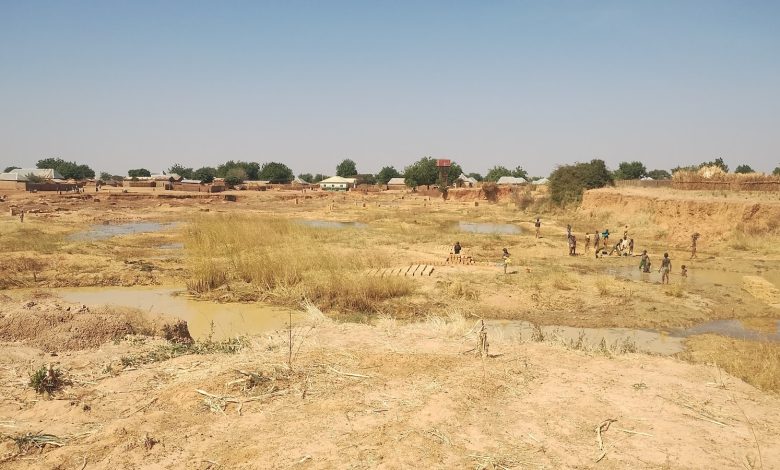
When the explosive devices from the US airstrike landed in Birkini, a satellite village in Jabo town, Sokoto, North West Nigeria, on Thursday, Dec. 25, locals said they were alarmed after years of relative calm that allowed them to sleep peacefully at night. More than 18 civilian neighbouring communities were similarly shaken after the blast in Tambuwal Local Government Area (LGA), prompting some residents to pack their belongings and flee.
The villagers believed they were under direct attack.
Before the news of the incident became widespread, rumours spread in the area that the American government was targeting Muslim-dominated settlements in Nigeria.
Muhammad Bawa, a commercial driver from Birkini, said the airstrike, which targeted suspected Islamic State terrorists, occurred close to his farm. He said locals read social media posts claiming that “the American government is envious of Nigeria’s long history of peace and has been misled into believing that Nigerian Christians are being persecuted”.
“As a result, the US seemed prepared to target us, especially the Muslims in the North. This is why we are all feeling frightened and anxious about these unusual incidents,” he said.
HumAngle found these claims to be false and misleading. However, with little media literacy and limited access to reliable information, many residents chose to leave rather than risk being caught in another strike.
“That night, people from all 18 neighbouring communities gathered to move to Jabo in search of safety, as we were unsure of what might happen next,” Muhammed told HumAngle.
As dozens of residents attempted to flee, Aminu Aliyu, the Information Officer of Tambuwal LGA, addressed some of them, urging calm and asking them to return to their homes. He assured them that the strikes were not aimed at civilians.
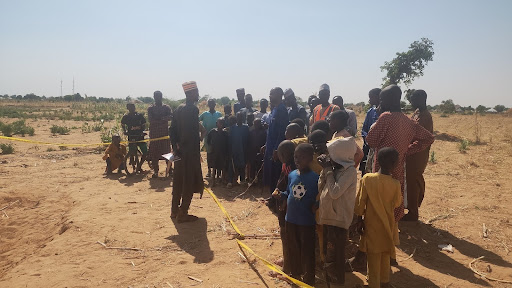
Although the primary impact site was Birkini, fragments of the explosive device were later found across neighbouring communities, including Sakanau, Tungar Barke, Aske Dodo, Barga Hordu, Gasa Lodi, Yangwal, Lungu, Tungar Doruwa, Tungar Kwatte, Tungar Na’adda, and Darin Guru.
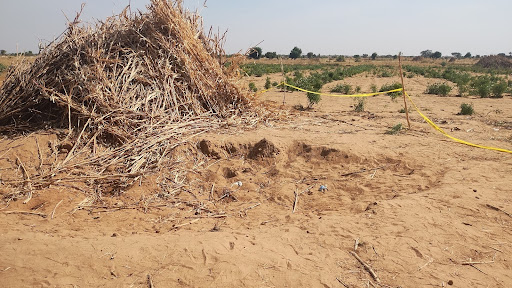
Muhammad recalled sitting on a mat watching a movie when the device flew above, “shaking our roof and sounding like strong wind before it fell”. “I didn’t give a damn and went on watching the movie,” he said. “We suddenly heard a high-sounding explosion strike like thunder. It came with the fire catching dried shrubs and farm straws, swirling like a storm.”
The Nigerian government later claimed the explosive devices found in Jabo and other rural communities in Tambuwal LGA, as well as in Offa, Kwara State, North Central Nigeria, were debris from precision weapons fired at terrorist camps within the Bauni forest axis of Tangaza LGA, Sokoto State, several kilometres from Tambuwal.
Mohammed Idris, the country’s Minister of Information and National Orientation, said intelligence showed the Bauni forest was “being used as assembly and staging grounds by foreign ISIS elements infiltrating Nigeria from the Sahel region, in collaboration with local affiliates, to plan and execute large-scale terrorist attacks within Nigerian territory”.
He further noted that the strikes were launched from maritime platforms in the Gulf of Guinea after extensive intelligence gathering. Sixteen GPS-guided munitions were deployed using MQ-9 Reaper drones, and the targeted ISIS elements were successfully neutralised. Although specific damage assessments have not been released, Yusuf Tuggar, Nigeria’s Minister of Foreign Affairs, said “those who handled the operational aspects of the episode will return with the details”.
The origins of fear and terror
The Dec. 25 airstrike in Sokoto was first announced by US President Donald Trump, who said American forces struck ISIS positions in the northwestern region. The Nigerian government later confirmed the operation, noting that it was a joint effort between the Nigerian military and US forces, targeting terrorist camps in the state.
“No civilian casualties were recorded in Jabo Town or any other affected area,” according to Abubakar Bawa, the spokesperson for the Sokoto State government. He added that recovered objects were under investigation by Nigerian and US military authorities.
Trump justified the strike using a Christian genocide narrative, claiming that ISIS terrorists in Nigeria were “viciously killing, primarily, innocent Christians at levels not seen for many years, and even centuries”. This echoed earlier US rhetoric that designated Nigeria as a “country of particular concern” for alleged state-backed religious persecution.
Nigerian officials and conflict researchers have rejected this framing, stressing that terror groups target both Muslims and Christians. Nevertheless, the framing of the narrative heightened fear among Muslim communities in Sokoto’s Birkini, Sakanau, and Kagara, where many interpreted the strike as an attack on them under the guise of protecting Christians.
“I fled my community and will resettle in Jabo town for fear of the unknown,” Sani Yale, a resident of Sakanau, told HumAngle. “Drawing from what I watched in American films exposing the powers of the US in war, I fear that the bomb explosion will come to our villages again. We feel we are not safe at all.” Several other residents share the same fear.
Umar Yusuf, from the Kagara community near Jabo, said he was asleep when his wife woke him screaming that an American attack was underway. They fled to Jabo town, where they encountered others debating what they described as “America’s ill intentions toward Nigeria”.
“How can the US claim precision targeting at ISIS and throw bombs at us here, where we have never experienced a terrorist attack?” asked Ibrahim Shehu, a retired security officer from Jabo. “They claim intelligence sharing, yet miss the correct locations where terrorists, bandits, and Lakurawa reside and camp. This is just deliberately done to finish us, but God protected us.”
Nigeria’s foreign minister reiterated that the joint operation was intended “to fight against terrorism, to stop the terrorists from killing innocent Nigerians, be (they) Muslim, Christian, atheist, whatever religion.” Over the years, Nigeria has grappled with insecurity driven by a variety of causes, including terrorism, criminality, and ethno-religious violence.
Security analysts believe the strike targeted Lakurawa, a violent criminal gang active in the northwestern region. The group first arrived in the Gudu and Tangaza areas of Sokoto State around 2018, after some communities invited them to act as protectors against terror attacks.
At the time, security authorities described them as “herders [from the neighbouring Niger Republic] not known to be violent but strongly suspected to be armed”. The group became more lethal last year, frequently assaulting communities while taking refuge in the forests spanning across the region. The Nigerian Defence Headquarters designated Lakurawa a terrorist organisation in Nov. 2024.
A study by the Combating Terrorism Centre suggests Lakurawa may have had links to Jama’a Nusrat ul-Islam wa al-Muslimin (the al-Qaeda affiliate in the Sahel) between 2017 and 2018, but is now associated with the Islamic State’s Sahel Province (ISSP). Meanwhile, a Nov. 2025 study by Good Governance Africa notes that “the group currently maintains a nominal or permanent presence in at least 19 local government areas and 82 villages across Kebbi, Sokoto, and Zamfara”.
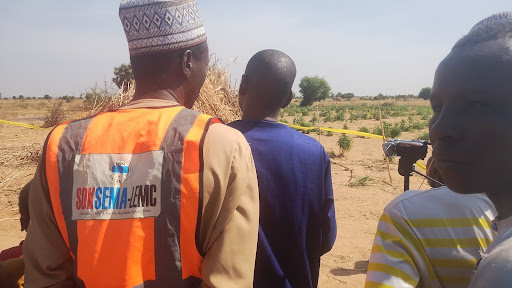
As authorities and residents continue to make sense of the recent strikes, concerns persist over the careless collection of unexploded fragments scattered across affected areas. Some of the devices have yet to detonate, according to Aminu, the Tambuwal LGA spokesperson.
“Military personnel were here to see for themselves, but did nothing to stop it. There are strong indications that it will probably explode at any time. People are barred from visiting the area,” he said.
In an airstrike on December 25 in Sokoto, Nigeria, US forces targeted suspected ISIS camps, causing fear and panic among local communities. Residents, alarmed by rumors and explosions, fled, fearing further attacks, while officials clarified that civilians were not targets and the operations aimed at ISIS elements in collaboration with the Nigerian military. Despite these reassurances, fear persisted due to misinterpretations of the US's intentions and past narratives framing Nigeria as a location of religious persecution. The airstrikes were part of efforts to combat terrorism, with intelligence indicating ISIS's presence in the Bauni forest being used for planning terrorist activities. Meanwhile, fears grow about unexploded ordnance remaining in communities, leading to safety warnings from local authorities.
Support Our Journalism
There are millions of ordinary people affected by conflict in Africa whose stories are missing in the mainstream media. HumAngle is determined to tell those challenging and under-reported stories, hoping that the people impacted by these conflicts will find the safety and security they deserve.
To ensure that we continue to provide public service coverage, we have a small favour to ask you. We want you to be part of our journalistic endeavour by contributing a token to us.
Your donation will further promote a robust, free, and independent media.
Donate HereStay Closer To The Stories That Matter