
Editorial: Africa at the Fault Line of a Failing Global Order
Africa, long treated as the periphery of global concern, may yet prove to be the mirror in which the world’s moral failure is most clearly reflected.

Africa is burning, not metaphorically, but in measurable realities of conflict, collapse, and abandonment. Old wars refuse to end, new crises are born faster than diplomacy can name them, and the continent has become the gravitational centre of global disorder. This is not accidental. It is the consequence of a world order that has lost both its moral authority and its will to act reasonably.
Across Africa, unresolved conflicts metastasise into permanent emergencies. From the eastern Democratic Republic of Congo, where rebellion has become cyclical rather than exceptional, to Nigeria, where life has become short and brutal, even for schoolchildren, to the broader Sahel, where state authority continues to retreat.
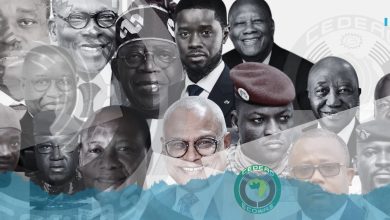
West Africa alone has recorded more military coups and counter-coups in recent years than any other region in the world, a stark signal of democratic erosion and widespread disillusionment with governance models that no longer deliver security or dignity.
At the same time, global terrorist organisations once concentrated in the Middle East, such as Al-Qaeda and the so-called Islamic State, have strategically relocated their operational centres to Africa. This shift is not because Africa is inherently prone to extremism, but because prolonged neglect, weak international engagement, and fragmented security cooperation have created fertile ground. Terrorism has followed power vacuums, not cultures.
Climate change compounds these failures. Shrinking water sources, desertification, and unpredictable weather patterns are intensifying violent competition over land and livelihoods in countries like Nigeria. Farmer–herder conflicts, insurgent recruitment, and forced displacement are increasingly linked to environmental stress. Africa, which has contributed the least to global carbon emissions, is paying one of the highest prices for climate inaction.
Meanwhile, the continent’s once-vibrant wildlife and ecological heritage are being depleted at alarming rates, seen as collateral damage of conflict, illegal exploitation, and weak global enforcement. The loss is a planetary failure dressed up as a regional problem.
Yet the world’s response is disturbingly muted.
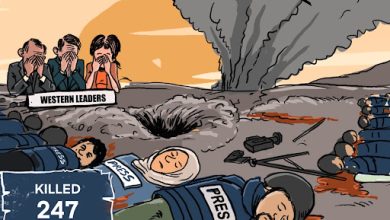
The traditional self-appointed guardians of international order – the global ombudsmen who once spoke the language of human rights, rule of law, and humanitarian responsibility – are increasingly selective, inconsistent, or complicit in many wars. While African conflicts smoulder with minimal global outrage, these same powers are actively involved in or defending genocide in Gaza. International law, once presented as universal, is now applied with geopolitical discretion.
More troubling still is the open disregard for sovereignty and legal norms by states that brand themselves as “civilised democracies”. From extraterritorial military actions to extraordinary renditions and unilateral interventions, practices once condemned when carried out by authoritarian regimes are now normalised by democratic ones—often without consequence.
This double standard carries profound implications for Africa. It weakens already fragile states, delegitimises global institutions, and reinforces the perception that African lives and laws matter less in the global calculus. When rules are enforced selectively, power, not justice, becomes the governing principle.
The world today is not merely facing a crisis of conflict; it is facing a crisis of leadership.
What is missing is rational, principled global leadership that upholds the rule of law not only within national borders but across them; leadership that does not excuse violations when committed by allies; leadership that understands Africa not as a theatre of endless emergencies but as a central pillar of global stability. Africa, long treated as the periphery of global concern, may yet prove to be the mirror in which the world’s moral failure is most clearly reflected.
Africa faces a crisis of conflict, with unresolved wars and new emergencies worsening due to a global order lacking moral authority and effective action.
The continent experiences numerous military coups, terrorism relocation, and environmental challenges exacerbating violence and displacement.
Despite Africa's minimal contribution to global emissions, it bears severe climate consequences and wildlife exploitation is rampant. However, the international community's response is subdued, with traditional powers displaying selective and inconsistent involvement.
This double standard undermines global institutions and underscores a leadership crisis, highlighting the need for principled global action that respects Africa's importance to global stability.
Support Our Journalism
There are millions of ordinary people affected by conflict in Africa whose stories are missing in the mainstream media. HumAngle is determined to tell those challenging and under-reported stories, hoping that the people impacted by these conflicts will find the safety and security they deserve.
To ensure that we continue to provide public service coverage, we have a small favour to ask you. We want you to be part of our journalistic endeavour by contributing a token to us.
Your donation will further promote a robust, free, and independent media.
Donate HereStay Closer To The Stories That Matter