Constant Attacks Continue to Cast Doubt on Borno’s Resettlement Scheme
Constant attacks by terrorists in Mayanti, Warabe, and Kirawa raise questions about the safety of communities reopened for the resettlement of displaced families.

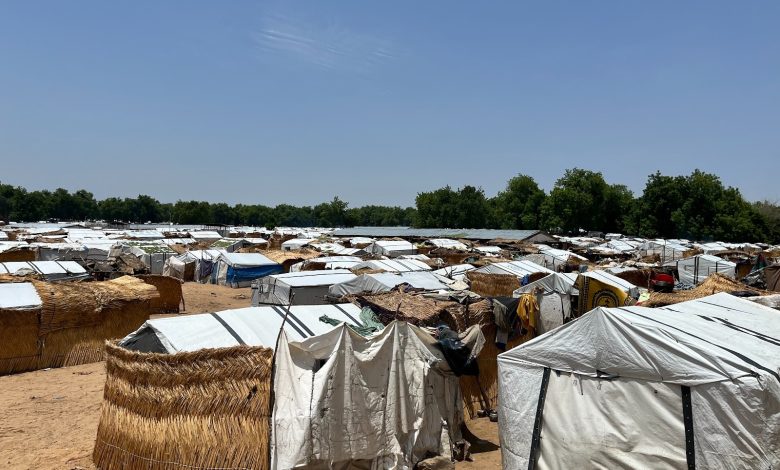
On the night of Nov. 17, gunfire tore through Mayanti village as Boko Haram terrorists attacked the construction site for returnees in Borno, North East Nigeria. Labourers working on the resettlement project scattered into the darkness as the insurgents closed in.
“They came at midnight, stormed the construction site, and everybody ran into the bushes. Some of us went towards Dar Jamal village,” a survivor of the night raid told HumAngle. By the time they returned at dawn, four labourers and four members of the Civilian Joint Task Force (CJTF) were dead, while two sand trucks used on the project were still smouldering.
The site had grown tense moments before the attack; some labourers had stopped showing up for work, fearing that Boko Haram might strike. The concern was not unfounded. Mayanti sits barely 10 kilometres from Dar Jamal, where 63 people were killed in September, only two months after their community had been resettled.
These patterns have deepened worries across Borno. In April, Governor Babagana Zulum admitted that Boko Haram was regaining momentum in the region and urged the federal authorities to step up support. Long before the latest attacks, HumAngle had reported the resurgence of terrorism and insurgency in Borno.
Across the state, resettled communities continue to face severe risks. On Nov. 20, Boko Haram fighters attacked the Warabe community, killing seven CJTF members and one civilian. Kirawa, another village reopened for returnees in 2022, has suffered repeated assaults since the return of displaced people.
The attack in Mayanti has intensified fears among uprooted families still living in the Bama displacement camp. “Since the Dar Jamal attack, we have been concerned about returning to Mayanti, and now this has happened,” said Bulama Audu*. “But if the government decides, we don’t have any option but to follow.”
Earlier this year, the Borno State government announced the Bama IDP camp would be closed by the end of 2025 and promised that return would take place in phases.
Many IDPs say they want to go home, even with the risks. “Even if it is not secure, we would love to go back to our home,” Aisha Ali told HumAngle.
But repatriation has faced repeated setbacks. In July, an explosion at the construction site for the people of Goniri killed two labourers, according to a CJTF fighter. Construction continued despite the incident, and in November, the community was resettled. Yet insecurity remains a constant worry. The Warabe incident, carried out that same month, highlighted the dangers faced by those who had returned.
For many returnees, the desire to rebuild outweighs their fear, though the situation forces them to live with uncertainty. “We will find a way to live with them,” said Hauwa Ali from Goniri, who had just been resettled this month.
HumAngle has documented cases where returnees are compelled to pay taxes to Boko Haram jihadists for farming protection. In several farming settlements, returnees say they hand over cash, produce, or everyday items like salt, sugar, and Maggi cubes to terrorists. Some farmers told HumAngle they give as much as 20 per cent of their harvest as a compulsory levy. Others described situations where refusal meant threats or being barred from their own farmlands. These arrangements, rarely acknowledged publicly, have become part of the uneasy survival tactics in resettled communities across Borno.
Returning home
Locals say returning home in Borno brings more uncertainty than comfort, especially for families displaced for years. HumAngle’s reporting from places such as Nguro Soye, Kirawa, Baga, and Kawuri reveals that many returnees arrive in communities where the basic foundations of daily life, such as water, food, healthcare, and physical safety, are barely functioning.
People often settle in villages with broken boreholes, unreliable hand pumps, or incomplete sanitation systems, leaving them to walk long distances or pay for water they can hardly afford. Food scarcity is another immediate burden. The food support available in displacement camps disappears once people return, and many communities have no alternative safety net.
Insecurity remains an everyday pressure; insurgents frequently move around farmland boundaries and footpaths, leading to kidnappings, harassment, and restrictions on movement. Many returnees say they were never meaningfully consulted during the resettlement planning process, leaving them to rebuild their lives in places with limited services, unstable livelihoods, and fragile protection.
For some families, such as those who resettled in Monguno before fleeing again, the hardship becomes overwhelming, pushing them back into displacement. The reality is that returning home does not always guarantee safety. It often means exchanging the predictability of camp life for a far more fragile existence shaped by risk, scarcity, and daily improvisation.
*Name changed to protect source from reprisal.
Boko Haram insurgents have intensified their attacks in Borno, Nigeria, targeting construction sites for returning displaced persons. On November 17, the group attacked Mayanti village, killing eight people and destroying property, heightening fears among residents of nearby displacement camps. Governor Babagana Zulum acknowledged the resurgence of Boko Haram in the region, calling for federal support. Despite the risks, many displaced persons express a desire to return home, though they often face insecurity and inadequate living conditions, including lack of basic necessities and pressure from insurgents who impose levies on them.
Resettled communities like Warabe and Kirawa suffer repeated attacks, underscoring the precariousness of life even after displacement. Resettlement plans lack meaningful consultation with affected individuals, and returning home often means forgoing the predictability of displacement camps for an unstable existence. Many returnees must navigate daily threats from insurgents, contribute to Boko Haram's imposed taxes, and deal with inadequate infrastructure for basic needs like water and food, often leading to further displacement due to unbearable conditions.
Support Our Journalism
There are millions of ordinary people affected by conflict in Africa whose stories are missing in the mainstream media. HumAngle is determined to tell those challenging and under-reported stories, hoping that the people impacted by these conflicts will find the safety and security they deserve.
To ensure that we continue to provide public service coverage, we have a small favour to ask you. We want you to be part of our journalistic endeavour by contributing a token to us.
Your donation will further promote a robust, free, and independent media.
Donate HereStay Closer To The Stories That Matter