Why Stability Remains Fragile in the Lake Chad Basin
Counterterrorism efforts in the Lake Chad region are entering a more complex phase, as renewed violence and deepening community vulnerabilities undermine recovery and stabilisation plans, exposing gaps in regional security responses.

At the beginning of 2025, eight state governors from Nigeria, Chad, Cameroon, and the Republic of Niger gathered in Borno State, northeastern Nigeria, to discuss regional security challenges and explore solutions for stability in the Lake Chad region.
Almost a year later, those ambitions feel increasingly distant. Instead of stability, the region has slid deeper into humanitarian distress, while violent operations by the two infamous Boko Haram factions—Islamic State West Africa Province (ISWAP) and Jama’atu Ahlis Sunna Lidda’awati wal-Jihad (JAS)—have resurged across multiple frontlines.
This disconnect between political commitments and lived reality marks a troubling shift in the conflict. The Lake Chad insurgency is no longer defined only by active combat, but by the failures of recovery, reintegration, and protection that now shape everyday life for millions.
Across Nigeria’s North East, Far North Cameroon, Lac Province in Chad, and the Niger Republic, communities are grappling with overlapping crises that blur the line between post-conflict recovery and renewed instability.
One of the clearest signs of this deterioration lies in the region’s farmlands.
Shrinking farmlands and deepening hunger
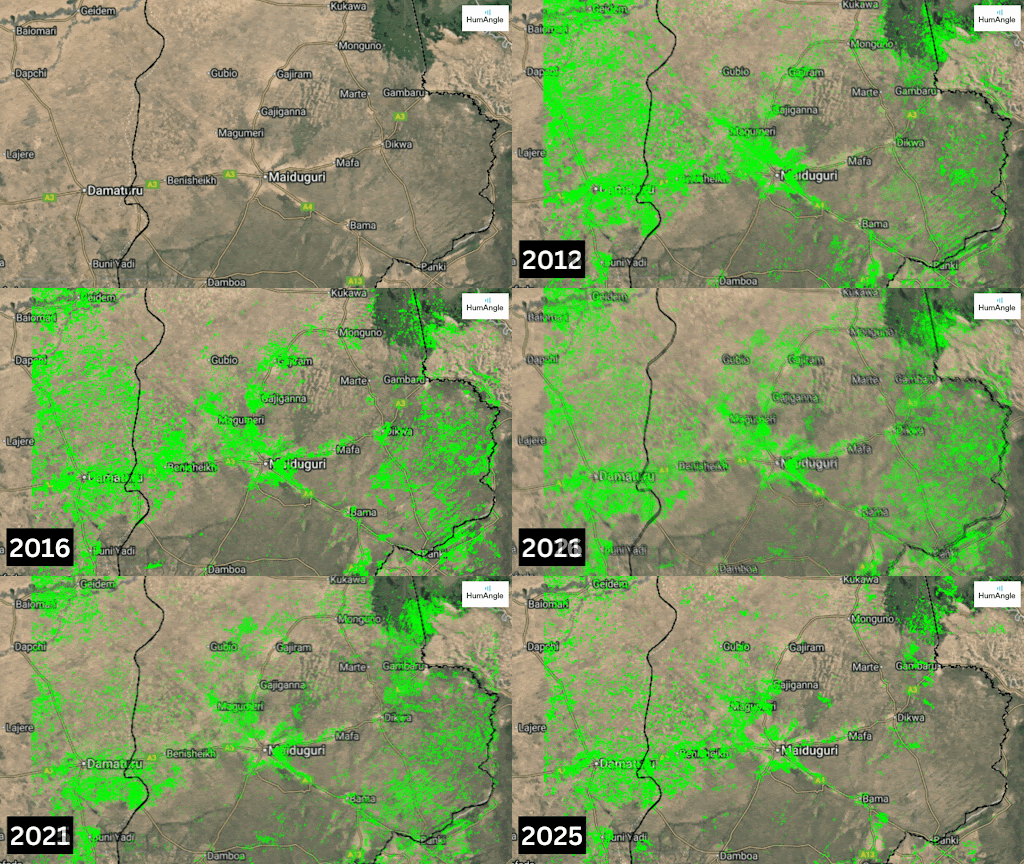
Across affected communities, farmland cultivation has steadily declined over the past decade, reflecting the cumulative effects of insecurity, displacement, and fear. Even where families have been officially resettled, farming has not returned to pre-conflict levels.
For many returnees, their land lies abandoned or overgrown, or sits beyond areas considered safe due to the presence of terror groups or frequent abductions. As a result, cultivation is often confined to small plots near military formations or within safe corridors.
In Borno State, HumAngle’s geomapping of farming activities from 2012 to 2025 reveals a clear pattern of stagnation and decline. While a few pockets near urban centres or heavily secured areas show minimal recovery, large swathes of fertile land remain unused.
Fear continues to determine movement. Farmers who still cultivate their land face constant threats of kidnappings, extortion, and violence. Young people, in particular, have become prime targets for abduction; some are held for ransom, while others are forcibly recruited into terror groups. When they are abducted, ransom demands often run into millions of naira, forcing families to sell livestock, farmland, and other possessions or resort to crowdfunding to secure their loved ones’ release. This cycle of fear, exploitation, and financial ruin has become a defining feature of rural life in the region.
As a result, farming in some communities is now largely undertaken by elderly women, who are less targeted but lack the physical agility required for large-scale or intensive cultivation.
The consequences extend beyond reduced agricultural output. It has evolved into a deepening food crisis that directly links hunger to insecurity, pushing households into dependence on humanitarian aid and eroding the very livelihoods needed for recovery.
An estimated 4.9 million people across the Lake Chad Basin are facing acute food insecurity at Crisis and Emergency levels (IPC Phases 3 and 4), with over 3.7 million of them in Nigeria alone, according to the March–May 2025 Cadre Harmonisé analysis.
The analysis shows that Phase 3 (Crisis) reflects households unable to meet minimum food needs without selling assets or adopting harmful coping strategies, while Phase 4 (Emergency) indicates extreme food consumption gaps, high malnutrition, and increased mortality risks.
Against this backdrop, questions of justice and reintegration have taken on sharper edges.
Reintegration without justice
As communities struggle to feed themselves while living in fear, they are also being asked to absorb the return of terrorist deserters through Operation Safe Corridor, a non-kinetic counterterrorism programme launched in 2021 by the Nigerian government.
In principle, the initiative offers an exit pathway for insurgents and a chance to weaken terrorist groups from within. In practice, many communities view it as deeply unbalanced. Locals increasingly ask why terrorist deserters receive rehabilitation and support, while civilians arrested during mass military operations remain detained for years, or never return at all.
This sense of injustice is deeply personal. Recently, three of the 42 men from Gallari, a community in Borno State, who were arrested by the Nigerian military in April 2014 as suspects following the Chibok schoolgirls abduction, were released. They told HumAngle that only five of them are still alive, while the other two remain in custody.
Such situations have fuelled resentment, fractured trust in the government-led deradicalisation efforts, and complicated the broader implementation of transitional justice frameworks. Across households, HumAngle has repeatedly encountered the same question: When will our loved ones return home?
For grassroots advocacy groups such as Jire Dole and Knifar Women, the issue is not opposition to reintegration itself, but the absence of accountability and justice alongside it. Led by activists, survivors, and victims, these groups argue that transitional justice was introduced prematurely, without addressing the fate of thousands held in prolonged, unlawful detention.
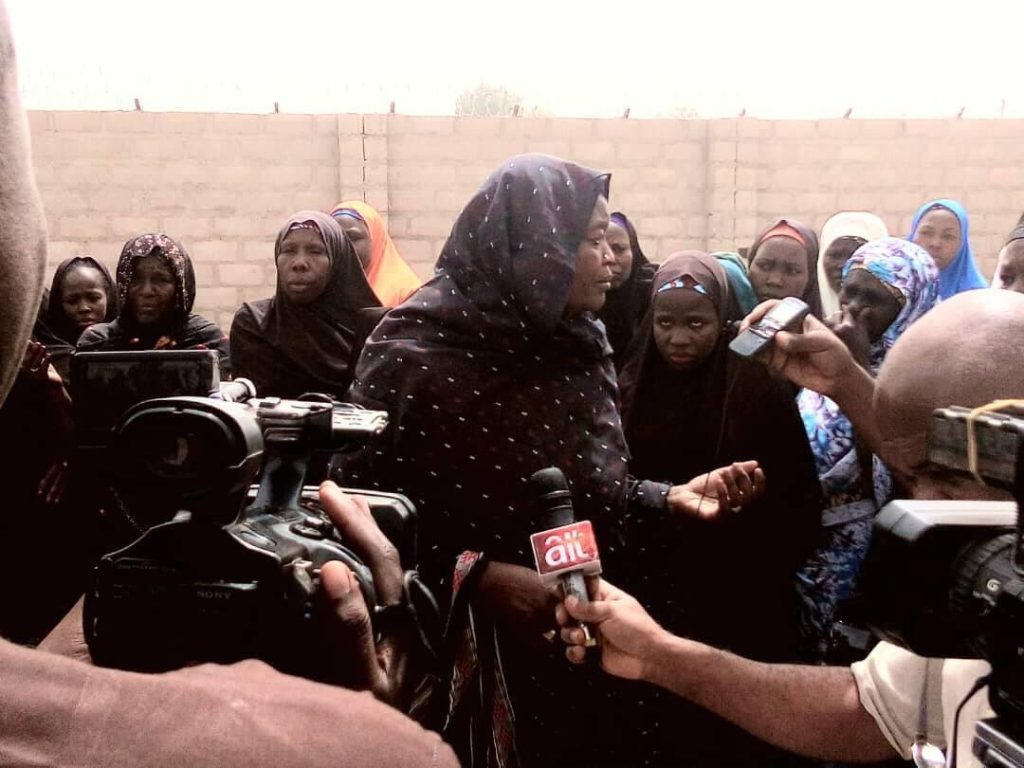
Their advocacy has reached the global stage. With support from organisations such as Amnesty International, their concerns were brought before international mechanisms, prompting the International Criminal Court (ICC) to open preliminary considerations into alleged war crimes, unlawful detentions, and abuses committed during the conflict.
Although the ICC process has shown little visible progress, it has amplified the voices of affected families and increased pressure on state authorities to address the long-standing demands for justice, transparency, and accountability.
Meanwhile, the scale of reintegration continues to grow. More than 120,000 terrorists have reportedly surrendered in Nigeria through Operation Safe Corridor, undergoing rehabilitation and empowerment programmes. Yet thousands of fighters have also re-entered communities without passing through any formal deradicalisation process.
HumAngle’s on-the-ground reporting shows that this dual reality has generated serious tensions. In many communities, hostility has grown not only between residents and the deserters but also within local security structures. Friction frequently arises between community vigilantes and former insurgents who have been repurposed to support security operations.
Recently, in Borno’s Gwoza Local Government Area, a terrorist deserter who has been integrated into the Civilian Joint Task Force shot another member of the team. The incident sparked intense public debate and renewed calls for the government to reassess the role of former insurgents in community security arrangements, especially as terrorists are setting up spy networks to infiltrate communities for revenge attacks.
Similar concerns and challenges are unfolding across other communities in the Lake Chad region. In Cameroon, thousands of terrorist deserters have been reintegrated since 2021 through the National Committee for Disarmament, Demobilisation and Reintegration. The Republic of Chad has also recorded a sharp rise in defections, with more than 200 fighters surrendering in July 2025 alone. In Niger’s Diffa region, over 100 repentant Boko Haram members were reintegrated in January 2025, underscoring the regional scale of the dilemma.
Intensified attacks
At the same time, insecurity has intensified. Throughout 2025, JAS and ISWAP escalated attacks on military barracks, security posts, and Multinational Joint Task Force formations across Borno State and neighbouring areas, often poorly fortified locations.
Towns such as Kirawa, Banki, Monguno, Dikwa, Gajiram, Rann, Mairari, Malam Fatori, Tolkomari, Goniri, Marte, Barkaram, Wajiroko, Buni Gari, Wulgo, Ngamdu, Diffa, and parts of Far North Cameroon witnessed repeated raids in which insurgents overran bases and looted weapons. Videos of captured soldiers and seized military equipment were later circulated through ISWAP and JAS media channels. These raids have significantly strengthened insurgent capacity, enabling further ambushes, abductions, and territorial control.
Even outside of the formal settlements and amidst military pressure, terrorists still attack commuters in Borno, northern Cameroon, and the lake islands.
Matters arising
Meanwhile, ISWAP has expanded its intelligence-gathering networks, embedding spies within communities. A recent HumAngle investigation found that targeted assassinations of deserters, vigilantes, informants, and opposing members have increased in 2025, deepening fear and silencing community collaboration with security forces.
Local leaders also report a growing number of unaccompanied children arriving in their communities from ISWAP and JAS-controlled areas. In Borno State’s Bama LGA, a CJTF member estimates that dozens of children under 14 sometimes arrive at displacement camps at once, with little information about their parents or origins.
“We have many children roaming the streets here in Bama, and we know their parents are not in town. Most of them are unaccompanied. I have spoken to several of them about the whereabouts of their parents, but most say they don’t know. Sometimes, a few will tell me their parents are still in the bush,” Usman Mamman, a resident of Bama, told HumAngle.
Adding to the influx of terrorist deserters who were never formally rehabilitated or reintegrated, fear and distrust continue to worsen, and many fear the risk of infiltration or re-radicalisation.
Communities now distinguish between those who passed through official programmes and those who quietly infiltrated without screening, heightening fears of re-radicalisation and infiltration. This uncertainty feeds directly into broader patterns of insecurity, including economic and social disruption.
On the roads, commercial drivers and civilian commuters face a growing web of extortion and harassment from soldiers, police, and CJTF members, as well as terrorist deserters working in informal security roles.
Marte Ali, a commercial driver who used to travel regularly through the route, said he was forced to abandon it due to the extortion: “From Maiduguri down to Monguno, you will pay at every checkpoint, and you pass more than 60 checkpoints before reaching your destination. The military alone collects at least ₦1,500 per driver, while the others take a minimum of ₦200.”
He said the cumulative deductions on a single trip can wipe out drivers’ profits entirely.
“On my last journey, I spent ₦27,000 just on these charges. I am tired,” he told HumAngle. “It is too much. I can’t even afford fuel, talk less of all these payments on the road.”
In areas where official presence is weak, these pressures dovetail with the persistence of shadow governance. Some communities, seeking protection amid escalating threats, continue to pledge loyalty to Boko Haram factions, paying taxes and providing labour. These parallel systems of authority undermine stabilisation efforts, entrench insurgent influence, and create a climate in which civilians must constantly navigate competing power structures.
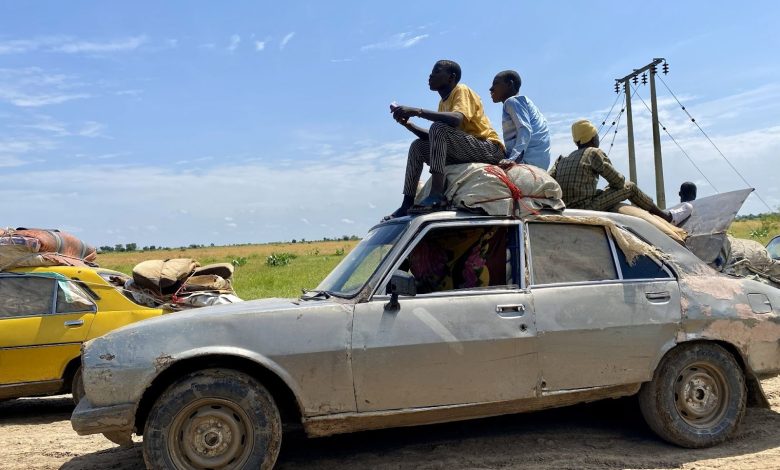
At the same time, even communities that have undergone formal resettlement are once again being uprooted. Renewed attacks, food shortages, and the absence of basic services have triggered fresh waves of displacement.
In Dar Jamal, Boko Haram carried out a deadly raid in April, just months after resettlement. Similarly, in Kawuri, many returnees fled almost immediately after returning, citing the same combination of insecurity and deprivation. In September alone, ISWAP attacks had displaced more than ten villages in Borno’s Magumeri LGA. Residents abandoned their farmlands, leaving crops to rot in the fields, later overtaken by weeds or destroyed by roaming herds.
This pattern of repeated displacement has created new humanitarian burdens while steadily eroding public confidence in state-led resettlement initiatives. It also highlights a broader contradiction at the heart of current policy approaches.
Despite deteriorating conditions on the ground, state-led repatriation programmes have continued, bringing thousands of refugees back from Cameroon, Niger, and Chad. Many of these returnees, however, soon find themselves compelled to flee again due to the same factors.
In February alone, the Borno State government facilitated the return of more than 1,500 families from Chad. Yet within months, some of these families made the difficult decision to return, since their resettled communities did not offer safety or viable means of survival.
Meanwhile, over 12,000 Nigerian refugees remain in Cameroon, and the government has begun repatriating them in phases. In parallel, by December 2024, the government of Niger Republic directed the return of more than 100,000 Nigerian refugees, most of whom had lived for years in the Diffa region. This sudden, large-scale movement has raised serious concerns about reception capacity, access to shelter and food, protection services, and the long-term sustainability of the return process.
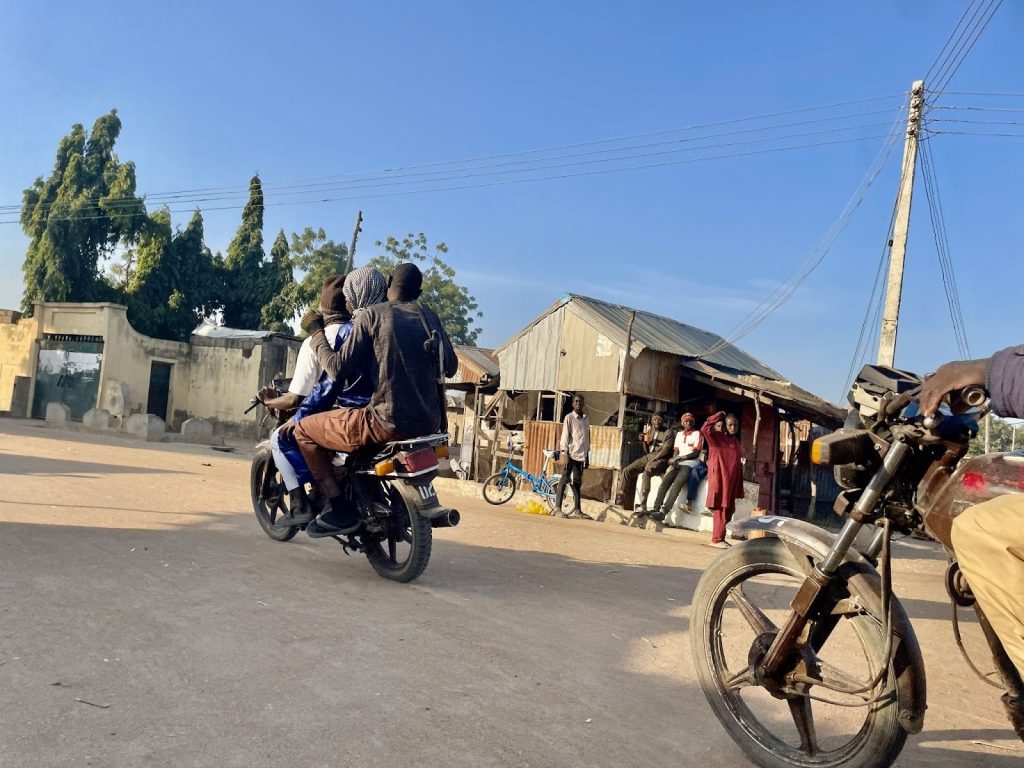
Together, these accelerated return exercises also raise a critical question: what guarantees of safety and stability exist for refugees being brought back home while the region continues to experience persistent insecurity?
Compounding these risks, many areas designated for resettlement lack an effective security presence or remain under the influence of armed groups. As a result, returnees often encounter the same dangers they fled from, leaving humanitarian agencies and protection actors deeply concerned about the ethics and sustainability of large-scale returns under such conditions.
These emerging issues reveal how rapidly the conflict environment is evolving. Collectively, they point to a landscape that is not stabilising but mutating—one in which insecurity, hunger, reintegration without justice, shadow governance, and premature returns intersect to erode any durable path to peace in the Lake Chad region.
In 2025, significant instability plagued the Lake Chad region despite previous efforts by governors from Nigeria, Chad, Cameroon, and the Republic of Niger to address regional security issues.
The area has been thrust into humanitarian distress, particularly due to the resurgence of Boko Haram factions, leading to reduced farming activities, food insecurity, and increasing reliance on humanitarian aid. Attempts at reintegration, such as Nigeria's Operation Safe Corridor, have also faced criticism for perceived injustices, further complicating recovery processes.
Challenges include rising attacks on military and civilian targets by Boko Haram factions, highlighting ongoing violence and insecurity. Reintegration efforts are seen as problematic with unrehabilitated terrorists reentering communities, escalating tensions, and fracturing trust.
Furthermore, premature resettlement initiatives have been questioned, as refugees often face the same risks upon return, revealing a volatile and uncertain landscape that undermines long-term stability and peace initiatives in the region.
Support Our Journalism
There are millions of ordinary people affected by conflict in Africa whose stories are missing in the mainstream media. HumAngle is determined to tell those challenging and under-reported stories, hoping that the people impacted by these conflicts will find the safety and security they deserve.
To ensure that we continue to provide public service coverage, we have a small favour to ask you. We want you to be part of our journalistic endeavour by contributing a token to us.
Your donation will further promote a robust, free, and independent media.
Donate HereStay Closer To The Stories That Matter