Terrorists in Borno Executed IDPs After Families Couldn’t Raise Ransom
In rural Borno, northeastern Nigeria, where displaced people have been resettled by government authorities, everyday kidnapping has become a norm. In this case, five IDPs were executed over their families’ inability to pay ransom.

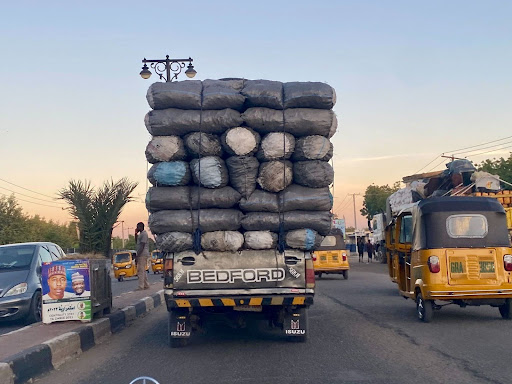
Jidda Hadu is married and has six children who depend entirely on him for survival. His younger brother, Mohammed Hadu, in his mid-20s, is single. Together, they take care of their immediate and extended families.
On Dec. 11, 2025, the two brothers set out with eight others into the sprawling bush of Mafa Local Government Area (LGA) in Borno State, northeastern Nigeria.
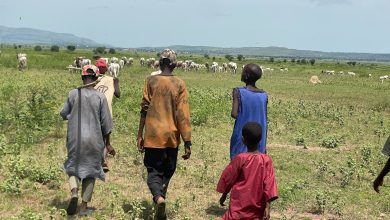
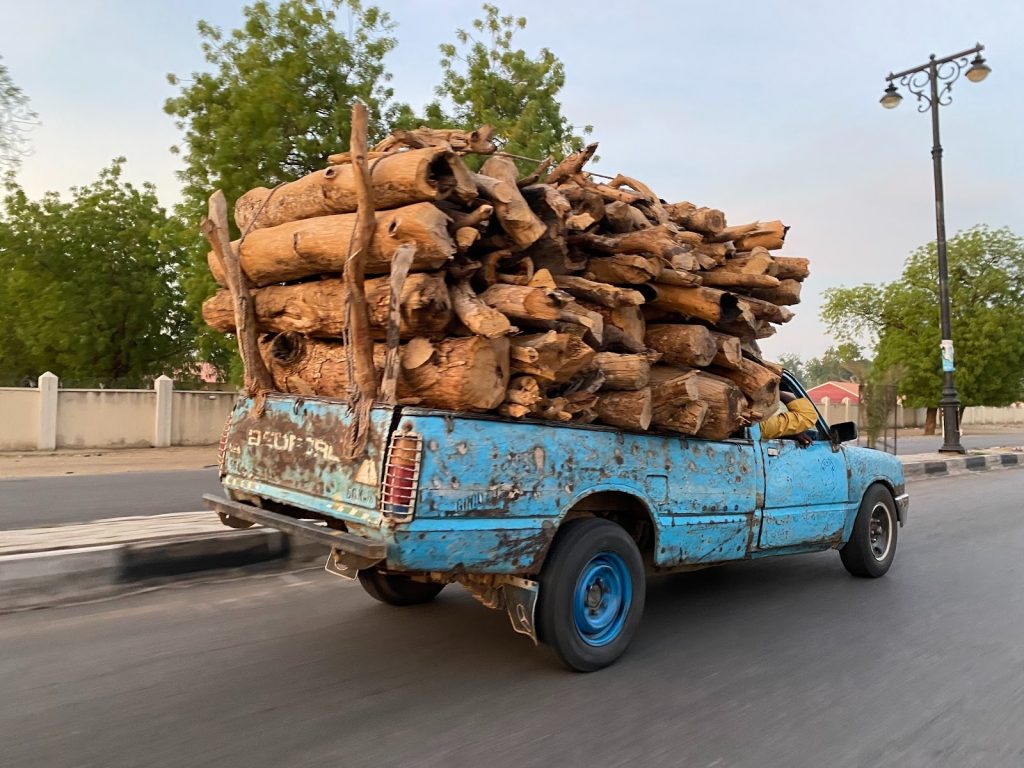
What they set out to do was as simple as it was necessary. They went to scout for large trees, cut them down, and smoke the finest logs into charcoal. This is an errand they have been running for the past 15 years, since they fled their villages in nearby Marte LGA due to violent attacks by the Boko Haram terror group.
With no access to farmland and limited livelihood opportunities in Gome, the resettled residents have turned to cutting trees and producing charcoal, which they later sell in urban areas to feed their families. They do so fully aware of the danger. Armed groups operate in the surrounding bush, yet the work remains one of the few options available to them. In 2025 alone, at least seven people were killed in the bush while logging, according to local sources in Gome. In the same year, several abductions were recorded, with ransoms running into millions of naira.
“We know the danger, but there is no other means of survival. If they don’t go, there will be nothing to eat,” Hadu, the father of Jidda and Mohammed, said.
The day they were abducted
That Thursday morning, when Jidda and Mohammed joined others to venture into the bush, they hoped to return. “They bid us farewell and left, just like they always did,” Hamman, their eldest brother, recalled, saying they left with work tools like axes, wheelbarrows, and machetes.
“We did not know it would be the last time we would see them,” he added.
It was unusual that Jidda and Mohammed did not return home at their usual time of around 6 p.m., Hamman said. However, the family did not immediately panic. It was only a day later, when none of the ten people who went to the bush with them returned, that the family realised something was terribly wrong.
The family began calling the phone numbers of Jidda, Mohammed, and the others, but none of the calls went through. As the hours passed, the atmosphere grew tense, and fear gripped everyone in the household.
Two days later, the uncertainty turned into an unsettling confirmation. The kidnappers used one of the phones belonging to the abducted men to call Hadu, the father of the brothers. It was during that call that the families learned that their children were in captivity.
The abductors demanded a ransom for the captives’ release. After several rounds of negotiations, the kidnappers fixed the ransom at ₦7 million and threatened to kill all captives if the money was not paid on time. The families were plunged into desperate efforts to raise money they did not have. Two weeks later, they collectively raised less than ₦1 million.
As a stern warning, the kidnappers shot dead Jidda and four other men. They later called the victims’ families to inform them of the killings and forced Mohammed to relay the news of his brother’s death. He told his family that if the ransom was not paid, he too would be shot.
‘We are tired’
Jidda’s family, alongside friends, neighbours, and relatives, organised a condolence gathering to mourn the death of their son. The ceremony was marked by prayers, sobs, and words of remembrance, as community members came together to console the bereaved family and support Jidda’s widow and six children, whose lives have been abruptly upended by his killing.
“We are tired of this situation,” Bulama Marte, a community leader who attended the condolence prayers, told HumAngle. “We are pleading with the government to do something about these concerns. We cannot depend on aid alone, and the only work available to us is in the bush, a very dangerous venture.”
Bulama said the killings have deepened the sense of exhaustion and despair among displaced people from Marte. He added that the prolonged displacement remained the root of their suffering. “Our village in Marte is still not accessible. If it were safe, we would not be staying here and suffering without security,” he added.
Even as the community mourned, the threat to the remaining captives loomed. The kidnappers later called Mohammed’s family again, demanding ₦1 million for his release. Faced with the possibility of losing another family member, relatives and friends immediately began crowdfunding, reaching out to fellow displaced persons and community members for help. Some women sold their assets, including jewellery, to contribute.
Within three days, they managed to raise the required amount. The money was paid, and Mohammed was subsequently released and reunited with his family.
Surviving 21 days in captivity
Narrating his ordeal, Mohammed told HumAngle that on their way to the bush that Thursday morning, they sighted armed men approaching from a distance. Panic broke out among the group. Some attempted to turn back, while others hesitated, recalling previous encounters where the terrorists had only taken fuel and left without harming anyone.
“Before we knew it, they had already reached us and surrounded us,” he recalled.
The terrorists gathered everyone in one place and began selecting captives. Those chosen were told they would be taken to meet the group’s amir (leader).
“They told the remaining people not to be afraid and to continue their work. They said they could not take all of us because they didn’t have enough motorcycles,” he recalled.
Those captives were taken away from the Maiwa bush, while the others fled. It took three days of walking to reach an unknown location.
“They chained us very tightly. The chains wounded our legs,” Mohammed said.
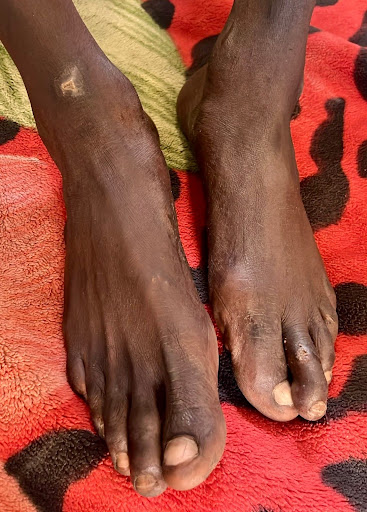
Upon arrival at the camp, Mohammed said, about 50 terrorists celebrated their capture. “They were happy they had brought ‘disbelievers’,” he recalled. What followed was sustained torture. “They tortured us a lot and shot five of our people dead, including my elder brother.”
In total, seven people were killed during their captivity, including captives they met at the camp. Altogether, he said, 21 captives were held at the location at different times. “We stayed for 21 days before returning home. They were mourning me before I came back. They thought I was also dead,” Mohammed said.
He himself narrowly escaped death several times. “They wanted to kill me at first, but they left me. They attempted to kill me three times.”
Initially, the abductors demanded ₦30 million per person. Mohammed said he told the terrorists that the demand was impossible. “I told them if we had ₦30 million, we wouldn’t have come to the bush. They beat me for saying that,” he recalled.
After repeated pleas and after executing some of the captives, the kidnappers reduced the ransom to ₦1 million per person and allowed them to call their families. Once the families had gathered the money and paid the ransom, Mohammed said, he and other surviving captives were released and shown a route to follow. They eventually reached the Bama town entrance around 4 p.m., where members of the Civilian Joint Task Force (CJTF) stopped them.
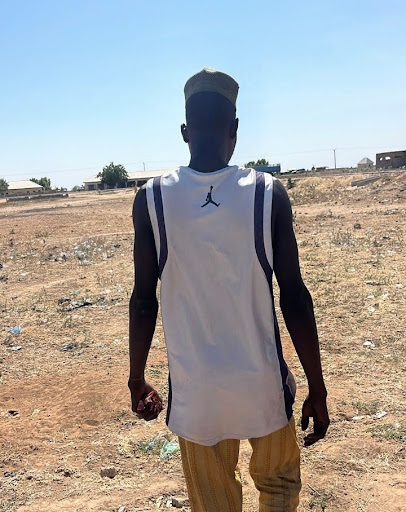
“They asked us many questions, ordered us to sit and stand repeatedly, and gave us water. We were very thirsty; we drank about three gallons,” Mohammed recounted. They were advised by the CJTF not to tell the soldiers that ransom had been paid.
The security operatives took the men to a military barracks and kept them overnight in a guard room before being allowed to leave the next day.
The following day, they begged a truck driver to take them towards Maiduguri. Five of the released men returned to Konduga, while Mohammed and one other came to Maiduguri.
Their return brought relief, but it did not bring justice or protection.
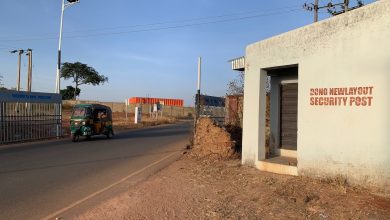
The families said they reported the abduction to the nearest security post in Gome village, which is manned by Nigerian Army soldiers and members of the CJTF. However, no action was taken following their report.
Families and community leaders who spoke to HumAngle said this has long been the norm in the area: even in previous abduction cases, families are often left to negotiate with kidnappers on their own.
Jidda Hadu and his brother Mohammed, residents of a remote village in Borno State, Nigeria, relied on cutting trees and producing charcoal for survival after displacement by Boko Haram violence. Their perilous work led to an abduction by armed men, demanding a ransom for their release. After a hostage ordeal resulting in Jidda's death and a reduced ransom, Mohammed was released. Despite their return, the community's ongoing security challenges and lack of government support exacerbate their hardship, leaving them to fend for themselves against kidnappings and insecurity. The constant threat and unresolved displacement issues have left the community in despair.
Support Our Journalism
There are millions of ordinary people affected by conflict in Africa whose stories are missing in the mainstream media. HumAngle is determined to tell those challenging and under-reported stories, hoping that the people impacted by these conflicts will find the safety and security they deserve.
To ensure that we continue to provide public service coverage, we have a small favour to ask you. We want you to be part of our journalistic endeavour by contributing a token to us.
Your donation will further promote a robust, free, and independent media.
Donate HereStay Closer To The Stories That Matter