Tension as Mass Displacement Trails Local Militia Clashes in DR Congo
Since early November, armed violence in the DR Congo has escalated, with local militias intensifying their assaults against one another. Civil society organisations have called for a ceasefire and the provision of a humanitarian corridor.
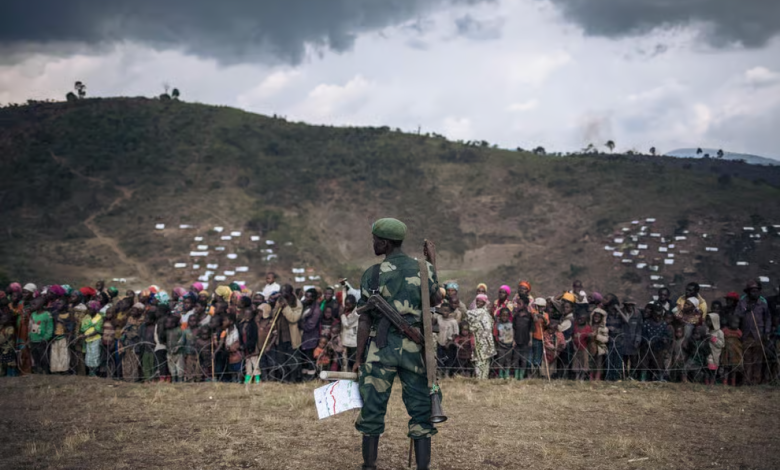
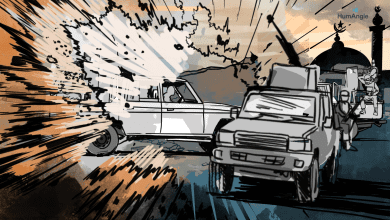
Scores of locals were uprooted from their households following clashes between the Wazalendo militia and the Twirwaneho group in several villages of the Fizi and Mwenga territories in the Democratic Republic of Congo (DRC).
The Fizi Civil Society, a coalition of human rights organisations in the DRC, on Wednesday, November 12, reported that the displaced individuals mainly come from the villages of Tuwetuwe, Kitasha, Ngezi, Bilalo-Mbili, and Point Zero.
The group noted that these areas have been the hardest hit by the ongoing fighting, which has worsened the humanitarian crisis in the region. Many fled between November 4 and 7, 2025. At least 552 households, comprising approximately 3,452 people, have been forced to leave their villages, according to Fizi Civil Society.
“These clashes have today brought about negative consequences on the material and humanitarian lives of the population, such as the massive displacement of the population, theft of cattle, burning and destruction of houses of the population,” said Alimasi Jacques, the leader of the Fizi Civil Society. “The village of Ngezi has been completely devastated by the belligerents. The health centre in the village of Tuwetuwe, in the Itombwe health zone within the Mikenge health area, was completely dispossessed of its important materials, including drugs and beds.”
While the Twirwaneho, a deadly militia group linked to M23 rebels, claims to be defending its community in South Kivu, the Wazalendo group, a government-backed coalition of local militias, opposes them. Their clashes, rooted in ethnic and political tensions, have displaced thousands and worsened insecurity in eastern DRC.
Since November 4, 2025, fighting in the region has intensified, with armed groups escalating assaults against one another. The civil society group said it has called for a ceasefire and the establishment of a humanitarian corridor.
“It is a pressing necessity and indispensable for saving human lives and upholding human rights and international humanitarian law. The parties concerned in the armed conflict in the region have a big role to play in facilitating this procedure so that humanitarian organisations can access all these zones conveniently,” Alimasi said.
Many displaced persons were found in and around the villages of Bikyaka Forest, Anunga River Forest, as well as in Kanguli, Bilende, Mulima, Abala, and other villages in Point Zero and Itombwe. Local officials said displaced persons are currently being sheltered by families, in schools, and in churches across Busumba, Mpati, Rugogwe, Kalengera, and Kibarizo. These civilians face extremely difficult conditions, having fled with only what they could carry.
The village of Kivuye, located in the Bashali area of Masisi territory in North Kivu, has been completely deserted. One section of the village is under rebel control, while the other is held by Wazalendo forces. Since Thursday, clashes between M23/AFC rebels and Wazalendo militias have paralysed socio-economic activities, forcing villagers to abandon their homes.
The Fizi Civil Society had previously highlighted a troubling humanitarian situation, including malnutrition among pregnant women and children, alongside widespread violence and human rights abuses, all of which continue to affect civilians.
Havent detected content to summarize.
Support Our Journalism
There are millions of ordinary people affected by conflict in Africa whose stories are missing in the mainstream media. HumAngle is determined to tell those challenging and under-reported stories, hoping that the people impacted by these conflicts will find the safety and security they deserve.
To ensure that we continue to provide public service coverage, we have a small favour to ask you. We want you to be part of our journalistic endeavour by contributing a token to us.
Your donation will further promote a robust, free, and independent media.
Donate HereStay Closer To The Stories That Matter