Seeking Redemption, Spurring Terror: The Curious Lives of Former Boko Haram Fighters in Nigeria
It is a tale of terror, misguided faith, and resignation to fate. The characters are soaked in blood; the streets are littered with mutilated bodies of souls lost to domestic jihadi warfare. There comes a semblance of repentance or sobriety, as the hands that once slit the throats of civilians in the name of religion now wield the power of the gun to protect and curiously re-terrorise them at the same time.
Listen to this story

12 Jun 2026
As a pariah child in search of Islamic knowledge, Goni Abubakar has no clue what it means to hold a gun and pull the trigger. He is just an almajiri who runs errands for his cleric master in Bama, a town in Borno State, northeastern Nigeria. He learns to recite Quran verses by heart; he is one of the brightest pupils under the cleric’s tutelage. In the beginning, the messages are clear: have faith in Allah, the Prophet Muhammad, and the Day of Judgement. Every pupil carries these heavy words around and keenly believes in them. They say the Quranic verses that match those words by heart: “O you who have believed, fear Allah and believe in His Messenger; He will [then] give you a double portion of His mercy and make for you a light by which you will walk and forgive you; and Allah is Forgiving and Merciful.”
The preaching is pious until peril pierces the heart of the preacher.
The teacher sells groceries, and Goni doubles as his shop assistant. Detached from his parents as a child, he was now a teen, tending only to the bidding of his mentor. Dozens of children are on this path to seek knowledge, but Goni is the teacher’s delight: fierce, smart, and completely loyal. Their earliest form of education is the Tsangaya, a traditional Quranic education in northern Nigeria, and most of them have not attended any formal secular school before they are thrown under the control of a man they all call “mallam”. The morning and evening classes are held in the shade of a tree and are led by the teacher, who preaches to them the ways of Islam.
Kids like Goni know what it means to grow up in a local community. A child can sing through the neighbourhood, begging anyone there for food and water. Local farmers prosper in peace after months of tilling and cultivating the land. People sleep at night without fear of being raided by assailants or militants. Fear and terror consumed the town when Boko Haram’s strange ideologies spread like wildfire into the communities. Goni’s teacher is among the first to embrace the ideologies propagated by Boko Haram’s founder, Mohammed Yusuf. As his preaching changed, his way of life changed too, beaming terror and extremism infused into the hearts of children under his mentorship.
In 2009, when Boko Haram went underground before re-emerging in 2010, Goni was already a 12-year-old. Too young and naive to ask questions, he and dozens of children followed their tutor to join the insurgent group that would later destabilise Nigeria. Now, in the northeastern region, the Boko Haram insurgency has uprooted over three million people and killed over 350,000, with government authorities failing to rein in the deadly scourge. Armed violence has spread beyond the region’s borders into parts of the northwestern and north-central regions.
Goni would become a grown man, swallowing the rulings of terrorists until he could no longer bear them. He now seeks redemption and reintegration through the state-backed deradicalisation programme. While it appears he has left a life of violence and attacks for good, it’s not that simple. For him and many other men in his shoes, post-Boko Haram life presents some puzzles that test the true efficacy of the deradicalisation scheme.
Are the terrorist deserters genuinely seeking redemption or only trying to survive? For months – between November 2025 and May 2026 – HumAngle probed the complexities of the former insurgents’ lives, documenting their journeys from the past to the present, their struggles to become civilians again, their secret frontline deals with the military, and the fragile peace their reintegration poses to the civilian population.
Snaring the cat
When Goni joined Boko Haram as a teen, his master’s preachings had switched from admonishing children under his watch to have strong faith in their religion to brainwashing them into a life of violence. They embraced it, truly believing that spilling the blood of people who don’t believe in their ideology was the clearest pathway to paradise. Elsewhere in Borno, in the Malam Fatori area, Ali Bukhar also listened to the sermons of Boko Haram’s jihadists. Those sermons summoned the beast in him and took away the best of his humanity. He joined them convinced that true salvation was immersed in the ideology of killing and maiming.
“In the preachings, they’d emphasise that if you died in the cause, you are a martyr. That you are going to paradise straight,” Ali recalls. He joined as an adult in 2014 during the peak of the Boko Haram emergence. About five months after joining the group, he was asked to attend training. His handlers took him to a riverine area and gave him a gun. “They have a specific instructor whose job is solely to train new intakes. You’d train for about four to five months. After the training, they’d return you to the Markaz [Arabic word for headquarters or centre]. And when it is time to go out for a fight, they’d give you guns.”
Suleiman Mohammad tells a slightly different story. He joined Boko Haram in 2013, during the first Baga attack. The militants and the military had been locked in a fierce battle that cost hundreds of civilians their lives and thousands their homes. A retaliatory raid after a military base was attacked in Baga took a bloody turn for mostly civilians, brewing a trust deficit in the operational methods of Nigerian forces in their fight against terrorism. The insurgent group took advantage of the situation to recruit young people into its unholy ways. Suleiman was among hundreds of people brought into the system after the Baga bloody saga and the uprising that followed. He was a herder in Malam Fatori and had grown up through the local Tsangaya education system.
“So after the Baga attack, I was contacted by the fighters who turned out to be from my village,” Suleiman reminisces. “We studied together when we attended Tsangaya and Islamiyya a long time ago. They told me how the other brothers were with them. They told me stories of how they recite the Quran collectively and also wage ‘holy war’ together. Then they invited me to join them. So, we made an appointment to meet at Mairari.”
A week later, the terrorists came as agreed and met with Suleiman’s father in his home.
“Your son is joining us in the cause of Allah. He’d work for Allah,” the terrorists say.
“Allah’s cause?” the father wonders. “Jihad is mandatory for all muslims. And since he has agreed to go with you, I have no objections.”
The terrorists had come with guns and machetes, Suleiman notes, suggesting that his father was made to agree under duress. “That was how I joined them. We had carried out several attacks ever since. From Mairari, Tungushe, and others. In fact, we held Mairari – under Magumeri – captive for quite some time before it was recaptured by the military.”
People joined the Boko Haram insurgency for different reasons. For Goni and his cohorts, it was a case of misguided faith rooted in brainwashing and psychological manipulation. The story is different for many others. The fire of the burning insurgency started from the charismatic oratory and radical sermons by the founder of Boko Haram, Mohammed Yusuf, between 2002 and 2009. Since at least 2021, HumAngle has interviewed dozens of defectors who revealed why they joined the deadly group before surrendering to a deradicalisation scheme organised by the government. Mohammed took advantage of the dysfunctions within the Nigerian state to campaign against a secular system of governance and, by extension, democracy.
Testimonies from defectors and custodians of Boko Haram’s history reveal that the post-2009 state repression, especially the actual brutality of the Nigerian military and police against civilians, and the uprising that trailed it, were among the factors that drove young people into insurgency. At the time, “Tura Takai Bango” was the mantra for the agitation, literally meaning “they had been pushed to the wall”. The era and the ugly events that unfolded encapsulate the desperation that leads civilians to affiliate with insurgents. When the state’s counter-insurgency tactics involve collective punishment, the civilian population often finds itself caught in a “double jeopardy” where both the state and the insurgents are viewed as existential threats.
Isa Alamndiri, one of the victims of the state repression, told HumAngle how he witnessed the summary execution of young people in 2016, in the Marte Local Government Area (LGA), on the grounds that they were shielding terrorists. “They came and gathered all of us in the village. They then separated the elderly and killed all the youths. They shot over 30 youths that day. Their reason was that we were harbouring Boko Haram in our midst,” Isa says.
Another witness of what many believe pushed youths in the state to the wall, Musa Kurama, recalls that the Nigerian military invaded his village in Meleri, also in Marte, to burn his house, among many others, to the ground, saying that the entire community was a hideout for terrorists. The cycle of violence forced young adults and naive teenagers to take the insurgents’ offer of “protection”, which was a predatory alternative to state-sponsored destruction.
Boko Haram also targeted schools for attacks, deliberately conducting mass kidnappings such as in Chibok and Dapchi to enforce their radical ideology by making secular educational institutions unsafe. This insurgent tactic strategically provides a supply of young captives who were groomed as fighters or forced into “marriages” that facilitate the group’s long-term sustainability. The state’s failure to secure these environments has led to the closure of over 600 schools in the region, creating a lost generation of children who are more susceptible to recruitment because of the absence of alternative futures.
Jihad: ‘Pathway to paradise’
Goni has grown up knowing nothing but violence and bloodshed, and now claims he’s out of the messy circle. He smiles as he speaks, but when he remembers how he joined other terrorists to pillage villages, uproot people from their homes, farmlands, and abduct scores, he furrows his brow.
“Before we go out, we would prepare. They’d mobilise 100 to 200 fighters, give them arms, and say, ‘We are going out to wage a holy war’. Then we would charge into military barracks,” he tells HumAngle curtly. “I believe we were deceived by our masters because they don’t practice what they preach and twist religious verses to suit their evil acts and intentions.”
Regardless of how and why they joined, newly recruited insurgents are made to believe that killing and spilling the blood of anyone not following their templates of violence has only one name: jihad. Most defectors we spoke to corroborated this during separate interviews in 2025 and later in 2026.
Experts and scholars in political science, human rights, and peace and conflict studies argue that Boko Haram weaponised the concept of jihad to manipulate its followers into believing keenly in killing and destroying those who disagree with their ideology. In the 2021 issue of the Al-Hikmah Journal on Social Sciences and Education, for example, Issa Muhammad-Jamiu, a researcher at Kogi State University in North Central Nigeria, notes that Boko Haram’s ideology contradicts Islamic injunctions. The most disturbing aspect, he states, is the condemnation of any scholarly verdict that falls short of their view.
“How could they attribute Islam to the prohibition of Western education, which has become a necessity, if not compulsory, to Muslims in the contemporary world? Do they mean that they are more knowledgeable and more committed to Islam than those Companions and Tabi’un who studied foreign cultures and sciences for the interest of Muslim communities?” Issa ponders.
Two sides of the coin
As Goni speaks, his lips look pale and peeling. He’s been battling typhoid and malaria and is still receiving treatment. He carries a gentle demeanour that betrays the terror he had perpetrated, and wears a blank face wrinkled with emotionlessness. For him, peace is a no-brainer when violence is pervasive.
He quips, throwing on a long, tedious smile when asked what he thinks of the concept of peace. “Peace tastes good,” he says. “Living peacefully among loved ones is greater than any other thing. I was in Njimia before leaving. I had worked in several places, including Gazuwa, my birthplace. What made me leave was recent developments. The conflict between the factions and the injustice. So, I took my weapon and left. I arrived at Konduga, where I was received. They then brought us to Bama and then to Hajj Camp.”
Goni believes that embracing peace simply means walking away from a life of pain, violence, and gnashing of teeth. Dwelling in the forest with terrorists means dining with the devil, he says. His moral postulation and spiritual freedom were destroyed in the terrorist camp. He had access to the Quran and understood its teachings, but every verse he read had to be interpreted in accordance with the sect’s teachings. He had no freedom of thought or understanding of whatever he read from the scripture. He had no meaningful life in the forest, he says, apart from destroying people’s lives.
He and many of the terrorist deserters we spoke to said they experienced pain in its most extreme form. Whenever they sustained gunshot wounds during field battles with the military, they returned to the forest almost dead. They were being treated by their locally-trained doctors, whom many of the ex-combatants described as quacks. Most times, they gave them dangerous, addictive opioids such as Tramadol and Refinol. They became addicted to these drugs to escape their daily ordeals, even after healing from the wounds.
“They punished us for taking hard drugs they introduced to us in the first place,” Goni complains. “Sometimes a fighter could be killed just because he takes hard drugs. When they knew it was bad, why did they use it to treat us?”
Many terrorists decided to surrender to the military for different reasons. One major cause of mass defections from the terrorist camps was the sudden demise of Abubakar Shekau, the Boko Haram gang leader who took over the mantle of terror from Mohammed Yusuf. There had been cracks within the insurgent group, leading to the rise of the Islamic State for West African Province (ISWAP), which was formed as a rebel group against Shekau’s camp. Another thing that followed the death of Shekau in 2021 was disease and hunger outbreaks.
The Nigerian military took advantage of Shekau’s death to launch several offensive attacks on the terrorist dens in northeastern Nigeria, destroying their logistics bases. That year, the military said it recorded thousands of defections from terrorists who surrendered to embrace peace. Once they submit themselves to the military after years of committing criminal atrocities, they are subjected to deradicalisation through the Borno Model.
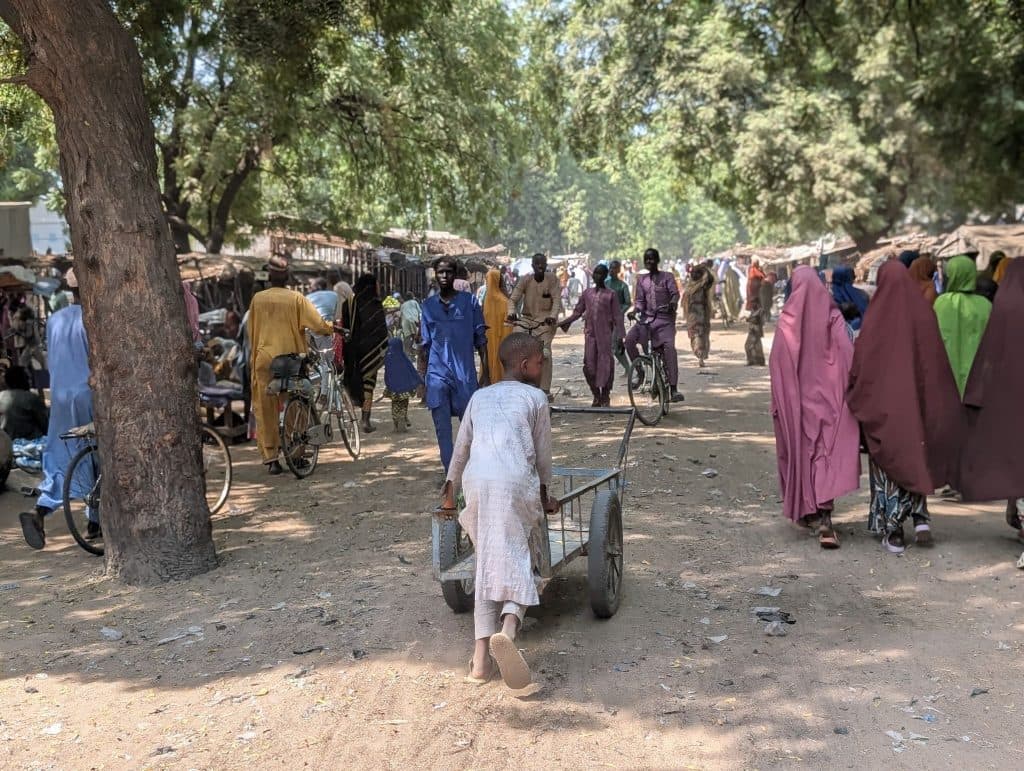
HumAngle interviewed several Boko Haram deserters to examine their understanding of peace after committing grave crimes against the human population in the region. Many of them curiously oversimplified the concept, reducing it to simply switching sides and moving from deadly armed violence to living an average civilian life.
“From my understanding, peace is us leaving the group,” Ali simply says and goes ahead to recount how he joined other fighters to enslave girls for sex after kidnapping them from their homes, schools, and farms. He had been through hell as a former Boko Haram member, and now seeks solace in embracing peace by surrendering to the military. He had been imprisoned by his superiors in the terror camp and asked to surrender his arms, but he refused. “I buried it where they could not see it. I was locked up for three months. When they released me, I went and dug up my gun and left them,” he recalls.
For him and several defectors, returning to the civilian community is an exciting prospect. Despite the horror they inflicted on civilian communities as terrorists, they consider living with ordinary locals again, especially close to their families, as a peaceful reconciliation of their horrible past. “We were ignorant when we did those things in the past. But now we know better,” one of them, Abubakar Saleh, says. He was a Boko Haram commander who led dozens of fighters to dislodge communities, rape women and girls and subjugate civilian communities under terrorist control.
He has now returned to Maiduguri with his family. His wife had just given birth when we spoke to him, and he has settled well into the civilian community. To him, peace is relief from the pain that comes with being a terrorist leader. Although he enjoyed authority as a commanding fighter, his life in the forest was miserable, as he was always on the move to evade military operations and surveillance.
“Life here is better,” he affirms. “It is more comfortable and peaceful. In the forest, there is no rest. You’d hunt daily like a lion. Always changing locations. But here, no attacks.”
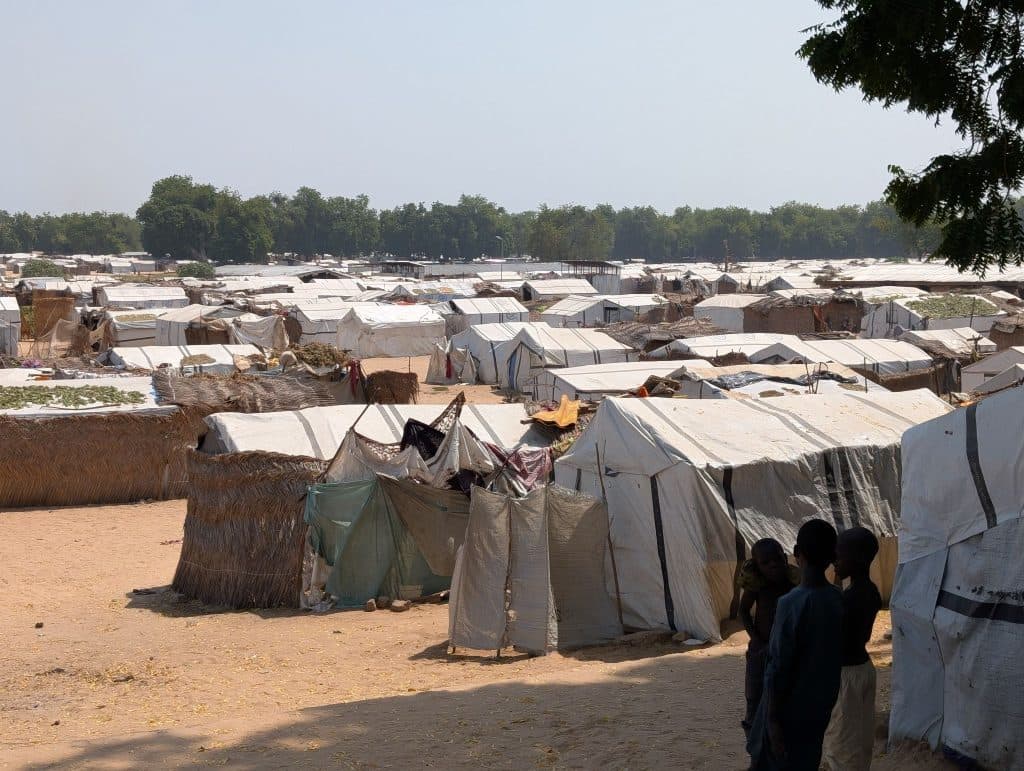
For civilian casualties of the terror perpetrated by many of these terrorist deserters, however, peace doesn’t come easily. For years, victims of insurgency in the northeastern region have longed for peace and reparations. Thousands of displaced people not only lost their homes, but also lost hope in ever rebuilding their lives or returning to their settlements. In parts of Borno, especially at the Shuwari displacement site, displaced people feed on the leftovers from former terrorists undergoing the government’s deradicalisation programme, a situation that has created an atmosphere of distrust and inequalities. When the Borno State government began a resettlement scheme for displaced people, they were promised protection and stipends to rebuild their lives. Many of them ended up being re-displaced by terrorists and would not get the opportunity to rebuild their lives.
Ensuring peace and justice in the North East is far more complicated than many terrorist deserters have assumed, says Ndubuisi Ani, a Senior Researcher at the Institute of Security Studies. The transitional justice expert told HumAngle that the defectors’ curious understanding of peace undermines the pains and level of destruction civilians have witnessed at the hands of terrorists. He argues that peace and justice cannot be achieved in tackling violent extremism unless there’s inclusivity, good governance, and stability.
“The state must understand that there are basic needs to be responded to (on the side of victims),” Ndubuisi explains. “A lot of communities need a lot of social contracts on the ground.”
The security expert further explains that any transitional justice scheme by the government must be victim-centred. He advised that the state must go back to its original duty of protecting citizens and ensuring peace and tranquillity in society.
“You’ve not psychologically prepared actors. How do you let the victims understand?” he asked, stating that the government can’t successfully reintegrate terrorist deserters back into society without proper public engagement. “The intent is good, but the approach is the problem.”
Seeking peace and redemption
Like many terrorist deserters, Goni accepts that he has lived a complicated life of violence and horror. This is not the time for regret, he says. It’s a moment to seek forgiveness, to retrace his steps, and perhaps to wash the blood from his own hands. When he arrived at the Hajj Camp in Maiduguri after surrendering to the military and going through the process of deradicalisation, he struggled with the guilt of the atrocities he had committed, and, to prove to the military that he had backed off from a life of bloodshed, he agreed to work in the field with soldiers fighting terrorists. He’s not alone in this. Several former combatants we spoke to said they decided to work as auxiliary operatives to fight alongside the military against Boko Haram, the same sect they once belonged to. Several other defectors noted that when they chose to work with the military – as a way to seek redemption – they were handed rifles, loaded onto the backs of patrol trucks, and sent directly into the marshes and forests they had recently fled.
Asked whether they were coerced into joining the military, Goni laughed before saying the escapade was never mandatory.
“It is a choice,” he replies. “I may decide not to work with them again.”
It is a hard nut to crack, but the terrorist deserters say the military operatives have learned to work and walk with them.
“They arm us and take us with them. If, for instance, a Commanding Officer is going out for an operation, he’d request a certain amount of “repentants” from the Hajj Camp officials. And the officials would assign like 50 or 100 persons to him, depending on the scale of the operation,” Goni says.
By fighting the same people who recruited him into the monolithic Boko Haram camp as a teen, Goni says, he has freed himself from a lifetime of guilt. During his time with the killers, he recalls asking many of the fighters if they loved what they were doing. Those fighters feel trapped, he says; they’re homesick, but even their families have rejected them. Now that he has freed himself from the shackles of terrorism, he says he begs God for forgiveness. But while he seeks forgiveness for the atrocities he has committed, he would use every knowledge he has about the group to fight them back. That’s his way of seeking redemption.
“They give us food and allowances, and we give them intelligence. We show them the hideouts. Because we know the terrain better than they do. We know their fighting styles,” Goni brags, smiling and looking directly at the reporter. “We know their escape routes. Isn’t this helpful enough? Also, we lead the way. They’d follow behind. We charge in.”
Redemption through revenge
Ali’s life after Boko Haram is even more thrilling: he seeks redemption through revenge. He had fallen for peer pressure to join one of the most brutal terrorist organisations in existence, and his life had since remained terrifying. For years, he was a cog in the Boko Haram machine, serving with vim and vigour. He learned to repair military vehicles in the forest and became renowned as the sect’s mechanic. He would repair heavy military patrol vehicles seized by the insurgents or those stuck in the mud within the forest during ambushes.
Despite his servitude for Boko Haram’s cause, he says, his entire life with the terror group was a lie. He grew to realise that behind the Boko Haram ideology was a hail of deceit and human manipulation. Bamboozled with distorted interpretations of verses from the Quran, Ali recounts how he had joined hundreds of other fighters to trigger plague, tears, and horror in civilian communities in the name of holy war.
“The practice violates the preachings. My biggest reason was that the practice was not what the Prophet truly teaches,” he claims. “The commanders would usually stay behind, leaving a comfortable life, while the foot soldiers are left starving and fighting day and night.”
For Ali, the deal breaker with Boko Haram was during a chaotic raid in the Tungushe town of Borno. He had come under a heavy burst of military gunfire, which tore through his arm, shattering the bone. He had expected that the sect’s medical team would give him some extra care due to his critical condition, but they treated him like disposable property.
“I was so humiliated by the sect’s medical team, as treatments were handled haphazardly,” he laments. “If it were the commanders, they would treat them swiftly with maximum care. But for fighters, there is usually no medical attention.”
For two straight years, he nursed the pain alone and grew bitter resentment for the sect and its ideologies. He realised he was nothing but a tool for achieving the commanders’ personal hunches and interests. One night, he slipped away, through the scrublands, trudging northward until he found himself around the military garrison in Monguno, where he fell flat on the ground and surrendered.
“After surrendering in Monguno, they took us to Hajj Camp in Maiduguri,” Ali tells HumAngle. “Days later, they brought forward an opportunity where you could help in the fight. You may decide to follow the military during attacks or provide them with intelligence. Whatever you think you can do. So, I said I want to fight. I have a friend who also fights alongside the soldiers. I chose to fight because I have realised that we were deceived by the group.”
Repentance or survival?
Unlike Ali and Goni, repentance has an entirely different meaning for Suleiman: it is an illusion or a political statement made by people in government. Calling him a “repentant Boko Haram” is an insult, he says. To him, that word is a subtle qualifier for a coward. With a cold voice and a sour look, he describes how he worked with ground troops to attack Timbuktu, Sambisa, and other terrorist hideouts.
His case is more of just switching sides than actual repentance. He dreads the term “repentant Boko Haram” and doesn’t hide it. As a terrorist, he lived for violence, pillaging villages and destroying people’s lives and properties. Following the rise of Abu Mushab al-Barnawi, a factional leader of the Boko Haram sect, Suleiman came under his command, joining over 100 fighters under his control. He had fought fiercely against the Nigerian military on many occasions, and he was feared for his precise brutality amid battles.
His cruelty had no bounds, as he had fought against top Nigerian military leaders, as he states, like Captain Bala, Manga, and Abu Ali, leaving scars on the town that are still visible today. He had also raided beyond Nigeria, maiming locals in the Niger Republic, especially in Diffa, Maine-Soroa, and Chabbal.
When factional infighting turned truly brutal, Suleiman chose to be on the safer side. Exhausted by the tireless internal slaughter, he left and surrendered to the military. Now, he does almost the same thing on the other side. The activity is the same, he notes, only the targets are different.
“I am not comfortable with that name [repentant]. I don’t like it,” Suleiman says. He would frown and then laugh during the interview to convey the complexity of the terror drowning him. “In the forest, I followed someone’s commands. Here too, I am commanded and still branded repentant?”
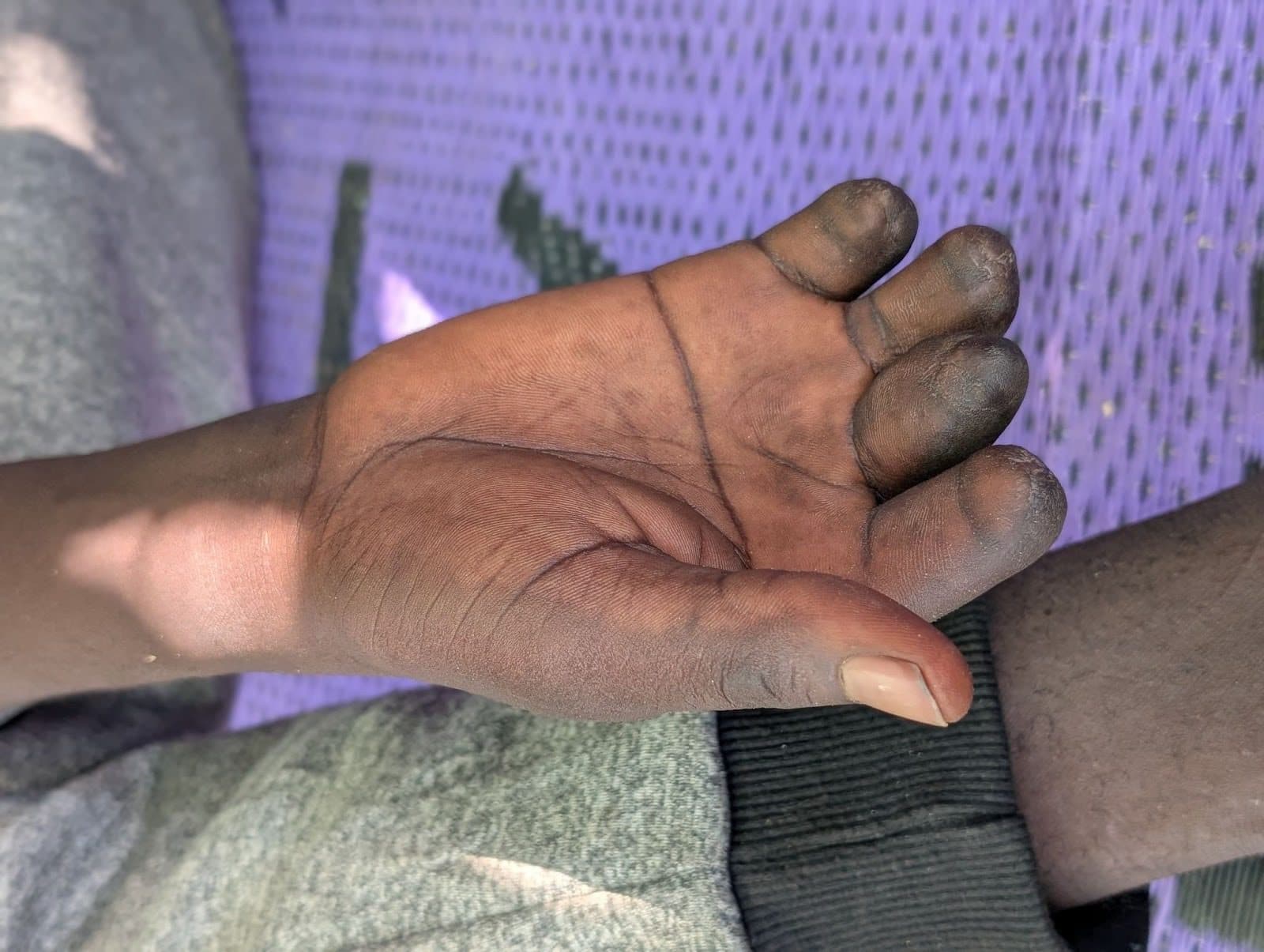
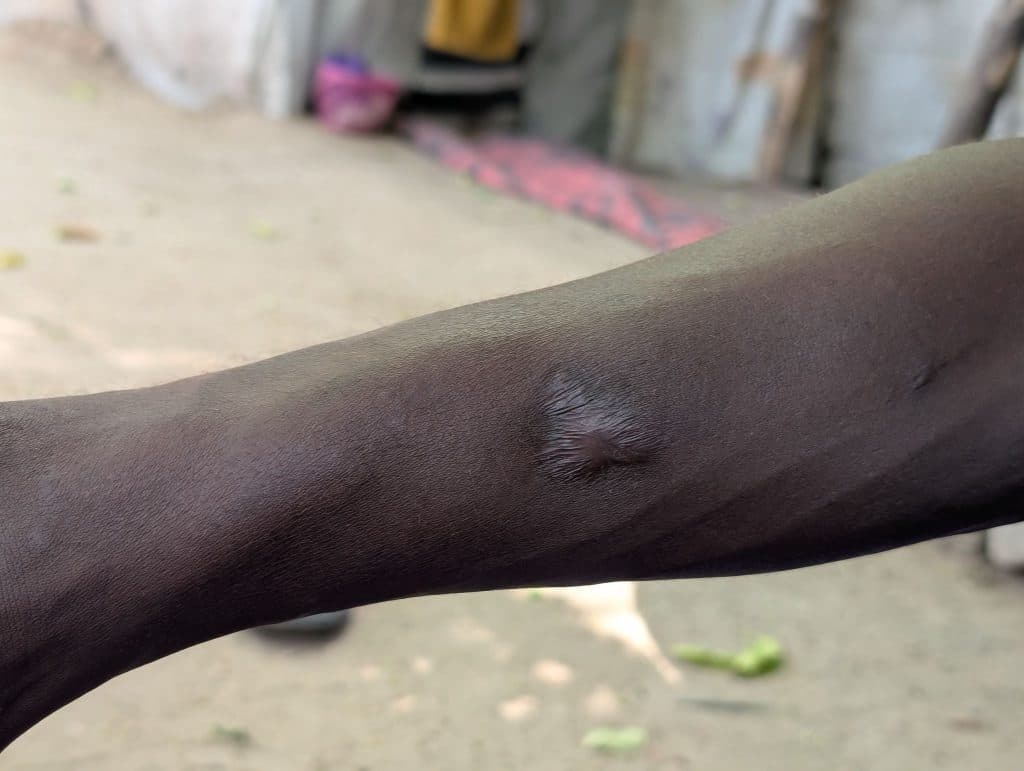
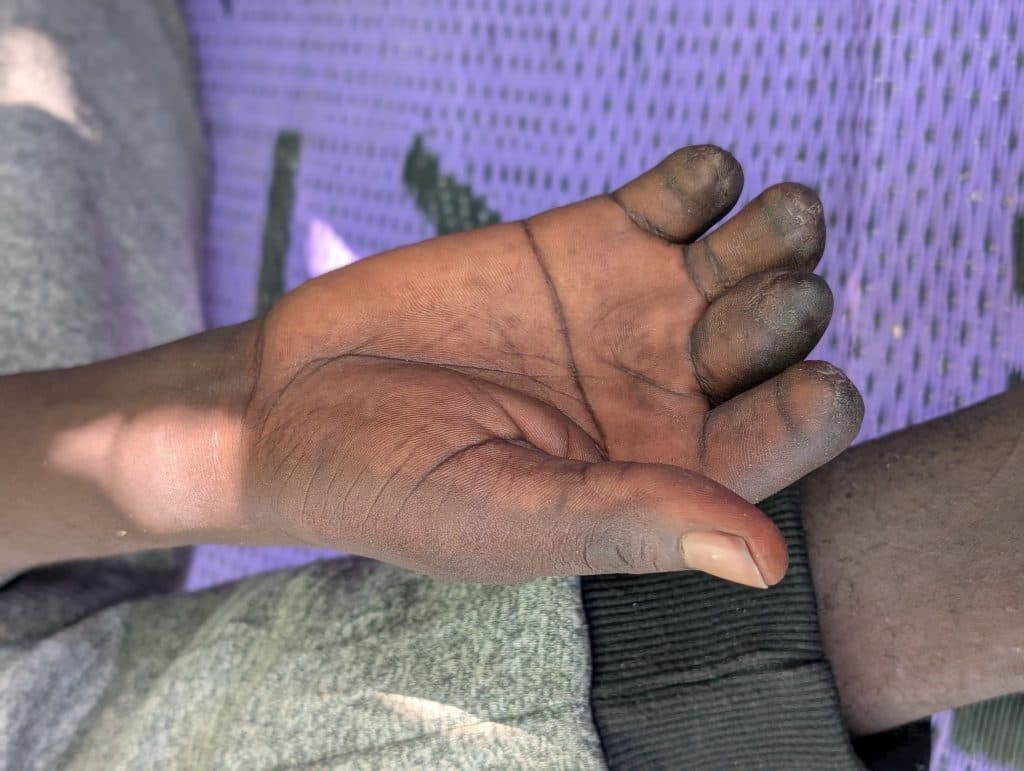
He wears a worn Civilian Joint Task Force (CJTF) uniform during the interview with HumAngle, bragging about following soldiers to the battlefield against terrorists in Geidam, Marte, Kala-Bridge and Malam Fatori. Despite his defiance, however, he seems to have taken bullets for the military during counterterrorism raids in northeastern Nigeria. His four fingers are chopped off, and there are scars all over his body. It was during a joint offensive with Chadian forces in northern Monguno. An artillery explosion had torn through the military ranks and killed several soldiers and terrorist deserters fighting by their side. He would follow the forces into the fortified hideouts of Timbuktu and Sambisa, giving on-the-ground intel to navigate the terrain.
“I got this arm scar, and my fingers were chopped off while digging out a planted landmine about five months ago,” he says of another military raid he participated in. “The explosion killed two other ex-combatants and nine soldiers. When the engineer scouted and identified a planted bomb, he refused to dig it out. None of the soldiers did. So they asked me to do it. One of the wires sparked. Then it exploded. It also affected my leg.”
The deradicalisation scheme
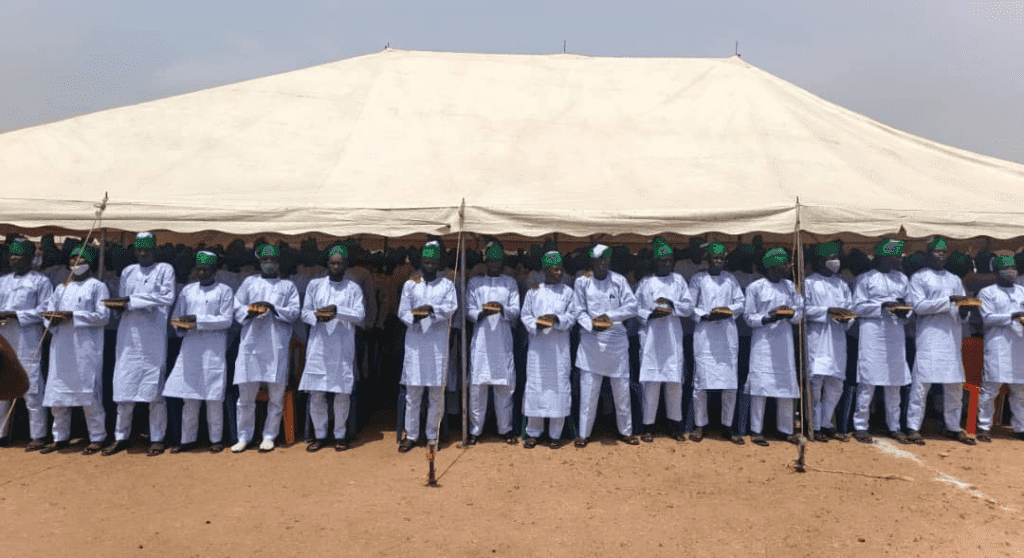
The term “repentance”, which Suleiman and several other defectors loathe, is one of the modus operandi of the Operation Safe Corridor, a military-led deradicalisation and reintegration programme across northeastern states. Established in 2016, the programme has witnessed both criticism and appraisal from experts and affected citizens. The quest for transitional justice, following the mass atrocities committed by Boko Haram against the people and the government of Nigeria, pushed authorities to come up with peacebuilding efforts.
The federal government had introduced the judicial approach of mass trials of Boko Haram figures captured on the battlefield, but systemic failures of the legal system derailed the processes. With a conviction rate of less than 10 per cent after conducting mass trials of thousands of fighters between 2017 and 2020, public distrust in the judicial system grew rapidly. These efforts also faced hurdles due to limited resources and circumstantial evidence, as well as a massive backlog of approximately 10,000 suspected fighters awaiting trial.
Following deficiencies in the judicial and military mechanisms, the government provided non-judicial options, such as the Operation Safe Corridor (OPSC) and, later, the Borno Model, a scheme designed to handle the mass defections of thousands of insurgents.
HumAngle reviewed at least two research studies that confirm our on-the-ground reporting on the deficiencies and the public misgivings against the counterinsurgency initiative. The independent studies, one led by Idayat Hassan, then of the Centre for Democracy and Development (CDD), and the other by Hassan-Taiwo Adebayo of the Institute of Security Studies (ISS), noted a systemic imbalance that seemed to favour the rehabilitation of perpetrators over the survival and justice of their victims. The disparity in the attention given to terrorist deserters also fueled widespread community resentment and birthed a narrative that terrorists are being pampered at the expense of their targets. The security and transitional justice experts also assert that a flawed public appeal and information management have sparked outrage and a trust deficit on the government’s side.
One concern Taiwo’s research raised is the persistent challenges in providing sufficient economic support to Boko Haram deserters once they leave the camps. Several defectors HumAngle interviewed raised the same concern. Although they vowed to live civilian lives again, they claimed their lives in the forest were more prosperous, and they’re now facing economic hurdles after defecting. The former insurgents, now working as assets to the military, also complained of constant failed promises. When they’re called upon for operations against the terrorists, the military would pledge mouth-watering financial gains only to offer them an amount far less than what they had promised.
“Then they’d say they’ll pay us each ₦1 million or ₦1.5 million for every crucial piece of information and operation. But after a successful mission, they’d go back on their words and pay ₦100,000 or below. Whereas we have families to cater for. Wives, children, and parents,” Suleiman recounts, a claim substantiated by other former combatants we interviewed.
Wayward ways
As many defectors struggle to settle into communities, civilians also struggle to embrace them. The reason is not far-fetched: the villagers have grown resentful of former Boko Haram members who have raided their settlements, stripping them of their homes and stable lives, only to come and live next door. The moment they leave the rehabilitation camps, they escape the military’s watchful eyes. Many times, this escape means defectors choose what they do with their lives, including displaying violent tendencies against civilians. The villagers call them “repentants”, but insist their ways are wayward.
Locals, including displaced people, say so-called repentant terrorists re-terrorise them, making them relive the terror they had inflicted on them. During separate interviews, civilian villagers accused security agents of shielding defectors when they commit offences against the people. They say this has triggered a climate of silence within the Maiduguri metropolis, where everyone is scared of speaking ill of a former Boko Haram fighter, even when they’re guilty of wrongdoing. When HumAngle visited the Bama displacement camp in 2025, for instance, we saw dozens of defectors moving around aimlessly with guns and other weapons. Camp officials claimed the armed defectors were protecting displaced persons, but when we requested to speak with them, they denied us access. Displaced persons also refrained from discussing their situation, fearing persecution.
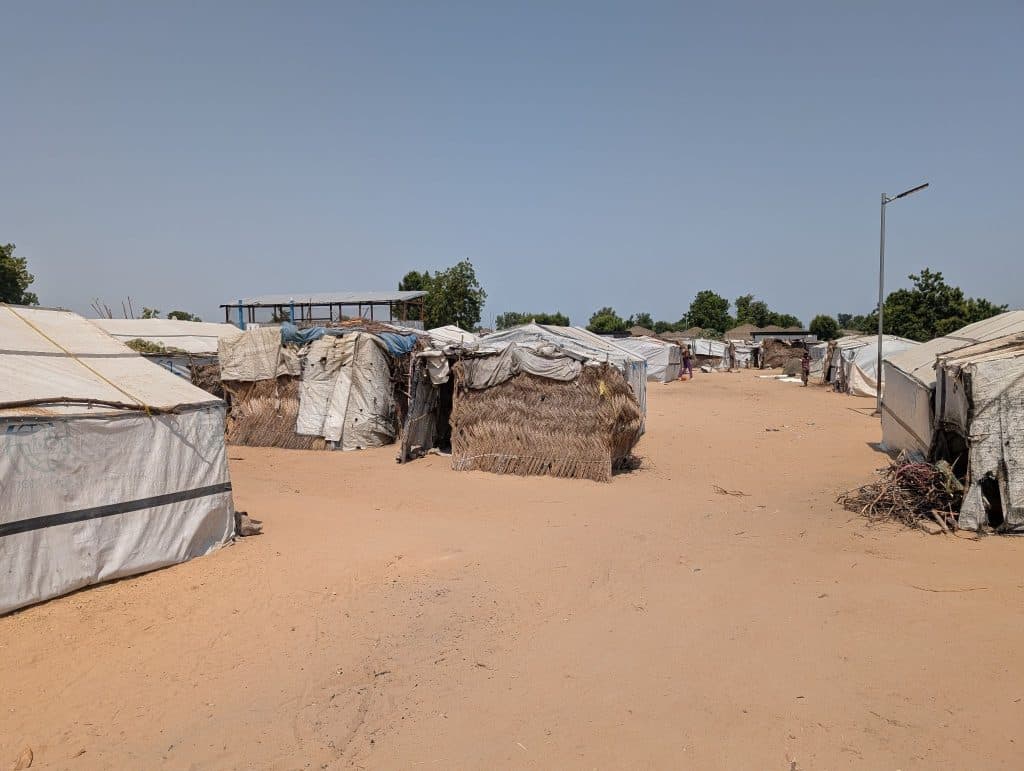
In Shuwari, a peri-urban area just outside Maiduguri town in Borno, a few locals agreed to talk to HumAngle on the condition that their identities would be concealed. Villagers say these defectors incite violence, rob civilians, and harass women. When they complain or try to fight back, they brag about having ruled the forest for years and having the power to do whatever they want within the civilian communities. Displaced people also live side by side at the Shuwari IDP camp with men they believe are responsible for their displacement. Living with them at the camp comes with fear and mistrust, IDPs say.
When Salihu Garba briefly returned to Bama, following the Borno state resettlement programme, threats from former Boko Haram fighters forced him back to the Shuwari IDP camp, he says. While some defectors seem to be living without fighting their neighbours, others, especially those working as assets for the military, move around brandishing rifles, spurring terror, and instilling fear among locals. Simple communal disputes often degenerate into violence. Salihu tells HumAngle that, two months ago, a quarrel spiralled into stabbing a villager. A former insurgent had stepped on bricks laid by a villager to build part of his compound, and that escalated into an exchange of blows and domestic weapons. Both the civilian and the defector were arrested, but the latter returned the next day to stab the former, who was later rushed to the hospital to fight for his life.
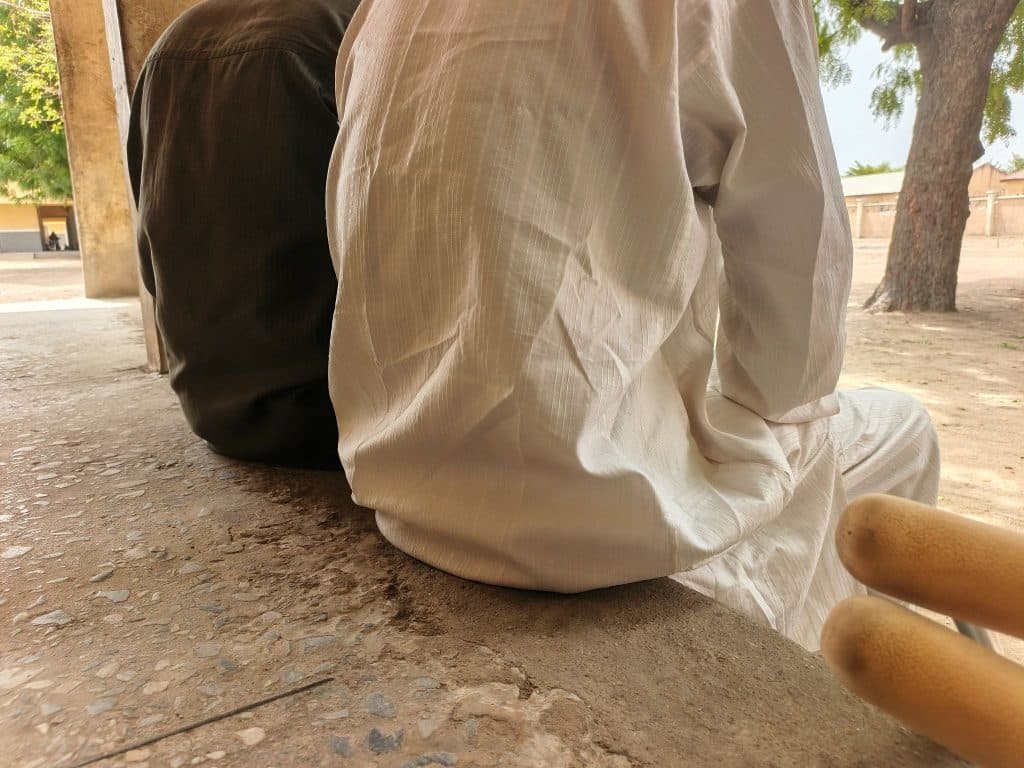
Rural criminality also adds to the tension that comes with forcibly reintegrating terrorists into civilian communities, locals say. One repentant terrorist was recently arrested for theft after breaking into shops and stealing six bags of beans. Before being sent to the police cell and later prison, he threatened the shop owner: “I will return and kill you after serving my term.”
For Isah Kamsulum, another resident of Shuwari, the fear is deeply personal. In 2015, he witnessed a man named Ba’ana slaughter fifteen people in Bama. Years later, Ba’ana resurfaced as a repentant, working with soldiers in the community. Isah’s nephew confronted him, enraged that someone who had killed his sibling now lived comfortably among them. Ba’ana killed the nephew. He was arrested, held briefly, then released. Today, he fights alongside the military in Gamboru. Residents say they were never consulted before repentants were resettled among them. “We just saw them,” he complains. “The government brought them out of the forest and kept us here, too. We are all under their control.”
Ibrahim Adam of the Zajeri community in the state says he had an even more concerning experience. Over a year ago, about ten former insurgents got an apartment for themselves within the community. They were at first unarmed, but some of their friends, who worked as auxiliary fighters with the military and were armed, would frequently come visiting them daily. Their presence, especially in large numbers, unsettled the villagers. The former insurgents started asking young women to marry them. One divorcee selling food by the roadside was told she must marry one of them. Scared to the bone, the woman abandoned her trade and fled the area.
Villagers say they have grown alarmed living with the repentants, with Ibrahim recounting that they have witnessed about 30 of them crammed in an apartment, talking recklessly and loudly about their past and bragging about their atrocities before surrendering to the army. The community demanded their eviction, but the landlord refused because he’s afraid. While older repentants in the community maintain some decorum, the younger ones, accompanied by armed companions, remain a source of fear.
For Goni, Ali, and several terrorist deserters HumAngle interviewed, relapsing into terror is not an option. They also said they’re not among the young repentants instilling fears into the civilian community. They say they’ve chosen the path of peace and would never return to a life of violence.
Support Our Journalism
There are millions of ordinary people affected by conflict in Africa whose stories are missing in the mainstream media. HumAngle is determined to tell those challenging and under-reported stories, hoping that the people impacted by these conflicts will find the safety and security they deserve.
To ensure that we continue to provide public service coverage, we have a small favour to ask you. We want you to be part of our journalistic endeavour by contributing a token to us.
Your donation will further promote a robust, free, and independent media.
Comments
3 comments
Abdulkadir Usman
21 Jun 2026, 10:38
We ve found ourselves caught btw the devil and deep blue sea. There is need for periodic monitoring and evaluation of the programme to give especially the community confidence and peace of mind.
Abdulkadir Usman
21 Jun 2026, 10:37
We ve found ourselves caught btw the devil and deep blue sea. There is need for periodic monitoring and evaluation of the programme to give especially the community confodence and peace of mind.
Dayo Suleiman
15 Jun 2026, 21:25
We pray for better Nigeria, not the ruthless one that is happening to us.
Sign in to join the discussion.
Of course, we want our exclusive stories to reach as many people as possible and would appreciate it if you republish them. We only ask that you properly attribute to HumAngle, generally including the author's name, a link to the publication and a line of acknowledgement.