Renewed Terror Attacks Target Those Rebuilding Borno’s Terrorised Villages
Across Borno State, the government is closing camps, rebuilding destroyed homes, and resettling displaced communities. However, consistent terror attacks targeting construction workers, security bases, and resettled communities are exposing the fragility of efforts to rebuild and restore normal life.

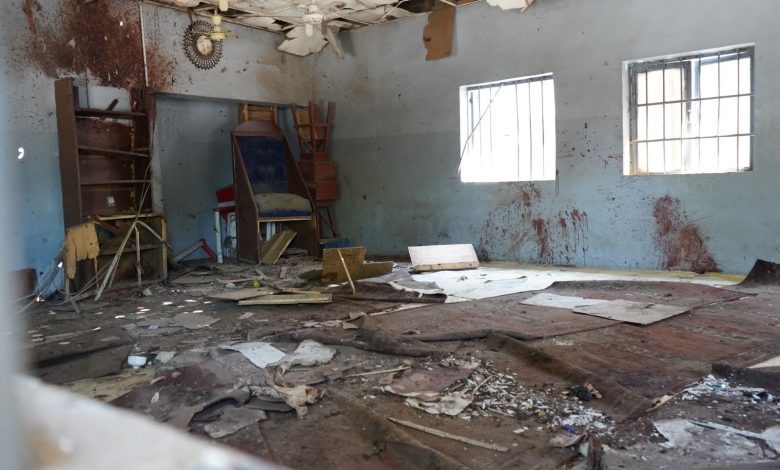
Yusuf Abdulmalik’s phone rang, and the voice on the other end did not waste time on greetings. “They said they had been killed,” he said simply.
“Who? And by whom?” Yusuf asked, startled.
“The workers we drove to Sabon Gari.”
Yusuf still remembers where he stood when the call came: at the park in Biu, northeastern Nigeria, watching as vehicles loaded and left. Two days earlier, his friend, also a commercial driver, had driven about 30 construction workers from Biu to Wajiroko, a community under Damboa, a few kilometres away. They had travelled under military escort.
“I was at the park when they left,” Yusuf told HumAngle.
At Wajiroko, the men were rebuilding a bridge previously destroyed by terrorists from the Islamic State West Africa Province (ISWAP). Ali Abdullahi, a roofer based in Maiduguri, the Borno State capital, and originally from Biu, knew some of them. Two were his friends.
“They were [form] carpenters and welders,” he said.
The route between Biu and Damboa is familiar to traders, drivers, and labourers. Yet it has remained an unsafe axis for years. The bridge construction at Wajiroko brought some hope of reopening access. But that optimism has thinned.
“The road is not safe,” Yusuf said. “It is full of potholes. And inside these potholes, they [the terrorists] bury mines.”
This has been a constant worry. In April 2025, improvised explosive devices (IEDs) buried along the Maiduguri-Damboa road exploded, killing at least seven passengers and injuring several others.
At the Wajiroko site, Ali said, the workers usually returned to either Biu or Damboa to spend the night after each day’s work. But on Wednesday, Jan. 28, they did not.
Instead, they moved to Sabon Gari, a nearby community, a short walk from the construction site. “They were killed at night, in their sleep,” Yusuf said. “It was around 11 p.m.”
Some media reports put the number of the dead at 25. But in Biu, where the bodies were brought and buried, people counted differently. “I counted 23,” Yusuf said. “Nine of them were my friend’s neighbours.”
The corpses arrived in the morning, and word spread quickly. Families and residents rushed to identify faces, to search for familiar clothes, to confirm fears they had carried through the night.
“You cannot stand the sight,” Yusuf said. “Because of how they were murdered.” Two people survived, he added. Some of the victims were buried on Thursday. Others on Friday.
A member of the Nigeria Forest Security Services (NFSS), a volunteer security outfit supporting counterterrorism efforts in the region, said the security personnel attached to the workers had returned to their base in Damboa that night.
“They had no base in Sabon Gari,” said the NFSS member. “The closest is Damboa. For security to spend the night at the site, it must first be approved.”
He said discussions had already begun about establishing a new security post in the area.
“They had compiled a list of personnel to be posted there,” he said.
Reconstruction under pressure
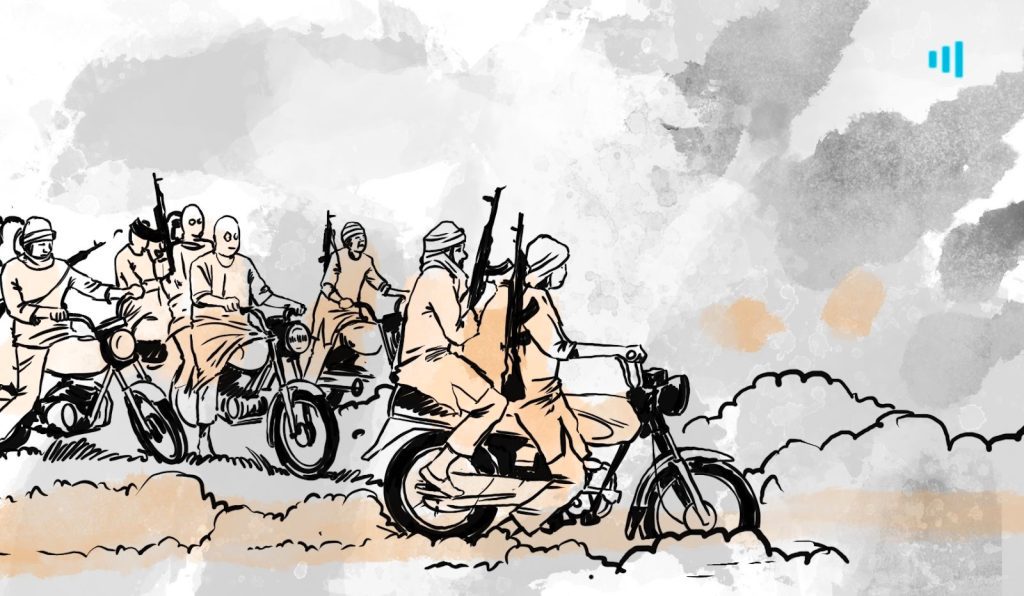
These incidents reflect a broader pattern across Borno: infrastructure projects and security bases meant to support resettlement often become strategic targets.
An incident similar to that of Sabon Gari occurred on the night of Nov. 17, 2025, when terrorists attacked a construction site in Mayanti, forcing labourers to flee. According to Yusuf, construction efforts in the Wajiroko area have repeatedly been disrupted. Workers would begin rebuilding sections of road or bridge approaches, only for attackers to return, destroy completed portions, and force crews to abandon the site.
The resettlement push began in 2021 when the Borno State government began rebuilding homes, schools, clinics, and public facilities in previously abandoned communities as part of its transition toward what it has framed as a “post-conflict recovery phase”. Thousands of internally displaced persons have been moved out of camps in Maiduguri and returned either to their original communities or to nearby host settlements considered relatively secure.
The reconstruction drive depends heavily on movement. Contractors, labourers, and materials must travel from Maiduguri into rural local government areas. That movement has increasingly become a point of vulnerability.
Resettled communities have also been attacked. In September 2025, terrorists attacked Darajamal, a community in Bama and once a terror stronghold, killing at least 63 people, including five soldiers, and setting about 24 houses ablaze. Many residents fled again.
Umara Ibrahim, a professor of International Relations and Strategic Studies at the University of Maiduguri, said the attacks may be aimed at constraining the government’s resettlement efforts, thereby restricting the insurgents’ freedom of movement.
“Because their movements are observed and monitored, and perhaps challenged, it is not in their interest for resettlement to proliferate,” he said.
He also suggested the violence may be designed to shape public perception.
“It may be a way to counter government efforts by constructing narratives and shaping public opinion that the incumbent government is not in a position to be trusted on security. This could challenge both state and federal authorities and push the electorate to seek alternatives.”
A humanitarian worker in Maiduguri, who spoke anonymously for security reasons, supports this analysis.
“The recent attacks are strategically done to undermine the efforts of the government and the capacity of troops, which in turn would make people lose confidence,” he said. “By deliberately destroying facilities and making services absent, resentment grows. This also makes communities easier targets for recruitment and ideological influence.”
Professor Umara added that some of the attacks may also be externally influenced, particularly in ways that amplify international narratives about the conflict.
A surge of recent attacks
Hours before the construction workers were killed at Sabon Gari on Jan. 28, another attack had already unfolded in the same town.
AP News, quoting a police officer, reported that an army base in the town was struck earlier that day. Nine soldiers and two members of the Civilian Joint Task Force (CJTF) were killed. About 16 injured security personnel were evacuated for treatment after the gunfire.
Days later, the military announced a counter-operation. On Saturday, Jan. 31, troops carried out a night raid in Konduga, reportedly killing a commander of the terror group and ten other fighters. Weapons, food items, and medical supplies were recovered, the army said.
But the violence did not pause.
On Thursday night, Feb. 5, terrorists attacked a military base in Auno, a community close to Maiduguri along the Maiduguri-Damaturu road. Several soldiers were killed. Vehicles and weapons were carted away, according to a military source who asked not to be named.
“It happened around midnight,” the member of the NFSS said. “Reinforcements were sent immediately. Later, the CJTF joined the police. But it was too late.”
In Auno, residents heard the attack before they understood what was happening.
“It was in the middle of the night,” said Aja Bukar, who lives in the community. “I had just prepared to sleep when I heard gunshots.”
He said the attackers did not target civilians.
Earlier that same day, the NFSS member said, a security base in Dalwa, another community near Maiduguri, was also attacked. Two days before that, there had been another assault along the Maiduguri-Monguno road.
On Jan. 26, Reuters reported that terrorists attacked a military base in Damasak, killing seven soldiers and capturing 13 others, including their commanding officer. Eleven managed to escape. Earlier, on November 14, 2025, terrorists ambushed a military convoy along the Damboa-Biu road. Two soldiers and two CJTF members were killed. Brigadier General M. Uba, the Brigade Commander of the 25 Task Force Brigade, was abducted and later killed.
In May of the same year, ISWAP attacked several key locations, and on Nov. 20, they attacked a CJTF base in Warabe, killing eight people and leaving three others missing. The volunteer outfit was said to be the only security force in the community. On Dec. 25 of the same year, a suicide bomber detonated at a mosque in the Gamboru Market area of Maiduguri. Five people were killed, and 35 others were injured.
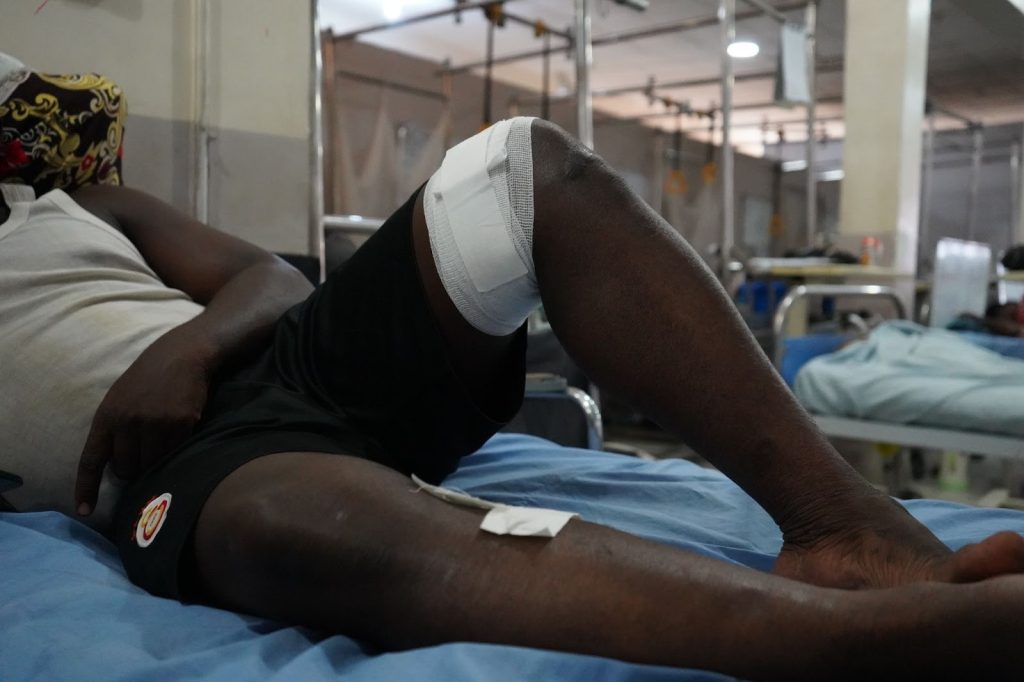
The terror group has also been targeting defectors. In November 2025, HumAngle reported how former members were being tracked and assassinated across Borno.
All of this is happening amid what observers describe as a violent resurgence. HumAngle has reported that the terror group has undergone several technological shifts that have aided its expanded attacks and operations, including the use of artificial intelligence and drones.
Despite that, the government continues to resettle displaced persons. On Jan. 28, the Borno State government received about 300 Nigerian refugees from Cameroon and resettled them in Pulka. On Feb. 8, it received 680 more.
The ambushes, Professor Umara says, also serve a logistical purpose.
“Some of their tactics include ambushing and carting away weapons and supplies from peripheral bases in unfortified areas. It also includes attacks on bases, especially in places where backup might take time to arrive,” he said.
“Building the people’s resilience” is one way to sustain resettlement, the professor added. He suggested community-based vigilance and improved local intelligence gathering, noting that security forces cannot cover every part of the country due to its vastness and limited manpower.
He pointed to the role of volunteer security groups, like the CJTF, and traditional institutions, which he said can help monitor and govern difficult terrains. He also stressed the need to curb porous borders and strengthen control over the flow of weapons.
For Yusuf, he hopes to travel the Biu-Damboa-Maiduguri road freely again. He hopes the government will fix the roads and intensify security efforts.
A recent incident in northeastern Nigeria highlights the ongoing danger for workers in conflict zones. Construction workers repairing a bridge at Wajiroko under military escort were killed during an overnight stay in a nearby community, Sabon Gari. Reports vary, with local counts putting the dead at 23, while media reports suggest 25.
The road, known for its instability and buried mines, reflects larger security concerns in Borno State, where infrastructure projects are often targeted by terrorist groups like ISWAP.
These attacks are perceived as efforts to destabilize government resettlement initiatives aimed at rebuilding communities and returning displaced persons. Factors like ambushes and sabotage aim to undermine government credibility and challenge military efforts. Despite increased violence and attacks on civilian, military, and volunteer forces, the government continues to resettle refugees. Experts stress the need for improved local intelligence and community resilience to combat these threats effectively.
Enhanced border security and vigilant volunteer security groups are also recommended to sustain resettlement efforts and enable safe travel on crucial roads.
Support Our Journalism
There are millions of ordinary people affected by conflict in Africa whose stories are missing in the mainstream media. HumAngle is determined to tell those challenging and under-reported stories, hoping that the people impacted by these conflicts will find the safety and security they deserve.
To ensure that we continue to provide public service coverage, we have a small favour to ask you. We want you to be part of our journalistic endeavour by contributing a token to us.
Your donation will further promote a robust, free, and independent media.
Donate HereStay Closer To The Stories That Matter