One Man’s Kidnapping in Kano Unmasks Growing Criminal Siege
In Gwarzo, located along the Kano-Katsina border, kidnappers are preying on individuals whose names have been whispered to the wrong people.


Audu Danbaba is in his fifties but trudges like someone in his eighties. He walks carefully, sometimes raising his hands as if they were scales calibrating his body’s equilibrium.
As he emerged from his house on Feb. 25, he moved with visible effort – his feet swollen – counting each step as if needles were being pressed into the soles of his feet. With a laboured exhale, he eased himself down onto a mat that faced his home. The house, made of mud bricks, is located in Nassarawa village, Gwarzo Local Government Area (LGA), in Kano State, northwestern Nigeria.
Audu cannot remember the exact date when the armed kidnappers pulled him from his house, but he does know that it happened roughly two months ago, maybe a little longer. “I spent about 40 days with them, and now I’m in my fourth week since I was released,” he told HumAngle.
Audu’s ordeal is a window into a calculated and expanding kidnapping economy that has quietly taken root in the Gwarzo LGA. Kidnapping in Kano is fuelled by informant networks, strengthened by a porous border with Katsina State, and maintained by a ransom cycle that is systematically draining the little resources left in the poorest communities of the northwestern region.
Late at night, he was lying down when he heard screaming. The attackers had already entered his home and were beating both of his wives and children. He rushed outside and asked what was happening. They told him directly that they had come for him. To protect his family, he surrendered.
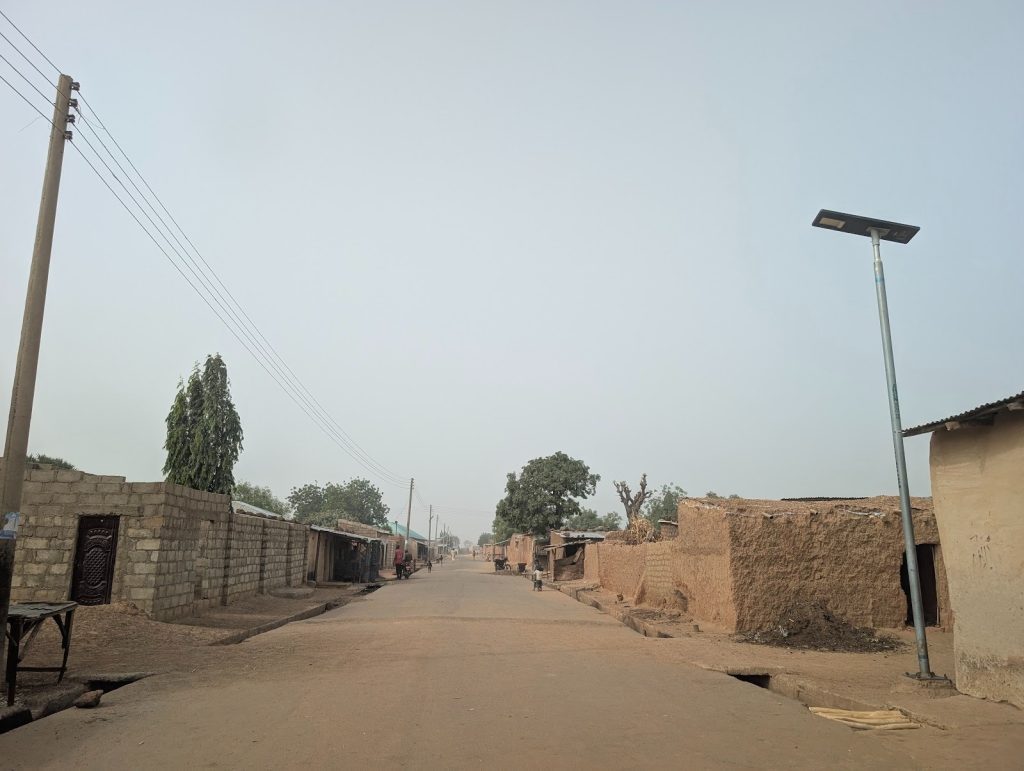
“Here is where they tied my hands and started beating me with the butt of a gun on my legs,” Audu recalled, gesturing toward the spots he said still ache. “Then they pushed me forward, beating me and shoving me until we had walked a long distance through farmland and crossed a road.”
Audu could not recall how long they had trekked with him because he was barely conscious as they dragged him. His sense of measurement also appears faulty, as he confuses miles and kilometres several times while narrating his story.
And so they kept pushing him.
“It was on the road that I noticed security operatives on patrol, as though they had received a tip and were following us. I tried to lift my head, and they struck me with the rifle butt and pinned me down. I couldn’t speak. We stayed like that until the patrol passed, then they pulled me up and kept beating me as we walked,” he added.
What Audu described, the systematic beating of victims after abduction, has emerged as one of the most disturbing features of the kidnapping crisis in northern Nigeria. After reaching the forest, he said he was tied alongside another man who had also been abducted. The torture continued with such ferocity that the other man died a week after he was abducted.
“After his death, his corpse lay there with me for two days before they took him away,” he said.
Different clips showing how abducted victims are tortured by their abductors have recently been circulated online. One footage featured a member of the National Youth Service Corps (NYSC) being tortured repeatedly by his abductors while pleading for help. In another widely shared video, three women were shown being struck as the abductors pressured them to urge their families to pay a ransom.
Another harrowing case is the testimony of a man published by a local media outlet in Zamfara, Maibiredi TV. The man narrated that his abductors burned one of his hands using molten rubber during ransom negotiations to force his family to speed up payment. Only two of his fingers remain.
What is happening in Gwarzo?
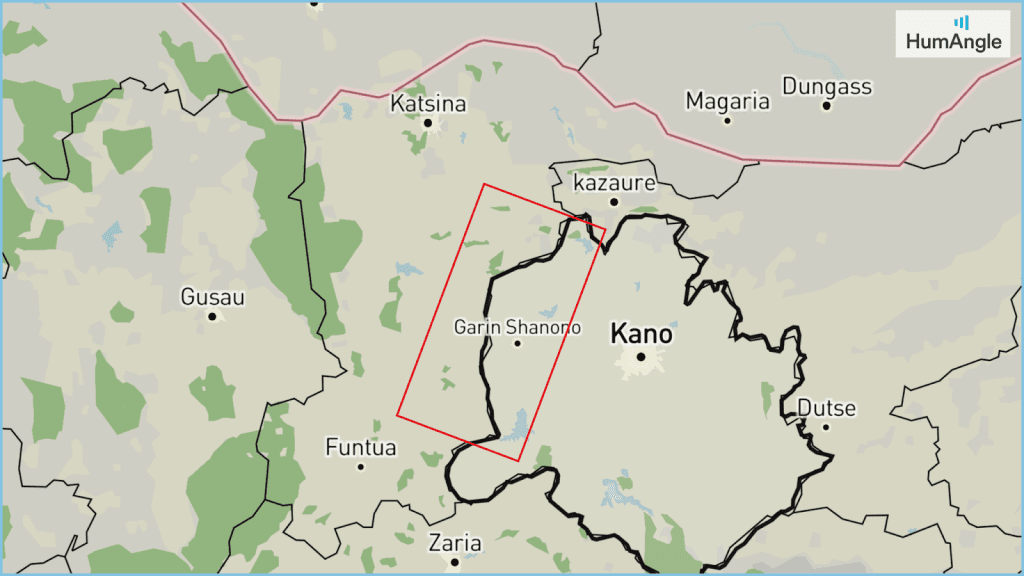
At least five Local Government Areas (LGAs) in Kano share borders with neighbouring Katsina State, namely Rogo, Tsanyawa, Shanono, Gwarzo, and Ghari (formerly Kunchi). While Tsanyawa and Shanono have suffered the most attacks, Gwarzo is particularly vulnerable. The town’s western and northern borders are adjacent to Katsina’s Malumfashi and Musawa LGAs, which have been heavily impacted by terrorist activities for a long time.
The dense and ungoverned forests in these regions provide terrorists with continuous cover for their operations. From there, locals say, they flow into Gwarzo.
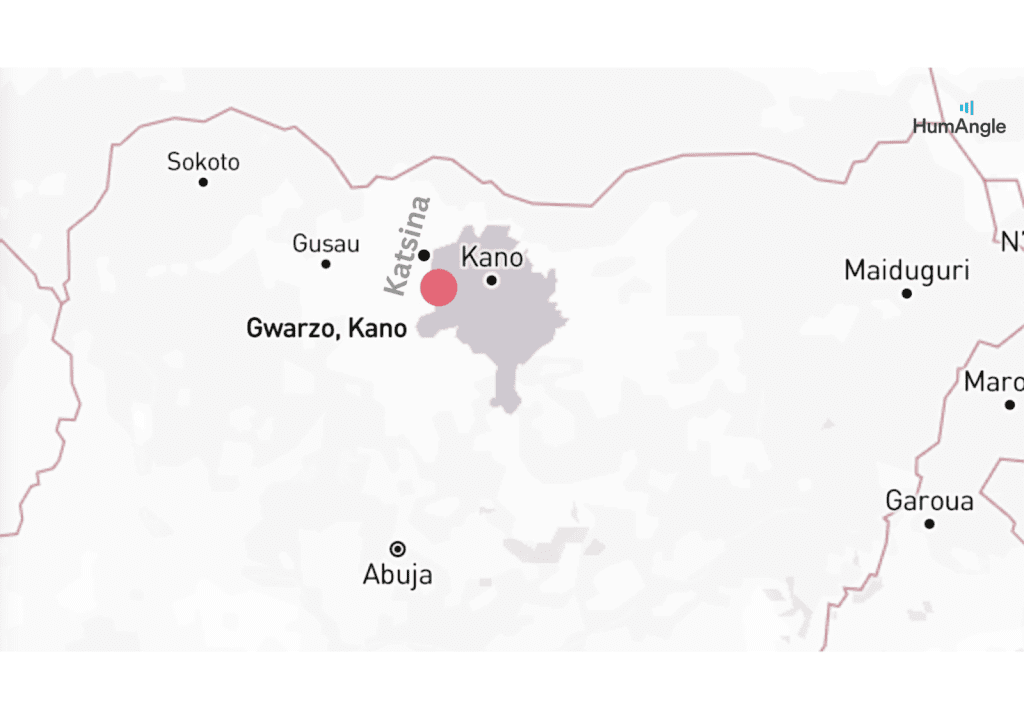
Locals say that the first recorded case of kidnapping occurred on Dec. 14, 2025, when terrorists on motorcycles attacked the Kururawa community in the Lakwaya district of Gwarzo. They invaded the home of an elderly man known locally as Yakubu Na Tsohuwa and abducted him. His eldest son, Badamasi, was injured while attempting to stop the assailants from taking his father. Within the same week, a second kidnapping incident was reported.
Gwarzo’s security crisis did not start in December 2025. In January 2024, police operatives arrested Isah Lawal, a 33-year-old man from Giwa LGA in Kaduna, during a clearance operation in Karaye LGA along the Kaduna-Kano border. He confessed to fleeing a terrorist camp in Birnin Gwari due to internal gang violence and expressed his intention to establish a new camp in the Gwarzo-Karaye forest. This arrest, which was largely unreported at the time, served as a warning that the authorities did not adequately heed.
The Gwarzo-Karaye forest corridor, straddling Kano’s border LGAs and stretching toward Katsina’s ungoverned zones, had already been identified by displaced armed factions as a viable new territory.
The December 2025 attacks followed a pattern that exposed how openly these groups now operate. Around 20 armed men were spotted in Danjanku village in Malumfashi LGA, heading toward the Kano axis, according to sources. The attack on Zurum Mahauta in the Gidan Malam Sallau community came at midnight on the same day.
To address the growing threat, the Kano State Government deployed forest guards to monitor the woodland areas around Gwarzo. These guards serve a dual purpose: overseeing the reforestation efforts critical to the state’s climate change response, and functioning as an early-warning layer for security threats emerging from the forest.
Dahir Hashim, the Commissioner for Environment and Climate Change, told HumAngle that the guards were recruited to tackle both challenges simultaneously: “Managing the forests because of their critical role in halting desertification, and providing rapid alerts whenever security threats are detected.”
HumAngle spoke to Abdullahi Hamza, who leads the team managing one of the forests in Mainika, Gwarzo. He is cautiously optimistic about the project, saying: “This initiative by the government has delivered results; at least for now, we have gone many days without a security incident inside Gwarzo, though there may be areas we are not yet aware of.”
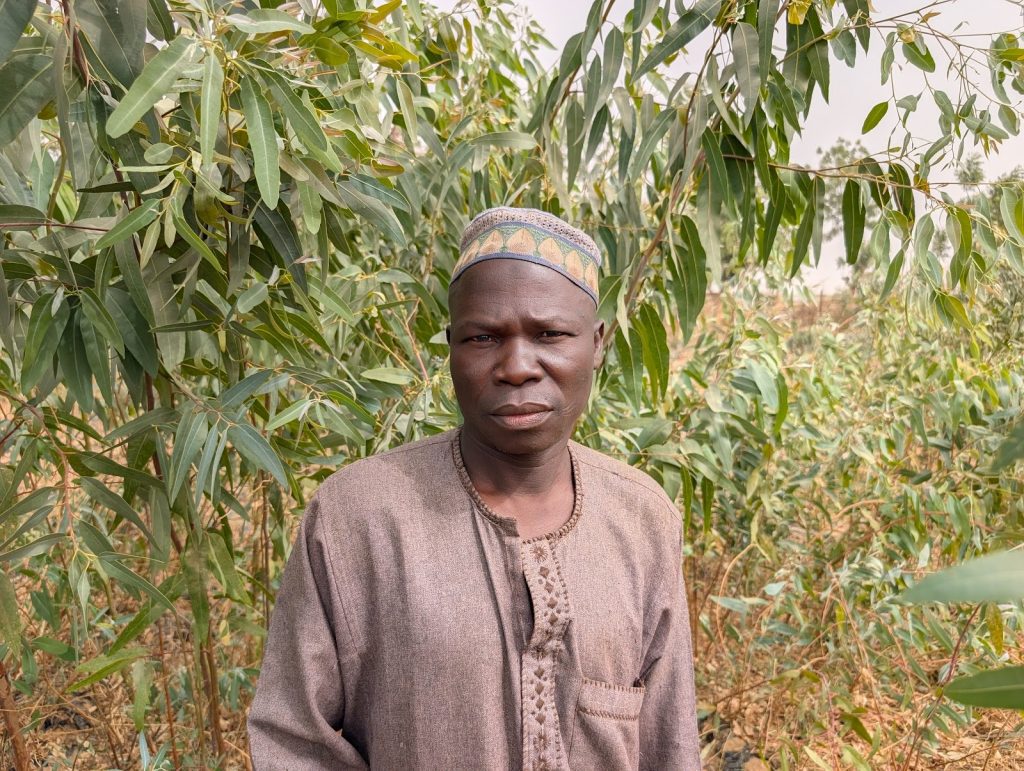
There are two forests in Gwarzo. One is known as Dajin Katata, where the forest guard Musa Muhammad previously worked.
“There were constant criminal incidents in that forest; the fear eventually led the previous government to fell the trees to deny criminals cover,” he told HumAngle.
Musa was later reassigned closer to home in Mainika. He does not hide his discomfort with that decision. The felling of Dajin Katata, he said, was ecologically damaging — those trees were a bulwark against the advance of the desert. But he has made his peace with the logic behind it.
“Security comes first,” he said. “You must be alive to breathe the shade of a tree.”
Kidnapping the poor for ransom
Why was Audu a target for abduction in the first place? By every visible measure, even within his own village, Audu is not a wealthy man. His mud-brick house sits among the more neglected on the street, unrepaired and unremarkable.
He told HumAngle himself that shortly before his abduction, he had tried to sell his farmland out of financial desperation, but the offer he received felt so insulting that he walked away from the deal.
“The land was worth between three and a half and four million naira, but they offered me two and a half million naira. I felt disrespected, so I refused,” he said.
Then came a coincidence that, in hindsight, feels like anything but.
Around the same period, the Kano State government began disbursing outstanding allowances owed to former ward councillors across the state. Audu’s son, Anas, had served as a councillor between 2020 and 2023, which placed him among the beneficiaries. The payment, amounting to roughly ₦6 million, was not made quietly; the state government publicised it widely. Photographs were taken at the government house. Screenshots of bank alerts began circulating on social media, shared by recipients whose names and faces were now attached to a specific, traceable sum.
The publicity became something else entirely.
“Many people had their eyes on that money,” said Mallam Saidu, Audu’s neighbour. “There is a strong suspicion that it was this payment that drew the kidnappers to Danbaba’s house that night.”
Audu suspects the same. He says his captors told him, as they held him, that someone had directed them to him. They did not tell him who.
“They showed me about five people from a distance,” he said. “I could barely lift my head to look, and when I did, I didn’t recognise any of them.”
Later, during ransom negotiations, Audu says he kept hearing one side of a phone conversation — someone telling the kidnappers that they should push his family harder to bring more, insisting they had the money and should produce it.
Across northern Nigeria, kidnapping has evolved from opportunistic crime into a sophisticated industry, and at its operational core lies a network of human intelligence that security agencies have struggled, and often failed, to penetrate or counter.
Kano has witnessed a surge in kidnapping and criminal operations aided by local informants and snitches within the state’s localities. This development seems to have inflated security threats in local communities. Musbahu Shanono, for instance, is originally from Faruruwa in Kano but works in Lagos, in Nigeria’s South West.
When HumAngle spoke with Musbahu in 2025, he described the creeping anxiety that now accompanies what should be an ordinary homecoming – the fear of informants making him a stranger in his own community.
“Now I only come at night,” he said. “No one should know I’m around. Not even my friends. Not until I’m sure it’s safe.”
According to security authorities across northern Nigeria, kidnappers conduct detailed advance planning before armed teams execute raids at vulnerable hours, overwhelming lightly protected targets and transporting captives deep into remote forest hideouts.
In 2021, the Zamfara State government announced the arrest of more than 2,000 suspected informants. The following year, the state went further to enact legislation prescribing life imprisonment for anyone found to have aided kidnapping operations or other criminal activity in the state.
Yet the problem has not abated. Security authorities across Nigeria acknowledge that informant networks remain one of the most intractable elements of the crisis, embedded in communities, operating in plain sight, and extraordinarily difficult to root out.
Even Nigeria’s Minister of Defence, then-Chief of Defence Staff, Christopher Musa, admitted publicly in 2024 that informants were being used not only to identify and track targets, but to actively misdirect security forces pursuing terrorists.
“They make the troops go elsewhere, and when they get there, they meet nothing,” Musa said.
The price of coming home
Now Audu is back. But his return has cost his family everything.
“They only released me after we paid ₦8 million and three motorcycles,” he recalled.
The family sold whatever they could find. The farm that he had refused to part with for two and a half million naira, the offer he had walked away from as an insult to his dignity, went for only ₦1.8 million in the end due to desperation.

“Then we went around asking for help – some people gave us gifts, others gave us loans,” said Anas, his eldest son. Today, after his father’s release, the family is saddled with a debt of approximately ₦4.5 million and has no clear idea where to begin repaying it.
Audu carries the weight in his body as much as in his finances. “Even after I returned, everyone who saw me broke into tears at the state I was in,” he said. “Doctors have examined me and given me medication, but the pain in my body has not stopped.”
His deeper anguish is the problem he cannot solve: how does a man who had nothing rebuild from less than nothing? “We sought help from every direction and found very little,” Anas added. “We are still appealing to the government, even if it is just to help settle the debt, because everything we had was consumed by this ordeal.”
For the remaining residents of Nassarawa and the villages clustered along Gwarzo’s edges, the haunting question is not about debt. It is about prevention and how to protect themselves from the fate that swallowed Audu before the kidnappers come again.
Audu Danbaba, a resident of Gwarzo, Kano, was kidnapped and held for 40 days in a growing trend of abductions fueled by informant networks in northwestern Nigeria.
Despite his lack of wealth, his son’s public reception of a significant governmental payment likely marked him as a target. This incident reflects the broader issues of insecurity, where kidnapping has become a structured industry involving security lapses, widespread informants, and ransoms that drain the resources of impoverished communities.
Gwarzo, vulnerable due to its proximity to terrorist-impacted areas in Katsina and dense forests, is at the heart of this crisis. The state government has employed forest guards to monitor these areas, but informant networks remain a critical obstacle.
These networks, operating openly and embedding deeply within communities, facilitate kidnappings, complicating efforts by security agencies to counteract them effectively.
Audu's family managed to secure his release by paying ₦8 million and three motorcycles, leaving them in debt and stripping them of their assets. This case exemplifies the broader insecurity challenges and the desperate attempts by affected families to pay ransoms, while systemic issues of informant-driven crimes continue to escalate, needing more effective intervention strategies to offer protection and support to the affected regions.
Support Our Journalism
There are millions of ordinary people affected by conflict in Africa whose stories are missing in the mainstream media. HumAngle is determined to tell those challenging and under-reported stories, hoping that the people impacted by these conflicts will find the safety and security they deserve.
To ensure that we continue to provide public service coverage, we have a small favour to ask you. We want you to be part of our journalistic endeavour by contributing a token to us.
Your donation will further promote a robust, free, and independent media.
Donate HereStay Closer To The Stories That Matter