‘Nowhere to Shit’: Conflict, Flight, and Lagos’s Toilet Crisis
From highways to streets already choking on sanitation failures, poor infrastructure is turning an already severe toilet crisis into a public health time bomb in Nigeria’s most populous city.

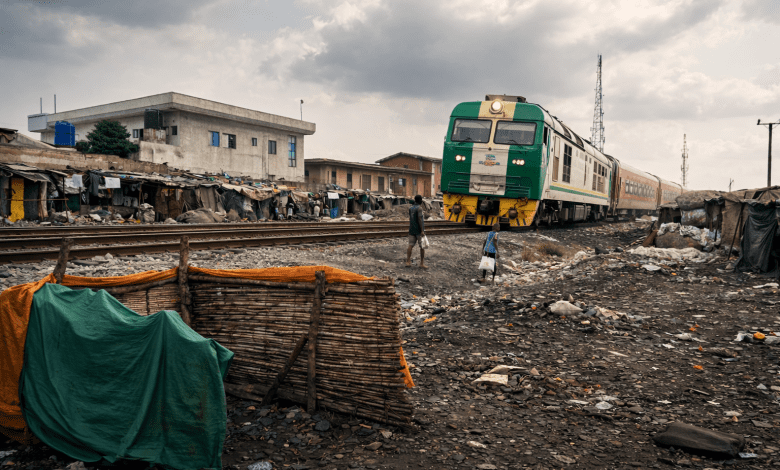
From Zaria to Lagos, Yakubu spent three days. Along the way, he hoped, ate, and even stepped aside to relieve himself.
Home had become a stronghold of terrorists who rustled cattle, kidnapped residents, and cut farmers off from their harvests. Even children, Yakubu recalled, openly carried weapons in Funtua, the area where he grew up in Katsina State, northwestern Nigeria.
He fled first to Zaria in neighbouring Kaduna State, where he negotiated with a truck driver transporting cattle to Lagos, in the country’s South West. With ₦3,000, he secured a small space and spent what remained of the ₦5,000 his father gave him on food along the journey. Whenever the need arose, the driver pulled over so he and others could relieve themselves in the bushes.
Yakubu’s journey shows the vulnerability of travellers in Nigeria, including migrants, where sanitation infrastructure fails to meet evolving needs.
In 2020, REACH found that many people in some parts of northeastern Nigeria were not using latrines because facilities had been destroyed by conflict. In some internally displaced persons’ (IDPs) camps in Borno State, up to 30 per cent of residents practised open defecation. And of the 254 sites assessed across the state between 2021 and 2022, 57 per cent showed evidence of the practice.
By the end of 2024, Nigeria had over three million displaced persons, driven largely by insecurity in the northern region, as well as climate-related displacement linked to flooding and environmental degradation.
Many displaced people move south, travelling along highways without public toilets and settling in urban centres where informal settlements lack basic sanitation. Studies have linked cholera outbreaks in such settings to open defecation.
In Lagos, Nigeria’s most populous city and a major destination for migrants, including IDPs, recent cholera outbreaks killed more than 20 people and left many others hospitalised.
The impact of the absence of Water, Sanitation, and Hygiene (WASH) facilities continues to play out daily.
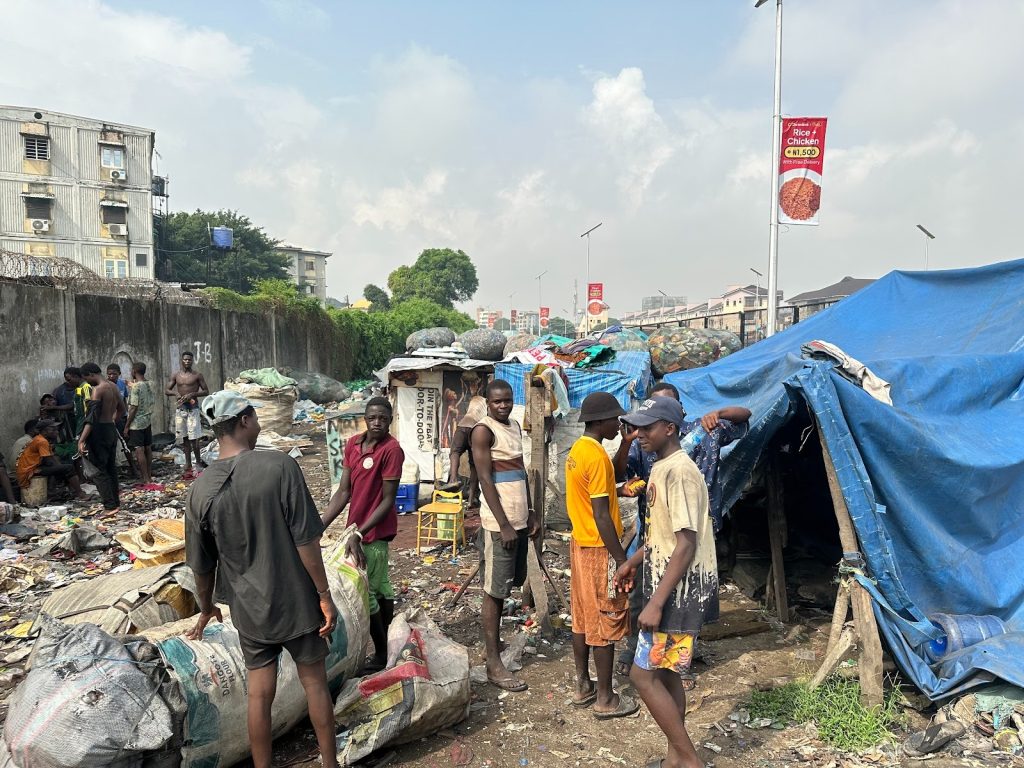
Sixteen-year-old Shamsu arrived in the city from Kurfi Local Government Area of Katsina State. For five years, he has lived in a small shanty along Yaba, a residential community in Lagos Mainland, with other young people who earn a living collecting used plastic bottles.
The shanty offers little protection from either rain or heat. When it rains, water seeps through the torn tarpaulins that serve as walls and roof. And with no toilet, occupants defecate in a small patch of bush a few steps away.
“When I need to defecate, I buy sachets of water for ₦50,” Shamsu said, explaining that he uses the water to clean up afterwards. He came to Lagos in search of economic opportunity.
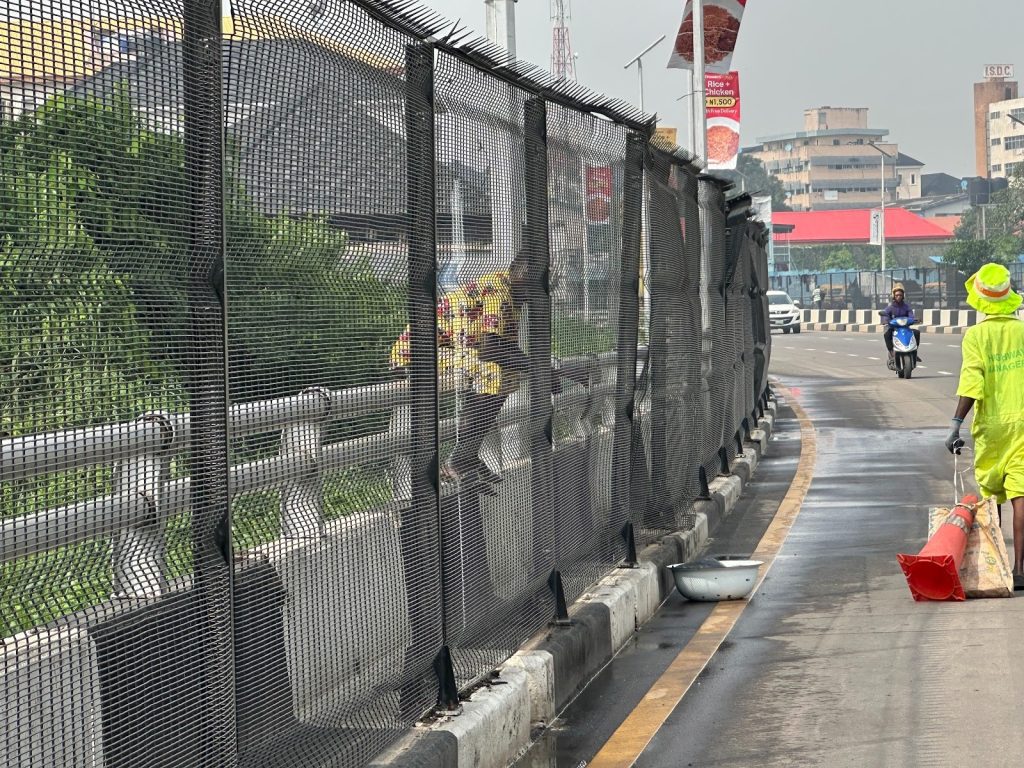
At the spot where Shamsu and others defecate, HumAngle encountered a man crouched on a highway barrier. His back curved inward, the rest of his body leaning forward as vehicles raced past. The man, known to sell suya in the area, appeared shy in the face of the urgency of the moment and the exposure it demanded. No water for cleaning was visible.
Yusuf said he pays ₦200 to use a public toilet in Akogun, some distance away from Makoko, where he lives in an informal settlement with other migrants. He had come to Lagos on the back of a truck after fleeing terrorism in the Makoda area of Kano State.
The cost and distance, however, raise questions about how accessible such facilities are in practice, particularly at night, and what options remain when toilets are out of reach.
In 2019, the federal government launched Clean Nigeria, a national hygiene campaign aimed at ending open defecation across all 774 local government areas by 2025. By the end of the target year, however, nearly 48 million Nigerians were still engaged in the act.
The Federal Ministry of Water Resources’ 2021 Water, Sanitation and Hygiene National Outcome Routine Mapping projected multiple target misses due to slow progress. And in November 2024, the federal government launched a revised Clean Nigeria Campaign (CNC) Strategic Plan, extending the goal to 2030 and proposing measures such as media outreach, fines, and increased access to toilets in schools, homes, and public spaces.
According to the United Nations Children Fund (UNICEF), Nigeria would need “a fourfold increase in the current rate of progress,” including the construction of millions of toilets, to achieve the ambitious goal of eradicating open defecation.
Who’s to blame?
The problem, said environmental specialist Adesehinwa Adegbulugbe, cannot be blamed on a single actor.
“Local governments struggle to provide services at the pace of population growth, while national policy and planning frameworks have not fully anticipated such urban influxes,” he said.
“Poor urban planning, insufficient investment in decentralised sanitation, weak enforcement of building codes, and fragmented municipal coordination all hinder effective sanitation provision. In other words, even where infrastructure exists, mismanagement or inequitable access often perpetuates open defecation practices.”
HumAngle found that many migrants, like other residents, are willing to use sanitation facilities when available. Railway, the shanty where Yakubu resides among other scrap collectors, showed no evidence of open defecation.
Public toilets, Yakubu said, stood a short distance from where he sat, dismantling discarded electric switches and separating metal from plastic.
Built by the local development council, one of the toilet facilities in the area was in use at the time of HumAngle’s visit. Water flowed, users moved in and out, and the surroundings appeared orderly and maintained.
“I’m enjoying my peace in Lagos,” said Yakubu, who was a carpenter back home. “If not because of my parents, I won’t travel home at all.”
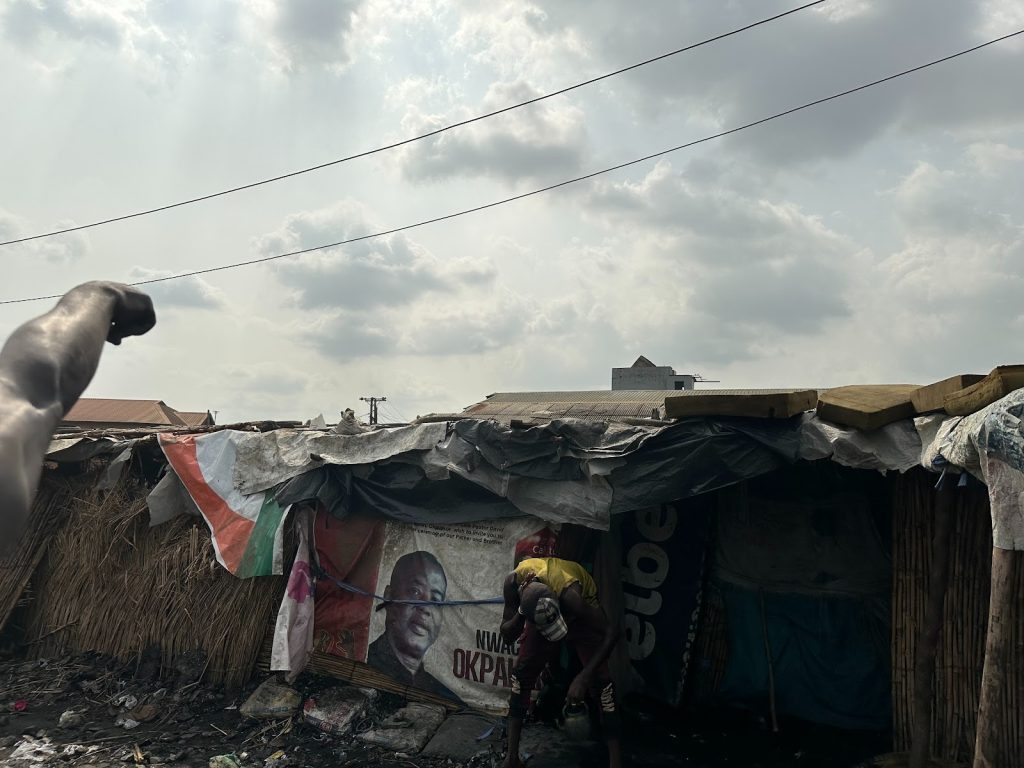
In Gengere, another informal settlement largely occupied by northern migrants and traders working in Lagos’s Mile 12 Market, residents said they use available public toilets, including at night. HumAngle observed one of the facilities. We also did not find evidence of open defecation in the community.
Even Shamsu said he dislikes the routine of crouching and defecating in the open, even though Makoko, a large slum near his shanty, boasts of a few public toilets.
“If there’s a decent toilet, I’ll use it,” he said.
The Lagos State Government has acknowledged deficits in toilet access, particularly in public spaces and informal settlements. In March 2025, it announced plans to build 350 additional public toilets across the state in partnership with WaterAid and private operators. Earlier in November 2024, the state government had approved the construction of 100 public toilets as part of efforts to curb open defecation in the state.
Even as Lagos moves to expand public toilet access, sanitation pressures linked to rapid urban growth extend beyond the state.
The populations are growing at a rate that housing, employment, sanitation services, and enforcement are yet to catch up with. In Ado, the Ekiti State capital in South West Nigeria, the road leading to Mary Immaculate Grammar School smells like an overflowing latrine. Residents blame open defecation.
“Different people come to dump waste or defecate here,” said Taye Adelaju, a resident.
Meanwhile, public toilets in the area charge only a token fee for use.
Taye said only strict sanitation enforcement can prevent the area from becoming a public health hazard.
Adesehinwa said that it’s critical to view open defecation as a systems failure, and not just a behavioural or cultural issue. “This framing,” he said, “enables multi-sectoral interventions, mobilises public and private investment, and promotes accountability across institutions rather than targeting individuals.”
As insecurity pushes more Nigerians onto the road and into unplanned settlements, urban centres like Lagos either expand sanitation systems or allow open defecation and the diseases it fuels to become a permanent feature of their growing population.
*Only first names have been used to protect the identities of some of the sources.
This is the second of a ‘Down South’ series exploring migration from areas of Northern Nigeria to Lagos. Read the first here.
Yakubu's journey from Zaria to Lagos highlights the dire conditions for travelers in Nigeria, exacerbated by poor sanitation infrastructure. As internal conflict and climate displacement swell the numbers of internally displaced persons (IDPs) to over three million by 2024, many move south without adequate public toilet facilities. This situation leads to high rates of open defecation, notably contributing to cholera outbreaks, underlining a national sanitation crisis.
The government's efforts to curb open defecation, such as the Clean Nigeria campaign, are hindered by slow progress, necessitating a revised goal to end this practice by 2030. Despite this, systemic issues such as insufficient urban planning and investment, as well as fragmented municipal coordination, continue to obstruct access to sanitation facilities. Meanwhile, Lagos state and others make strides in expanding public toilet access, but rapid urban growth still strains these resources, threatening public health and hygiene sustainably.
Support Our Journalism
There are millions of ordinary people affected by conflict in Africa whose stories are missing in the mainstream media. HumAngle is determined to tell those challenging and under-reported stories, hoping that the people impacted by these conflicts will find the safety and security they deserve.
To ensure that we continue to provide public service coverage, we have a small favour to ask you. We want you to be part of our journalistic endeavour by contributing a token to us.
Your donation will further promote a robust, free, and independent media.
Donate HereStay Closer To The Stories That Matter