Kwara Massacre of 170 Despite Warning Raises Questions About Nigeria’s Security Intelligence
The attack and killing of 170 people in Kaiama is not an isolated incident. It reflects a growing pattern of violence across Nigeria’s north-central and northwestern regions, where rural communities have become increasingly vulnerable to armed groups.

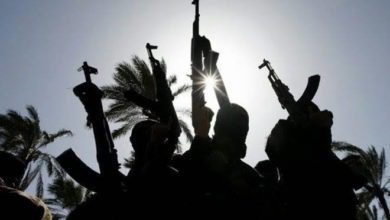
On Feb. 3, Nigeria witnessed one of its deadliest rural attacks in recent memory. Terrorists stormed Woro and Nuku villages in the Kaiama Local Government Area of Kwara State, North Central Nigeria, killing about 170 people, razing homes, and abducting several residents.
Reports say victims were shot at close range, some burnt alive, while others were found with their hands tied and their throats slit. The global human rights group, Amnesty International, has described the killings as evidence of systemic neglect of rural communities.
In a statement on their X page, the organisation condemned and described the killings as “vicious attacks” and criticised the Nigerian government for leaving rural communities at the mercy of rampaging terrorists.
The statement highlights a broader pattern: rural communities across northern Nigeria have long been marginalised, with limited infrastructure, weak policing, and poor access to justice. The persistence of mass killings in these areas reflects not only the strength of armed groups but also the absence of a coherent state strategy to protect vulnerable populations.
The scale of the killings is staggering. Eyewitnesses recounted scenes of horror: families rounded up and slaughtered, corpses left in pools of blood on the streets, and homes set ablaze.
While no group has claimed responsibility for the attack, it comes amid a complex security crisis in the country, where violent groups like Boko Haram and the Islamic State West Africa Province (ISWAP) destabilise the northeastern region, alongside a surge in kidnappings for ransom by armed groups across the northwest and north-central regions over the years.
However, what makes the Kaiama massacre particularly alarming is the evidence that the attack was not spontaneous. Amnesty International says the gunmen had been sending warning letters and pamphlets to the communities for over five months, including as recently as two weeks before the killings.
“This suggests a deliberate campaign of intimidation and control, one that local authorities failed to anticipate or prevent,” says Yahuzu Gesto, an intelligence and security expert. “What this shows is that these terrorists have been there in the community for a while before carrying out these attacks.”
The trend of terror groups in Nigeria sending warning letters before attacking has existed almost as long as the country’s history with terrorism. It was seen during the 2014 Buni Yadi massacre, the Birnin Yauri abduction, the recent Maga abduction in Kebbi State, and several others. The warnings have done nothing to prompt security preparedness in these cases.
Yahuza told HumAngle that he has been reporting the presence of terrorist groups around Kwara and how they’ve imposed and collected levies for the past five years, and the Nigerian intelligence security’s inaction about it.
“They are not Boko Haram: they are Lakurawa terrorists,” he claimed, though the Nigerian President blamed the attack on Boko Haram. “I have provided intelligence through clips and audio interviews, and I shared it with relevant authorities. Why is the government only sending a battalion there now when it should have done it earlier? This is pure negligence,” he stated.
Meanwhile, the Kwara State Governor, AbdulRahman AbdulRazaq, has condemned the killings, stating that the attack is a terrorist assault aimed at imposing extremist ideology on local Muslims. He, however, promised a stronger military presence and community protection.
Following the attacks, President Bola Tinubu has ordered the deployment of an army battalion to the affected communities.
In a statement issued by the presidential spokesperson, Bayo Onanuga, the president described the attack as “cowardly and beastly” and said that the new military commander will spearhead the ‘Operation Savannah Shield’ to checkmate the “barbaric terrorists and protect defenceless communities.”
Security experts like Yahuza Getso told HumAngle that warnings having been issued months in advance raise serious questions about intelligence gathering and the responsiveness of security agencies.
“How could such explicit threats be ignored? Why were communities not fortified or provided with adequate protection?”
Soldiers and forest guards have since been deployed to Kaiama, but their arrival after the fact underscores the reactive nature of Nigeria’s counterterrorism strategy.
A mirror of rural violence
The violence in Kaiama cannot be understood in isolation.
Just across the border in Niger State, Borgu has experienced similar attacks this year. Armed groups have repeatedly targeted villages, killing residents, abducting women and children, and displacing communities.
Borgu’s proximity to Kaiama is significant. The two areas share forested terrain and porous borders that armed groups exploit to move freely.
Woro, the community where the attack took place, is located around the Kainji National Park area, a vast forest reserve covering about 5,341 square kilometres. The Kainji Lake also borders the Wawa area of Borgu, an area where there are pockets of attacks by terror groups.
This attack comes barely three weeks after terrorists attacked Kasuwan Daji in neighbouring Niger State, killing more than 30 people and abducting an unspecified number of women and children.
Security experts note that the regional dimension of insecurity suggests that armed groups are not confined to single states but operate across borders, using forests and rivers as cover. This mobility complicates counterinsurgency efforts and requires a coordinated, multi-state response.
Yahuza revealed that the Kainji Forest area has increasingly become a hideout for terrorist groups, including Boko Haram and the Mamuda group, popularly known as Ansaru.
“This location and these attacks are strategic because they have relations with dense forest reserves like Kainji, Allawa Forest, and the extreme end of Yawuri [Agwara]. There have been attacks in all of these places from December to date,” he said.
For security experts like Yahuza Getso, the Kaiama attack is a stark reminder of Nigeria’s deepening insecurity.
“It reflects not only the brutality of armed groups but also the failures of the state to protect its citizens. The proximity of Kaiama to Borgu in Niger State underscores the regional dimension of the crisis, with armed groups exploiting porous borders to expand their reach.”
He advised that unless Nigeria recalibrates its security approach—moving beyond reactive deployments to proactive intelligence and community-based protection—the cycle of violence is likely to continue.
In early February, terrorists attacked two villages in Kwara State, Nigeria, resulting in around 170 deaths, home destruction, and numerous kidnappings.
Amnesty International labeled the massacre as evidence of systemic neglect by the government, highlighting the continuous marginalization and inadequate protection of rural communities. The attack followed months of warning letters ignored by authorities, underscoring the failure of Nigeria's intelligence and security response to imminent threats.
This massacre, part of an escalating regional security crisis, reflects a long-standing pattern of armed violence in Northern Nigeria. Proximity to regions like Niger State, notorious for attacks, reveals how armed groups exploit porous borders and forested terrains for operations.
Security experts argue that without a shift towards proactive intelligence and community-focused strategies, Nigeria's reactive counterterrorism efforts may perpetuate cycles of violence.
Support Our Journalism
There are millions of ordinary people affected by conflict in Africa whose stories are missing in the mainstream media. HumAngle is determined to tell those challenging and under-reported stories, hoping that the people impacted by these conflicts will find the safety and security they deserve.
To ensure that we continue to provide public service coverage, we have a small favour to ask you. We want you to be part of our journalistic endeavour by contributing a token to us.
Your donation will further promote a robust, free, and independent media.
Donate HereStay Closer To The Stories That Matter