#HumAngleShowcase25 Bears Witness to the Realities of Vulnerable Communities and Press Freedom in Nigeria
The HumAngle Showcase 2025 explored press freedom and the realities of vulnerable communities through panels, a documentary screening, podcast listening sessions, and VR experiences.
Every day, journalists covering conflict and humanitarian issues worldwide navigate significant risks to document the experiences of affected communities.
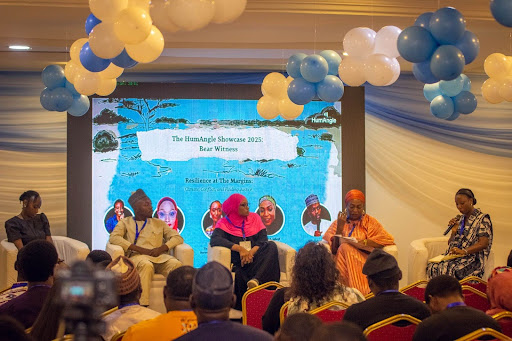
HumAngle, Africa’s leading conflict, humanitarian, and development media organisation, convened community advocacy actors, journalists, media professionals, and stakeholders for the HumAngle Showcase, its annual immersive event, on Saturday, Nov. 29, in Abuja, North Central Nigeria.
“By gathering all of us here, the Showcase becomes a collaborative space to exchange insights and catalyse action for lasting impact,” said Ahmad Salkida, HumAngle’s Founder and CEO.
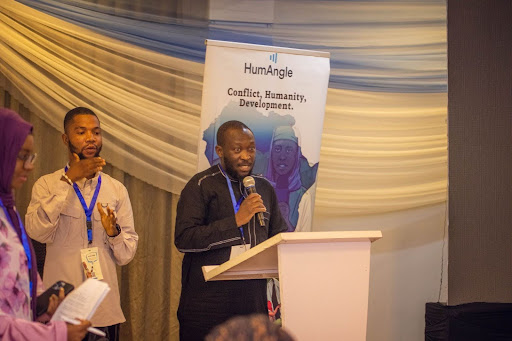
The first panel discussion, moderated by HumAngle Media’s Managing Editor, Hauwa Shaffii Nuhu, focused on Democracy and Press Freedom: The Cost of Bearing Witness Today. Panellists Busola Ajibola, Deputy Director of the Journalism Programme at the Centre for Journalism Innovation and Development (CJID); HumAngle’s Investigations Editor, Ibrahim Adeyemi; and Evelyn Okakwu of the Committee to Protect Journalists examined the complex pressures facing journalists in Africa, and the ways they attempt to overcome them.
“I do not think anyone who is a journalist in this room feels safe to do rigorous investigative work in Nigeria,” Busola said. She stressed that many journalists now resort to self-censorship to avoid stories that may endanger their lives.
Evelyn reinforced this concern. “Harm to other journalists in Nigeria, and across the world, has discouraged others from pursuing important stories, or even covering protests,” she noted.
Every year, more than 30 journalists are attacked in Nigeria, according to CJID’s Press Attack Tracker, which documents violence against the press. The risks are even more severe for those reporting from conflict-affected communities.
“When we talk about press freedom, conflict reporters face very unique challenges in Nigeria, making them more vulnerable. You are dealing with terrorists, authorities, and even fixers who sometimes put you in trouble intentionally,” Ibrahim said.
The panellists proposed several ways forward, including stronger collaboration among media organisations to pursue legal redress and collective support for journalists who face persecution.
“We need to leverage collaborations among media institutions to protect journalists. Working in silos makes us more vulnerable,” Busola argued. “Media organisations need to come together to set up a ‘Media Defence Fund’ in Nigeria that can provide legal and psychosocial support for journalists facing different forms of harassment.”
Evelyn added that accountability must accompany these protections. “As we work to ensure journalism is not criminalised, we, as journalists and newsrooms, also need to be more responsible in our work,” she said, urging news professionals to equip themselves with knowledge of relevant issues, including the laws that affect them.
The second panel examined ‘Resilience at the Margins: Climate, Conflict, and Finding Justice’. HumAngle Foundation’s Programme Director, Angela Umoru-David, moderated the conversation. Penellists included Shezane Kirubi, Head of Programmes at the Norwegian Refugee Council (NRC); Zainab Bala, founder of The Scoop Storytelling Initiative; Rosemary Igboyi, Deputy Director in the Women and Children Department of the National Human Rights Commission (NHRC); and Abdullahi Ibrahim, an alumnus of the HumAngle Technology & Civic Impact Fellowship ( HTCIF).
They explored the multidimensional challenges confronting vulnerable communities. “Collaboration in reporting and advocating for justice around climate and conflict issues is essential to drive impact,” Abdullahi said.
Beyond inter-organisational cooperation, the panellists emphasised the importance of involving communities directly in telling their stories and advocating for their needs. “Institutions need to work with communities to co-design responses to their local challenges,” Shezane observed.
When asked what justice means for these communities, Zainab drew from her work in rural South-South Nigeria. “For vulnerable communities, justice means solving their problems, helping them rebuild their lives, and addressing their grievances,” she explained.
The Showcase then transitioned from conversations to a demonstration of HumAngle’s technological tools. Mansir Muhammed, HumAngle’s Senior Specialist for GIS, OSINT, and Emerging Tech, introduced the audience to Maps.HumAngle, a database used extensively to track and analyse insecurity across Nigeria and the Sahel.
“It is a narrative GIS platform that is more than just a map; it is an analytical partner trained to find the human angle in complex geospatial data about the issues we cover, from displacement to migration and terrorism,” Mansir said.
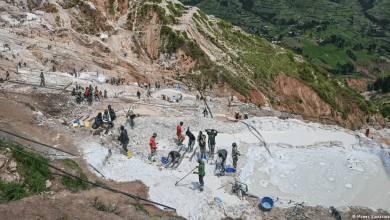
The Showcase also include the screening of Finding Treasures in Borno, HumAngle’s documentary on artisanal mining in Nigeria’s North East. Al’amin Umar, the HumAngle reporter who produced the story and witnessed the precarious conditions faced by artisanal miners, joined Hauwa Shaffii Nuhu for a conversation about the making of the film.
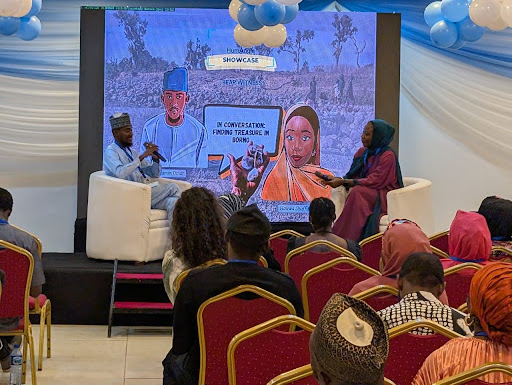
“Watching the documentary again reminded me of that day, and how it almost marked my end because of the accident that happened while I was inside the mining pit,” Al’amin recalled. “For me, it was a one-off experience, but for these people, it is their daily reality, and the risk they face.”
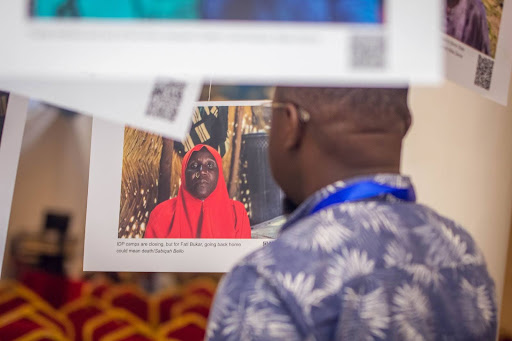
In addition to the documentary, participants experienced podcast screenings, VR storytelling, and photo and comic exhibitions, featuring stories about cultism, displacement, and terrorist deserters, further immersing the audience in the lived realities behind HumAngle’s reporting.
As the event drew to a close, attendees were introduced to some of HumAngle’s resources, including the HumAngle Tracker and the Transitional Justice Manual — tools developed to advance reporting and advocacy on conflict and development issues.
The audience responded warmly. “It was an amazing experience going through the exhibitions and engaging in the conversations,” said Auwal Sani, a communications lecturer at the University of Abuja.
Building on this sentiment and the overall experience, HumAngle’s Managing Editor delivered the closing remarks. “We take our audience seriously, and that is why we brought you here to experience our work. We value your support and your readership,” she said.
HumAngle, a leading media organization in Africa, hosted the HumAngle Showcase in Abuja, Nigeria, bringing together journalists, community advocates, and stakeholders to discuss pressing issues related to conflict, humanitarianism, and development. The first panel, led by HumAngle’s Managing Editor Hauwa Shaffii Nuhu, examined the challenges facing journalists concerning press freedom, highlighting the prevalent risks and censorship in Nigeria. Panellists emphasized the need for inter-organisational collaboration to provide legal and psychosocial support for persecuted journalists.
The second panel addressed ‘Resilience at the Margins’, focusing on climate and conflict challenges. Key speakers stressed the importance of involving vulnerable communities in storytelling and advocating for justice. The Showcase also featured demonstrations of HumAngle’s technology tools, including the Maps.HumAngle database, and screened the documentary “Finding Treasures in Borno” to highlight the realities of artisanal miners. The event also showcased various multimedia exhibitions to deepen audience engagement with the lived experiences covered by HumAngle's reporting.
Support Our Journalism
There are millions of ordinary people affected by conflict in Africa whose stories are missing in the mainstream media. HumAngle is determined to tell those challenging and under-reported stories, hoping that the people impacted by these conflicts will find the safety and security they deserve.
To ensure that we continue to provide public service coverage, we have a small favour to ask you. We want you to be part of our journalistic endeavour by contributing a token to us.
Your donation will further promote a robust, free, and independent media.
Donate HereStay Closer To The Stories That Matter