HumAngle Unveils Radical Anti-Burnout Policy, Adopts Nine-Month Work Year
HumAngle’s new anti-burnout policy embeds a three-month rest period into contracts for newsroom staff while still providing full annual pay. It also shifts to a two-day work week for support staff from January 2026.

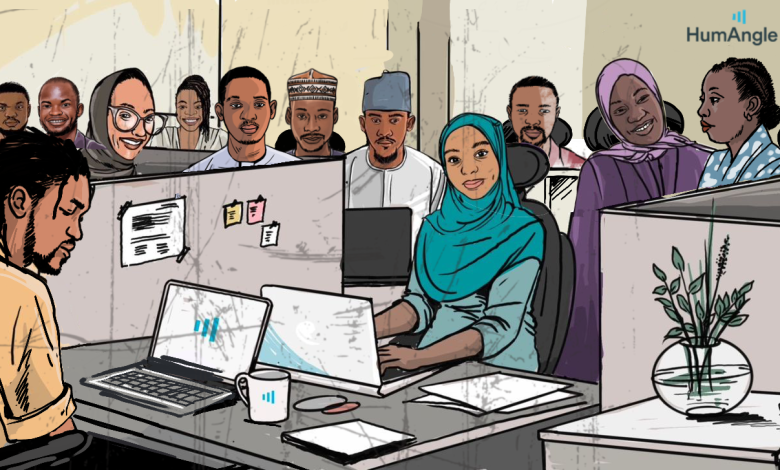
HumAngle, the newsroom known for its in-depth coverage of conflict, displacement, and insecurity across West Africa, has announced a major overhaul of how our journalists work and rest.
From January 2026, an Anti-Burnout Work Policy that restructures the work year into nine active months and three mandatory rest months will be introduced, while maintaining a full 12-month salary for our journalists.
The move, an attempt at reimagining what sustainable journalism looks like, is designed to protect mental health, reduce burnout, and sustain the quality of reporting from some of the region’s most difficult environments.
Under the new system, editorial staff will work in three cycles each year:
- Work: January–March
- Rest: April
- Work: May–July
- Rest: August
- Work: September–November
- Rest: December
Traditional annual leave will be embedded into these rest periods, which are intended to serve as structured breaks for recovery, reflection, and creative renewal. The in-house workweek for journalists will also be shortened to three days — Monday to Wednesday.
Support teams and staff of the advocacy arm, HumAngle Foundation, will have a different, flexible structure: they will be required to work two in-office days per week, with the remaining days remote, and will receive 28 days of paid annual leave. Accountability and performance expectations will remain in place, but alongside a clearer recognition of human limits.
Why rest is now part of the job
HumAngle’s reporters routinely work in and around conflict zones, camps for displaced people, and communities living with violence and trauma. This kind of journalism demands not just technical skill but emotional stamina and deep empathy, and the costs are often borne silently. We have a dedicated clinical psychologist who supports staff well-being and manages secondary trauma that results from our regular interaction with violence and victims of violence.
HumAngle sees burnout not simply as personal exhaustion, but as a direct threat to credible journalism, storytelling, creativity, and accuracy. Building rest into the structure of work itself is a step towards treating mental health as a core requirement for excellence, not an afterthought. Well-rested journalists are better able to think clearly, write powerfully, and engage more sensitively with vulnerable sources and communities.
The policy aims to ensure continuity in coverage while allowing staff to step back regularly, process the emotional weight of their work, and return with renewed focus.
A cultural shift in African newsroom practice
Care, structure, and humanity, especially in newsrooms that routinely deal with violence, loss, and injustice, are critical for the sustainability of newsrooms. By aligning productivity with well-being, HumAngle hopes to model an alternative to the long-standing culture of overwork that exists in many media spaces.
The policy is a commitment to our people and our mission: to demonstrate that rest and excellence can reinforce each other, and that protecting journalists’ minds is part of preserving the integrity of the stories they tell.
HumAngle has introduced a revolutionary Anti-Burnout Work Policy starting January 2026 to protect journalists from burnout while ensuring sustained quality in journalism. This policy divides the work year into nine active months and three mandatory rest months while maintaining a full 12-month salary. Journalists will work in three-month cycles followed by a month-long rest, with a shortened three-day workweek, enhancing recovery and creative renewal.
The policy acknowledges the strenuous nature of reporting in conflict zones, promoting mental health as essential for journalism excellence. HumAngle's inclusion of structured rest in work routines aims to prevent burnout, which they view as a threat to storytelling and credibility. The organization is pioneering this cultural shift in African newsroom practices, aligning productivity with well-being, demonstrating that rest complements excellence. This approach aims to support journalists' mental health and uphold the integrity of their impactful reporting.
Support Our Journalism
There are millions of ordinary people affected by conflict in Africa whose stories are missing in the mainstream media. HumAngle is determined to tell those challenging and under-reported stories, hoping that the people impacted by these conflicts will find the safety and security they deserve.
To ensure that we continue to provide public service coverage, we have a small favour to ask you. We want you to be part of our journalistic endeavour by contributing a token to us.
Your donation will further promote a robust, free, and independent media.
Donate HereStay Closer To The Stories That Matter