Daily Abductions Leave Borno Farmers Terrified as Harvest Peaks
Listen to this story

8 Dec 2025
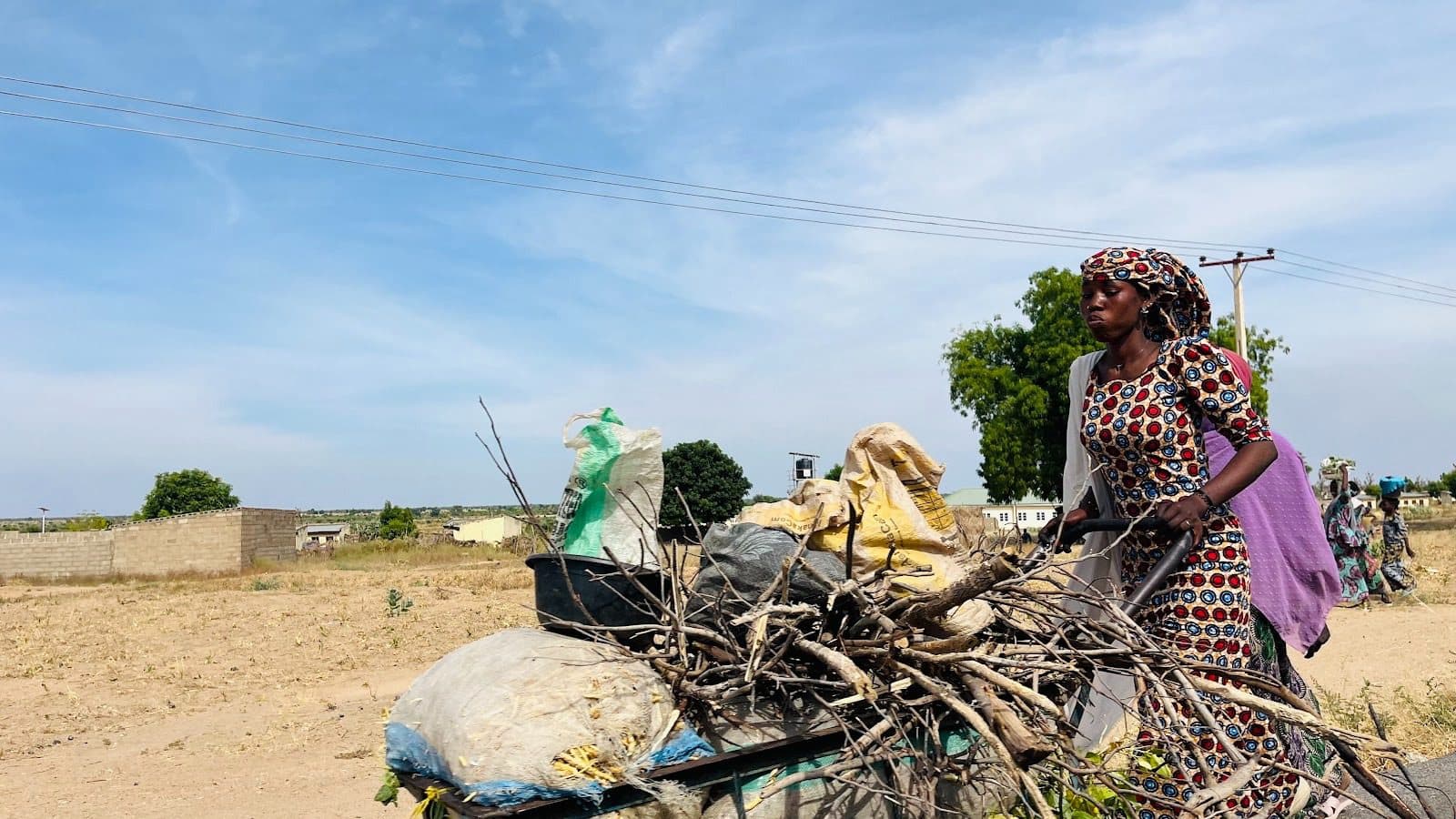
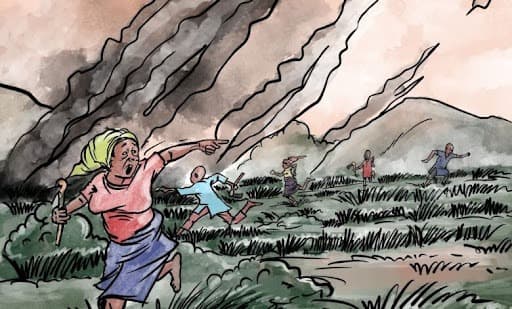
Aisha Waba’s hands moved quickly through the rows of beans as she harvested under the midday sun at her farm in Jere Local Government Area (LGA), Borno State, North East Nigeria. She worked alongside other women, chatting lightly as they filled their sacks with bean pods. Suddenly, Aisha sensed movement behind her. Before she could react, the other women sprinted out of the field, leaving their sacks scattered on the ground.
Confused and terrified, she dropped to her knees, arms raised, pleading for her life.
Eight terrorists on four motorcycles surrounded the farm. “They positioned themselves at every corner,” she recounted. Four of the men had their faces hidden behind a balaclava; one of them spoke in a loud, muffled tone. “We don’t kidnap women here,” he said. However, they seized a male farmer and his labourer.
“It took less than five minutes,” she said, her eyes flickering as she fought back tears.
Amidst the food shortage in the region, the harvest season is meant to offer relief to Borno’s farming communities. However, this period is now marked by tension and constant fear of abduction. Across communities in Jere, Konduga, Mafa, Gwoza, Bama, Damboa and several other LGAs, farmers say abductions occur as often as they visit their fields.
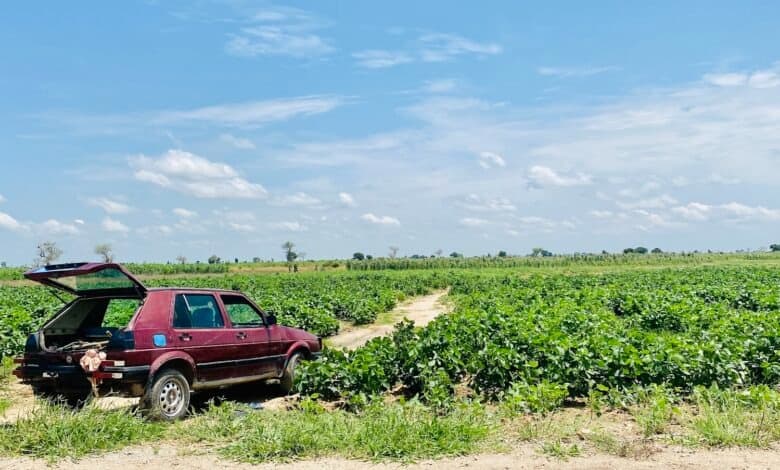
From late October through November, HumAngle received reports from farmers of at least 80 abductions. Many only spoke after their relatives were either released or found dead.
In Bama and Konduga alone, farmers said more than 30 people were abducted in November. During the same period, at least 21 cases were reported in Damboa, Askira Uba, and Chibok LGAs.
One of the recent incidents in Bama involved three teenagers from Old Bama Junior Secondary School, who were on a routine fishing trip along a stream near their community. A teacher at the school, who wished to remain anonymous, said the boys had gone out early in the morning, but terrorists intercepted them before they could return home. They are yet to be released.
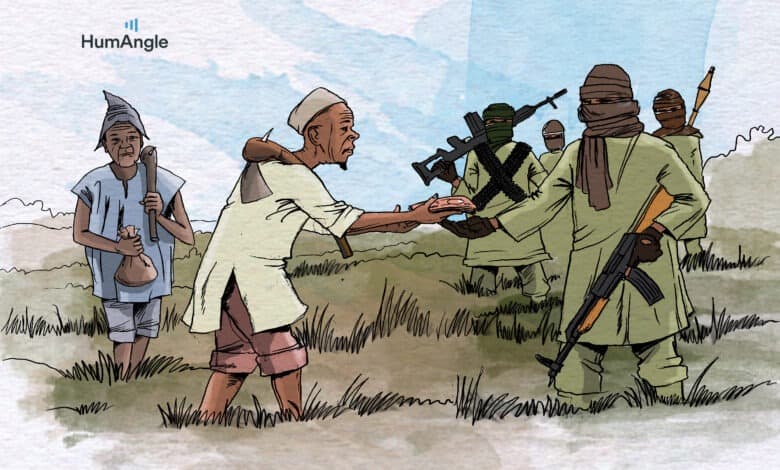
In some communities, farmers are experiencing sudden breaches in fragile agreements with terrorists. Onion farmers in Malari, a village in Konduga, have long maintained a tax arrangement with Boko Haram, but the pact collapsed on Nov. 30 when the terrorists, who had previously received levies from locals in exchange for access to farmlands, stormed the area despite the farmers’ compliance.
“We felt betrayed,” Modu Konduga, an onion farmer, told HumAngle. Terrorists have continued to breach such agreements across the region and in the North West.
Locals in Malari, who witnessed the incident, said the terrorists came on nearly 30 motorcycles. A farmer was shot and wounded in the raid, and many others were abducted; the exact number is unknown. “We never thought it was the abduction they came for,” Abba Kura, another farmer in the area, said.
Fleeing farms
As attacks continue to escalate, even in areas where levies are paid, fear is forcing some farmers to abandon their fields altogether. Fifty-year-old Mohammad Haruna and his 28-year-old son had barely begun harvesting on their bean farm in Jere when the terrorists stormed and kidnapped them in November. “We were pushed towards their motorcycle, and they drove off while casually firing into the air,” Mohammad told HumAngle.
They were eventually released after Mohammad asked his family to sell his house to pay the ₦1.5 million ransom. Although they told him and his son to continue coming to the farm, he remains sceptical.
Musa Bukar, a 42-year-old millet farmer in Mafa, has not touched his land since the morning he narrowly escaped an abduction in October. He was working on the farm when two armed men emerged from a thicket and ordered him to stop. He fled toward a nearby farm, sprinting until he could no longer hear their shouts behind him.
That night, Musa told his family that he was done with farming. They tried to convince him otherwise, reminding him that the farm was their sole source of income, but Musa refused. He relocated to Maiduguri, where he now works as a casual labourer, earning a fraction of what he once produced on his land.
Musa harvested 20 bags of millet last year and was expecting about 15 bags this year. Before the insurgency, he cultivated over 100 bags of millet annually.
“If they take me, who will feed my family?” he said. “Better not to farm than to be killed or beg for ransom.”
Mohammed and Musa are only two of several farmers who are now leaving entire fields abandoned out of fear, thereby worsening the food shortages spreading across the region.
The danger of ungoverned spaces
In Borno and neighbouring areas, the threat to farmers varies depending on which faction of terrorists they encounter.
ISWAP (the Islamic State of West Africa Province), a Boko Haram breakaway, rarely attacks farmers outright. Instead, it operates like an armed tax authority in the territories it controls, demanding levies, dictating access, and allowing farming only after payment. By contrast, JAS (Jama’atu Ahlis Sunna Lidda’awati wal-Jihad), the older Boko Haram faction, is unpredictable. Farmers describe JAS-held areas as places where anyone can be targeted.
Local leaders also consider returning terrorist deserters a significant threat, noting that it has become difficult to track those who return to communities without going through official reintegration channels.
In early 2023, residents of Konduga raised complaints that some surrendered Boko Haram members had begun taking part in kidnappings with informants inside the town.
“Some of those who surrendered later slipped away with the motorcycles and the gun the military gave them for support,” Modu Kura told HumAngle. “They even claimed the motorcycle and the weapon were what persuaded them to surrender in the first place.”
These concerns are heightened by the fact that abductors often possess intimate knowledge of their victims. Modu Yale, a rice farmer, explained that the abductors sometimes reference the victim’s possessions and income sources. “They tell you exactly what you have at home,” Yale said. “They will even tell you to sell a property to pay them. How can they know these things unless someone close to us is giving them information?”
Despite the attacks and breach of “peace arrangements”, farming continues to be transactional. Some rice farmers in Konduga pay levies through organised groups or informal unions that collect money on behalf of insurgents. Those unable to pay simply stay away from their fields. Along the Damboa LGA axis, terrorists often operate in small groups—typically fewer than ten people—and target farmers working far from security posts.
Security personnel assigned to guard farming areas, who spoke to HumAngle, admit that communication gaps worsen the situation. They say some farmers ignore evacuation warnings, choosing to remain on their land even when danger is imminent. Insurgents exploit these moments to seize people with little resistance.
Farmers who avoid speaking to the military noted that their caution comes from lived experiences: in 2020, Boko Haram brutally killed 43 farmers accused of passing information to soldiers in Zabarmari community, a gruesome incident still remembered across rural Borno.
“We have to obey them or else we can’t farm, or worse, we will be killed; we just have to abide by them to survive,” Bukar Abba, a farmer in Bama, told HumAngle.
In Monguno, terrorists enforce a strict system in which farmers receive tickets after being screened, granting access to their fields. Through the system, each farmer must surrender a quarter of their harvest, with another quarter taken from labourers. Fields without such arrangements face a far higher risk of abduction.
Across the Lake Chad basin, the absence of government presence has allowed terrorists to entrench themselves as de facto authorities, imposing rules that shape daily survival rather than behaving like fugitives.
The humanitarian consequences of these attacks are severe. Nearly 35 million people across Nigeria, especially in the northern region, are at risk of severe food shortages in the 2026 lean season, due to these terrorist attacks, according to the World Food Programme. The situation is even more dire in Borno State, where tens of thousands may fall into conditions described as “catastrophic or famine-like” if current trends persist.
Names changed to protect sources from reprisal.
Support Our Journalism
There are millions of ordinary people affected by conflict in Africa whose stories are missing in the mainstream media. HumAngle is determined to tell those challenging and under-reported stories, hoping that the people impacted by these conflicts will find the safety and security they deserve.
To ensure that we continue to provide public service coverage, we have a small favour to ask you. We want you to be part of our journalistic endeavour by contributing a token to us.
Your donation will further promote a robust, free, and independent media.
Comments
0 comments
No comments yet.
Sign in to join the discussion.
Of course, we want our exclusive stories to reach as many people as possible and would appreciate it if you republish them. We only ask that you properly attribute to HumAngle, generally including the author's name, a link to the publication and a line of acknowledgement.