Central African Republic Community Flees to UN Military Base as Border Town is Attacked
Am Dafok, a town in the Central African Republic, has spiralled into panic and fear as assailants attack, leading to displacement, deaths, and injuries.

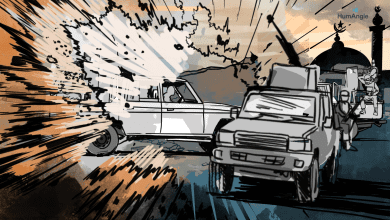
The population of Am Dafock, situated on the border between Sudan and the Central African Republic (CAR), have been forced to abandon their homes and take refuge in the camp of the United Nations Multidimensional Mission in the Central African Republic (MINUSCA) following an attack early this morning of Monday, Sept. 22, by unidentified assailants from Sudan.
This attack is suspected to be a reprisal, happening three days after the killing of four Sudanese Arabs by Russian mercenaries on Sept. 16, in Am Dafock, and marks an escalation of violence on the border between Sudan and CAR. The attack happened in a village seven kilometres from Am Dafock on the CAR side of the border. The Sudanese conflict has been spilling into the country for some time now.
“Today’s attack was concentrated in the Bilibili zone, where clashes took place between youths and yet to be identified assailants. Several victims were recorded, but the casualty figure remains unknown due to the confusion that currently reigns in the area,” an anonymous military source told HumAngle.
Zachir Eric Takiya, former president of the youth prefectural council in Vakaga, has confirmed the ‘attack by Sudanese aggressors’, adding that it resulted in deaths and injuries within the local population, but no exact numbers of casualties were confirmed.
“Faced with this new wave of violence, the population of Am Dafock have massively fled from their homes in search of places of refuge, with most of them going to the MINUSCA base in the town. This collective escape is proof of the terror that has seized the inhabitants who are now convinced that their security can no longer be ensured by their national army,” opined an anonymous civil society activist.
“The behaviour of the national army, popularly known by the acronym FACA, deployed in the zone has been contributing to the confusion, visiting the local population. The behaviour of the FACA forces is proof of the fact that they are incapable of facing the attackers,” the activist added.
Am Dafock is currently in a state of total paralysis. This situation is proof of the collapse of state authority in this strategic border region.
This new escalation in violence confirms the analysis by Zachir Eric Takiya, who had alerted the authorities to the porous situation of the CAR border with Sudan during the national dialogue in 2022. According to him, the border resembles “two passageways which enable Sudanese and Chadians to enter and go as they like in the Central African Republic territory. These foreign populations, most times, know the terrain more than the Central African Republic natives themselves.”
“The contrast between the reality lived by the populations and the official version of events is becoming more and more difficult to decipher,” declared another anonymous civil society activist.
The Am Dafock crisis demonstrates the total failure of the security strategy based on the use of Russian mercenaries. Their initial attack against innocent herders has sparked off a cycle of reprisals which have spiralled out of control.
An attack by unidentified assailants from Sudan forced the population of Am Dafock, on the CAR-Sudan border, to flee to a UN base for safety.
This assault, believed to be retaliation for an earlier conflict involving Russian mercenaries, highlights escalating violence in the region. Reports confirm deaths and injuries, although exact figures are unclear due to ongoing chaos. The local population's distrust in the national army stems from its inability to provide security.
The situation underscores the collapse of state authority and the porous nature of the CAR-Sudan border, previously warned by Zachir Eric Takiya. The failure of security strategies, such as deploying Russian mercenaries, has resulted in uncontrollable retaliatory violence.
This crisis exemplifies the disparity between the lived experiences on the ground and official accounts, complicating the understanding of events.
Support Our Journalism
There are millions of ordinary people affected by conflict in Africa whose stories are missing in the mainstream media. HumAngle is determined to tell those challenging and under-reported stories, hoping that the people impacted by these conflicts will find the safety and security they deserve.
To ensure that we continue to provide public service coverage, we have a small favour to ask you. We want you to be part of our journalistic endeavour by contributing a token to us.
Your donation will further promote a robust, free, and independent media.
Donate HereStay Closer To The Stories That Matter