Burundi Faces Refugee Surge as M23 Rebels Advance from Eastern Congo
Burundi has also accused the M23 rebels of conducting a bombing attack within its territory, signalling an increase in regional tensions despite several peace agreements.
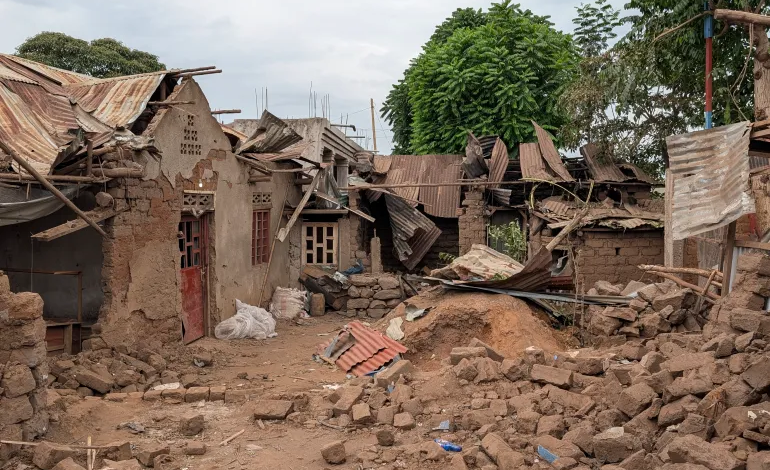
Due to the ongoing advance of M23/AFC rebels in the Democratic Republic of Congo (DRC), scores of displaced people have crossed into Bujumbura, the capital city of Burundi, on Dec. 9.
Burundi is facing a major surge in refugees as families escape ongoing conflict. The unexpected influx, which includes individuals with ties to armed groups, has raised fears of a security and humanitarian crisis in the country. The chaotic situation at the South Kivu border sees both civilians and armed personnel caught up in the turmoil.
Refugees from Luvungi, Katogota, Bwegera, Luberizi, Mutarule, and Sange of the DRC crossed the border en masse at the Kaburantwa bridge under construction, on the 6th avenue in the Buganda zone of Bukinanyana district. According to local Burundian media, the rout of armed groups and regular forces allowed armed fighters to blend into the crowd.
On Dec. 8, joint operations conducted by Burundian soldiers, Congolese Wazalendo militias, and Rwandan rebels resulted in the seizure of weapons and uniforms, and the arrest of men suspected of being infiltrated fighters. These operations took place in Kansega, in the border area of Ndava, Bukinanyana district.
Burundi has also accused the M23 rebels of conducting a bombing attack within its territory, signalling an increase in regional tensions, despite several peace agreements. The militant actions by the rebels continue despite the ratification of the Washington peace accord signed between DR Congo, the M23/AFC rebels, and Rwanda under the Trump administration.
Despite facing strong resistance from the DR Congo national army, the M23/AFC rebels, with support from Rwanda, continue to advance on the ground toward the capture of the city of Uvira in South Kivu, which has become the province’s provisional capital.
The two main parties involved in the conflict in the eastern Congo, the Kinshasa government and the M23/AFC rebels, previously signed a framework agreement. This agreement aimed to initiate new discussions on the underlying causes of the conflict and, eventually, to reach a comprehensive peace accord to restore normalcy in North Kivu and South Kivu.
Despite multiple meetings with the mediator and several signed documents, including mechanisms for prisoner exchange and cease-fire verification, the measures have not yet been implemented.
Kinshasa officials accuse Kigali of continuing to support M23/AFC rebels, violating the Washington Accords.
The advance of M23/AFC rebels in the Democratic Republic of Congo has led to a surge of refugees crossing into Burundi, resulting in fears of a security and humanitarian crisis. Burundi has accused M23 rebels of a bombing attack, raising regional tensions despite existing peace agreements.
Burundian, Congolese, and Rwandan forces have been conducting joint operations to address the situation, arresting suspected infiltrators. Despite efforts and multiple agreements, including the Washington Accords, conflicts persist with accusations of Rwanda supporting the rebels in violation of these agreements.
The conflict has centered around discussions and agreements intended to address underlying issues and establish peace in the affected regions of North and South Kivu, but implementation has faltered. The city of Uvira is currently a focal point, as the rebels advance despite resistance from the DR Congo’s national army.
Support Our Journalism
There are millions of ordinary people affected by conflict in Africa whose stories are missing in the mainstream media. HumAngle is determined to tell those challenging and under-reported stories, hoping that the people impacted by these conflicts will find the safety and security they deserve.
To ensure that we continue to provide public service coverage, we have a small favour to ask you. We want you to be part of our journalistic endeavour by contributing a token to us.
Your donation will further promote a robust, free, and independent media.
Donate HereStay Closer To The Stories That Matter