Borno’s “Second Chance” Schools are Rebuilding Education for Women and Girls
Women and girls in Borno, who have long been denied education due to conflict, poverty, displacement, and cultural norms, are finding hope at this school.

Fatima’s smile glows with the thrill of discovery. At 18, she has only just begun to taste the world of reading, a pursuit that has visibly changed the way she carries herself. She eagerly shared that she can now read short words, listing ‘box’, ‘get’, and ‘you’ with a mixture of pride and disbelief.
Fatima Mohammad Amande does not know why she and her siblings were never enrolled in school. All she knows is that formal education was never permitted in her home. Her father, a Qur’anic teacher, runs lessons on slates and insists that none of his children will attend formal school.
All of them were raised in that enclosed system, and Fatima learned the Ajami script from her father instead.
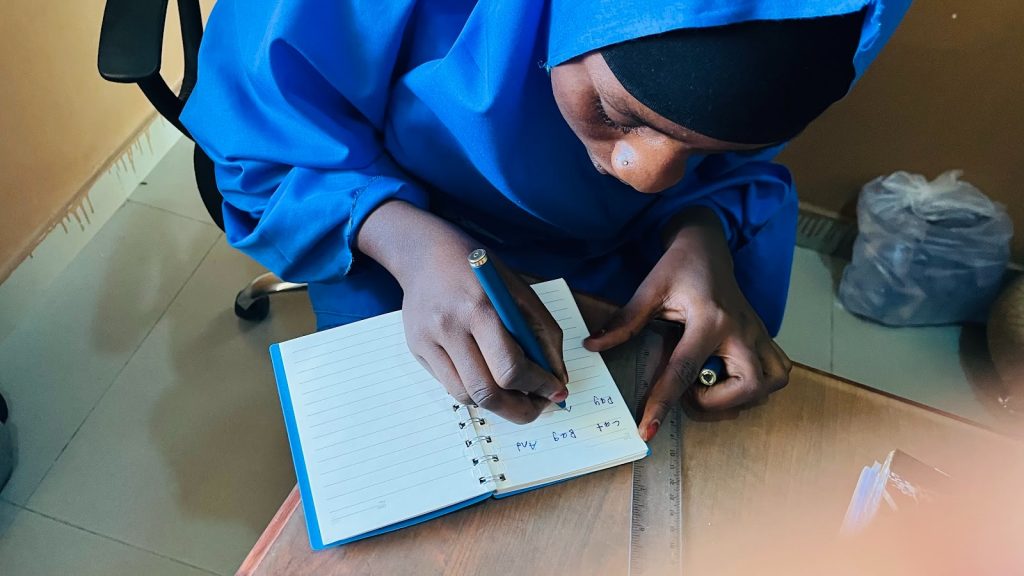
Her admission into the Second Chance Girls/Women Skill Acquisition School in Maiduguri, Borno State, northeastern Nigeria, was a rare exception. Her father agreed only because he believed it focused strictly on vocational skills, which he considered harmless. Fatima soon discovered that the centre also taught literacy and numeracy, a detail she hid from him at first for fear he would drag her back home. When he finally learned that she had begun reading and writing, she expected fierce resistance. Instead, he stayed silent.
For Fatima, that silence felt like a crack of light.
Yaga Hillary Kamba, a teacher at the school, ensures the mathematics lessons are rooted in daily life. “We teach them to identify numbers. Such as teaching the tailors how they can take measurements,” he explains.
Her literacy and numeracy classes quickly proved useful, helping her read simple words, write numbers with confidence, and record basic details such as phone and account information.
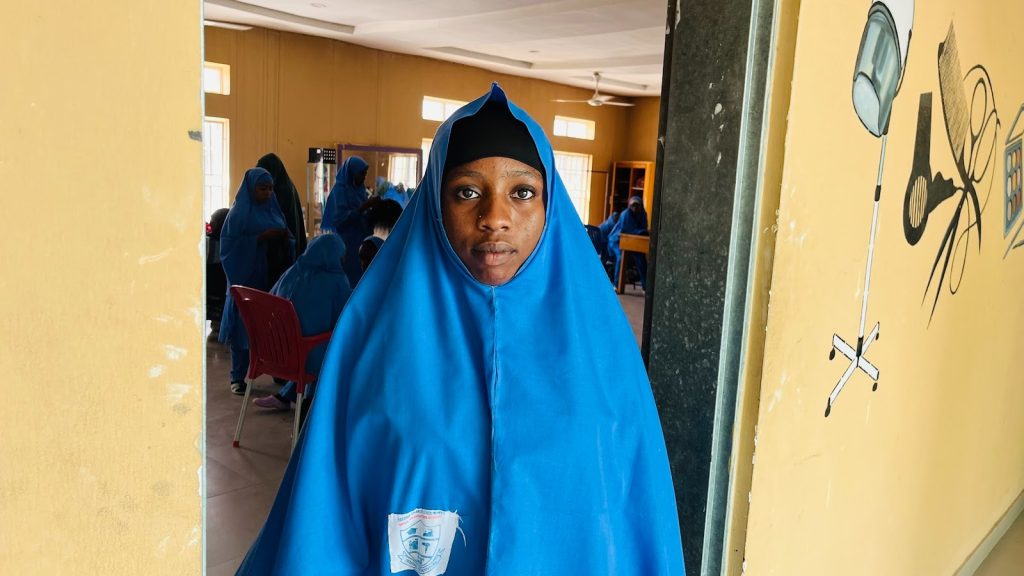
Her situation reflects the circumstances of many others who arrive at the Second Chance Girls and Women Skills Acquisition School, all seeking a path back to learning.
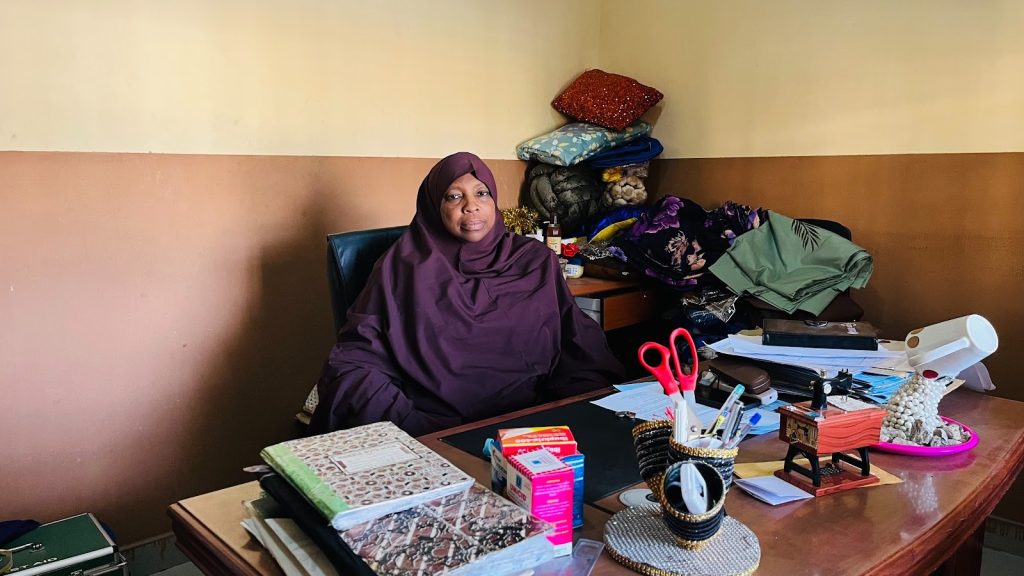
“The school was initiated by Borno State Governor Professor Babagana Umaru Zulum in 2022. It was established specifically to empower girls and women in the state who had been affected by conflict, poverty, and cultural resistance,” Mrs Boli Kawu Daja, the principal and coordinator of the school, told HumAngle.
The school is strategically located in Ngarranam, a community that fell to Boko Haram in 2013 and remained under insurgent control until 2017, making it a focal point for rebuilding education.
The principal explained the urgent need for the centre: “The community had suffered immensely during the insurgency, and the community is educationally backward. Many girls are married as young as 12.”
The United Nations Children’s Fund (UNICEF) reports that conflict and climate pressures are directly influencing the rise in child marriage. The data shows that child marriage rises by 7 per cent for every tenfold increase in conflict-related fatalities. Attacks on schools and long periods of closure intensified already existing gender inequalities, pushing more girls into early marriage and early pregnancy.
Nigeria carries one of the heaviest education burdens globally, with the United Nations Children’s Fund (UNICEF) estimating that more than 10 million children between 5 and 14 are not in school, with nearly half of them being girls. Borno remains one of the most severely affected states. Also, more than 1.9 million children have been affected by the 14-year-long insurgency in North East Nigeria.
Boli Kawu Daja further explained that the school works with a broad mandate, extending learning opportunities to vulnerable groups in the surrounding communities. She noted that the beneficiaries include school dropouts, internally displaced people, widows, divorced women, and others facing financial difficulties. She said the approach has delivered tangible outcomes, with 970 students already graduated and 820 others currently enrolled.
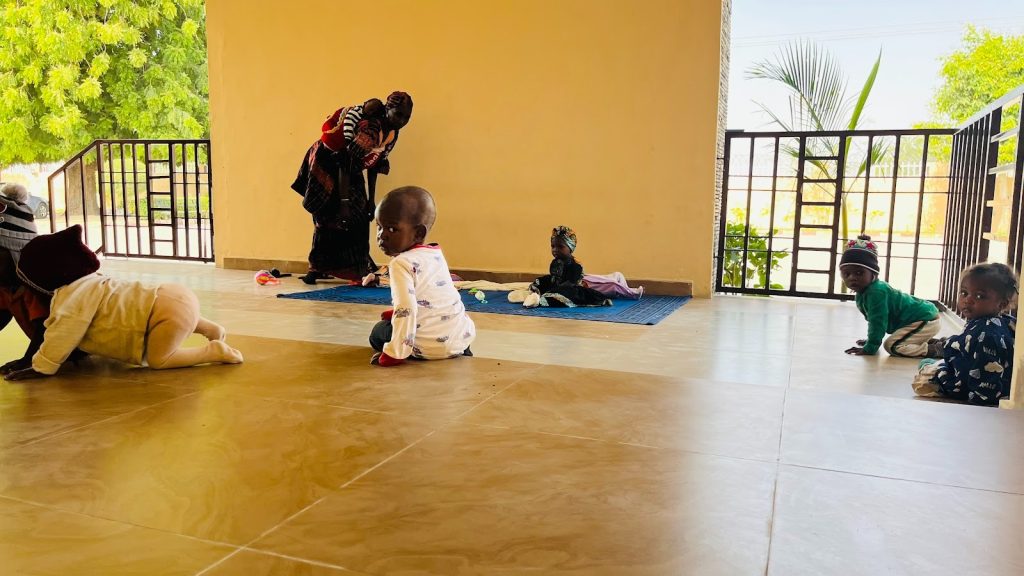
The school provides a creche for nursing mothers and ensures they can continue learning. Breakfast is also provided for students and trainers, ranging from moi moi and pap to beans cakes, puffs, and tea and milk.
Some women have already begun transforming their lives before even completing their training. Falmata Bukar, 48, arrived knowing little about business. “Before this training, I didn’t know much about business,” she said. Three months later, she was producing perfume at home. After her trainer approved her first sample, she began selling to nearby villages. Now she supplies in bulk. “I have six children and five grandchildren. This work helps me feed them and take care of myself, and my capital is still intact.”
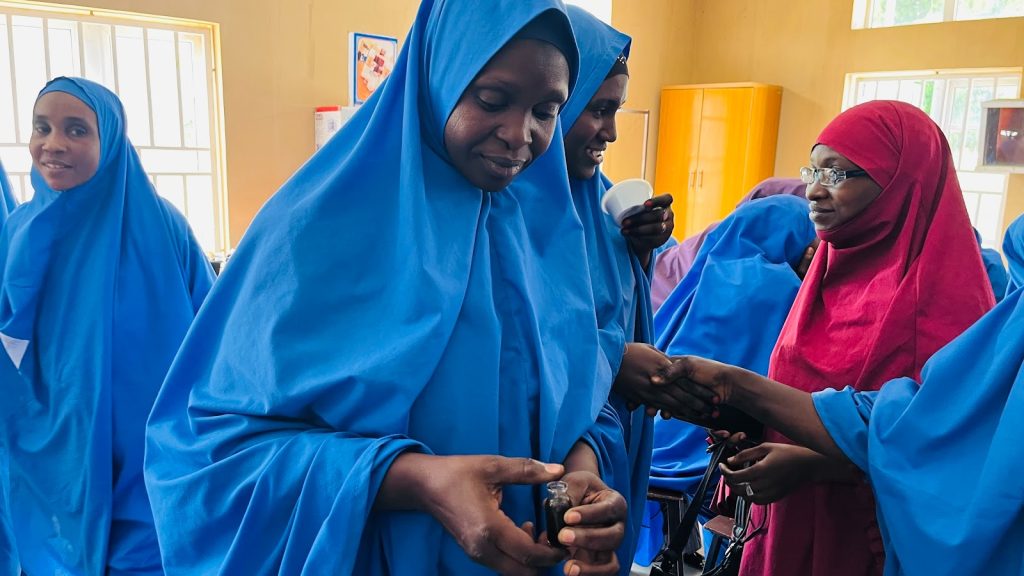
The program is run by the government and crucial partnerships with organisations like The United Nations Children Fund (UNICEF), the Norwegian Refugee Council (NRC), and Adolescent Girl Initiative For Learning and Empowerment (AGILE), who send their students to the school. Principal Boli Kawu Daja advocates strongly for this model, urging authorities to prioritise practical subjects. She argues that short vocational courses give young people marketable skills far faster than traditional schooling alone, offering an accelerated path to economic self-sufficiency.
The curriculum is designed around immediate market needs, offering nine specialised trades: Tailoring, Catering, Computer skills, Knitting and Crocheting, Makeup, Saloon, Incense making, Fabric Painting, and Embroidery. Crucially, this vocational training is coupled with essential literacy, numeracy, and business studies. Principal Boli noted that the program is constantly evolving to meet demand, adding, “Starting next term, we are introducing leather work.”
The women are not left behind
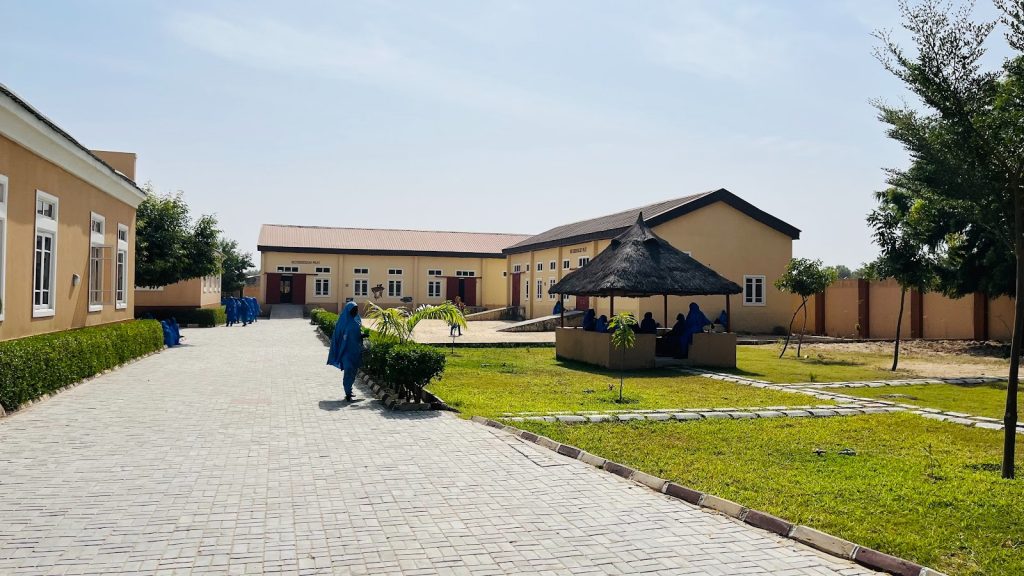
The students, dressed in their blue uniforms, blend almost naturally with the sky, providing a subtle, visual suggestion that more is possible than they once believed. The school carries the atmosphere of a large extended family, where older women move with calmness, fostering easy, informal mentorship between the elderly and the young despite the age gap.
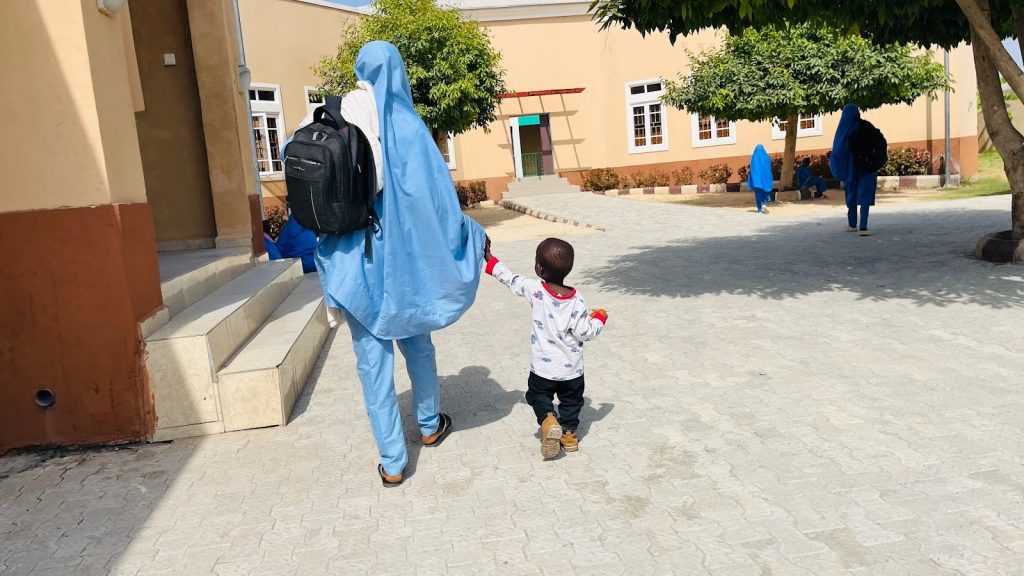
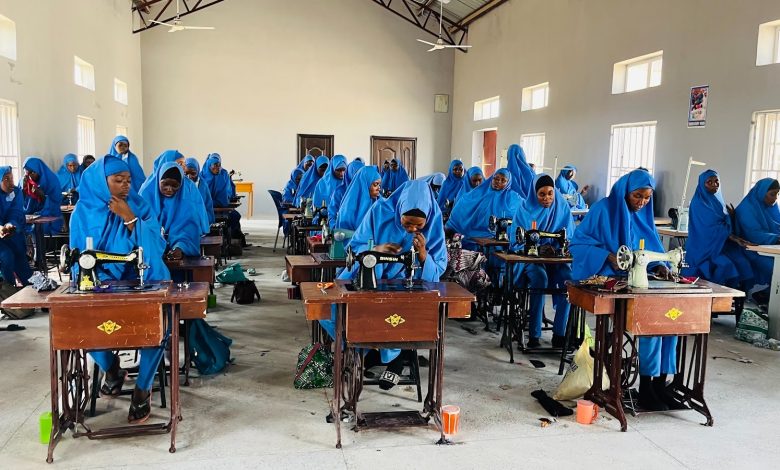
Along the corridor, each classroom announces its purpose through the tools and equipment arranged inside. Inside the literacy classroom, the mood shifts from the open calm of the compound to steady concentration. Across the corridor, the tailoring hall has its own rhythm–the soft thrum of sewing machines fills the space as older teenagers and women bend over their fabrics. Some beadazzle dresses, others work on embroidery, while a few stitch garments. The wide room is crowded with dozens of women actively bringing life into pieces of fabric.
The computer room adds another crucial layer of opportunity. Here, some students still hesitate before touching the keyboard. A young woman, with her baby resting lightly against her shoulders, sits before an HP monitor studying the endless cells of an Excel sheet. She attempts to input the summation formula that the instructor just demonstrated. As she types, her tutor nods with quiet encouragement, the kind that comes from someone who has watched many such breakthroughs take shape slowly.
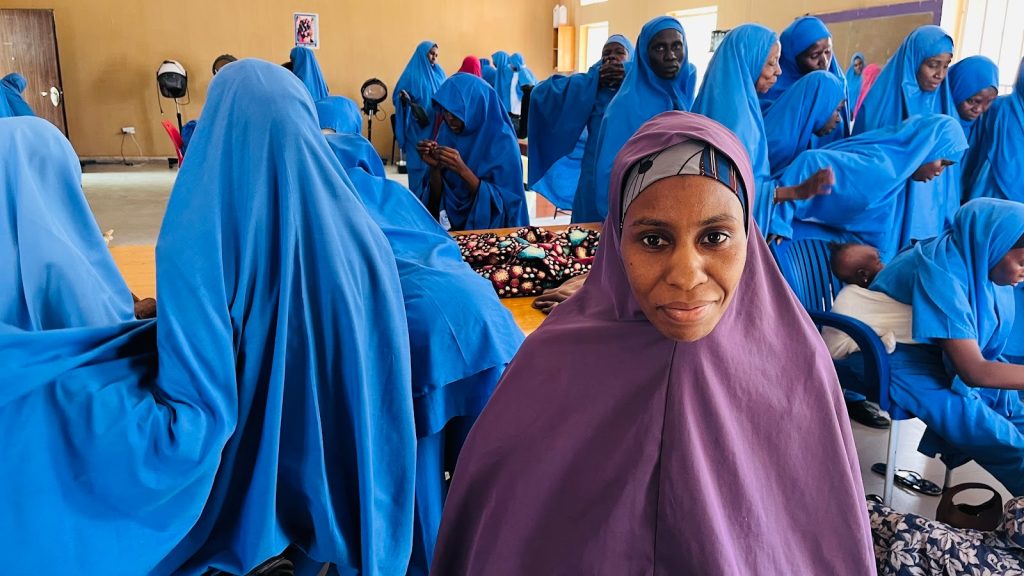
The programme has also produced its own trainers. One of them is Zainab Yunus Mohammad, 25, an orphan who joined the second cohort as a trainee. Now she teaches fabric painting and trains a few students at Second Chance School. “I also teach girls from my area with a token,” Zainab said.
“We have recruited 86 graduates of our technical school to train others across our schools and centres,” Mallam Matawalli Ahmed, Director of Science and Technical Education in Borno State’s Ministry of Education, told HumAngle.
Even graduates find a foothold at the school. Fatima Abubakar, who holds a degree in biochemistry, realised her ambitions would stall without computer skills. At the Second Chance school, she is learning data analysis and digital design tools she once believed were beyond her reach.
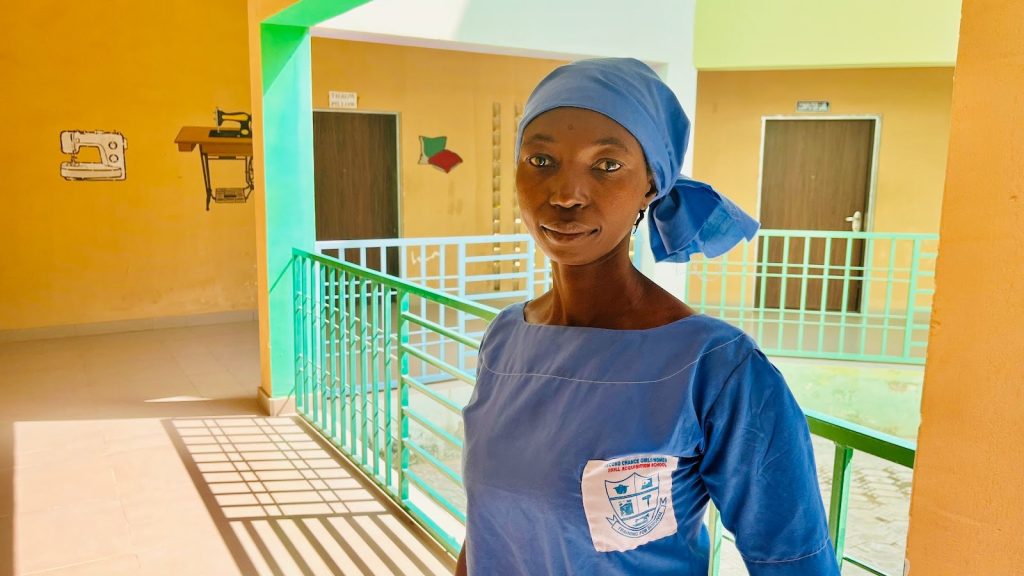
Others arrived after long years of displacement. Florence James, 45, fled Ngarranam in 2009 after Boko Haram listed her among the people they would kill.
She was displaced to Askira Uba local government in Borno, then to Mubi in Adamawa, and is now settled in an informal camp in Maiduguri.
Today, she gets a second chance at school, where she learns tailoring.
In each room, the same pattern emerges: Women and girls who were once told that learning was not meant for them now sit with books, tools, and machines that point to a different, self-determined future.
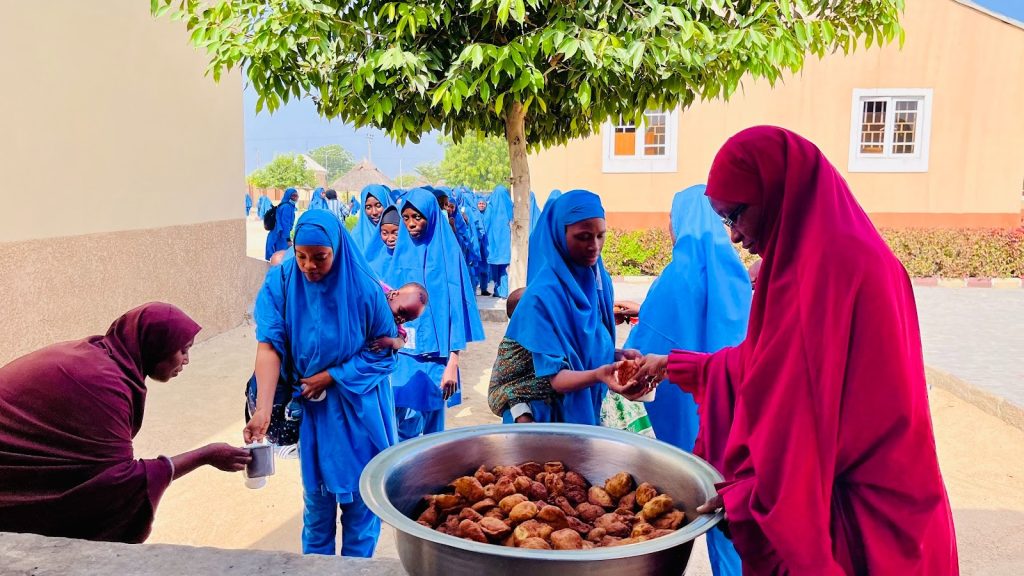
“Women and girls in Borno rarely get the chance to learn trades through informal workshops because of cultural and religious restrictions,” noted Mohammad Usman Bunu, an educator at Future Prowess Academy. He added that “Government-run vocational and revived technical schools are filling that gap, giving them access to skills that were previously out of reach.”
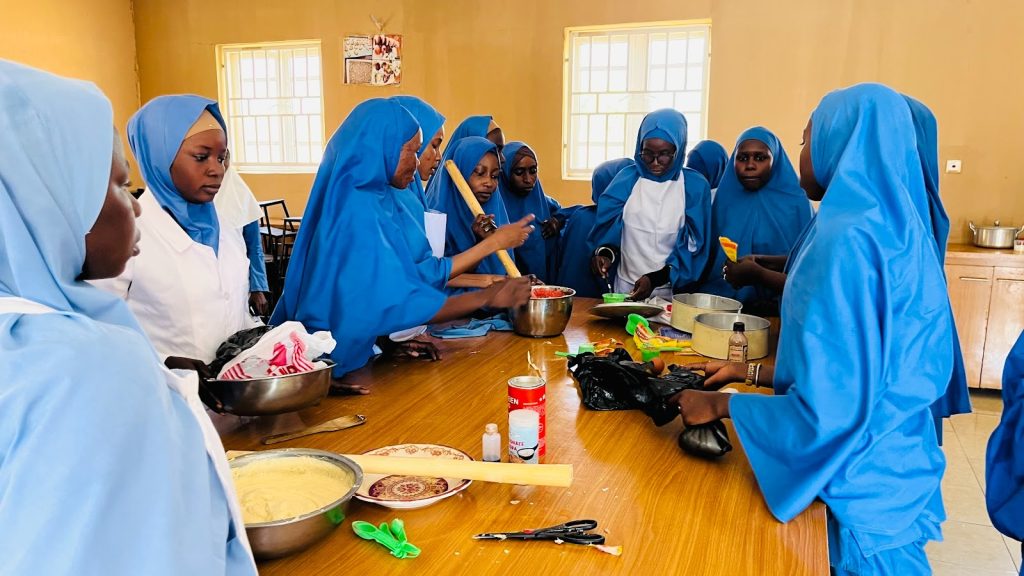
The Borno State government has made this vocational approach central to its strategy. In the last five years, the state government said it has reduced the out-of-school children rate from 2.2 million to 700,000. This reduction is attributed to the government’s focused effort on reviving Technical and Vocational Education, and Training (TVET) to address the massive challenge of out-of-school youth beyond the limitations of conventional schooling.
The director elaborated on the strategy: the government expanded vocational and technical education specifically as a response to the state’s massive population of out-of-school children. He explained that the Borno State Vocational and Enterprise Institute (BOSVEI) and the overarching TVET programme were created to give young people and adults a way back into learning after years lost without education. The initiative, he noted, is especially vital for adolescents who have missed foundational education.
The programme’s reach is widening. According to the director, there are now three Second Chance Girls/Women Skill Acquisition Schools operating in Maiduguri, Bama, with the Biu local government centre yet to be commissioned, and additional technical schools operating in Bama, Biu, Magumeri, Bayo, Askira, Jere, Maiduguri, and Shani.
Sharp attendance declines still occur
Despite the programme’s growth, the Director outlined challenges that continue to limit its overall impact. In rural communities such as Mafa and Magumeri, attendance falls sharply during planting and harvest seasons as many families prioritise short-term income over long-term learning. Security concerns further complicate enrolment. Many learners travel long distances from surrounding villages, yet insecurity makes hostel accommodation unfeasible. Some participants also withdraw early due to the absence of immediate financial incentives, even though graduates receive ₦50,000 and a starter pack upon completion, in addition to the daily brunch provided.
Beyond enrollment issues, the absence of local industries in Borno limits opportunities for industrial attachments, often forcing trainees to be posted to other states. The Director expressed deep concern over the program’s sustainability, noting that if a future administration decides not to fund vocational and technical education, the continuity and impact of the entire initiative will be cut short.
The school employs differentiated instruction for its literacy and numeracy classes, dividing learners into two groups: those who once attended formal school and those who never had the opportunity. Both groups study English, mathematics, and business studies. The business curriculum teaches practical skills such as calculating profit and loss, keeping simple records, and understanding how small ventures operate. This approach ensures that graduates leave with skills they can use immediately to start small businesses or support household income.
Fatima Mohammad Amande, an 18-year-old from a home that prohibited formal education, found solace in a vocational school in Maiduguri, Nigeria, learning literacy and numeracy. The Second Chance Girls/Women Skill Acquisition School, initiated by Borno State's government, empowers women affected by conflict and cultural barriers, offering trade skills and basic education. Resulting from partnerships with organizations like UNICEF, the school has graduated hundreds, highlighting how vocational education can bridge the gap for those affected by systemic educational exclusion.
The school's curriculum targets immediate market demands, offering specialized trainings in trades like tailoring and computer skills. Beyond literacy, students gain practical business skills essential for micro-enterprises. Despite challenges like attendance drops during agricultural cycles and security concerns, the program boosts economic self-sufficiency among women, breaking historical education barriers. As it evolves, the initiative continuously aims to tackle the legacy of Boko Haram's insurgency, contributing to the reduction of out-of-school children and empowering a previously marginalized demographic.
Support Our Journalism
There are millions of ordinary people affected by conflict in Africa whose stories are missing in the mainstream media. HumAngle is determined to tell those challenging and under-reported stories, hoping that the people impacted by these conflicts will find the safety and security they deserve.
To ensure that we continue to provide public service coverage, we have a small favour to ask you. We want you to be part of our journalistic endeavour by contributing a token to us.
Your donation will further promote a robust, free, and independent media.
Donate HereStay Closer To The Stories That Matter