Beneath the Tracks: The Systemic Failures of the Abuja-Kaduna Train
The commissioning of the Abuja-Kaduna train was a source of hope for many Nigerians. But over the years, travellers have faced security threats, ticket racketeering, technical failures, and other concerns that affect their daily lives.
Listen to this story

30 Mar 2026
Panic came last for Mubarak Hassan* on the evening of March 28, 2022.
It’s been four years since the terrorist attack on the Abuja-Kaduna train, but the memories still echo. After one of his clients was arrested by the Nigeria Customs Service (NCS) for alleged forgery, Mubarak travelled to the Abuja Headquarters to process his administrative bail. He was supposed to return on the same day he finished the process, but decided to spend one more night.
“My client’s family friend, who also happened to be a lawyer, insisted that we catch up with the evening train,” he recalled. Tired and exhausted, Mubarak was sleeping on board when the sound of a blast reached him.
“The next thing I heard was a voice saying that we were under attack and we should turn off our phones and lie down, which we all did. At first, I did not panic. I was asking myself if it was real or maybe the train just shifted its position, and it was misinterpreted to be an attack,” he said.
His worst fears were confirmed five minutes later, after the first gunshot tore through the wind, hitting the body of the train. Everything was happening so fast that he was struggling to process it.
The attack on the train carrying 970 passengers happened at approximately 7:45 p.m. in Katari, Kaduna State, northwestern Nigeria. The terrorists used explosives to halt the train before firing and kidnapping passengers. This incident, which resulted in ten deaths, multiple injuries and kidnappings, later caused the Nigerian Railway Corporation (NRC) to pause its services.
“We started to hear the screams of passengers from other coaches and the footsteps of people heading towards our coach for safety, because the gunfire started from their side. Other people in our coach started to scream as well, but a man who identified as a Colonel with the Nigerian army said that our screams would draw the attention of the terrorists to us, so we tried to keep calm,” Mubarak told HumAngle.
Mubarak, like many others in the coach, started praying. Panic heightened as the terrorists reached the coach before them. Their voices echoed through the train as they asked people to keep quiet and lie down.
“We heard a gunshot, and one of them asked the other terrorist who shot someone why he did that in Hausa, and he said it was because the man was showing he wanted to survive more than anyone else by raising his head, but the other terrorist said no one should shoot again, they should just take people and leave.”
A few minutes passed before they started to hear other gunshots, and the man who said he was a colonel said some soldiers came to rescue them. When the soldiers arrived, they told them not to panic and asked them to check the other coaches for their relatives.
“Our coach was one of the safest, except for a medical doctor who was killed as a result of a stray bullet; no one else was shot. The first thing I saw when I stepped outside was the dead body of a man. Some other people were bleeding due to some injuries they sustained. We started helping the soldiers evacuate the passengers. The younger ones, like us, helped carry the children and elderly ones on their backs, after which the wounded ones were also moved,” he added.
They had to climb up a sloppy hill because of the train’s position. They rested for about 20 minutes before they trekked to the main road. The army later transported them to the 44 Hospital in Kaduna around 5:30 a.m. They were checked, and people like Mubarak, who sustained no injuries, were discharged by 6 a.m.
That was the last time Mubarak used the train.
But this attack is only one of many issues that eroded passengers’ trust and raised concerns over the years. Train stops in the middle of nowhere, derailments, ticket racketeering, and other issues continue to affect passengers. Despite these pending issues, the NRC increased the number of trips per day earlier this month in “response to growing passenger demand.”
This increase was what encouraged Sada Malumfashi, a journalist and researcher, to take the train again on March 12, something he had avoided recently due to the stress of trying to get a ticket for the single train ride per day. He didn’t expect to end up in an accident that day.
According to the NRC, the accident occurred when a rear locomotive made contact with a passenger coach due to a coupling issue, and no casualties were reported. The train arrived 38 minutes behind schedule due to the accident.
“We left on time around 7:15 a.m. It was a smooth ride at first. When we reached Jere, they made an announcement, but we couldn’t hear it from our coach. I drifted off to sleep but woke up to a banging noise. I fell off my seat, but I didn’t hit anything,” Sada said. “Due to the previous history of attacks, people were terrified, many were shouting, praying loudly, and panicking.
Sada assumed the train was going to derail, and he tried to hold onto whatever he could. “My second thought was that maybe it was a terrorist attack, I crouched waiting for gunshots just in case because I did some reporting on the last train attack that happened in 2022 and talking to people who were directly on that train gave me a front row seat to that experience and what they described was very similar to what was happening at the moment,” he said.
When he didn’t hear any gunshots, he got up and began checking his surroundings. The place was in disarray: luggage was on the floor, and things spilt from the cafe section at the end of their coach.
“I saw one of the workers lying on the floor, and his leg was bleeding. There was also a pregnant lady crying as she hit her stomach. Someone couldn’t stand up because he hit his back, and another person behind me was bleeding through his mouth,” he explained.
The incident happened about two to three minutes from Asham station on the Abuja-Kaduna corridor, so he walked to the station. Some military personnel arrived to check the accident, which gave passengers some comfort. After a while, a Hilux car, assumed to be from the NRC, came to check the accident.
“They didn’t communicate anything, but they took a look around. At that point, many passengers were out of the train and were hanging around outside. They turned on the engine, and we started moving again. It was a sombre trip back to Kubwa,” he said.
A long history of train glitches
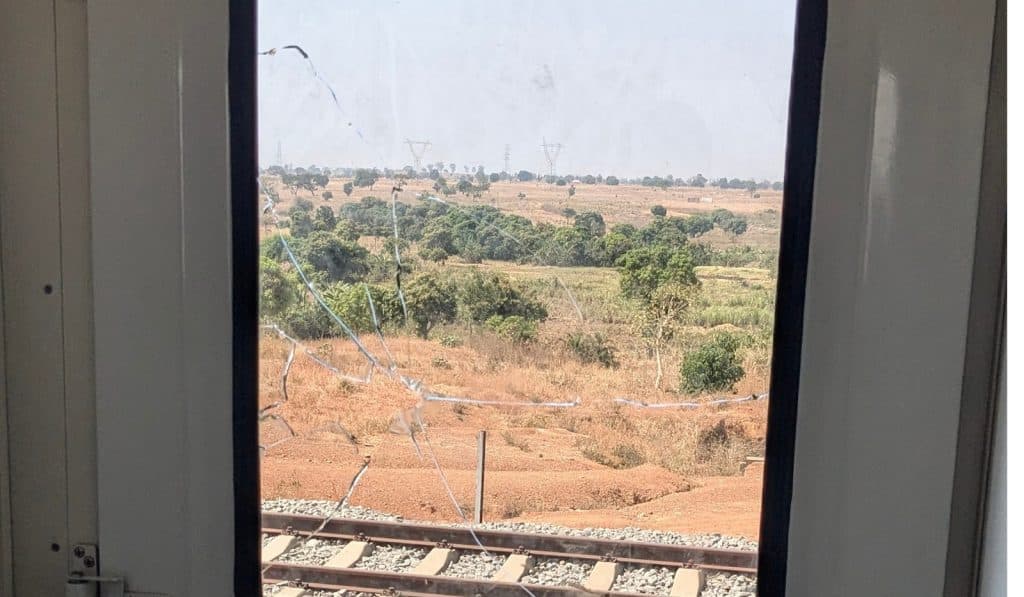
It was one such stop that made Chidera Egbo’s first visit to northern Nigeria in December 2021 a journey wrapped in terror. After he was posted to Kaduna for his National Youth Service, he tried to get a direct car from Enugu, southeastern Nigeria, where he was based, but unfortunately, he could only get one to Abuja, where he was advised to take a train. He was excited as it was his first time on a train.
Things went well at first, and he started a conversation with the girl sitting next to him. “While we were chatting, we heard an explosive sound and the train started to slow down. People started to talk, but I couldn’t understand anything as they were mostly speaking their native tongue,” he said. He panicked along with them. The incident happened about 10 to 15 minutes away from the Kaduna station.
He noted that there were some armed security personnel on board that day. He remembered seeing some people lying on the floor, and he followed suit.
When the train stopped, he started to regret getting on it, and his fear worsened when someone said it was a terrorist attack. The lack of official clarification about what was happening also increased his panic. Even an hour after their supposed arrival time, no help was sent from the station. When the lights went out, a man in their coach suggested they lie down and shut off their phone lights because everyone assumed they were under attack. During that period, some passengers panicked, thinking they saw lights they believed were people approaching. They turned out to be distant static lights.
“There was zero reception, and I had no way of contacting people to let them know what was happening. After a while, they told us that help was coming from Abuja.” The lack of phone reception rattled many of the passengers, who were worried about their families back home and had no idea what was happening to them. Some passengers demanded information. Eventually, people started to lighten up when an NRC staff member announced that help would be arriving in about 30 to 40 minutes.
After a while, some people started demanding to be let out of the train due to the heat. It took hours for the help to arrive, and the train kept stopping as it was being pushed towards the Kaduna station. He didn’t make it to his destination till after 2 p.m.
The experience left him rattled. He now feels anxious every time he has to travel. “I don’t travel often, but when I do, I am always on edge and feel like I am going to be attacked,” he said.
Despite the impact of this incident, it was mostly not covered by the mainstream media.
For some people, like Rashida Idris*, stories like this make them sceptical about using the service. “ I always hear people say it gets faulty midway, and I prefer to use the car due to how inconvenient the train is. But then, on the 2nd of August 2025, my mum, older brother, and I decided to use the train to travel down to Abuja, and it turned out to be the worst decision we made that day,” she said. It started with a slight burning smell that worsened as the train moved on, then slowed and later stopped completely.
The train, which was supposed to leave at 7:00 a.m., didn’t arrive until 2:30 p.m, and they ended up missing the event for which they were travelling. Drinking water ran out on board, and the air conditioners stopped working, leaving people anxious and dehydrated in the heat.
“It was very chaotic, and we were very hungry and tired. The train just stopped mid-way, no explanation from them whatsoever,” she told HumAngle.
She hasn’t used the train again since that day.
Sometimes, these stops harm passengers, as in August 2025, when they caused a derailment en route to Kaduna. Khadija Zahradden, who was on that train, said a loud noise woke her up from a nap.
“The train started shaking, and there was a loud sound before it fell. Some parts of the train, like the coach I was in, were slanted, but it didn’t fall down completely. I remembered it was raining,” she said.
The passengers got off the train and began trekking to a nearby military camp. A lot of security personnel came over, including fire service and road safety officials. She recalled that a military aircraft was patrolling and left with some of the people.
“The military personnel also carried passengers to the closest bus stop, where we got cars to complete our trip,” she said.
Dysfunction, ticket racketeering
Bukar Hassan* was on the first-ever train ride on that route, and for the past few years, he has used it to shuttle between the two states. But now, the journey lacks enthusiasm, and his experience keeps worsening, with tickets becoming harder to obtain by the day.
“First, you have to know someone reliable whom you probably have to keep on your payroll in anticipation of a future occurrence. Usually, an NRC or TPS staff member guarantees an offline ticket,” Bukar said. “Where they are unable to secure one themselves, they look to a syndicate that has created jobs for itself through this channel. You pay double the price, and most times, the ticket is issued in another person’s name, and you probably have to do with what is available, not your preferred class of travel.” This causes the 62-year-old man major concern.
Apart from the barriers to getting tickets, technical breakdowns occasionally occur, and the experience is usually alarming, especially if the train stops in the middle of nowhere. The security concern is also a major issue for him, as are the stops, which affect his commitments, causing delays in scheduled meeting times and travel schedules.
This is also worsened by insufficient communication, leaving passengers to fill in the blanks when something happens.
“Passengers hardly know what the issues are and rely mostly on hearsay. In some cases, apologies are not even tendered,” he lamented, noting that the recent creation of a passenger’s forum has provided passengers with an avenue to lodge complaints.
HumAngle investigations reveal that when complaints are made, organisation staff respond promptly via the WhatsApp forum, but this has not reduced the number of issues plaguing travellers, and many people are unaware of this channel. A disabled passenger who spoke to HumAngle, but preferred not to be named, said the organisation is making efforts to make rides more accommodating for disabled passengers, with customer service representatives approaching them to discuss their needs. However, Bukar showed concern that the uncontrollable number of bag carriers on and off the train poses a security risk.
“Security personnel handling weapons on board in the midst of plenty, even though comforting, can easily be manhandled. Sometimes, desperate passengers board without tickets. This is a major concern as you are not sure who is a genuine traveller,” he said.
“There are too many ad hoc staff on board doing nothing but jumping up and down and making noise. Some are only waiting for the arrival to carry passengers’ bags. Thirdly, a single channel of buying tickets only is grossly inadequate. A more reliable, functional app should be available for passengers to buy tickets in advance. I personally do not see the rationale for restricting ticket purchases to only 48 hours. It does not make any business sense. These will actually be more efficient, and also reduce the offline business,” he added.
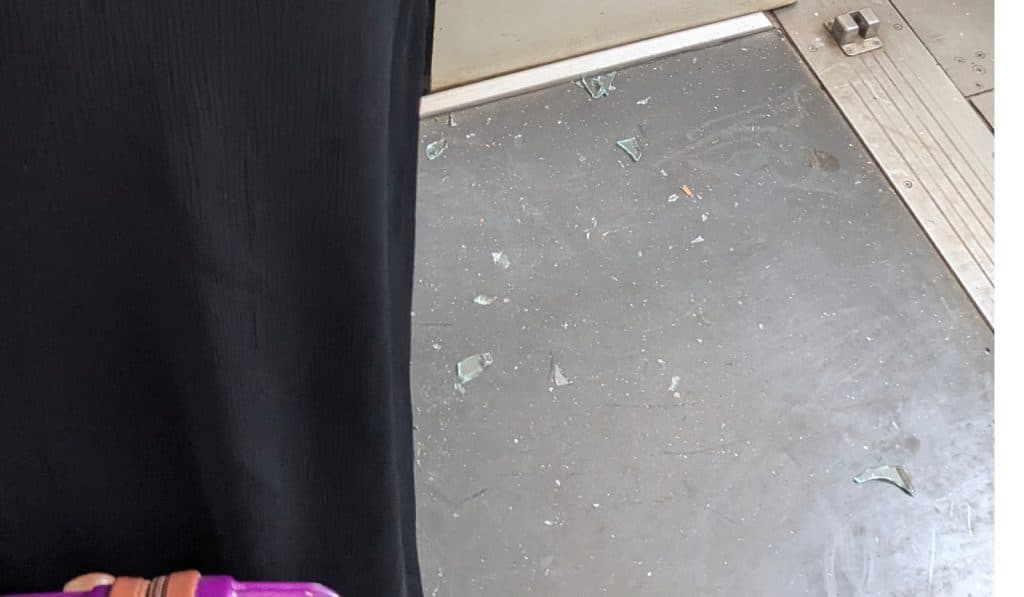
Bukar also noticed that, during trips, stones are sometimes thrown aboard by nearby communities. He thought the incident had eased over the years, but HumAngle investigations show that this problem still persists: on December 24 2025, a stone was thrown aboard, shattering a window, which almost hit a passenger with her baby.
Bukar continues to use that service, as the train is still the most convenient means of transportation for him at the moment.
Like Bukar, Hassan Yunus*, who travels twice or three times a month, depending on his schedule, faces a similar problem. His family lives in Kaduna, while he works in Abuja. He frequently uses the train, which he considers the easiest and fastest way to travel between the two cities.
“As a frequent passenger, I experience long stops quite a number of times, sometimes 30 minutes, sometimes an hour, depending on the cause, but the management and the operation team will work to resolve the situation. To me, the management is trying, just that they need to improve as a revenue-generating corporation,” he said.
He believes the biggest barrier travellers face is ticketing issues with the transport payment solutions. He thinks the issue is fueled by poor customer service and system downtime. This also affects passengers’ quality of life, as many would have to stay awake to buy a ticket in the middle of the night. In a few instances, he was wrongfully debited after booking a ticket, and the process to get a refund for the missing ticket is usually stressful.
Another passenger, Balarabe Bello*, says getting tickets from Abuja to Kaduna is often a struggle. “I often notice that sometimes they hold the servers, and you will struggle to get a ticket, especially the business class tickets. Even if you are on the app by 12:00 a.m. when tickets are supposed to be released, it just keeps loading, and you can’t buy them,” Balarabe said.
In such cases, most people will attempt to buy directly from the train station workers, and a business class ticket, which usually goes for ₦6500, can sell for ₦8500, and he had heard of people being sold tickets as high as ₦15,000.
“My mum travels often as she works in Kaduna, and she is always complaining of one issue or another, such as uncomfortable seats and other technical issues. One time when I was on it, the train stopped in the middle of nowhere for like 10 to 15 minutes as a result of a burning smell coming from under the train,” he said.
To confirm claims of ticket racketeering by passengers, a HumAngle reporter followed the process of purchasing tickets outside the official channel. We interacted with NRC officials selling tickets through the back door to desperate passengers, short-changing the government. We also found that some individuals who are not working in the ticketing office also profit from the existing dysfunction by charging passengers far above official rates. The back-door procedure is simple: you provide your full name, phone number, and National Identity Number (NIN), then pay extra for the tickets. Although there’s a website to purchase tickets, many passengers are unaware of it, leaving them with no option but to patronise the racketeers.
Halimat Akande* knew that getting tickets for the Kaduna-Abuja train could be a hassle, so she tried to buy tickets earlier for a Monday trip. She wanted to purchase two for herself and her mother at 5:00 a.m. on Saturday, but there weren’t any seats available.
“My mom contacted someone who claims to work there. He said we should pay ₦5,000 for each ticket,” she said, a claim HumAngle confirms to be true. The price for economy or standard tickets on the website ranges from ₦3,600 to ₦ 3,800, depending on the seating arrangement. This option is the most affordable means of transportation from Kaduna to Abuja, as even car rides cost ₦9,000.
The NRC official, whom Halimat contacted, had mistakenly bought Abuja-Kaduna train tickets instead of Kaduna-Abuja. He reassured her they would receive their proper tickets before their trip, asking them to arrive early on the travel date, as a worker from the Abuja station would hand them the tickets at the train station.
They arrived an hour before their trip. “We stayed outside as we couldn’t check in since we didn’t have a ticket. A man approached us and told us we were not supposed to be standing there, and if we didn’t have a ticket, we should get out of the station.” Halimat and her mother both felt embarrassed and left the station to prevent further discomfort.
When the man arrived, he asked them to wait a little longer, claiming he had their tickets ready. However, when he brought the tickets, both were registered under different names. She also noticed that one ticket was for the previous date, but he assured them it wouldn’t be a problem. After he spoke to some people, they were allowed to board with the one valid ticket.
The man said he would get her a valid ticket before the journey started, but he never did. “After we boarded, my mum sat down in the assigned seat, and I sat down in the then-empty seat beside her, but the original owner came, and I had to stand up. I kept moving to about four or five random seats, but the rightful owners came up to claim those seats,” she told HumAngle.
She met her colleague, who was in the same predicament when he came to claim her mother’s seat as his own; the details on his ticket matched hers exactly.
“He told me that he was even going to take the road, but someone called him to tell him they had gotten him a ticket, only to give him the same exact ticket my mother had, which further complicated the situation. I think he ended up standing for a while,” Halimat said. Eventually, her mother offered her a seat and tried to find an empty one on the train, but it took a while before they got one for Halimat.
She was nervous and anxious, even after she got a seat, especially during the ticket verification round that happens during the trip. When the man reached her, she switched off her phone and claimed the battery had died. Fortunately, he bought her story, and she was able to escape for a moment. But her anxiety remained as the man told her to charge her phone before he returned, which he never did.
“Even though I knew they couldn’t drop me while the train was in motion, I was worried they might report or arrest me because I had broken a rule.” The whole experience was terrible, and she started advising people not to buy tickets offline from station workers.
For Nabila Shehu*, her trip to Abuja on July 25 2025, took a turn for the worse when she arrived at the train station and discovered that the number of passengers exceeded the original arrangement.
“It seemed their server had issues that day, and some people were debited but didn’t get a ticket. Due to the high number of people that were affected, they just opened the train and asked us all to get in,” Nabila said.
She couldn’t get a ticket earlier and called someone at the train station, who promised to get her one, but due to the pending issue, he couldn’t process any tickets for her and her four children.
“We couldn’t get seats, but one of the staff members on board gave me his stool and also helped me get another. I couldn’t sit, and the children took turns,” she complained, noting that the trip was difficult and exhausting, as they arrived late. The air conditioner was barely working, she added, and the train was moving too slowly due to an overload. “It was a terrible experience, and I avoided the train when I was returning.”
However, when she used the train again in November, she encountered no issues.
HumAngle sent an email to the NRC seeking clarification on issues raised by passengers regarding dysfunction and ticket racketeering in the Abuja-Kaduna train operations. We have yet to receive a response. Meanwhile, the risks of travelling the 198km between Abuja and Kaduna remain high, as passengers are forced to choose between the road, which has been under construction for the past six years, and the train, despite ongoing problems.
Support Our Journalism
There are millions of ordinary people affected by conflict in Africa whose stories are missing in the mainstream media. HumAngle is determined to tell those challenging and under-reported stories, hoping that the people impacted by these conflicts will find the safety and security they deserve.
To ensure that we continue to provide public service coverage, we have a small favour to ask you. We want you to be part of our journalistic endeavour by contributing a token to us.
Your donation will further promote a robust, free, and independent media.
Comments
0 comments
No comments yet.
Sign in to join the discussion.
Of course, we want our exclusive stories to reach as many people as possible and would appreciate it if you republish them. We only ask that you properly attribute to HumAngle, generally including the author's name, a link to the publication and a line of acknowledgement.