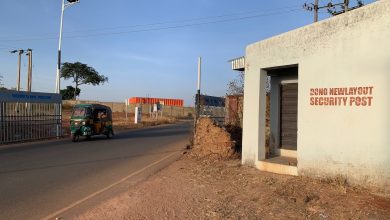
Adamawa IDPs Remember Home After a Decade Away
Since 2014, Boko Haram attacks have displaced thousands of people from their homes in Adamawa State, northeastern Nigeria. While some have returned, many remain stuck in displaced camps, struggling to rebuild their lives and yearning for home.

Life was good in Madagali. There was food, good shelter, and a large farm for 45-year-old Milcha Lazarus. But this was before Boko Haram attacked her community in Adamawa State, North East Nigeria, killing several people and forcing others out of their homes.
Following the 2014 attack, Milcha and her family wandered in the forest for over two days before getting a cab to Yola, the state capital, where they rented a single-room apartment.
They lived for about two years in the Sangere area of Yola, working menial jobs to survive. In 2016, after an announcement that the Ekklesiyar Yan’Uwa a Nigeria (EYN) church had opened a camp to shelter displaced persons from Mubi, Michika, Madagali, and other communities attacked by Boko Haram, Milcha and her family migrated to the IDP camp in Wurro Jabbe, Yola South.
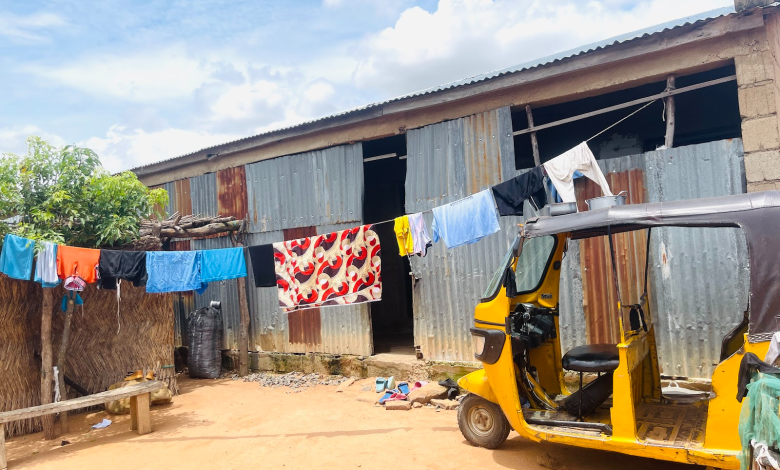
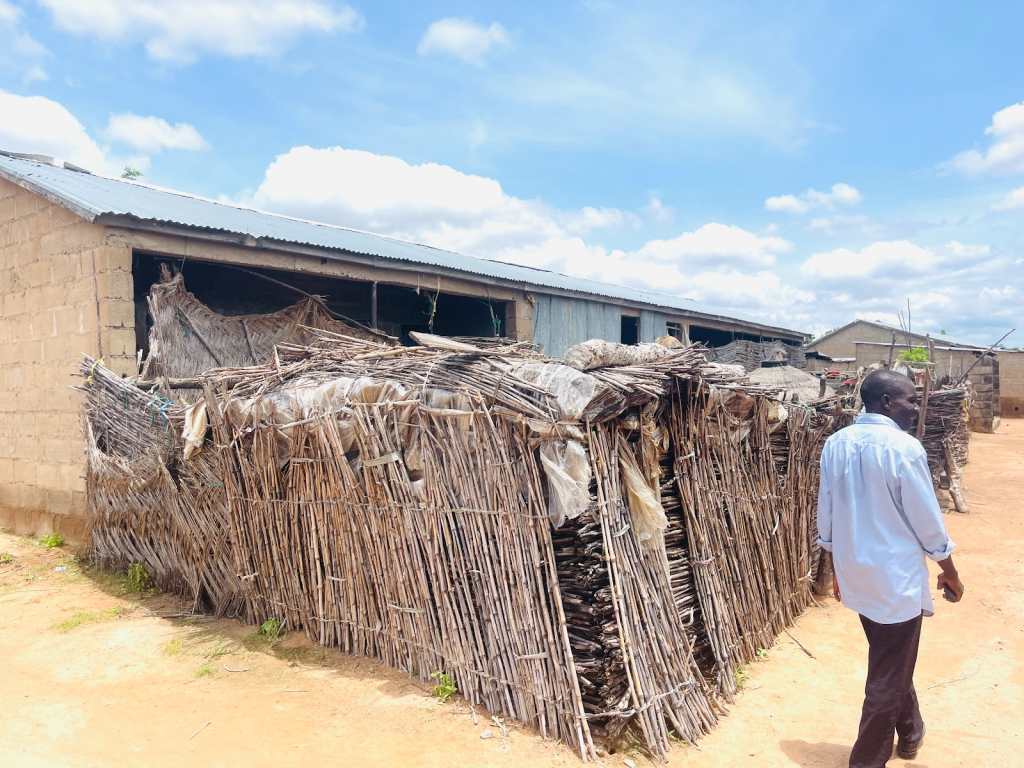
At the camp, each family was provided with a single room. The houses faced each other, leaving small spaces at the centre that allowed movement around the camp.
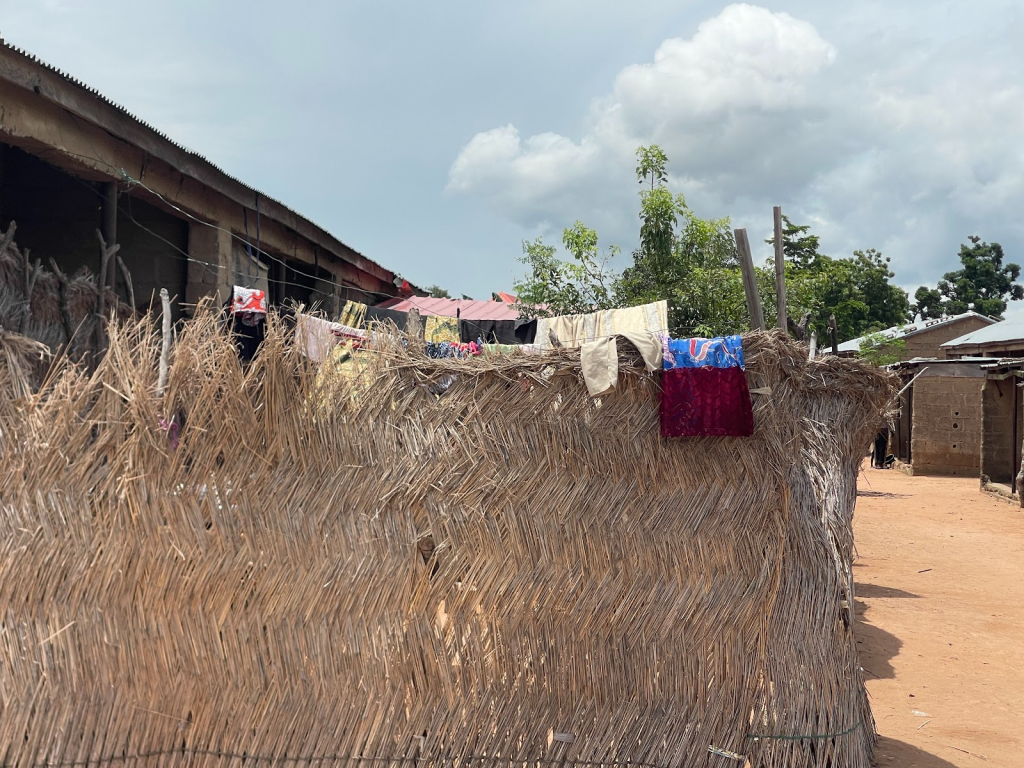
HumAngle observed that the displaced persons used thatch and zinc to form small enclosures in front of their rooms. These spaces house belongings and children of large families.
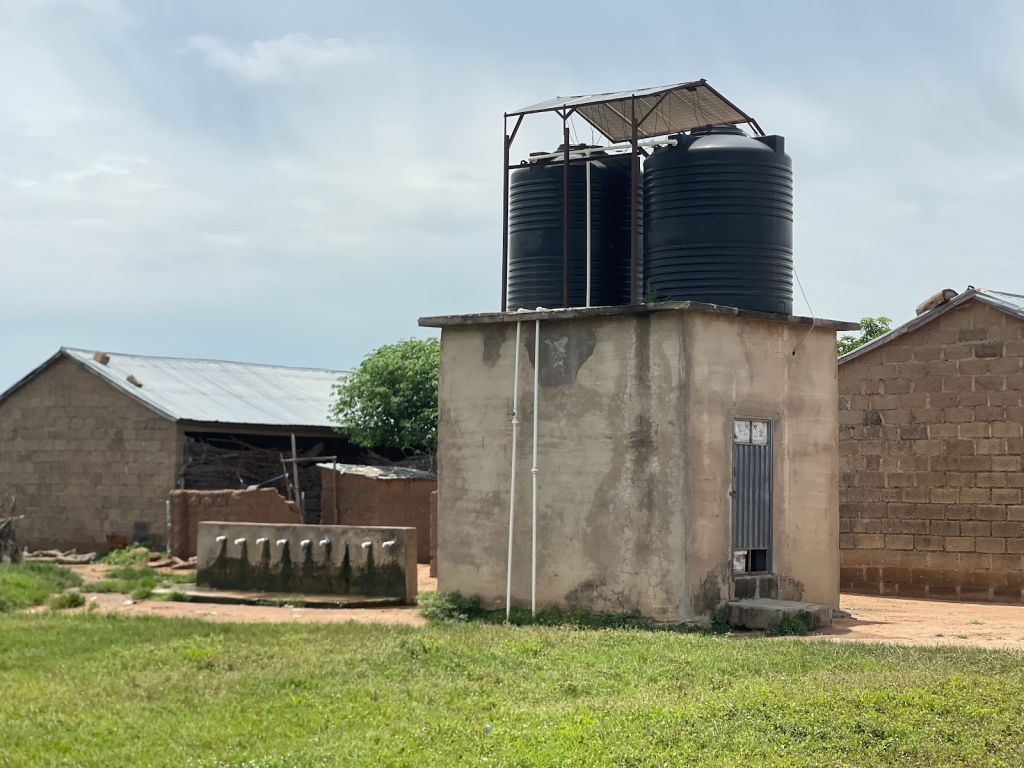
According to camp officials, there are about 500 displaced people inside the EYN camp at the moment, including 200 children. While they have access to clean water via a borehole powered with solar panels, there is no electricity.
The displaced community is made up of people from Madagali, Michika, Gwoza, Gulak, Chibok, and Askira.
“I can’t even compare it to anywhere,” Milcha said of Madagali, “because there’s no place like home.”
Each passing day, Milcha looks forward to going back home like other former IDPs, especially those from parts of Michika where peace has been partially restored.
“If I hear that peace has been restored today in Madagali, I’ll go back immediately,” she said.
She explained that her life had never been the same since she fled home in 2014.
Life in limbo
Milcha is not the only one who yearns for home.
Even though she has started a new home in the EYN camp, Godiya Kefas said the only home she knows is Wagga Chawa in Madagali. She was 21 years old when Boko Haram raided her community, causing her and many others to flee. She came to the camp in 2015, and her life has changed in the last decade.
“I fled as a student, then I came here, met Kefas, who is also a displaced person in the camp, and we got married some years ago,” she told HumAngle.
Now, she’s 31, raising four children in the EYN camp. While her husband combines farming and his tailoring work, Godiya cares for the children. She is worried that her children might never know home.
Through phone calls, Godiya communicates with some former IDPs who have returned to Wagga Chawa. She told HumAngle that the locals are currently living in fear as the terrorists keep invading the community, forcing many to relocate to new settlements.
“There is still instability, but if I have the opportunity to go back home, I will take it. The place is still unstable,” she said.
On Sept. 23, Boko Haram insurgents attacked Wagga Mongoro, a rural community in Madagali, killing four residents and injuring several others. The affected community neighbours Wagga Chawa, where Godiya hails from.
Godiya said she misses Christmas celebrations and other local festivals that she was accustomed to in Madagali.
“Back at home, we belonged to several groups and associations, so we cooked and shared food amongst each other on every Christmas day. We also allow our children to visit several neighbouring communities to attend Christmas festivals and obtain packages from people as gifts,” she said.
Now, the festive season is no longer the same.
She noted that communities in Madagali are known for organising dance festivals two weeks before Christmas Day. The communities gather in a public square to beat drums and dance all night.
“In this camp, we don’t dance or hold bonfires, but we try to lighten the mood by preparing special dishes every Christmas day, but the feeling is not the same as back home,” she stressed.
She added that the food they cook to share amongst themselves in the camp during the festivity doesn’t usually go round because they don’t have enough.
“Also, our children can not go out to receive Christmas packages or engage in fun activities like they used to. They just walk around the camp during every Christmas,” she said.
For 45-year-old Mary Bitrus, another displaced person in the EYN camp, home is a distant memory. She fled from Chibok in Borno State and then ended up in Shuwa, a town in Madagali, in 2014. When Shuwa was attacked, she fled again with her family, and they settled in the EYN camp in 2016.
Mary said she hasn’t heard from home in years now.
Back in Chibok, Mary’s husband was an accomplished cattle trader, while she was a large-scale farmer. They had a large home, enough grain in their storeroom, and cattle of their own.
“But now, things have changed,” Mary said.
While she is staying with her husband and eight children in a single apartment, Mary said, she remains grateful for the free shelter and the opportunity to live every day without fear of being attacked.
To make ends meet in the camp, Mary and her husband rented lands from the host community to cultivate maize, beans, and other crops.
She hopes to return to Chibok someday, but right now, she’s unsure whether the community is safe.
“Chibok used to be peaceful. I miss how we lived in abundance. I also miss how we farmed without renting farmlands like we do here.”
HumAngle gathered that the displaced rent farmlands from members of the host community every farming season and pay at least ₦25,000 per hectare.
Danjuma Kambasaya, one of the officials at the EYN camp, explained that farming within the host community, even though helpful, provides little benefit to the displaced persons, especially those with large families, as they can only rent small portions of land.
In order to cultivate large hectares so that they can have adequate food for their families and also sell in the local markets, some men from the camp go to Dunga, a forest far from the IDP camp, to cultivate.
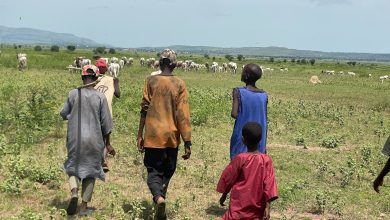
Farming in Dunga, which is 10 km away from the camp, gave them access to vast lands until they started clashing with herders a few years back.
“Some of the herders allow their cattle into our farm, and we cannot control or prevent them because we are scared of being attacked,” Danjuma said.
While most of the displaced have abandoned the farmlands in Dunga, a few still farm there. In Dunga, they spend weeks on the farmlands to keep watch over their crops, especially during the harvest season.
Danjuma explained that living in the camp in the last decade has been hell.
“In a place where people from different communities are gathered, there must be problems, especially because we are cramped. There are illnesses we’ve been battling here,” he said.
He noted that most women in the camp have been battling infections for the last ten years.
“Secondly, hepatitis is a condition that is disturbing us here. There are over 500 of us here, and if proper inquiries are made, no fewer than 35 per cent of our population has contracted hepatitis, and this is an ailment that kills people,” said Danjuma.
HumAngle learned that while the EYN church provides them with drugs once in a while, the displaced rely on the services of the primary healthcare centre in Wurro Jabbe, their host community.
According to Godiya, the primary healthcare centre in Wurro-Jabbe charges them a lot of money for medication and antenatal exercises, which they can hardly afford.
The displaced community told HumAngle that despite living with the host community for about ten years, they are sometimes treated differently.
“Anytime palliative is brought at the local government or community level by stakeholders, the locals here don’t include us. They share it among the real indigenes of the place, reminding us that we are not originally from here,” Milcha said.
Pushing forward
Danjuma explained that with support from the EYN church, a primary school was erected inside the camp to provide basic education for children since the community primary school in Wurro-Jabbe is far from the camp, and the displaced persons cannot afford the fees.
“It’s not like we fold our hands and watch. We are trying our best to push our children and families forward,” Danjuma stressed.
Since the displaced community can’t afford to pay teachers to come and tutor their children in the primary school that was established at the camp, some of them volunteered to tutor the children. However, during the rainy season, Danjuma noted, the school children are mostly abandoned as the volunteers take up farming jobs to earn money or work on their own farms.
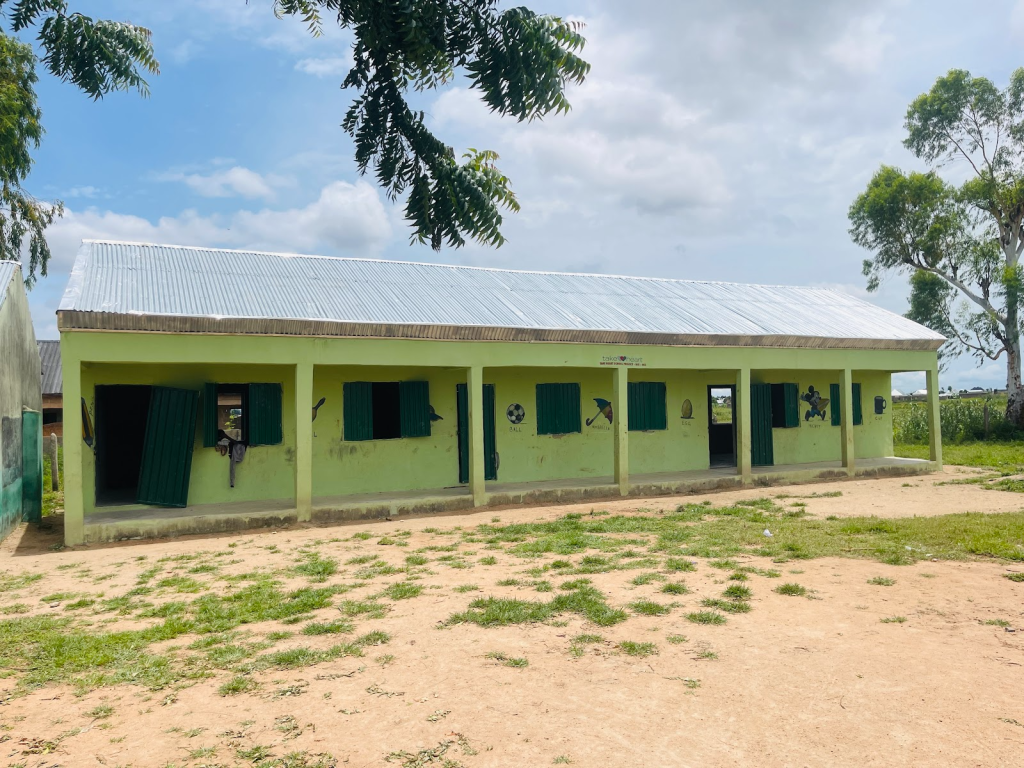
According to Danjuma, the primary school has graduated some pupils, and while some displaced parents are able to send their children to a government secondary school in Jimeta, many can’t do so due to a lack of funds.
“If we have access to farmlands or enough capital to start up good businesses, then we would be able to take care of ourselves and enrol our children in good schools,” he said.
He added that the meagre businesses like frying akara or selling kuli kuli, which the women have been doing, provide them with little capital that barely feeds their households.
“In terms of health, we get sick very often. A lot of our children suffered in the forest when we were fleeing to safety about ten years ago. Some of them came down with pneumonia and have not recovered since then,” Milcha said.
She explained that every day, food and medication are becoming a luxury that she and many others in the camp can’t afford.
“If we can access enough medication, then we will be grateful. In terms of water, we thank God. We have access to clean water here, and when it comes to farming, we rent farms from the host community. But we barely get enough, so we mostly buy grain in small measuring cups all year round because we can’t afford large quantities,” she said.
In terms of education in Madagali, Godiya explained that residents barely had challenges because each community has a primary and secondary school, mostly situated within.
“Since it’s a government school, the government employs teachers across the schools,” Godiya said.
She also stressed that each community had its own primary health care centre that tended to their health needs. In terms of complex cases, referrals were made to advanced hospitals. She explained that the primary health care centres were situated within the communities and could be accessed anytime.
“You just had to walk to get there, and if you’re coming from afar, it’ll take you about 30 minutes to get here,” she said.
Home someday
The displaced want to return home, but with recurring Boko Haram invasions of their communities, their hope keeps getting shattered.
In 2014, about 40 people were killed after Boko Haram attacked seven villages in Michika and its environs in Adamawa State. Two years later, the terror group invaded the Kuda Kaya village of Madagali Local Government Area and killed 24 people during an indiscriminate shooting.
In 2019, the terrorists struck again, but some of them were killed in Madagali after they tried to infiltrate a military camp. However, one soldier and a civilian died. Kirchinga village in Madagali was attacked in 2020 after Boko Haram insurgents stormed the village. Houses were razed and shops looted, causing residents to flee.
In 2021, locals from Bazza in Michika received threat letters allegedly sent by ISWAP, vowing to attack the community during the Yuletide celebration. Data from the International Organisation for Migration (IOM) shows that a total of 665 individuals from 133 households were displaced from their communities in Madagali by a non-state armed group in 2022.
Danjuma looks forward to a time when he will be raising his six children in Gulak, where he owns a large portion of farmland.
“We don’t want to keep staying here for the rest of our lives. We are hoping to get back to our different communities someday,” he said.
The Sept. 23 attack on Wagga Mongoro in Madagali, which has caused residents to flee their homes, casts a shadow on the hopes of the displaced persons.
“We do speak from time to time with those closer to our place in Madagali, and they keep informing us that the community is not safe. From time to time, we hear that terrorists come to abduct people. We also hear that they go to farmlands to attack and kill people,” Milcha said.
Speaking of her extended family, Godiya said she keeps in touch with some of them once in a while through occasional phone calls, while some of them have migrated with no news about them over the years.
Godiya has not lost hope.
She wishes to return home one day, complete her education, or start a proper business so that she can support her husband in providing for their four children.
Milcha Lazarus and other displaced families from Nigeria's North East, affected by Boko Haram's attacks, are sheltering in the EYN IDP camp in Yola South. They yearn to return to their homes in Madagali, Michika, and other regions, but ongoing violence keeps them in limbo. Despite the provision of shelter and water, the camp's displaced struggle with limited resources, health issues, and lack of educational facilities. Community life, including celebrations and farming practices, has been disrupted, with many hoping to eventually return to a peaceful homeland.
Support Our Journalism
There are millions of ordinary people affected by conflict in Africa whose stories are missing in the mainstream media. HumAngle is determined to tell those challenging and under-reported stories, hoping that the people impacted by these conflicts will find the safety and security they deserve.
To ensure that we continue to provide public service coverage, we have a small favour to ask you. We want you to be part of our journalistic endeavour by contributing a token to us.
Your donation will further promote a robust, free, and independent media.
Donate HereStay Closer To The Stories That Matter