A Decade After Zaria Massacre, Families Still on Long Walk to Justice
The scars of the December 2015 Zaria massacre remain etched in the lives of hundreds of families, especially the children and spouses who lost their loved ones. For them and other parents who lost their children, the journey to justice seems distant.

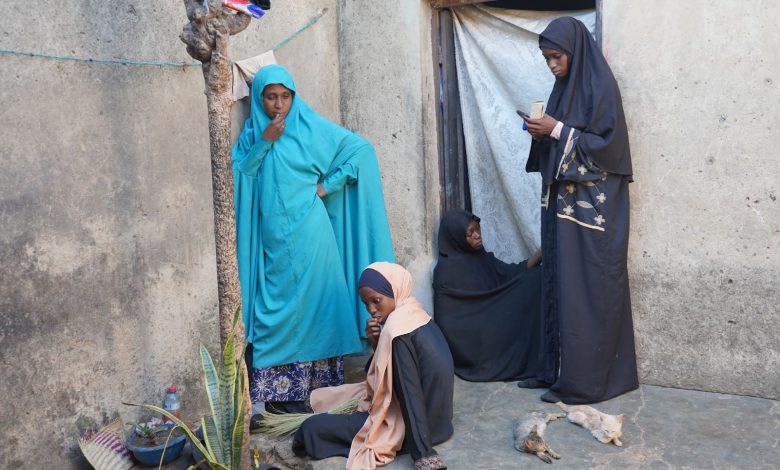
Fatima Alhassan is 20 years old now, but her voice still carries the weight of a ten-year-old girl who watched her world collapse a decade ago. Her father, Shahid Alhassan, was killed on Dec. 12, 2015, during the infamous Zaria Massacre.
“Despite our little time with him, we were always happy around him,” she said. “We were very close. Since we lost him, that vacuum has not been filled in our hearts.”
It was a Saturday morning, and Shahid had just returned home from a funeral. He lay on the sofa, with dust still on his palms. After some moments, he rubbed it across his face and said, “I am next”. His wife, Hauwa Muhammad, found those words unsettling.
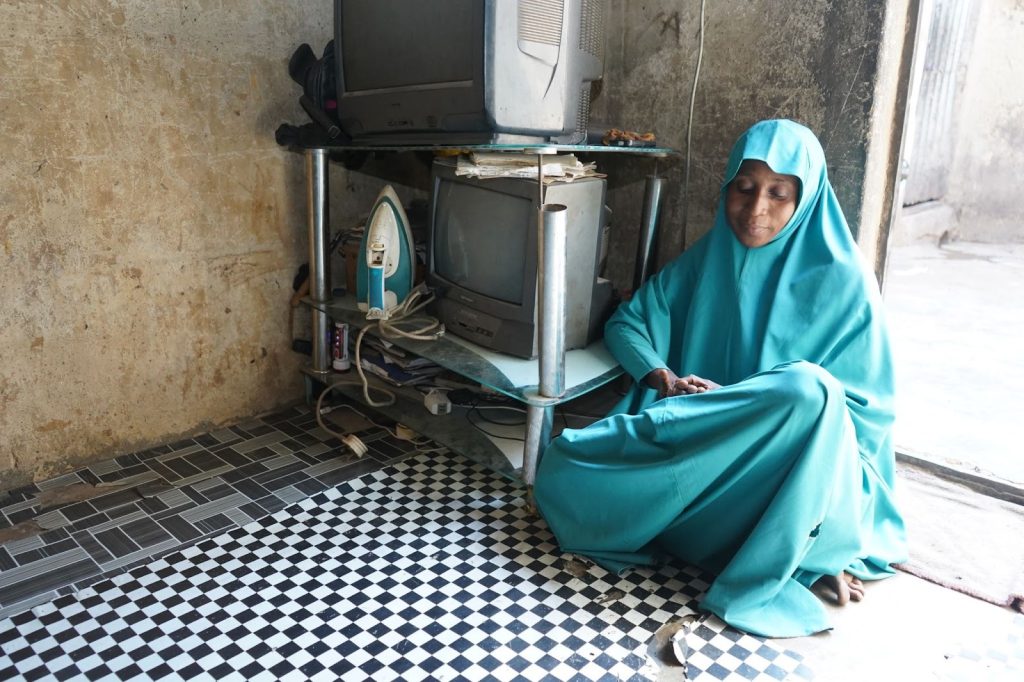
Immediately, Hauwa dismissed it, insisting it was not yet time and that they still had years to spend together, but he replied quietly that “my grave would not be dug in Kano, but in Gyallesu [a suburb in Zaria, Kaduna State, in North West, Nigeria].”
Shahid rose from the sofa, bathed, and had breakfast, and together they walked to the door, exchanging pleasantries before he left.
Around noon, news broke that officers of the Nigerian Army opened fire on some members of the Islamic Movement of Nigeria (IMN) in Zaria town.
That Saturday was the first day of Maulud, the birth month of Islam’s Holy Prophet Muhammad. Shahid and other IMN faithful had gone out for the celebrations.
Founded in the early 1980s, the IMN grew under the leadership of Ibrahim Zakzaky, then a student activist at Ahmadu Bello University in Zaria. Inspired by the 1979 Iranian Revolution, Zakzaky advocated for an Islamic State governed by Sharia law. What began as a campus-based movement quickly expanded nationwide, attracting millions of followers who aligned with the Shi’a sect.
What really led to the Zaria Massacre?
The military claimed that the convoy of the then Chief of Army Staff, Lt Gen. Tukur Yusuf Buratai, was denied access through the road where the members of IMN were preparing for the Maulud celebration.
However, Mukhtar Bashir, an IMN representative in Kano State, told HumAngle that the group were hoisting a flag when they sighted the convoy and some soldiers stationed near a filling station. Immediately, they felt something was off, and then some members confronted the convoy to enquire what was happening.
Over the decades, IMN’s growing influence and its confrontations with state authority led to heightened tensions with Nigerian security forces. One of the most significant clashes occurred in July 2014, when soldiers killed three of Zakzaky’s sons and 30 IMN members during a Quds Day procession.
The incident deepened mistrust and left many IMN members expecting hostility whenever the military appeared. As Mukhtar recalled: “We thought it was another attack.”
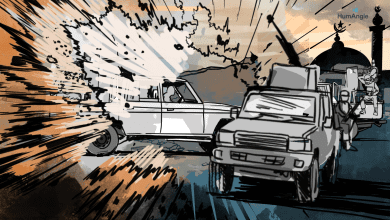
What began as a “simple confrontation” quickly escalated into a full-scale assault, which continued through the weekend. Mukhtar told HumAngle that the soldiers opened fire indiscriminately on unarmed civilians, including women and children, killing hundreds as the violence stretched across three days.
By Tuesday and Wednesday, the focus had shifted from gunshots to the evacuation of dead bodies that were buried in mass graves. Mukhtar said the burials were held without religious rites, or “any form of dignity”. Amnesty International confirmed this claim in a report on the incident.
Based on IMN records, “a thousand members of the organisation” were killed in the massacre. Muktar noted that when the numbers of passersby who were caught in the violence and also lost their lives are added, the death toll will be significantly higher. “We can show the houses of each person killed or missing,” he added.
The aftermath
When the news got to Hauwa, she was at home, anxiously waiting for her husband’s return. During those tense moments, she remembered the words Shahid had said while on the sofa. “What if his prayers had been answered?” She thought.
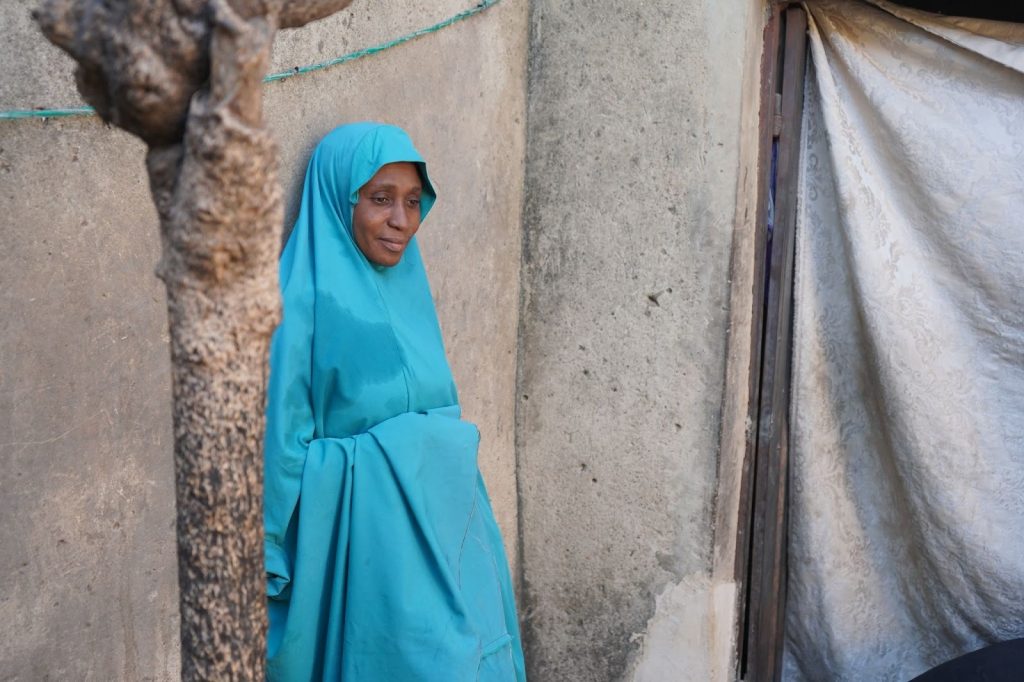
Hauwa kept dialling her husband’s phone number, but every call went unanswered. Later in the evening, she began receiving different accounts about Shahid’s whereabouts; some said he was injured, others said he was dead.
“Initially, I never believed he was killed,” she recounted. “We heard that it was our neighbour who died. Even my husband’s uncle said he was alive. Until Shahid’s friend, Malam Abdulkadir, drove to Zaria and confirmed that he was dead.”
Hauwa still didn’t believe that testimony until a local newspaper published images of the deceased Shi’a Muslims. That was when she accepted his death.
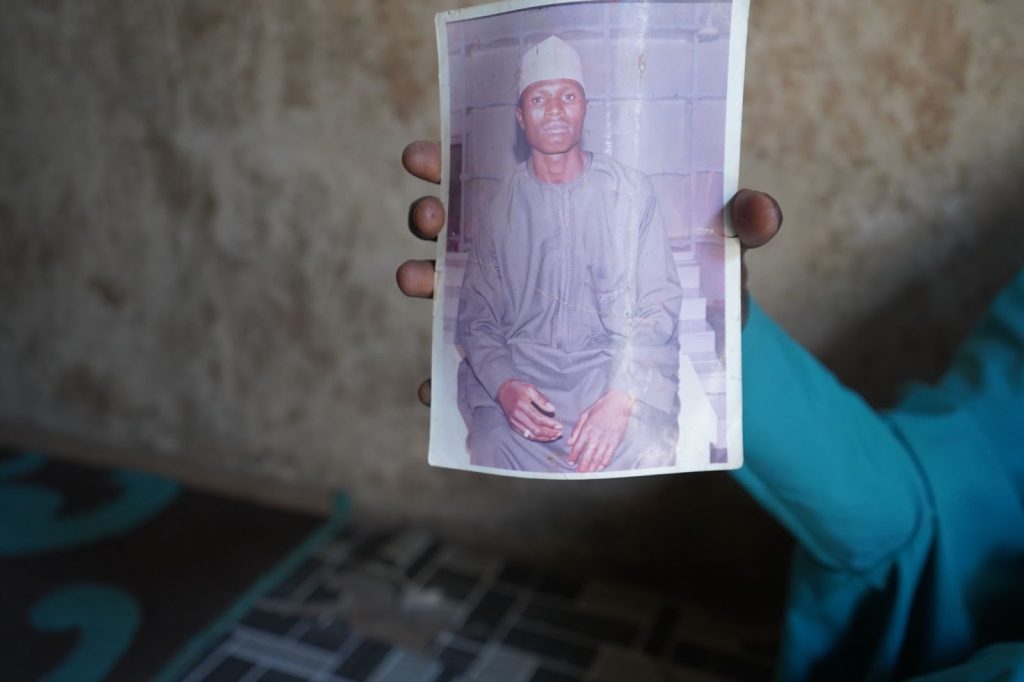
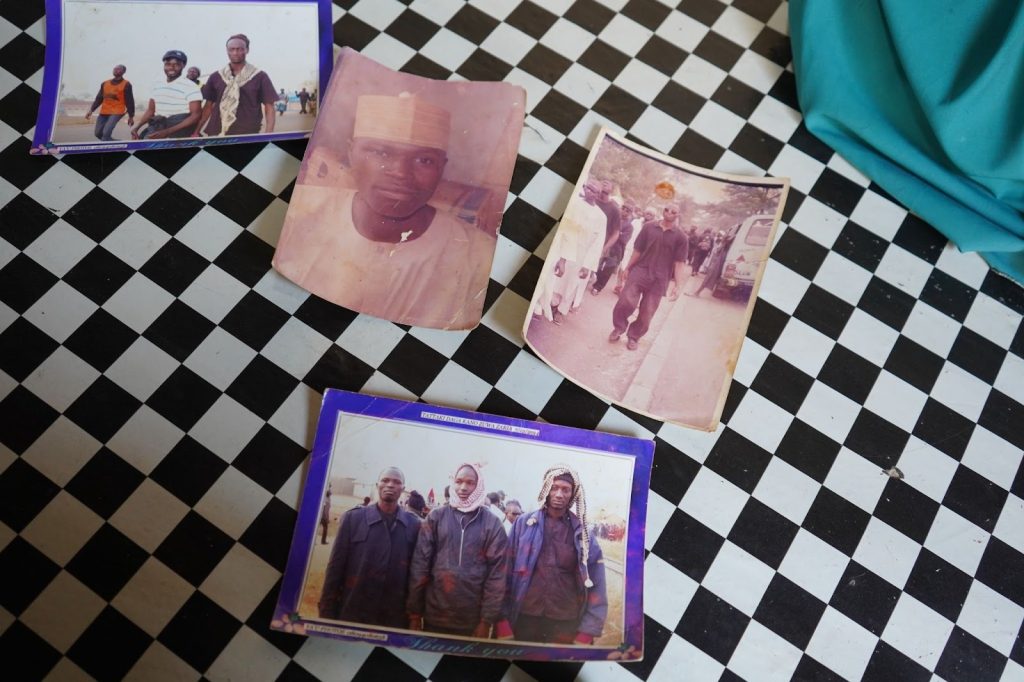
What followed was silence, Hauwa said it was unbearable. “Every day, in every aspect of my life, I felt the absence of my husband, the only pillar of our household. He had been a devoted father to our seven children and a loving companion to me,” she said.
His loss left the family adrift. Twenty-one months after the incident, Hauwa’s youngest son also died. It deepened the tragedy for the family.
“I miss my husband,” she said. “It was through him that I fell in love with the path I am on as a Muslim. I have nothing to say, only to ask Allah to bless him for all he has done for us, and may his soul continue to rest in peace.” Hauwa believes that Shahid died a martyr—a gift he had long prayed for.
However, the challenges of raising their children alone, the weight of grief, and the absence of justice have defined the family’s life for the past decade.
“Some days are filled with happiness, while others are filled with pain and hunger. The sad days are more than the happy ones,” said Fatima, staring away from the camera. She attends a secondary school in Kano, where she also lives with her mother and six siblings in a modest three-room apartment.
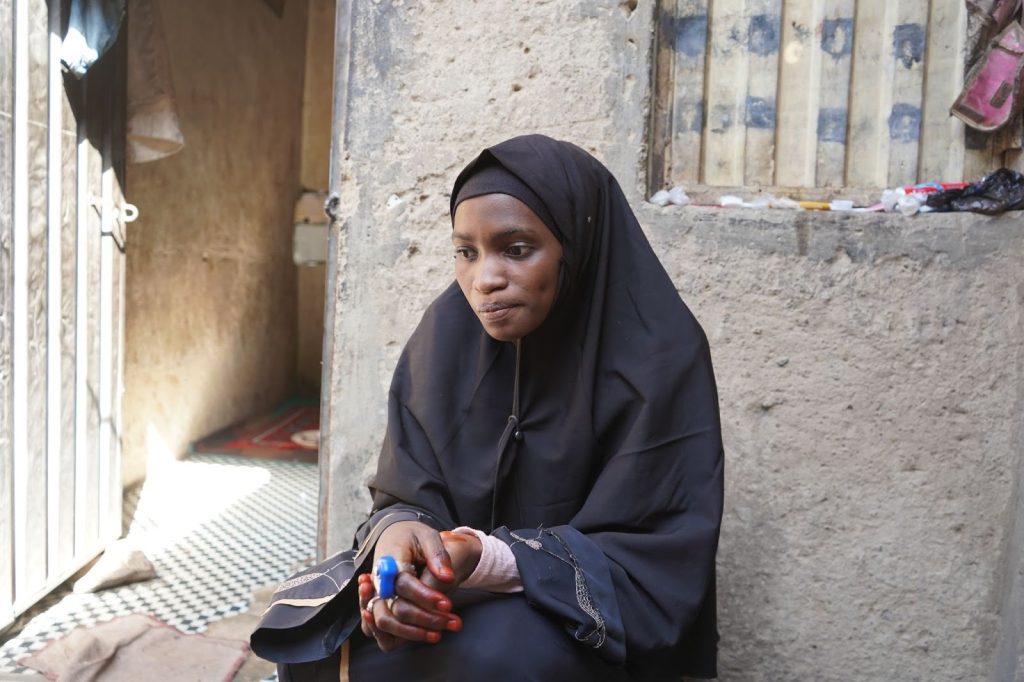
Each morning, as she prepares for school, she asks her mother for transport fare. Too often, her mother has nothing to give. Fatima does not feel anger; it is the ache of knowing her father is not there to shoulder the burden.
While in school, Fatima says she is often silent when conversations come up with friends about their fathers and their life plans. “Living without a father is emotionally disturbing,” she told HumAngle. “We just have to do everything with our mother, and it saddens me.”
The loss has reshaped her dreams. Once, she imagined herself studying commerce, perhaps medicine or journalism. But after her father’s death, affordability dictated her path. She now studies Arabic, hoping to become a teacher—a future she never planned for, but one forced upon her by circumstance.
It is ten years since the massacre, but families, like Shahid’s, said they have not gotten justice. “They even painted it to look like we are the ones who committed an offence,” Fatima said. “The government has not done anything tangible. To them, it might have passed, but to us, it is as fresh as it was ten years ago.”
After the massacre, the former Kaduna State governor, Nasir El-Rufai, set up a judicial commission of inquiry, whose report found evidence of human rights violations by the Nigerian Army and also noted that 347 IMN members were killed in the incident.
“The commission recommended prosecution of the soldiers who participated in the killings, but that has not been done,” said Haruna Magashi, legal practitioner and human rights activist.
IMN also accused the soldiers of demolishing their buildings, including the residence of their founding leader, Ibrahim Zakzaky. In November, when HumAngle visited Zakzaky’s house and some of the IMN centres, some had been turned into a refuse dump site, while others were still not in shape.
Some survivors who spoke to HumAngle three years ago recalled scenes of chaos as homes were raided, people shot at close range, and corpses left scattered on the streets.
Zakzaky was arrested by Nigerian authorities after the incident, but he was discharged and acquitted by the court in July 2021. “All the concluded cases against the IMN were in their favour,” said Haruna.
A Nigerian court has since ruled that the activities of IMN are “acts of terrorism and illegality”, an allegation that it has persistently denied. IMN was banned in July 2019.
Echoes of grief
While some of the survivors were teenagers and are now young adults, others can’t even remember because they were babies, but they have formed memories through stories.
Fatima Alhassan was four when her father died in the massacre. The 14-year-old said she only tries to picture her father through the good things her mother has said about him. Through the stories, she knows that her father was a good cook, and he always bathed his children and cared for the household whenever illness struck.
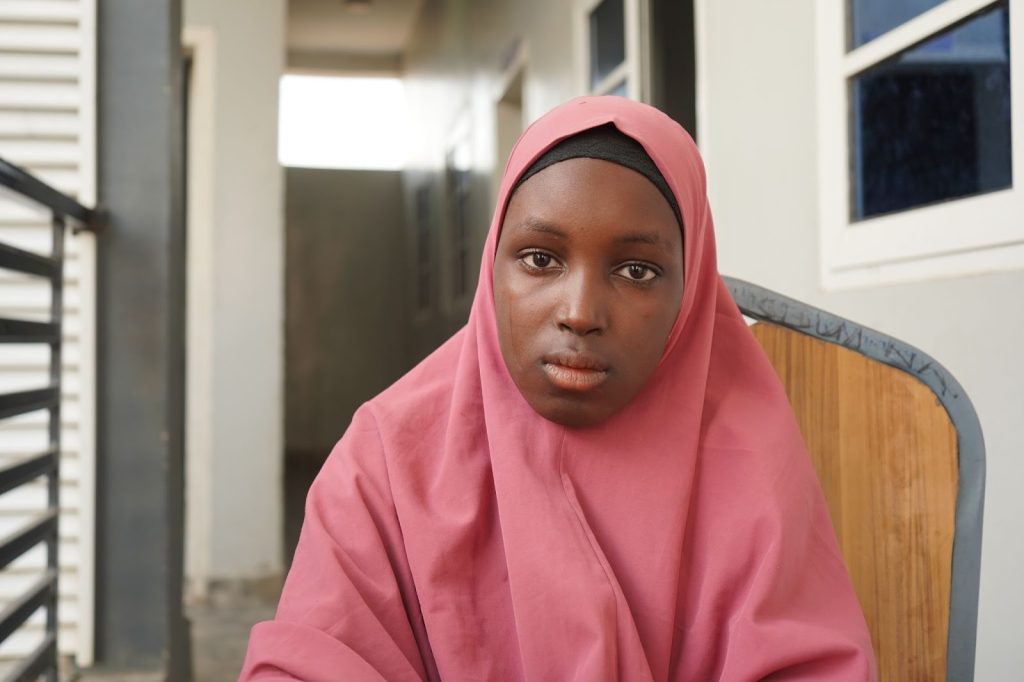
“Honestly, we have all been cheated in our family,” she said. “This is because whenever my mother falls sick and my elder siblings aren’t home, she has to do all the chores by herself. But if my father were around, I am sure he wouldn’t leave her like that. Even if she insists he go to work, he would still stay behind to assist her. Such moments break my heart, and I wish he were still alive.”
Those recollections make her long for the father she never really knew. At her former school, she and her siblings were bullied by classmates who mocked them for not having a father, flaunting gifts they received, while they reminded them of what they had lost.
Fatima says her uncles and other close relatives have been supportive, especially during festive seasons, but the longing for her father never fades.
“It hurts me a lot. If I were to see him now, I would tell him that we have missed him a lot and we have suffered without him,” she said as tears rolled down her cheeks.
‘To live my father’s dreams’
Amidst an unending grief that aches now and then, Al’haidar Alhassan said he wants to live his father’s dream. He is studying at Basita Darwish Chami Academy, a boarding school in Kano State built for orphans whose parents were killed in the massacre, and he hopes to be a scientist and a researcher someday.
“Glory be to God Almighty that we have gotten the support we need, and I believe we will achieve what we intend. Nevertheless, I still feel heartbroken. The thought of losing my father and pillar still affects me because I feel demotivated sometimes,” he said.
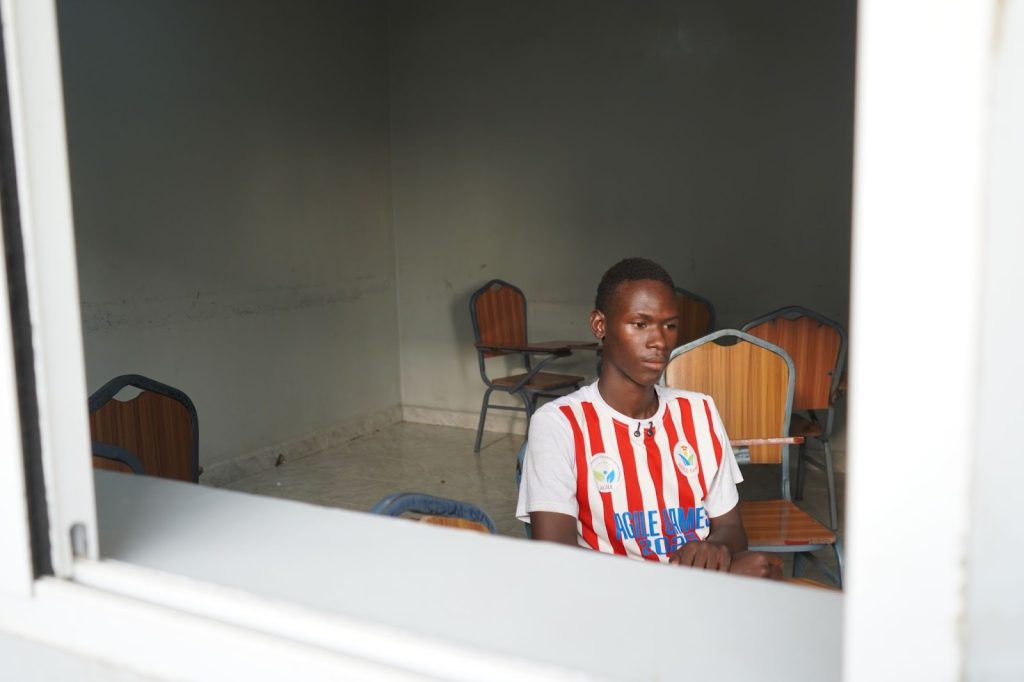
After his father’s death, the 19-year-old and his siblings dropped out of school for two years. Al’haidar said that his father’s greatest wish was for his children to be educated.
“I miss the father-and-son bond we shared. Whenever he was leaving for work, I never wanted to let him go. Whenever I see a child and his father, the more I miss him, and in some cases, I have no choice but to cry,” Al’haidar added.
A father’s loss
While Al’haidar misses the bond with his father, Bashir Muktar sits on the floor in his living room, in between the portraits of his two sons who were killed in the massacre. The bond with his children was one of deep affection and shared ambition.
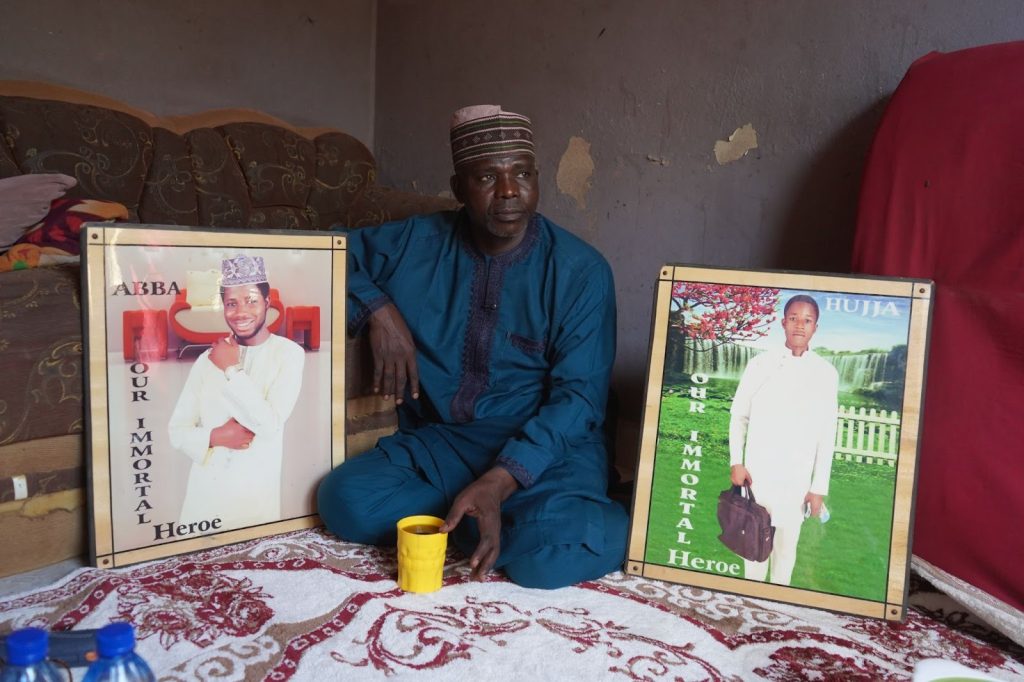
Shahid Abba, his eldest son, had just completed his remedial studies at the College of Arts and Islamic Studies a few days before the incident. The 20-year-old was brimming with plans to pursue chemical engineering at the university. Meanwhile, Bashir’s younger son, Hujjatullahi, was still in secondary school at Fudiya Science in Kano. The 18-year-old has dreams of becoming a doctor.
“A child is a flesh of yours,” Bashir said, “and you live your life trying to ensure that you build them up. You have certain ambitions towards your children. In every household, every father tries to build his children to greatness because they are your successors.”
Even though he kept a smiling face, it broke his heart as he recounted some of his sons’ youthful curiosity. He speaks about a day in 2014 when he found the younger son under the staircase, carving something for a school experiment.
He teased him for “still behaving childishly”, but Hujjatullahi replied: “It is an assignment. I am going to conduct an experiment on meiosis and mitosis.” That was the day his son revealed to him his dream of becoming a doctor. These memories, Bashir said, are etched in his heart.
He was on a trip in Abuja, North Central Nigeria, when his children called to ask if they could attend the Maulud programme in Zaria. He suggested they meet there at the event, but he was caught up in a late meeting, and his sons kept reaching out to confirm what was happening.
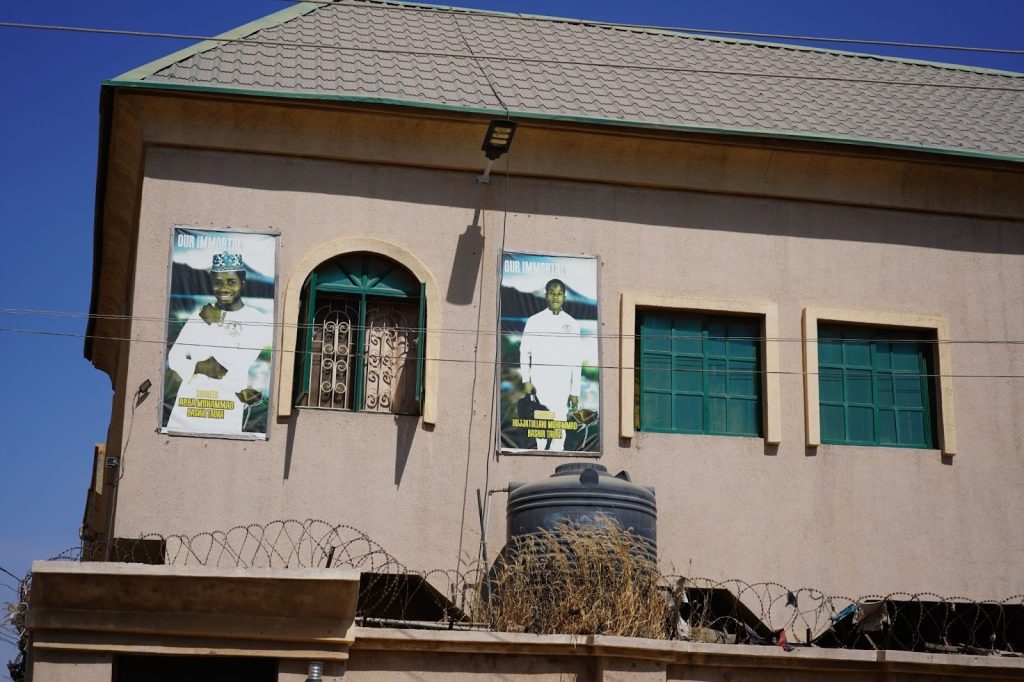
“They sent a text message enquiring what was happening in Zaria. I replied with, ‘Nothing is happening.’ They asked if they could proceed, and I said yes, not knowing soldiers had attacked and opened fire at the venue earlier that day,” Bashir recounted.
By the time he tried reaching them again, their phones were no longer connecting. Bashir attempted to travel to Zaria the following day, but the roads were sealed off as news spread quickly that soldiers had blocked the entrance to the city.
Two days later, while having breakfast, he got a call: “I extended salutations, then I heard, ‘Father! Father!!’ It was the voice of Hujjatullahi. I confirmed by calling his name, then I started recording and put the call on speaker. I asked, ‘What’s happening, Hujjatullahi?’ He said, ‘Please forgive us, Father.’ I asked again, ‘What is happening?’ He responded, ‘Forgive us for whatever we have done to you until we meet at Darul Salam [referring to the final abode of the deceased righteous in Islam].’”
The words that followed were devastating.
“My elder brother has been shot in the stomach, and I have been shot in the stomach and my arm,” Hujjatullahi told him.
Bashir said that how his sons were buried worsened his grief.
“If they had travelled or fallen sick and died, it would have been different. But the manner in which they lost their lives is painful,” he said. “After killing them, they took their corpses, both men, women, children, pregnant mothers, and the elderly, then dug a massive hole and buried them all together like animals. No religious ritual was performed. With these, there are a lot of things to remember, and we can’t forget them.”
When asked what justice looks like for him and other grieving families, Bashir said that the fight for justice is not only about acknowledging the massacre but also about reclaiming the dignity of those who were killed.
“The most important thing for us in this fight for justice is the corpse of our loved ones,” he told HumAngle. “Where are the dead bodies of the people they killed and buried without prayer, spiritual bath, no shroud, no graves, nothing at all?”
“I believe even if someone is sentenced to death, after the life is taken, the body belongs to the family. So, where are the bodies? Despite killing them without any valid reason, they are still depriving us of their dead bodies.”
The last witness
In the same incident, Zainab Isa lost nearly everything.
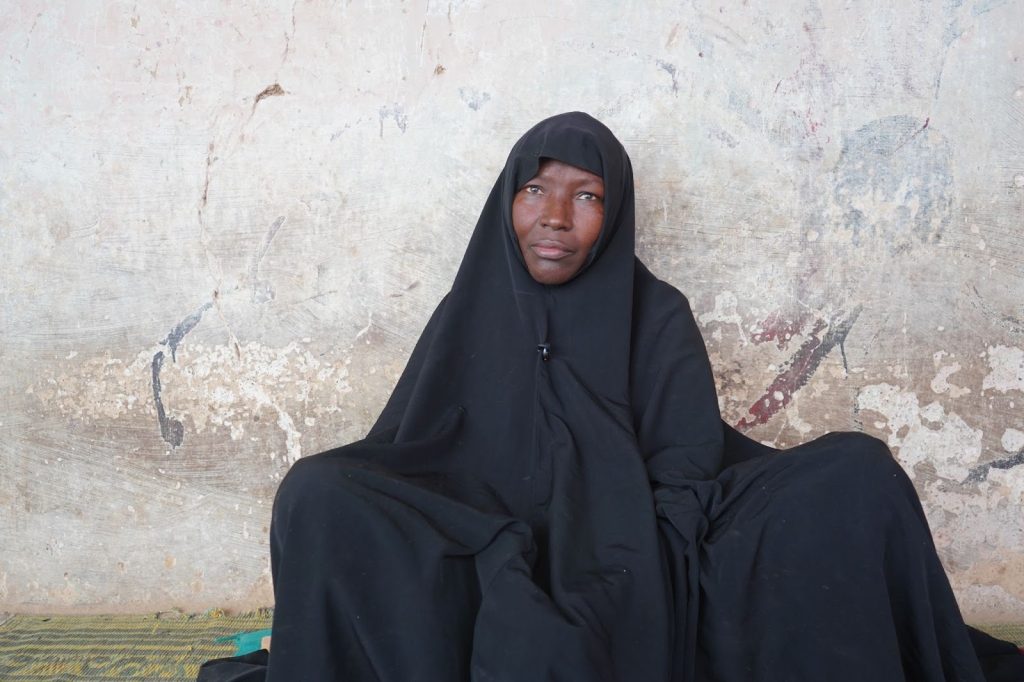
Her husband, Abdullahi Abbas, and six of their children—Abdulrazaq, Muhammad, Abbas, Ahmad, Ibrahim, and Jawwad—were all killed in the Zaria massacre.
A decade later, at her home in the Rimin Danza community in Zaria, she imagines what her youngest son, Jawwad, who was only 18 when he died, might have become at 28. “I wouldn’t be surprised if he were a doctor by now,” she said.
She said Jawwad was quiet, intelligent, and reserved and carried the kind of promise that only time could have revealed. Instead, his life ended before it even began.
Her eldest, Abdulrazaq, was over thirty when he was killed, four years after graduating from Ahmadu Bello University, Zaria.
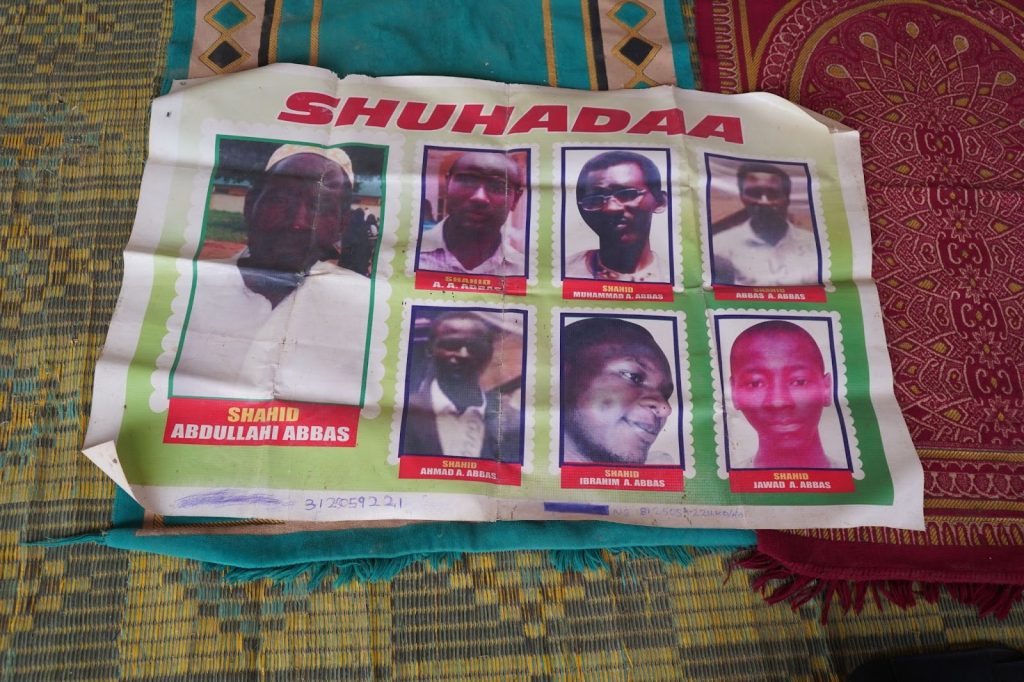
He had plans to further his education once he secured a job. She remembers his brilliance in school, his demur anytime he was announced first in class, and his humility in admitting that his younger brother Jawwad was even smarter.
Jawwad contributed to scholarship by writing an Islamic book, the Forty Hadiths, which was published and shared at his graduation, before his death.
Zainab can go over and over again about the stories of each of them. She told HumAngle that even other people in her community remember her children not only for their achievements but also for their kindness.
Neighbours told her of small acts of generosity—paying transport fares for strangers, helping to fetch water for a neighbour, and offering support without being asked. “Wherever they went, they were loved,” she said. “I am not saying it to prove anything. It was God Almighty that blessed me and made them upright.”
Since that incident happened, her husband’s words about the frailty of life have stayed with her: “Only God knows who would be the first to leave this world between us. I just pray God accepts my worship before He takes my life.”
“The scar will never heal,” she said. “Even if they would bring a truckload of dollars to my house, with the intention of making me happy, honestly, it won’t make me happy. If times could change, I would ask them to stay behind and go there myself to die instead, because they were still young and had dreams and were loved by everyone.”
Zainab is one of the few surviving witnesses to her family’s tragedy.
Between grief and discrimination
Sadiya Muhammad, another widow of Abdullahi Abbas, was left between the pain of losing her husband and the discrimination her daughter endured in its aftermath.
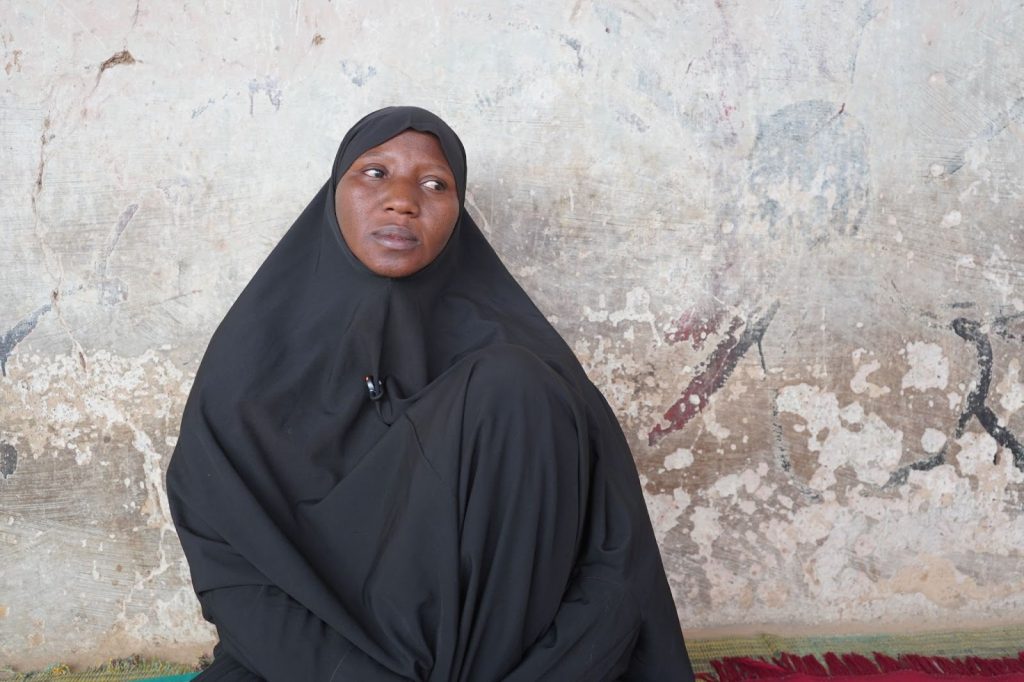
Sadiya’s daughter, Radiya, was only two years old in 2015. Too young to remember her father, she grew up knowing his face only through photographs. “Whenever you hand her a picture, she would be able to point out her father,” Sadiya said.
But at school, where students and teachers came from different Islamic sects, her daughter faced painful words that deepened her grief. One day, a teacher openly told the class, “Do not be carried away by the prayers and fasting of any person who is a member of the Shi’a sect; they are worse than unbelievers, and they are all going to hell.”
The little girl returned home troubled, asking her mother, “Since my teacher said those who are Shi’a are all going to hellfire, is my father also going to hellfire?”
Sadiya’s response was firm yet tender: “I told her that her father is not going to hell; rather, he was martyred, and by Allah’s mercy, he is going to paradise.”
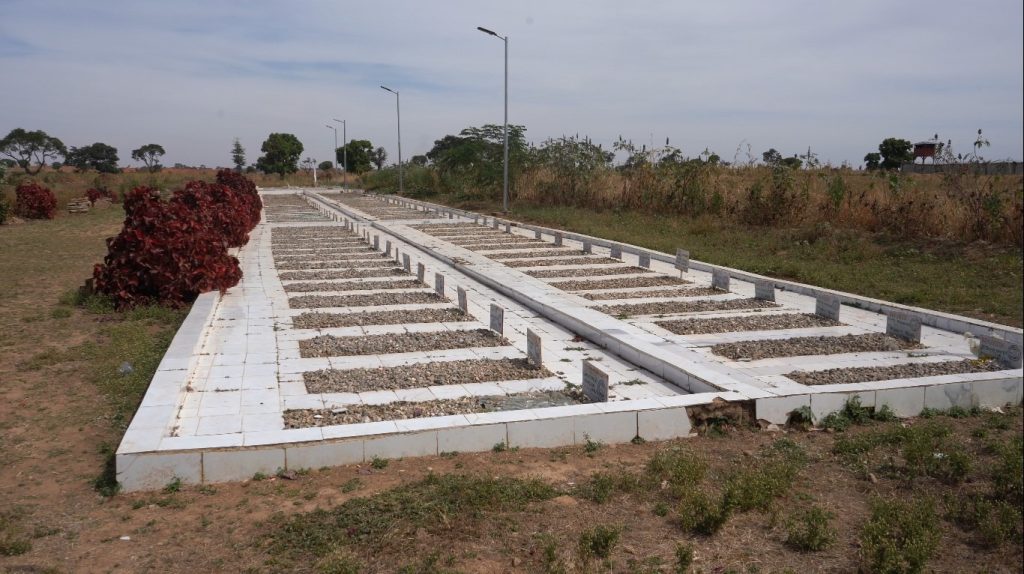
In the years after the massacre, her family’s mourning was made heavier by the sectarian prejudice of others, forcing her to constantly remind her children of their father’s honour and the value of their faith.
Human rights activists like Magashi believe the massacre carries a broader warning about minority rights in Nigeria. “You are in danger of extinction once you are a minority in the country,” he said. “This is dangerous as far as human rights are concerned. The Shi’ites are the minority Muslims in Nigeria, but they share the same human rights as the majority.”
Fatima Alhassan's father, Shahid Alhassan, was killed in the 2015 'Zaria Massacre,' an event that left lasting pain for many families, including hers.
The massacre occurred when Nigerian soldiers opened fire on members of the Islamic Movement of Nigeria (IMN) during the Maulud celebration. Key issues leading to the massacre include longstanding tensions between Nigerian security forces and the IMN, particularly following the confrontation with the Chief of Army Staff's convoy. In the aftermath, families like Fatima's have struggled with grief, financial hardship, and a lack of justice, as no soldiers have been prosecuted despite a judicial inquiry reporting human rights violations.
Victims' relatives recounted the indelible impact of losing loved ones, with children like Fatima and Al'haidar striving to fulfill dreams their father envisioned, despite challenges. Families described the profound void left by lost family members and the indignity of mass graves without religious rites. Meanwhile, survivors like Zainab Isa and Sadiya Muhammad face continuous pain, quest for justice, and discrimination, particularly against Shi’a Muslims in Nigeria.
The incident highlights the urgent need for recognizing minority rights and addressing unresolved grievances from the massacre.
Support Our Journalism
There are millions of ordinary people affected by conflict in Africa whose stories are missing in the mainstream media. HumAngle is determined to tell those challenging and under-reported stories, hoping that the people impacted by these conflicts will find the safety and security they deserve.
To ensure that we continue to provide public service coverage, we have a small favour to ask you. We want you to be part of our journalistic endeavour by contributing a token to us.
Your donation will further promote a robust, free, and independent media.
Donate HereStay Closer To The Stories That Matter