Cholera Hits a Resettled Borno Community Still Struggling to Recover
Weeks after cholera swept through urban areas in Borno State, infecting thousands and killing over 40 persons, the outbreak has reached resettled communities like Doron Baga along Lake Chad, where residents face limited healthcare, untreated water sources, and the lingering effects of conflict.
Listen to this story

25 Jun 2026
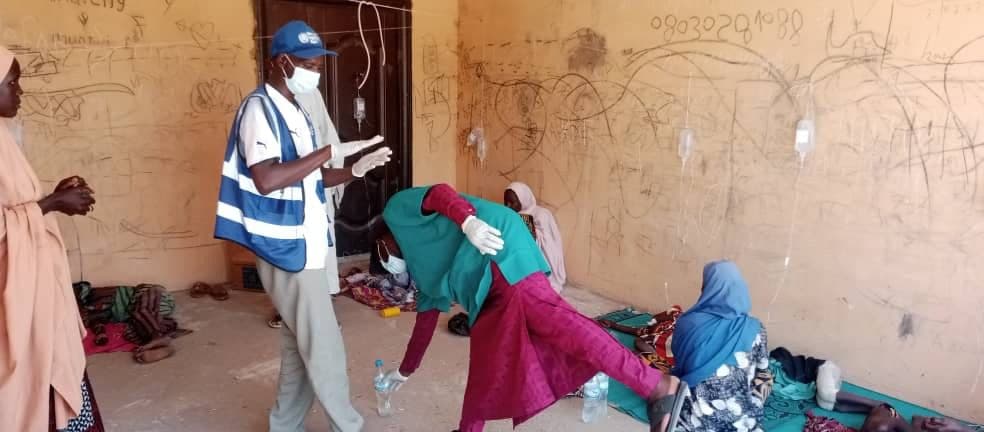
When the first three people fell sick on Thursday, June 11, residents of Doron Baga were unsure what was happening. The symptoms – vomiting, diarrhoea, and weakness – were familiar enough in a rural community where access to healthcare is limited, and illnesses are often treated at home or by local patent medicine vendors. However, as more people began showing the same signs, and deaths followed within days, concern spread across the community.
Ahmadu Haruna watched the disease move rapidly through his household. He is the community leader of Randa, an area within Doron Baga, a fishing and farming community on the shores of Lake Chad, less than three kilometres from Baga town in Kukawa Local Government Area (LGA) of Borno State, northeastern Nigeria.
He lives in a large compound that houses nearly 150 people, including his four brothers, their wives, children, and grandchildren. Within seven days, he said, at least 20 people living in his compound became ill. Seven died. “It started with three people,” Ahmadu recalled. “One of my brother’s children and another brother’s wife were the first to be infected.”
As cases multiplied, residents began drawing connections to reports they had been hearing from Maiduguri, the state capital, where a cholera outbreak had already overwhelmed health facilities and infected thousands. “We knew it was cholera because the symptoms matched what we heard on [the radio] about the outbreak in Maiduguri,” said Bashir Suleiman, a resident. “The people there were vomiting and having diarrhoea, and that was exactly what we were seeing here.”
The outbreak has unsettled Doron Baga, a community that has spent the last six years rebuilding after it was displaced by the Boko Haram insurgency. Residents were officially resettled in September 2020 by the state government. Many residents say that returning home symbolised the beginning of recovery. Families rebuilt their houses, fishermen returned to the lake, and farmers reclaimed their fields. Gradually, life appeared to be returning to normal. The cholera outbreak, however, has revealed how incomplete that recovery remains.
Cholera, according to the World Health Organisation (WHO), is “an acute diarrhoeal infection caused by consuming food or water contaminated with the bacterium Vibrio cholerae”.WHO), is “an acute diarrhoeal infection caused by consuming food or water contaminated with the bacterium Vibrio cholerae”.
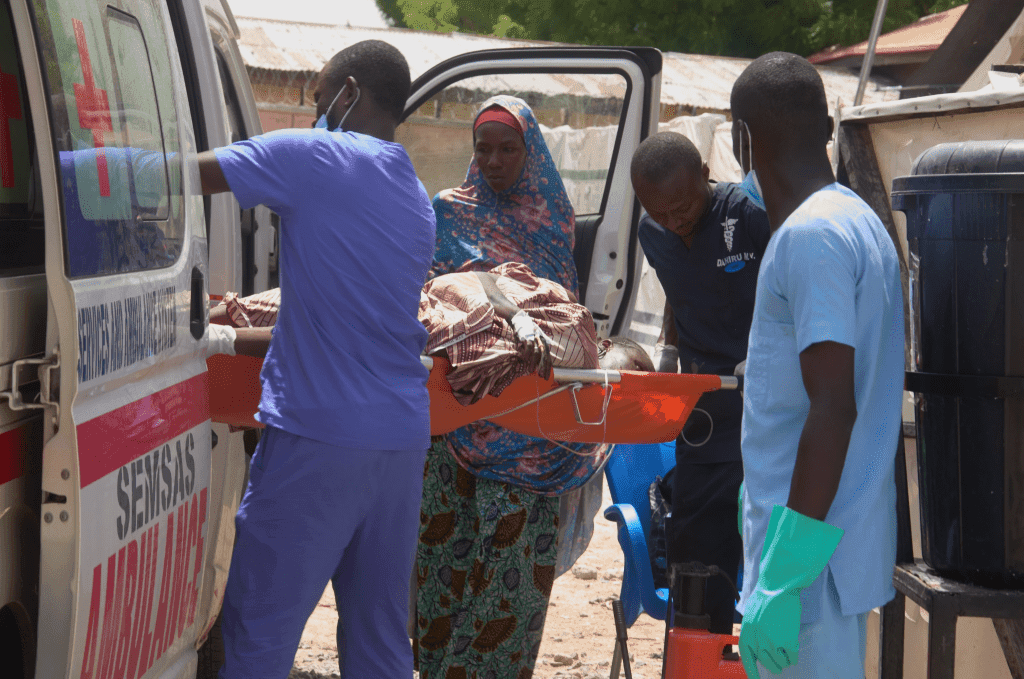
The disease is not new to communities along the Lake Chad shoreline. In 2018, the Borno State Ministry of Health recorded 502 cases and one death across Baga, Doro, and Kukawa wards. Doro accounted for the highest burden, with 254 reported cases. Response efforts at the time involved the Ministry of Health, WHO, and the Alliance for International Medical Action (ALIMA). Six years later, residents of Doron Baga say many of the conditions that enable cholera transmission remain unresolved.
Access to healthcare remains limited, many households depend on self-built water sources, and sanitation challenges persist in parts of the community.
Unlike many urban households, Ahmadu’s home is a large family compound that functions almost like a small settlement. At its centre is a manually operated hand pump, and near the entrance sits an open well. Built by the family years ago, the two sources continue to supply most of the household’s water needs. “Our main source of drinking water is the hand pump and the open well,” Ahmadu told HumAngle.
The compound also relies on pit latrines. Each household maintains its own facility, while another serves as a communal latrine for residents and visitors.
The source of the infection has not been established. But in a compound where dozens of people share water sources and common spaces, many residents may have been exposed to the same source of contamination. The outbreak also comes during the rainy season, a period when cholera cases often increase as flooding and runoff can contaminate drinking-water sources.
From Maiduguri to Lake Chad
The outbreak that has now reached Doron Baga began hundreds of kilometres away in Maiduguri, where it was first detected in early May. Health authorities had reported more than 2,700 suspected cases and 39 deaths across eight LGAs by mid-May, with Maiduguri Metropolitan Council recording the highest burden.
The spread, according to the international medical humanitarian organisation Médecins Sans Frontières (MSF), overwhelmed treatment facilities, prompting an emergency response from the state government and humanitarian organisations.
As the days went by, the numbers continued to climb. By June 7, Borno had recorded 7,850 suspected cases and 74 deaths across 14 local government areas, according to figures cited by MSF and state health authorities. MSF alone said it had treated 7,439 patients between May 1 and June 7.
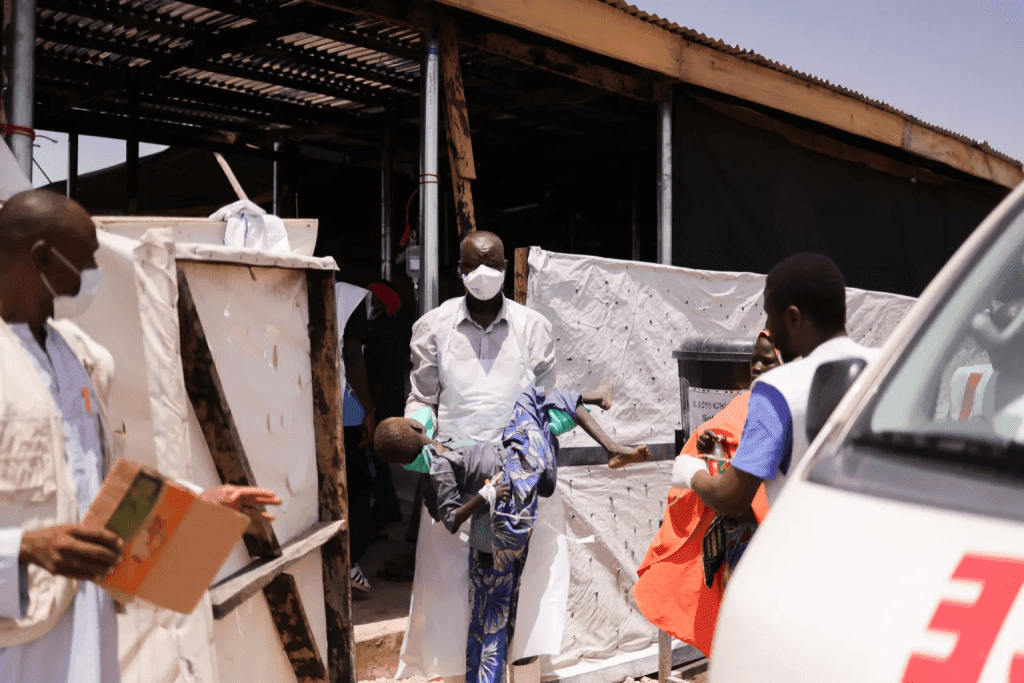
To contain the outbreak, the Borno State Ministry of Health and Human Services said it is implementing emergency health measures, improving sanitation, and increasing public awareness. In addition, humanitarian organisations such as MSF and Save the Children have activated emergency responses that include cholera treatment centres, oral rehydration points, surveillance, hygiene promotion campaigns, and water, sanitation, and hygiene interventions. MSF expanded treatment capacity in Maiduguri and opened additional cholera treatment units as admissions surged.
At the height of the outbreak, between June 5 and 7, MSF reported treating as many as 500 patients in a single day. Another organisation, Save the Children, said it was responding to more than 7,000 suspected cases reported across the state. The Nigerian Red Cross also supported awareness campaigns, case management, community sensitisation, and emergency response activities.
For weeks, the outbreak appeared largely concentrated in and around Maiduguri and other major population centres. Then it reached Doron Baga.
The unfinished work of recovery
As cases spread through Doron Baga, residents and health workers say longstanding challenges in healthcare, water access, sanitation, and public infrastructure have complicated efforts to contain it.
Many residents did not consider the local health facility a realistic option. When HumAngle asked why his family did not immediately seek treatment at the hospital, Ahmadu laughed. “Hospital?” he asked. “Do you expect us to take our sick relatives to a hospital without doctors and drugs?”
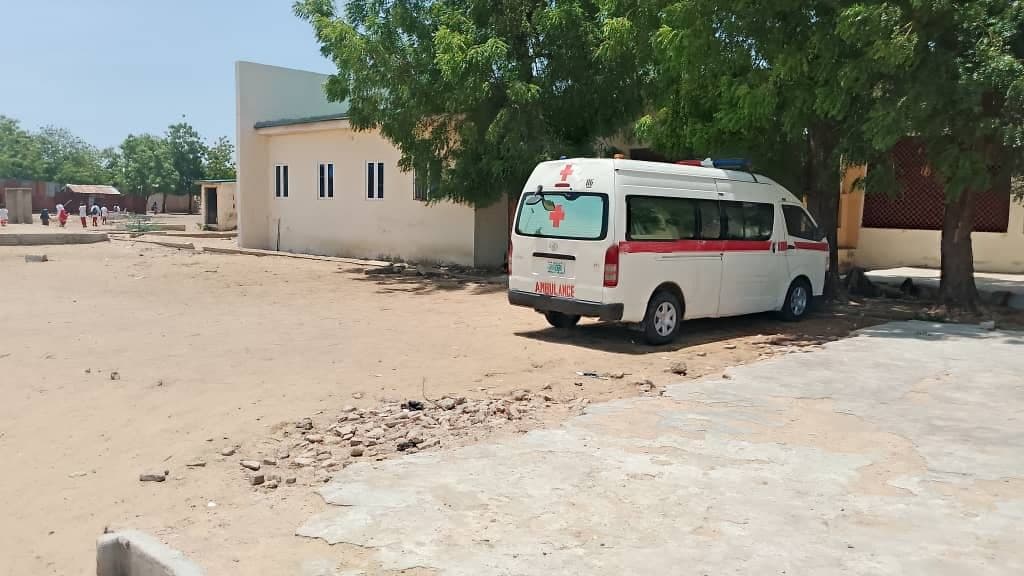
Residents say the Doron Baga Primary Healthcare Centre suffers from chronic shortages of personnel and medicines. “There are no staff, too,” Bashir said. “Those coming from Baga don’t spend more than an hour.” As a result, many families depend on patent medicine stores as their first source of treatment.
The nearest alternative is Baga town, but the cost of transportation, combined with the expense of purchasing prescribed medicines, often places formal healthcare beyond the reach of many households. “We usually take sick relatives to Baga,” Ahmadu said. “However, we did not take these ones there because it is expensive.”
Residents’ complaints come despite years of government investments aimed at improving healthcare services in the area. During a visit to Baga in July 2023, Borno State Governor Babagana Zulum ordered the rehabilitation of the Baga General Hospital and Doro Primary Healthcare Centre. Residents confirmed that the rehabilitation was carried out.
More recently, in May, Kukawa Local Government Chairperson, Mustapha Kukawa, distributed drugs to healthcare facilities across the LGA and warned against the diversion or mismanagement of medical supplies. At the state level, the Executive Secretary of the Borno State Contributory Healthcare Management Agency (BOSCHMA), Saleh Abba, said on June 4 that the agency had disbursed more than ₦400 million to 171 primary healthcare centres and nine secondary health facilities providing free treatment to vulnerable persons across Borno.
Yet residents of Doron Baga say shortages of staff and medicines persist, raising questions about the extent to which investments in infrastructure, medical supplies, and healthcare financing are translating into accessible services in some resettled communities.
Their concerns reflect a broader pattern documented across conflict-affected communities in Borno. In 2023, HumAngle reported that residents of Kirawa, a resettled border town in Gwoza LGA, frequently crossed into neighbouring Cameroon to access healthcare services. In 2024, residents of Baga and Dalori, another resettled community in the Konduga LGA, similarly complained about inadequate drug supplies and limited healthcare services. That same year, a Premium Times investigation found that despite significant investments in rehabilitating primary healthcare facilities across rural Borno, many communities continued to struggle with staffing shortages and inadequate medicines.
Together, these accounts suggest that while reconstruction has improved physical infrastructure in many communities, ensuring consistent access to healthcare workers, medicines, and essential services remains a challenge in parts of the state.
Faced with these realities, many residents turn to informal healthcare providers. One of them is Kasim Muhammad Auwal, a patent medicine vendor and community health worker who has operated in Doron Baga since the community was resettled.
“I have recorded 40 cases so far,” Kasim said. “Most have recovered. Four have died.”
Kasim holds a diploma in community health from the College of Health Technology in Maiduguri and believes that sanitation may also be contributing to the outbreak. “One major thing I have observed is increasing open defecation in the community,” he said. “This, I suspect, is the leading cause.”
According to him, the practice is particularly common among children, residents living on the outskirts of the settlement, and visiting fishermen from neighbouring communities.
Public health research supports concerns about the relationship between water, sanitation, and cholera transmission. The WHO identifies contaminated drinking water and inadequate sanitation as major drivers of cholera outbreaks, while studies have linked unprotected wells and poor sanitation practices to increased infection risks.
Like Ahmadu’s household, many residents rely on self-built infrastructure, including open wells and manually operated pumps, to meet their daily water needs. Although these sources may serve communities for years, they can become significant public health risks during disease outbreaks. Studies consistently show that communities dependent on untreated water and limited sanitation infrastructure face a higher risk of waterborne diseases.
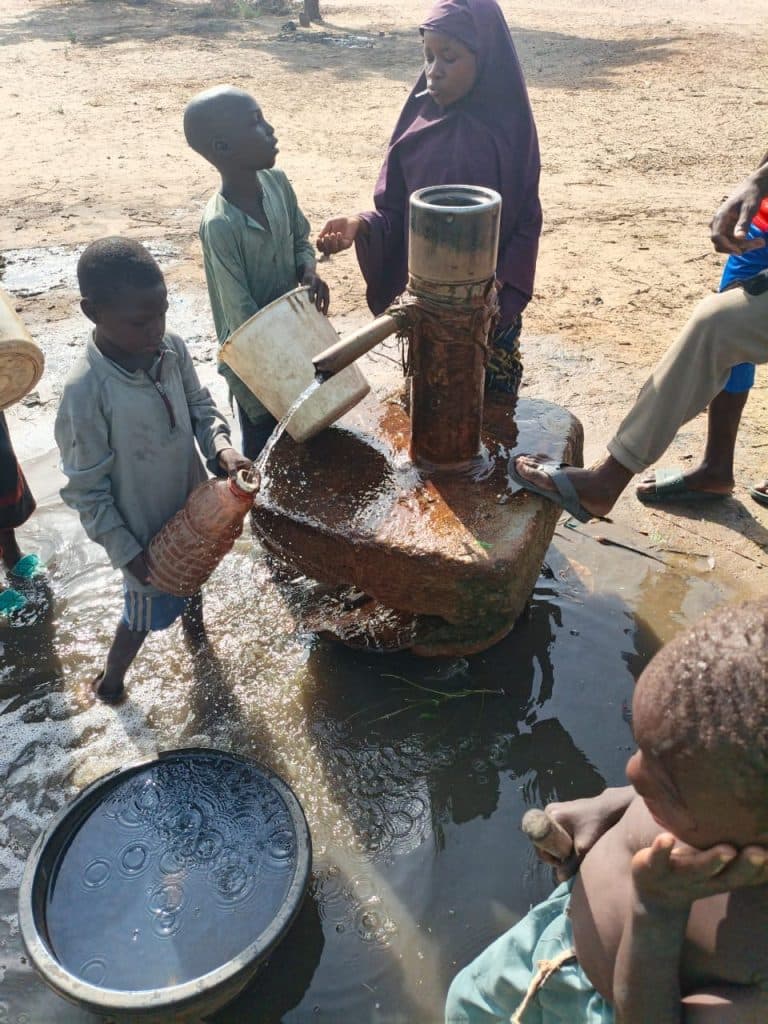
As cases spread through the community, humanitarian organisations also began carrying out preventive measures. Residents said volunteers from the Nigerian Red Cross and other organisations had conducted sensitisation campaigns, educating households about cholera symptoms, hygiene practices, and ways to reduce transmission.
A Red Cross volunteer in Kukawa confirmed that awareness activities were ongoing in the community but declined to comment officially, saying he was not authorised to speak on behalf of the organisation.
As of June 23, residents said new suspected cases were still being recorded in the community and that additional deaths had occurred in recent days, indicating that the outbreak had not yet been fully contained. They also said at least 11 patients were receiving treatment at the Doro Primary Healthcare Centre. HumAngle could not independently verify a community-wide death toll.
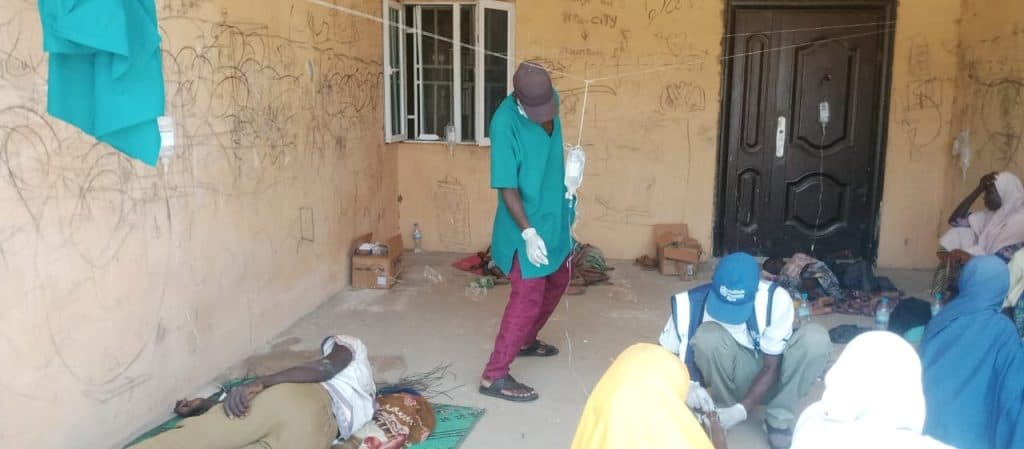
For many residents, the persistence of new cases points to challenges that extend beyond emergency response efforts. Community leaders like Ahmadu say the conditions facing Doron Baga are rooted in a longer history of conflict, displacement, and uneven recovery.
The community was among several settlements around Lake Chad that were emptied by years of insurgency before residents gradually returned under the state’s resettlement programme. Yet rebuilding communities after conflict involves more than restoring security. Across Borno State, reconstruction projects have frequently been disrupted by insecurity, while healthcare, water, and sanitation infrastructure have not recovered at the same pace as population returns.
Studies of recurrent cholera outbreaks in northeastern Nigeria have identified weak water infrastructure, sanitation gaps, poverty, displacement, and fragile health systems as recurring risk factors. Researchers argue that outbreaks often reveal deficiencies that remain hidden until disease transmission occurs.
In Doron Baga, the current outbreak has done exactly that.
Support Our Journalism
There are millions of ordinary people affected by conflict in Africa whose stories are missing in the mainstream media. HumAngle is determined to tell those challenging and under-reported stories, hoping that the people impacted by these conflicts will find the safety and security they deserve.
To ensure that we continue to provide public service coverage, we have a small favour to ask you. We want you to be part of our journalistic endeavour by contributing a token to us.
Your donation will further promote a robust, free, and independent media.
Comments
0 comments
No comments yet.
Sign in to join the discussion.
Of course, we want our exclusive stories to reach as many people as possible and would appreciate it if you republish them. We only ask that you properly attribute to HumAngle, generally including the author's name, a link to the publication and a line of acknowledgement.