The Human Price of Turkish AI-Powered Drone Rush Across Africa
A HumAngle investigation has uncovered a surge in military misfires propelled by poorly trained local operators and a lack of due diligence and accountability across the war theatres in Sub-Saharan Africa, where TB2 drones are at play.
Listen to this story

21 Aug 2026
Imahoy Welete had a close shave with an aerial-driven death, but fate spared her soul. She had worked tirelessly for hours alongside her fellow nuns under the burning sun of Ethiopia’s Amhara Region, South Wollo Zone. For a moment, she sought refuge under a baobab tree before stepping away to tend to other chores in an adjacent building. That morning, on July 21, the monastic life at the St. Arsema Unity Monastery had barely begun; women and teenagers in the quiet community were preparing their food reserves for the looming winter rains.
The blast of a drone strike suddenly emerged from the point Imahoy had just left, triggering a storm of dust and smoke. By the time the atmosphere was clear, Imahoy realised she had just survived a deadly drone strike. In the blink of an eye, the monastic sanctuary had transformed into a killing field amid a cauldron of fire. The nun ran through the haze of dust and wreckage to seek help.
“There is a tree over there near the house; women and children were gathered under it sorting grains,” Imahoy recalls. “I was sorting with them, then I stepped away to do another chore at the other building. As soon as it happened, I heard a loud, explosive sound that was difficult to fathom.”
The bombing destabilised the setting, cracking walls and triggering fear in nearby villages. The remote drone strike fell on an isolated community on the shore of the Amhara region, making it difficult to seek medical help for those fighting for their lives. As the shrouding smoke withered away, two nuns had died instantly while 11 others suffered injuries, leaving locals running around to rescue the victims. Kesis Semagne, the Borena Woreda Church Office head, described the rescue process as hectic and costly, thanking the religious leadership for the bailout.
“It was only possible to transport the wounded victims to the hospital with support from the Woreda administration,” Kesis says curtly.
The aerial bombardment in the community is just one of many military aerial operational failures demonstrated in Ethiopia. The recent drone tragedy, among many others, reflects the typical example of how misfires during air raids have shaped the ongoing war between the Ethiopian federal forces and the Amhara Fano militia, an ethno-nationalist insurgent group waging war against the government. The cycle of violence, which erupted in April 2023, has triggered a wave of drone warfare against the militants and taken a toll on civilian communities in the region.
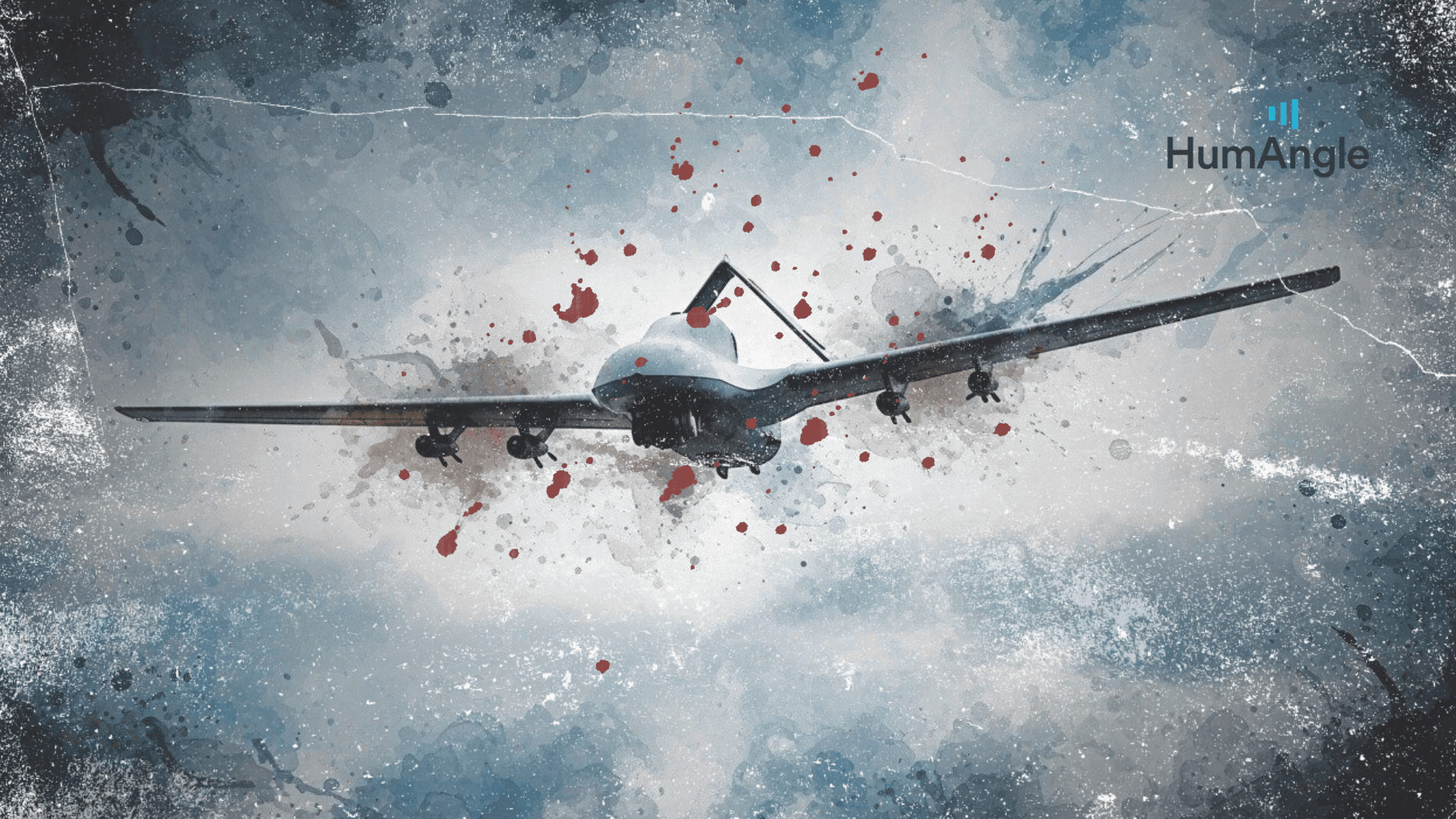
Drone warfare has been the hallmark of the Ethiopian military campaigns against insurgents in the Amhara axis. As the Fano militants retreated to the interior mountains of the region, the Ethiopian forces resorted to air raids. Among the arsenal of weapons deployed by the state-backed forces, one particularly stood out: the Bayraktar TB2, a medium-altitude, long-endurance (MALE) drone. Described as the “game changer” by the Turkish media, especially for its role during the Ukraine-Russia war, military strategists in Ethiopia and many other African nations have competitively patronised the uncrewed aerial vehicle (UAV).
The high-stakes rush by African governments to acquire the Turkish AI-enabled drones is colliding with a devastating trail of civilian casualties. A HumAngle investigation has uncovered a surge in military misfires propelled by poorly trained local operators, a lack of due diligence and accountability across the war theatres where TB2 drones are at play. From Ethiopia’s Amhara region to the volatile hearts of the Sahel, cash-strapped militaries have rapidly pivoted away from traditional hardware in favour of Turkey’s modern drone technology at the expense of civilian safety. How did the TB2 drone suddenly emerge as a lucrative bombing technology, competing with existing global predatory UAVs?
The making of a Turkish killer drone
When the United States sanctioned Turkey in 2019, it was a countermeasure against potential Russian backdoor espionage that could undermine the defence network of the North Atlantic Treaty Organisation (NATO). Turkey had strategically acquired the Russian-made S-400 defence system despite warnings that it could compromise the F-35, a fifth-generation fighter jet technology. Following the sanctions, the US denied Turkey the delivery of 116 F-35s, which were worth up to $25 billion. A training programme at the US air base involving Turkish pilots on how to operate the modern fighter jet was also suspended. With eight domestic firms removed from a supply chain where they had produced 937 different aircraft components, Turkey also lost its industrial role in the F-35 Fighter Jet Programme.
The military strategists in Ankara, Turkey’s capital, saw these sanctions as an opportunity to accelerate their long-standing ambitions for self-sufficiency. Baykar Makina, a privately owned defence company founded in the 1980s and later led by Haluk Bayraktar and his younger brother Selçuk Bayraktar, took up the fierce challenge. Selçuk, an MIT-trained military technologist and the son-in-law of Turkish President Recep Erdoğan, had long championed the idea that Turkey could design and deploy its own combat droneswithout relying on Western suppliers. The sanctions gave that vision political urgency and unlimited state backing. The defence merchants intensified efforts to localise components previously sourced from abroad, including flight control systems, data links for electro-optical sensors, and munitions integration. The idea of a locally produced drone became a reality with the production of the Bayraktar TB2, an AI-enabled drone described as “featuring proven smart munition integrations that support accurate target acquisition and precise engagement”.
The drone had been deployed locally in Turkey since at least 2014, but became much more prominent after the 2019 sanctions, laying the groundwork for a diplomatic windfall for the country. It received global patronage, as it promised high-end targeting capabilities at a fraction of the cost of manned fighter jets and could be exported without Western export controls. The drone is acclaimed for carrying four MAM-L laser-guided bombs and loitering for up to 27 hours, according to a marketing statementon Baykar’s website; its strength lies in its fully automated takeoff, landing, and flight control. With three autopilot features, the statement claimed, the UAV embodies reliability and advanced navigation capabilities, enabling it to follow routes automatically without human intervention. The drone also operates in semi-autonomous modes, gathering and analysing data on its own and executing tasks with minimal human input.
Compared to other modern UAVs, the TB2 seems cheaper, as one unit generally costs between $2 million and $5 million, according to drone experts and defence marchants, who noted that the cost might be higher – depending on the package and the trade agreement. In a $270 million contract with Baykar, for instance, Poland purchased 24 TB2s, bringing the per-unit cost to $11 million. According to official details provided on Baykar’s webpage, the deal, which was sealed in 2021, included the construction of three ground stations for the TB2 combat systems and services such as weapons delivery, training, and logistics.
In a similar bilateral trade with Romania in 2022, Baykar supplied 18 TB2 combat systemsfor $321 million – which is an average cost of $17 million per unit. The drone was aggressively marketed to countries facing internal security crises as a cheaper yet effective alternative to US UAV systems such as the MQ-9 Reaper, a remotely piloted aircraft (RPA) used for intelligence gathering and surveillance. The premier aircraft costs about $28 million, according to the U.S. Congressional Research Service, and is subject to tight restrictions under U.S. arms export regulations.
The Sahel, a region confronting complex armed conflicts, quickly became a priority market for the cross-border sale of TB2 drone systems. In five years – between 2020 and 2025 – many countries in the region developed a strong appetite for the TB2 combat drones, competitively patronising the Turkish Baykar tech company. The Niger Republic, for instance, received its first batch of around six TB2s in 2022, and Burkina Faso bought five TB2s the same year. Multiple TB2 drone systems have also entered Mali’sinventory, while Morocco has operated roughly 19 of the drones, according to multiple reports reviewed by HumAngle. In its web marketing and defence reporting, the Baykar company notesthat a wide range of African states, including Nigeria, Ethiopia, Togo, Djibouti, Somalia, and Rwanda, have chosen Turkish UAVs to strengthen surveillance and strike capability. These deliveries represent a rapid expansion of Turkish drones in Africa, beating the scale of earlier unmanned systems supplied from other sources.
Training deficits, operational failures
The mad rush for TB2 systems has created a training deficit among importing nations, especially in the Sahel. Baykar’s sales package is not limited to hardware; it includes what the company calls a Payload Operator Training Programme, which is designed to prepare drone crews to operate the TB2’s surveillance and targeting systems. The programme teaches operators how to manage payload systems, including gimbal cameras and laser designators, and covers technical terminology, simulator applications, drill videos, map usage and image evaluation. It also explores problem-prevention techniques and training flights culminating in “real mission experience with the help of test flights”.
The TB2 drone is much easier for countries to acquire, but operating such a MALE system demands a highly trained combat pilot, a payload operator, and a mission commander, according to multiple drone experts HumAngle consulted for this investigation. While Baykar provides structured training programmes, their duration is limited compared to traditional military aviation curricula. In Ukraine, where the Bayraktar TB2 has seen extensive operational use, training appears to be more formalised and consistent. The Ukrainian Air Force sent personnel to Baykar’s training centre in Keşan, Turkey, under structured courses that include both theoretical and practical instruction. One widely reported course lasts around three months, combining classroom work with simulator and live-system familiarisation, after which trainees return with certificates authorising them to operate and maintain the TB2 systems under national command. A similar long-term programme for prospective Baykar production facility staff in Ukraine involves at least nine months of training to build deep technical expertise in system assembly, operation, and maintenance.
While Ukraine maintains structured and consistent training programmes for its TB2 operators, there seems to be no trace of such training pipelines for many African militaries, particularly in Niger, Burkina Faso, Mali, and Ethiopia. The only well-documented case in Sub-Saharan Africa is Nigeria, where some UAV personnel took Baykar-linked training ahead of drone deliveries in 2022. Between May and September of that year, 35 Nigerian officers and 11 soldiers completed a compressed training course in Turkey, courtesy of the country’s “Project Guardian” defence initiative.
Experts familiar with operator preparation say that grounded training in drone operations makes a huge difference in complex war theatres. Comprehensive programmes that include simulator hours, scenario playbooks, and repeat assessments, as described in Ukraine, help build situational judgment and mission discipline. Military drone analysts warned that shorter, one-off trainings focused primarily on technical system use at the point of delivery, as seen in many African countries, may not adequately prepare operators to evaluate ambiguous real-world situations in which distinguishing between civilians and combatants is complex and critically important.
Oleksandra Molloy, a drone operations analyst and researcher, urged military operators to be wary of the plug-and-play notion used to promote modern-day drones like the TB2. Oleksandra, a Senior Lecturer in Human Factors and Aviation Safety at the University of New South Wales in Sydney, noted that uncrewed systems are highly complex and demand continuous, specialised tactical adaptation and integration doctrine, rather than being treated as standalone, easily mastered tools. Drawing from Ukrainian breakthroughs and failures during fierce air wars with the Russian forces, she stressed that one thing countries can learn from Ukraine is its consistent investment in training drone operators during wartime.
“The effectiveness of drones’ use largely depends on the skills and experience of their operators,” Oleksandra says. “Accordingly, ongoing training and education are essential to ensure a high level of competence in drone operation and utilisation.”
Faine Greenwood, a specialist in civilian drone technology and founder of Tarentum Consulting LLC, told HumAngle that experience really does matter in how a country deploys drones in war zones. Long before TB2, the Ukrainian forces had used combat drones for operations; the war against Russia only intensified the usage. Even after training over 50, 000 drone operators, the country doesn’t just rely on a one-off training pipeline to sustain its UAV campaigns against the Russian forces.
“Ukraine has a long history with drones,” Faine notes, “and that’s one reason it seems the TB2 drone is more effective there.”
A HumAngle scraping of Baykar’s website reveals that the training provided during TB2 deliveries mostly focuses on technical skills rather than offering insights into handling uncertainty and legal constraints in war zones. While Baykar’s official training frameworkcovers mastering electro-optical systems and operating precision-guided munitions, it fails to formalise instructions on international humanitarian law, civilian harm mitigation, or rules-of-engagement doctrine tailored to counterinsurgency environments. It also fails to publish curricula outlining mandatory hours for proportionality assessments, collateral damage estimation, or civilian-pattern analysis.
On the contrary, Western arms suppliers, particularly the US, usually attach human rights conditions or subject their arms buyers to political scrutiny when selling weapons to African states with documented rights concerns. In 2022, for instance, US lawmakers placed a hold on a nearly $1 billion sale of AH‑1Z attack helicoptersto Nigeria over reported abuses by security forces, before the deal was ultimately approved after review. Moreover, US legislators have proposed bills such as the SAFEGUARD Act, designed to legally restrict arms sales to states committing war crimes or other serious violations and to strengthen end-use monitoring tied to human rights compliance.
Restrictions of this sort have made TB2 drone systems appealing to African leaders facing mounting insurgencies and territorial threats from armed groups. In a galaxy of instances across Sub-SaharanAfrica, the militaries have misused the drone technology in civilian settlements, especially in Ethiopia and several countries in the Sahel. This lack of restrictions and adherence to international humanitarian laws have cost many civilian populations their lives across the continent. Adejoh Sunday, a human security scholar and military analyst at the Nigerian Defence Academy, warns that technical know-how of a drone is not enough in modern warfare without contextual intelligence and ground-level target verification. He says operators must be well-equipped to interpret raw data on their screen and avoid overreliance on machine logic or signal intelligence.
“Countries that want to succeed in modern warfare must deploy drone technology, but there’s a need for professionalism and ethical standards,” Adejoh says. “The best way to go is to adopt modern drone technology, ensure that those who are utilising it are properly trained, understand the ethics around using it, and the need for professionalism in its application.”
The human toll of African drone wars
In November 2024, a deadly barrage of laser-guided munitions fell on a local market in the Arge town of Ethiopia’s Amhara region, throwing hundreds of already troubled people into despair. The bombing tore through the civilian neighbourhood, hitting a school and a primary healthcare centre housing pregnant women and sick people. Locals counted 50 dead bodies, many of which had been shattered by shrapnel during the consecutive bombing. Five months later, in April 2025, a drone strike killed over 100 people in Gedeb, a rural town in the East Gojjam Zone in the same Amhara region, according to local media and multiple accounts from residents. While the Ethiopian government denied killing unarmed people in both cases, claiming the strike targeted Fano terrorists, witnesses insist that the victims were civilians. In a tragic turn of events, Ethiopian forces misfired about 40 fighterson their own side in a drone strike during an air raid in Amhara on Jan. 15. In this case, the military reluctantly admitted it was a mistake: a strike targeted at the state enemies landed on their militia allies. A 2024 report by the Armed Conflict Location & Event Data (ACLED), a US-based crisis monitoring organisation, found that at least 50 airstrikes have resulted in an estimated 431 fatalities, a figure locals believe to have been undercounted due to reporting constraints and media blackouts on the warfronts of Ethiopia.
HumAngle independently verified the incidents cited above in the Amhara region. We spoke with several local sources, reviewed verified footage of drone attacks, and analysed open-source databases to monitor cases of civilian casualties caught up amid operational failures in the wars against the Fano militants. The Ethiopian forces consistently endangered civilians by misidentifying ordinary people as enemies. They often deny killing civilians, and when they admit it – very rarely – they excuse it as regrettable but unavoidable. They also refuse to investigate civilian harm allegations or hold their troops accountable for reckless military operations. The same pattern is exhibited in the bombing of a monastic settlement in the troubled Amhara region.
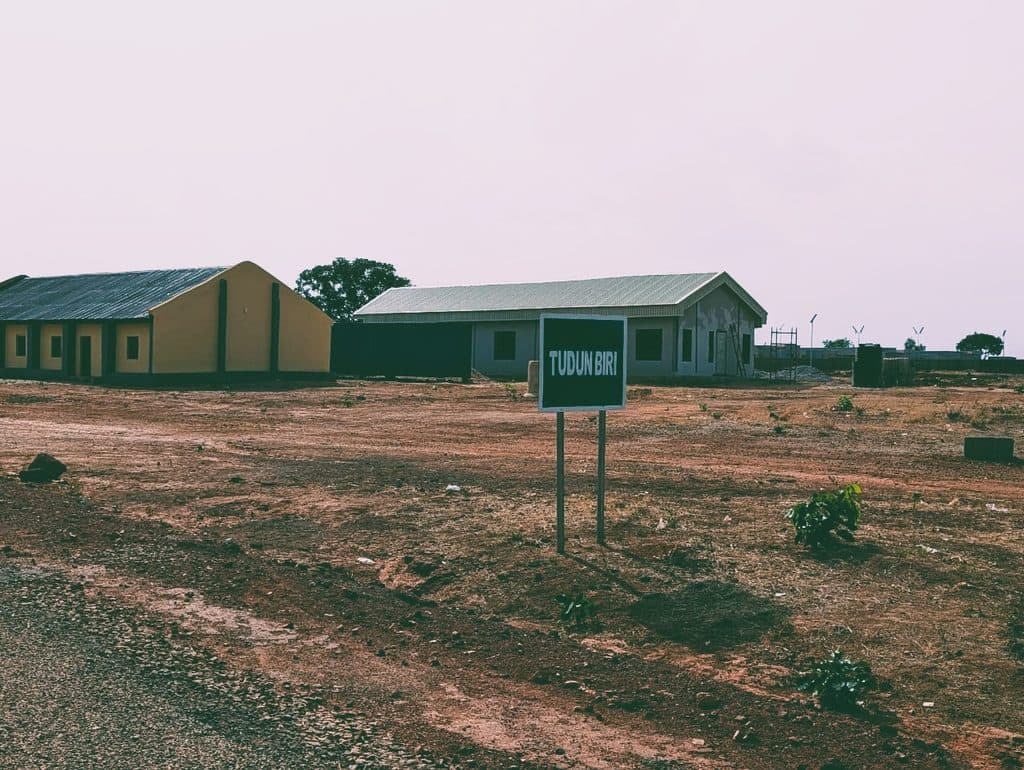
The Abey Monastery strike reveals the errancy of military forces handling remote aerial operations in Ethiopia. The distance between high-altitude UAVs and the reality on the ground in rural target zones creates deadly blind spots, causing sensor operators to misfires, according aerial defence analysts. In most instances tracked by HumAngle, aerial operations preoccupied with irreversible intelligence failure have cost hundreds of unarmed civilians their lives, and the Abay Monastery drone strike is one of the latest remote warfare goofs in Ethiopia. While drones are projected for their precision, they rely heavily on human operators, making them vulnerable to errors and civilian harm, according to a report by Pax for Peace, a Netherlands-based conflict prevention organisation. From thousands of feet in the air, a group of nuns and teenagers were mistaken as high-value targets, triggering a hail of drone fires that brought down monastic buildings in the civilian settlements.
“The kitchen was completely ruined by the strike,” Imahoy says, detailing the loss recorded after the drone attack. “The grain stored for our annual consumption was reduced to ashes. The water tank was torn into pieces, as shrapnel hit it.”
These long-standing practices stand amid active patronage of the Turkish TB2 systems by the Ethiopian government. The spread of the drone across Africa is raising serious ethical and legal questions. The weapons are said to be precise, but evidence proves their use has put civilians in harm’s way. Drone Wars UK, an organisation investigating and challenging the proliferation of armed drones, said in a report that the failure to control the proliferation of armed drones in Africa had led to more than 940 civilians being killed since November 2021. The report described that figure as “conservative”.
Ethiopia was one of the first African states to deploy the TB2 drone aggressively during the Tigray war. In 2023, the country even bestowed its prestigious Medal of Honour upon the CEO of the Turkishdrone manufacturer Baykar, recognising the significant role of the TB2 drones in the country’s civil war. However, the civilian population is paying the price, with the drone killing unarmed locals caught up in war zones. The unfolding military misfires in Ethiopia’s Amhara region mirror patterns seen thousands of kilometres west, across the Sahel.
“This must change. Unless the international community moves rapidly towards developing and implementing a new control regime, we are highly likely to see more examples of the killing of civilians from the use of armed drones,” said Cora Morris of Drone Wars UK.
In Burkina Faso and Mali, the Turkish drone systems are not only patronised, but they are also paraded as super-precise bombing technology rapidly eliminating state enemies. The two countries are junta-led; in other words, transparency and accountability are fantasies. Under the military leadership of these states, civilians are not only scared to be killed by drones – in place of terrorists – they’re also afraid of speaking to the media about it, lest they’re reprimanded. On Aug. 3, 2023, for instance, a Burkninabe military drone struck a bustling rural market in Bouro, killing 28 villagers and local traders. Survivors described bodies scattered among stalls selling grain and vegetables, and families burying their dead quickly, fearful that staying longer could invite another strike. Weeks later, on Sept. 21, a drone hit a funeral in Bidi, killing 24 men and a boy. Residents said armed fighters from Jama’at Nusrat al-Islam wal-Muslimin (JNIM) – which the military forces claimed they killed – were not among the civilian population. The drone operators fired anyway.
The increasing targeting of non-combatant settlements – and describing them as terrorists’ logistics hubs – has stained the innovative embrace of an automated drone technology in Mali and Burkina Faso. As seen in many televised military reports in the two countries, the Bayraktar TB2 drone system has been the main platform identified for these unfortunate incidents. In a comprehensive database which HumAngle has reviewed, Drone Wars UK described the escalating use of armed drones by military forces in the Sahelian states as “death on delivery”, detailing how the failure or misuse of the UAVs, especially TB2s, have resulted in mass civilian casualty incidents in Burkina Faso and on the edge of Mali war theatres. Despite overwhelming evidence, governments rarely prosecute military personnel responsible for civilian deaths, in clear contravention of binding international laws. Article 48 of Additional Protocol I to the Geneva Conventions states that parties must distinguish between combatants and non-combatants and shall direct military operations only against the former. Article 51 of the same Protocol also forbids attacks that cause excessive civilian harm relative to the anticipated military advantage. In addition, Article 57 obliges parties to take all feasible precautions to minimise civilian casualties and damage to civilian objects.
‘No questions asked’
As Turkish AI-powered drone technology fails across African nations, largely due to faulty intelligence, negligence, and training deficits, civilians are paying the price heavily. The consistent failure – which many militaries have defensively described as “operational glitches” – has raised critical questions about oversight, accountability, and the limits of exporter responsibility once weapons enter active conflict zones. However, the Turkish government has openly rejected notions that it operates a no-questions-asked export policy. Officials insist that all drone sales are vetted through an interagency process involving the defence ministry, foreign ministry, and the country’s presidency. Export contracts, they say, include end-use restrictions that explicitly prohibit the targeting of civilians and other violations of international humanitarian law. But defence analysts and human rights think tanks have insisted that Turkey’s explanations remain unconvincing. They cast doubt on whether these safeguards meaningfully constrain how drones are used once deployed.
The International Crisis Group, a non-profit committed to preventing deadly conflict, noted in a 2023 report that international regulatory frameworks governing armed drones are weak and largely unenforceable. Unlike traditional combat aircraft, the report stated, armed drones sit in a regulatory grey zone. Although Turkey participates in two of the most prominent voluntary export controlregimes – the Wassenaar Arrangement and the Missile Technology Control Regime (MTCR) – they both provide minimal constraints on the export of systems such as the Bayraktar TB2. These “unforceable” global regulations have made it difficult to hold Turkey accountable for exporting UAVs to countries without much attention to bilateral civilian protection commitments.
Doga Eralp, an associate professor of security studies at the Command and Staff College at Marine Corps University, worries that Turkish “pure mercantilist instinct” might be appealing to authoritarian governments across Sub-Saharan Africa, especially because the country’s drone systems are mostly low-cost. “Turkey’s ‘no-strings-attached’ approach in Sub-Saharan Africa sidesteps end-use monitoring and lacks accountability mechanisms typically expected in the export of lethal autonomous systems,” Doga notes. “This creates a permissive environment in which regimes with poor human rights records and limited adherence to international humanitarian law can freely exploit drone technology for coercive and domestic control purposes.”
On the one hand, the Wassenaar Arrangement, which was established for accountability in conventional arms transfers, gives national authorities absolute power to make licensing decisions, with no binding enforcement mechanism or penalty for violations. On the other hand, the Missile Technology Control Regime (MTCR) prevents the proliferation of delivery systems for weapons of mass destruction and controls exports of rockets and UAVs capable of carrying a 500-kilogram payload over a 300-kilometre range. Most modern armed drones, including the Bayraktar TB2, fall below these thresholds. As a result, they are effectively excluded from the MTCR’s most stringent controls, despite their proven capacity to deliver precision-guided munitions over long distances and cause heavy civilian harm.
More consequential is Turkey’s position on the Arms Trade Treaty (ATT), the only legally binding global framework designed to prevent conventional arms transfers that risk contributing to war crimes or serious human rights violations. While the country has signed the treaty, it has not ratified it. Turkey, alongside the US, remains one of only two NATO members outside the ATT’s binding obligations. Human rights researchers and military analysts have, however, urged Turkey to take concrete steps to minimise risks that come with its drone exports. They also asked the exporting country to ratify the Arms Trade Treaty and implement stricter and more transparent risk assessments before selling the drone systems to countries with active conflict zones.
The Carnegie Endowment for International Peace demystified the steps needed to be taken by the Turkish government to rectify its no-strings-attached propensity toward the unvetted proliferation of combat drones, turning low-cost airpower into deadly threats to civilians across African nations. A report by the global think tank stated that the government must first establish absolute transparency by disclosing all drone sales, enforce existing control regimes like the Wassenaar Arrangement, declare a binding code of conduct mandating end-users’ human rights restrictions, and lead an open debate to establish clear standards for automated warfare.
Alper Coşkun, a Carnegie Senior Fellow, argued that while Turkey might be caught up in an ethical grey zone of maintaining its global relevance by producing AI-powered drones, it must ensure constraints on the exports of its UAVs to countries with high records of civilian casualties. “Turkey’s aspiration to establish itself as a drone power and the interest it has generated among an ever-growing number of potential buyers present Ankara with a conundrum: how can it retain the image of a responsible international actor in terms of its policy on drone transfers to third countries, without inhibiting its competitive edge in a demanding market?” Alper says.
Hassan-Taiwo Adebayo, a human security analyst and senior researcher at the Institute of Security Studies (ISS) assert that while the large chunk of the blame must go to reckless AI-enabled drone operations, the TB2 suppliers also have a responsibility to conduct background checks on countries patronising them, especially on their history of civilian protection during air wars.
“In a way, they (the suppliers) can’t avoid accountability. That’s why control and regulations are very important,” Hassan-Taiwo says. “They need to conduct risk assessments before they sell arms to a country — assessments to determine the proclivity of the military in that country to arm civilians. They need to determine that even if something goes wrong, there are systems in place to make corrections and reparations to help the survivors recover from tragedies. They need to make those assessments. And when there are gaps, they should put conditions on the country to put systems in place. The human rights perspective is very important to determine who you’re selling to.”
This HumAngle investigation was produced in partnership with the Pulitzer Center’s AI Accountability Network.
Support Our Journalism
There are millions of ordinary people affected by conflict in Africa whose stories are missing in the mainstream media. HumAngle is determined to tell those challenging and under-reported stories, hoping that the people impacted by these conflicts will find the safety and security they deserve.
To ensure that we continue to provide public service coverage, we have a small favour to ask you. We want you to be part of our journalistic endeavour by contributing a token to us.
Your donation will further promote a robust, free, and independent media.
Comments
0 comments
No comments yet.
Sign in to join the discussion.
Of course, we want our exclusive stories to reach as many people as possible and would appreciate it if you republish them. We only ask that you properly attribute to HumAngle, generally including the author's name, a link to the publication and a line of acknowledgement.