Novena University Students Stranded after Getting Scholarship Through the Back Door
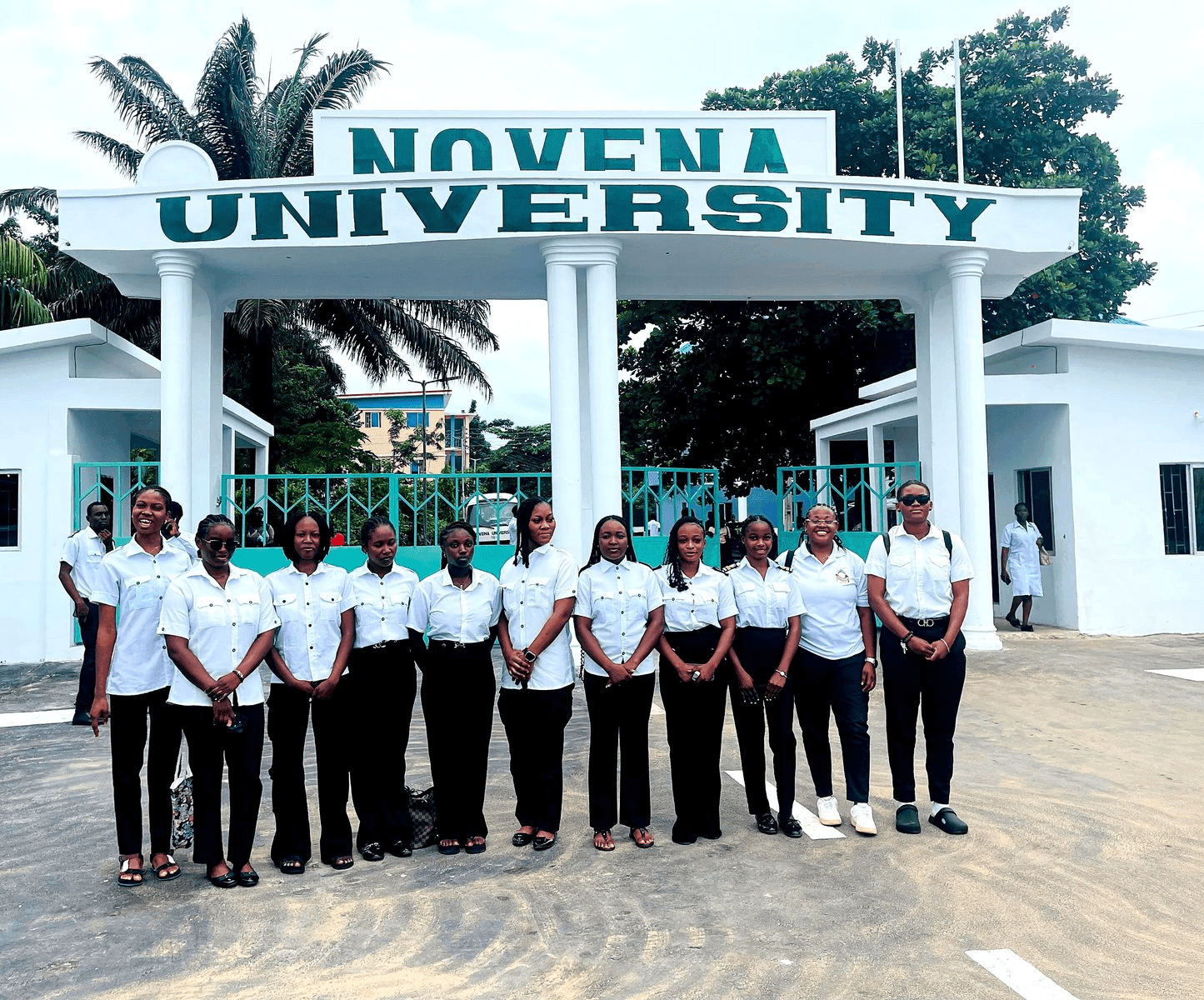
Some supposed recipients of the Presidential Amnesty Programme (PAP) scholarship at the Novena University are struggling to graduate after falling into the ditch of fleecing slot schemes.
Listen to this story

29 Jun 2026
With ₦2.759 million standing between Pious Umokoro* and graduation, his dream of building a better life for himself hangs in the balance. The chance to attend a private university felt like a blessing, but four years of relentless effort, sleepless nights, and hope are at risk if he cannot secure the funds.
Given his family’s financial struggles, Pious’s best chance at higher education was through the Presidential Amnesty Programme (PAP) scholarship at Novena University in Delta State, South South Nigeria. Trapped in a deceitful slot system that promised him the PAP scholarship, he is now unable to pay the outstanding fees demanded by the university.
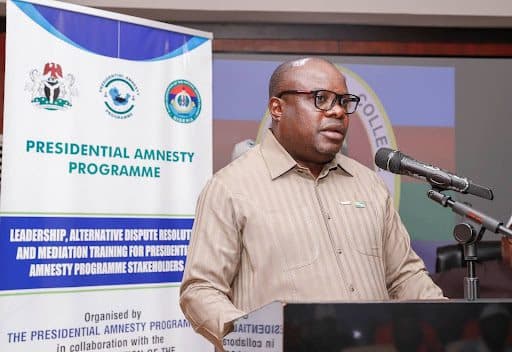
PAP was established in 2009 by the Nigerian federal government to address militancy in the Niger Delta region, offering scholarships, vocational training, and peacebuilding schemes. One of PAP’s initiatives is a fully funded scholarship programme that covers tuition, monthly stipends, books, and accommodation for both undergraduate and postgraduate beneficiaries. The scholarship scheme is meant to be life-changing for those lucky enough to receive it, but a confusing selection process and sharp practices have put the chances of many hopeful participants at risk.
According to the Foundation for Partnership Initiatives in the Niger Delta (PIND), militancy in the region arises from communal conflicts, gang clashes related to cults, armed confrontations with security forces, separatist agitations, and natural disasters. However, the PAP initiative provides opportunities for young people – ex-agitators and individuals from impacted communities – to eradicate militancy and armed violence in the region.
A dream deferred
Pious is the youngest of his parents’ four children. After losing his father at the age of two, his family moved from South West Nigeria to North Central. His mother, a retired nurse, became the family’s breadwinner, taking over her late husband’s frozen-food business to support her children. Unfortunately, the business began to decline, making things more difficult for them.
In 2012, pressure from their extended family in Delta State prompted his mother to relocate, driven by fears of the insurgency in the northern region. His mother registered him in a private school, but did not have the financial means to support his education there for long, which eventually led to his transfer to a government school.
The extended family promised to set up a chemist shop for his mother after she returned, but they could only pay her rent for a few months for a one-bedroom apartment. “The support stopped coming from family members, and my mother started to look for another job. Her salary was not enough to support us. So she eventually started farming, mostly cassava for our own consumption and occasional pepper farming, which she does to date,” he told HumAngle.
She raised money for her son to take the Basic Education Certificate Examination (BECE) by working on people’s farms. “The good thing is that the secondary school I attended was free. You just handle things like books and uniforms,” he recalled.
Despite the presence of many oil companies, the community in Delta State remained underdeveloped, and it took time for Pious’ family to adjust. After finishing secondary school in 2017, a church member introduced him to a teaching job paying ₦8,000 per month. Eventually, he took another job at a depot where he was paid ₦10,000. He would later find yet another job, which he held until 2021.
“I started working to raise money to do a computer training. I ended up saving nothing for the computer I wanted to learn,” he said.
Over the years, he had taken the Joint Admissions and Matriculation Board (JAMB) exam twice. On his first attempt, he applied to Ahmadu Bello University, Zaria, in the country’s northwestern region, but was not admitted. When he took the second exam, he encountered a technical problem due to a mistake by the person in charge of his registration. He went to a JAMB centre in Asaba, but couldn’t rectify the error. It was around that time that the Novena University opportunity came through a church member who worked in the school. The church member noticed that he had been at home since finishing secondary school and decided to get him the scholarship slot so he could reach his full potential. His excitement at the time seemed to have stopped him from spotting the red flag early enough, as he never received any formal letter indicating that he had secured the PAP scholarship, nor did he apply for it through any formal process.
“The church member who introduced me worked in the school. I was taken to the Dean of Student Affairs’ office, where I collected my admission letter,” he recounted.
Applications for this programme are submitted online through the official PAP portal, where successful candidates undergo a written aptitude test and an oral interview. Pious only became aware of the PAP scholarship through the church member. He was aware that companies, especially oil companies, and sometimes government organisations, offer scholarships, but he never had the chance to apply for any. He said he was clueless and had assumed the procedure he followed was the norm, meaning he didn’t explore the right application channel.
“Novena rarely did anything online. There was no student portal. When you resume, you will buy seven files, photocopy your documents into them, and then submit them to six offices. The system was fully manual, and we did that process for two years,” he noted, adding that he never received an email or any kind of digital message from PAP, and there was no direct interaction between the students and the scholarship scheme.
Schooling in fear
Pious and several other students in his shoes claimed the only evidence they had for being beneficiaries of the PAP scholarship was a mention of the programme on their admission form, specifically the student records update form, where PAP was listed as their sponsor. They received a temporary clearance each year, which granted them access to school facilities.
But the so-called scholarship came with so many uncertainties. Although they were not paying school fees, there were many other expenses, and the accommodation they were provided was not very good. “The hostels they put us in were not good, but we did not have to pay for them,” he said.
The school also prohibited activities such as cooking, making it compulsory for students like Pious, who were already struggling, to buy food. He said he persisted because he knew that he could not support himself in any other school. Even when he was starving, he poured everything he could into the school and eventually finished with a very good result.
“I didn’t want to let down the church member who helped me, or my family. So I put in everything, and my efforts paid off. This is why it is so painful that I am not allowed to graduate,” he told HumAngle.
Due to a lack of direct communication with the school, students like Pious must rely on rumours or seek confirmation from those who secured their scholarship slots for them, albeit through the back door.
After graduating in 2025, he was trying to gather the ₦200,000 required for his final clearance when the news officially came from the students who had started the clearance process. “A little before graduation, we started hearing stories of what could happen from previous amnesty students [PAP scholarship beneficiaries], who said that at one point they were told that amnesty [PAP] did not pay their dues,” he said.
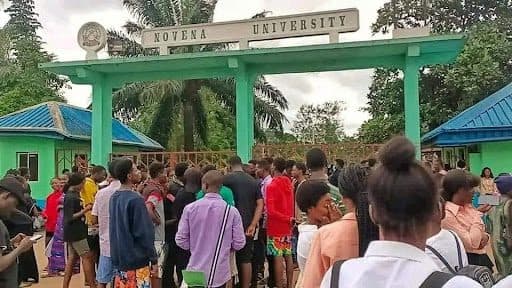
Pious refused to name the church member who had “given him the scholarship opportunity” at the university. In 2022, some of the supposed scholarship recipients staged a protest, stopping staff from entering the university premises. The protest also stalled lectures and other activities until the university management intervened.
“I don’t understand why they didn’t inform us when they weren’t receiving any money from amnesty,” Pious complained.
S cholarship for sale?
During separate interviews with HumAngle, several students who claimed to be recipients of the PAP scholarship, such as Favour David*, admitted they had to pay large sums to “buy” the opportunity, despite warnings on PAP’s website that the scholarship requires no payment from beneficiaries. Now, they find themselves in a muddle.
“My mum got information from where she works that someone was selling [PAP scholarship] slot for ₦200,000. He promised her a monthly stipend of ₦70,000, along with full tuition payment. So she didn’t hesitate to buy it for me,” Favour confessed. He had gotten his provisional admission letter at the university premises, where he also signed “many forms”. Like other students, he had gotten a temporary clearance slip instead of school fees receipts.
“We were made to sign lots of forms, among them was a clause stating that if amnesty does not pay our tuition, we are paying it ourselves later,” Favour noted.
It appears that some other students, like Pious, failed to pay attention to that clause, as noted in one of the documents they had signed. While speaking to HumAngle, Pious said he had only just noticed that such a clause existed in one of his signed documents.
“We filled out countless forms, and many of them contained those kinds of clauses, including the hostel forms. I only filled in the form once, and my attention didn’t go there,” he claimed. “I remembered I was called by the man who brought me to fill in the form, which we returned to him immediately, told us to pay attention to the name of the clan we were registered under, and that was the only name where that clan name appeared.”
The clan names refer to leaders of militant groups who worked with the PAP to represent their communities and were given slots to distribute to their followers.
For Favour, the red flags were obvious from the beginning. Some past beneficiaries of the scholarship also left midway after spotting what they described as “red flags”, but many just kept moving because they had invested too much to stop.
“Some people paid over ₦500,000 for their slot. Personally, I would have dropped out as well, but my mom disagreed, having lots of hope in our pitiful government. Now we have debts in millions on our heads, no promised stipend, no school fees paid, nothing but insults and humiliation,” he said.
The students complained that the school offered no direct communication with them and that they relied on the annual temporary clearance they were given, hoping for a better outcome.
“Even after everything, if you come for clearance, there are only two options – pay your outstanding fees or write a letter to the school board affirming your willingness to formally owe them. Even if you choose option one to pay your fees if you have the money, you still need to write a letter to the school board telling them that you are willingly converting from an amnesty student to a private, self-sponsored student before they allow you to pay the money,” he noted.
Favour, like other students, says he feels trapped and unable to move towards the better future they were promised. He is not the only person left to pick up the pieces after paying bribes to get “the alleged life-changing opportunity”.
Felicia John*, another student of the university, said she had never heard of PAP or Novena University before her parents allegedly raised ₦500,000 to secure her a slot through someone who worked at the university. The opportunity came two years after her secondary school graduation.
Due to late resumptions at the time, the university ran semesters concurrently, which affected many people, Felicia said. Before she got a PAP slot, her parents could not afford to send her to university, so she focused on learning a trade until she had the chance to continue her education.
When she arrived at the school, she discovered a list of all the amnesty students. This list came from a lecturer in a very important position at the institution. During her second year, as a 200-level student, there were numerous issues with the verification of the amnesty scholarship. In 2022, when students protested to learn their standing in the scholarship scheme, the school ultimately paused their exams.
“Even with all these, the school was still accepting students who came through amnesty to the extent that their nursing department was overpopulated,” she said.
Felicia considered dropping out in her third year due to unresolved issues, but the promise of a resolution kept her in school. Now, she feels stuck with little hope of graduating. Her spirits were lifted when the King of the Itsekiri ethnic group pledged to address their outstanding fees in 2025. However, not all students received an email inviting them to verify their information after completing the online form sent to members of the ethnic group.
“But my friends who went said if you’re not from Itsekiri, you have to change your origin to Itsekiri and also pay an amount of money for it, which they didn’t do, but those from the tribe were given a consent form to fill out. That’s more like a form that says you permit them to sort out everything for you,” she said.
The students are still waiting for a solution to this problem.
In September 2025, a group of 5,000 Itsekiri graduates from Novena University woke up to the news that they had been excluded from the official PAP scholarship scheme. This issue came to light when a representative for the Olu of Warri, Collins Oritsetimeyin, claimed that the government owed the university money for these students, noting that the palace would step in to help pay their fees and clearance costs.
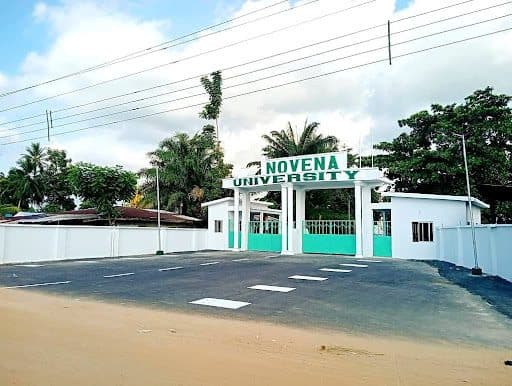
However, the amnesty officials insisted that they had no obligation to pay the students’ school fees, as the students had failed to secure the scholarship through the proper channel. In 2017, a group called the Itsekiri National Youth Council (INYC) sent a list of 5,000 names directly to Novena University as candidates for the PAP scholarship, without obtaining approval from the authorities, according to a statement by the amnesty office.
The statement, signed by Igoniko Oduma, the special assistant on media to PAP’s administrator, Dennis Otuaro, reiterated that during meetings with the university and the youth council, no one could find any letters or papers proving the government had ever agreed to pay for these students. Igboniko noted that paying for them now would encourage dishonest behaviour and “sharp practices”.
Dennis also said he has upheld this decision. While he is working to expand access to higher education in the Niger Delta, he says beneficiaries of the scholarship programme must follow the proper channels. The agency noted that, for the 5,000 Itsekiri graduates, the official stance remains that they were never part of the scholarship scheme.
Following the due process
Not all stories had a tragic ending. Kuru Blaq was a successful beneficiary of the PAP scholarship at Novena University. During his time in school, he held various positions in several campus associations. Admitted into the institution in 2019, Kuru received a scholarship letter following a verification exercise involving many other beneficiaries.
“The programme covered our tuition fee, stipend, and we were also given laptops, though some people didn’t get them, and some people also were not getting stipends, but many of those issues eventually got resolved,” he said. The legitimate PAP scholarship recipients received a monthly stipend of ₦70,000 and a book allowance of ₦20,000 every three months.
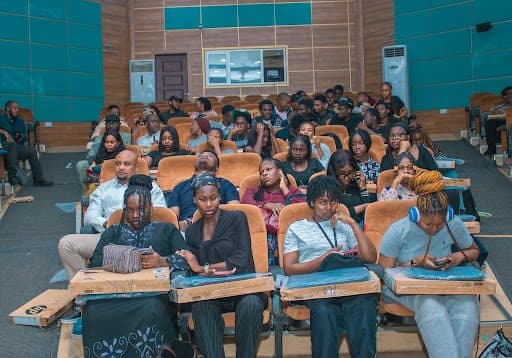
Kuru was still in school when some other sources HumAngle interviewed came in, but the admissions process was different. “Some of them said they got their admission letters while they were still at home. I am sure that if PAP sent people to the school, they sent deployment letters to the school,“ he said.
When Kuru was in school, their departmental dues, including examination fees, were also covered by PAP. They only had to pay dues occasionally. However, the other students, like Felicia, paid all dues and did not receive stipends.
“We started suspecting that those student sponsorships were not true. But students started to complain. Some students started withdrawing. I remembered that the then-coordinator of PAP came to Novena University for clarification,” he said.
Nothing changed for the students involved, leading to the protest at the university entrance in 2022. Kuru said he did not participate in the protest, but was in school when it occurred. He also said that the organiser of the protest was arrested, even though it was not violent.
“Later on, the university added a clause which many of the students did not read properly. But the students were not told directly that they were not bona fide scholarship students. People keep reaching out to me on a daily basis, asking for solutions,” he added.
Peter John*, another student who properly secured the PAP scholarship, said he served on a committee that oversaw complaints from beneficiaries of the programme. Peter’s role in the committee gave him access to top officials in the Abuja headquarters. He had urged the officials to conduct a thorough investigation into allegations that students bought their way into the programme.
He recalled speaking directly with some parents during which he realised that some students had paid certain people who claimed to be lecturers and officials of the amnesty programme. PAP would later issue two circulars to release the list of those who entered the amnesty scheme through the back door. For unclear reasons, he said, the circular was not pasted on the school’s notice board.
Peter also experienced a delay in payments for a few months after his admission, but it was resolved following another verification round, after which the arrears were paid. Some other students, however, noted that while their school fees were paid, their monthly allowances were delayed.
The PAP committee asked Peter for a list of students with controversial scholarship claims, but the school failed to provide it. Some affected students affiliated with the Itsekiri ethnic group approached him for intervention, but he was reluctant to help due to fear of being labelled tribalistic. The students were urged to visit the Itsekiri palace in Warri to resolve the issue.
“The list the school refused to give was later presented by the Dean of Student Affairs in my presence, claiming that they had already informed the affected students to leave the school. I could not say anything openly as I had not gotten my result then, and I had to be careful,” he said.
The PAP leadership subsequently made a public statement, advising delegates, traditional rulers, and parents to be cautious about paying individuals to secure the scholarship. They emphasised that the programme does not require any payment.
As a committee member of the PAP scholarship students’ association, Peter had also presented the matter to the then head of reintegration. “They send instructions saying that students can still apply by writing and passing the JAMB and applying directly to PAP, and they can send them to other schools. Some students got the information, and I am personally aware of some who were sent to other schools. Because of that issue, Amnesty stopped sending students to Novena University,” he said.
Reluctant response
HumAngle tried to reach Novena University via three different email addresses listed on its website, but received no response. A representative of the university who answered the call when we contacted the official phone number asked HumAngle to visit the school in person for identity verification.
When contacted, Linus Ilogho, the university registrar, initially claimed he needed to consult certain documents to answer questions posed by HumAngle, but later attempted to explain the complexities of the scholarship funding.
“The law of contract says every contract must be signed and delivered, must include an acceptance, and must be based on records. That is it, even if you are in an amnesty programme and amnesty says they are not paying for you, we cannot use our fee to pay for the person after we have given training to the person,” Linus declared.
“For example, if you spend four years and the scholarship you told us you were given does not work, and they don’t pay us for five years, four years, six years, everything we are doing in a private university is run on funds. There is no other thing I can tell you, unless you come to the university to ask these questions,” he added.
When asked if PAP had an arrangement with the university, he did not provide a clear answer. “Why are you talking to me in this manner?” he asked before hanging up the phone.
On June 1, HumAngle submitted a freedom of information (FOI) letter to PAP, seeking answers to pressing questions. As days turned into weeks, the silence from the government institution grew deafening, heightening the frustration and urgency of the situation. The affected students continued to chart their course, relentlessly pursuing any glimmer of hope that could reignite their dreams of a brighter future.
Editor’s Note: Students quoted in this story asked that their names be changed to protect them from possible retribution.
Support Our Journalism
There are millions of ordinary people affected by conflict in Africa whose stories are missing in the mainstream media. HumAngle is determined to tell those challenging and under-reported stories, hoping that the people impacted by these conflicts will find the safety and security they deserve.
To ensure that we continue to provide public service coverage, we have a small favour to ask you. We want you to be part of our journalistic endeavour by contributing a token to us.
Your donation will further promote a robust, free, and independent media.
Comments
0 comments
No comments yet.
Sign in to join the discussion.
Of course, we want our exclusive stories to reach as many people as possible and would appreciate it if you republish them. We only ask that you properly attribute to HumAngle, generally including the author's name, a link to the publication and a line of acknowledgement.