Misinformation Fueling Communal Resistance Amid Renewed Ebola Crisis in DRC
Katwa is the worst-affected health zone, reporting 93 confirmed ebola cases and 62 deaths. Following it are Butembo with 46 cases and 31 deaths, and Beni with 36 cases and 27 deaths.
Listen to this story

21 Jul 2026
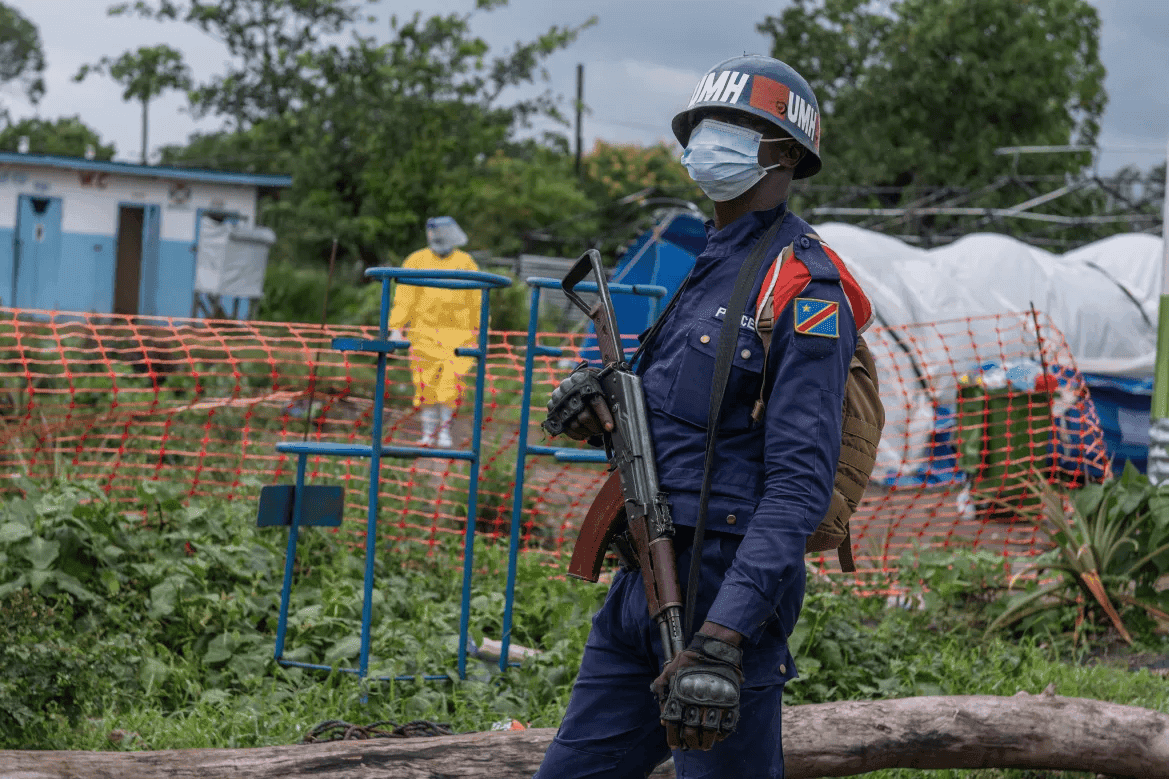
The number of Ebola virus cases and the death toll continue to rise as the epidemic ravages communities in the Democratic Republic of Congo (DRC).
In the Musienene health zone in the Lubero territory of North Kivu, health authorities confirmed 15 new cases of the virus as of Friday, July 17. There have also been nine reported deaths linked to the epidemic.
A Musienene-based civil society organisation has corroborated these numbers after collecting samples for official verification in Beni, according to Kambale Maboko, the organisation’s president.
The new cases emerged across five health areas: 8 in Nduko, 3 in Vikindwe, 2 in Ivatama, and 1 each in Katolo and Kyambogho. Among the nine deaths reported, five occurred in Nduko, two in Vikindwe, one in Katolo, and one in Ivatama.
Kambale expressed concern over the limited government involvement in combating the Ebola outbreak in Lubero territory. He urged authorities to equip health facilities with necessary prevention kits and stressed the importance of the community adhering to safety measures as confirmed case numbers continue to escalate.
“In view of the high number of confirmed cases and the number of deaths which continue to rise each day, we call on the government to put in place a mechanism to counter this disease. If nothing is done, we risk facing the worst scenario,” Kambale said. “We find that the government seems to have forgotten about us. We also call on the population to counter this disease by applying barrier actions in all their forms in order to block the road to Ebola.”
He noted how communal resistance is fueled by misinformation, saying: “We must sensitise the populations for them to understand that the disease exists and that it kills. If we are not careful, we risk being decimated, and we would have nothing to gain. The population seems to believe that those who go to the Ebola treatment centre must die, whereas this is not the case. We call on the population to be vigilant.”
At the provincial level, the Ebola response coordination reported seven new confirmed cases on July 17, including five from the Katwa health zone and two from Butembo. As per the epidemiological update released on July 18, 2026, North Kivu province has recorded a total of 213 confirmed cases, with 142 fatalities, resulting in a lethality rate of 66.7 per cent. Additionally, there are 36 recovered individuals, 25 active cases, and 10 patients who are unaccounted for or have moved to different locations. On Saturday, July 18, four patients who were declared healed were released from the Katwa Ebola treatment centre in Butembo.
Katwa is the worst-affected health zone, reporting 93 confirmed cases and 62 deaths. Following it is Butembo with 46 cases and 31 deaths, and Beni with 36 cases and 27 deaths. Other affected areas include Musienene, Kyondo, Kalunguta, Masereka, Oicha, Goma, Vuhovi, and Mabalako. In total, 11 out of the 34 health zones in North Kivu are experiencing the epidemic. The Ebola response committee is currently monitoring 3,009 active contacts, with 2,618 monitored in the past 24 hours, achieving a follow-up rate of 87 per cent.
Support Our Journalism
There are millions of ordinary people affected by conflict in Africa whose stories are missing in the mainstream media. HumAngle is determined to tell those challenging and under-reported stories, hoping that the people impacted by these conflicts will find the safety and security they deserve.
To ensure that we continue to provide public service coverage, we have a small favour to ask you. We want you to be part of our journalistic endeavour by contributing a token to us.
Your donation will further promote a robust, free, and independent media.
Comments
0 comments
No comments yet.
Sign in to join the discussion.
Of course, we want our exclusive stories to reach as many people as possible and would appreciate it if you republish them. We only ask that you properly attribute to HumAngle, generally including the author's name, a link to the publication and a line of acknowledgement.