Inside Nigeria’s Tedious Paths to Harmonised Digital Identity Systems
Beyond the interoperability problem facing Nigeria’s digital identity systems, a growing concern over data protection has also emerged among citizens and digital governance experts.
Listen to this story

17 Jun 2026
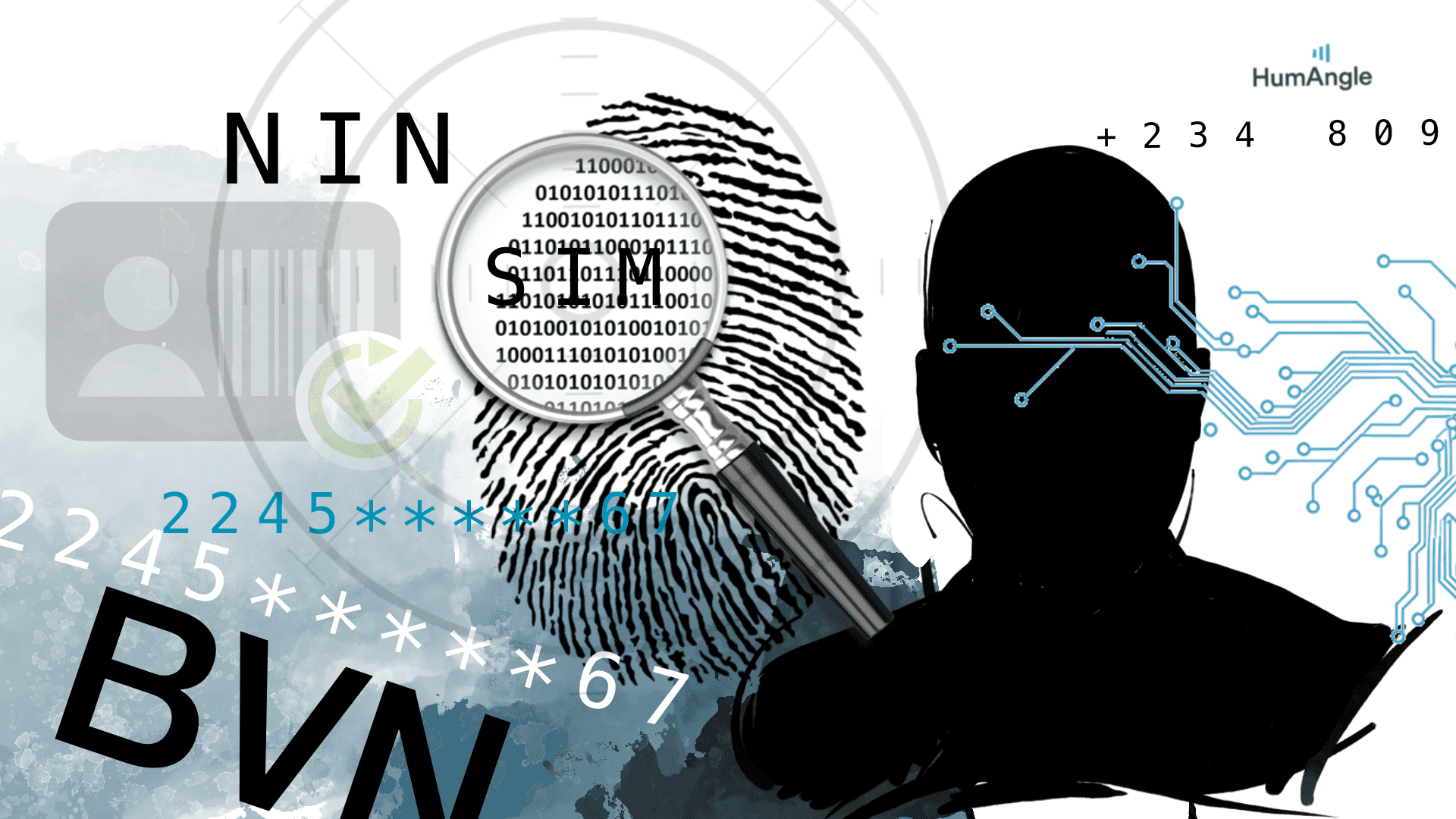
Jadon John keeps a diary in which he records reference numbers for government-mandated registrations. Based in Jimeta, a commercial district in Adamawa State, northeastern Nigeria, one page of Jadon’s diary contains his voter registration details and another lists his Bank Verification Number (BVN). The 34-year-old has also noted down his National Identification Number (NIN), records for Subscriber Identification Module (SIM) registration, and information for his driver’s licence renewal.
All of these are national digital identifiers that Nigerians require for most official documentation. For him, these entries feel like variations of the same repetitive process.
“It has been stressful from the beginning,” he said, sitting outside a phone repair shop near the Jimeta Modern Market in Adamawa. “I first registered for my voter’s card, then later did BVN at the bank, and after that, I spent almost two days trying to get my NIN. Every place asked for almost the same information and biometric capture.”
The queues were always long, he said, and sometimes the network would fail after hours of waiting. His experience has become a normal routine for many people in Nigeria, a country that has devoted years to developing digital identity systems aimed at modernising governance, enhancing financial inclusion, and minimising fraud.
Experts have described the government’s efforts as Digital Public Infrastructure (DPI), which encompasses the collective digital frameworks that facilitate effective online interactions between governments and citizens. Despite the government’s investments in identity infrastructure, many citizens experience cycles of repeated registrations, record mismatches, and fragmented databases. At the heart of the problem is a simple contradiction: Nigeria now has multiple powerful identity systems, but they do not fully connect with one another.
One person, many registrations
Jadon, for instance, says he struggles to remember how many times he has submitted his fingerprints for similar digital identity registrations. “Every agency takes my fingerprints, passport photo, phone number, and address again, as if I have never registered anywhere before,” he complained, especially about how repetitive and tedious these processes can be.
Nigeria has multiple agencies managing different biometric databases for identity verification, banking security, voting, and driver licensing. The National Identity Management Commission (NIMC) manages the NIN database to build Nigeria’s foundational identity system. The Central Bank of Nigeria (CBN) introduced the BVN in 2014 to secure the banking sector and combat fraud. The Independent National Electoral Commission (INEC) maintains its own voter register for elections, while the Federal Road Safety Corps (FRSC) operates another biometric database for driver licensing. Each system has its own valid purpose, but when combined, they frequently function in isolation. Experts say this lack of coordination can sometimes lead to significant problems.
Jadon said that on many occasions, he has suffered service disruptions due to identity mismatches. His bank account was once restricted because his NIN details did not exactly match the BVN record. One system had his middle name fully written, while another used only initials. A similar incident occurred in 2020, when his SIM was blocked amid the government’s NIN-SIM linkage policy.
“When my SIM was blocked because of the NIN-SIM linkage issue, I lost customers because people could not reach me,” he recalled. “I could not receive calls, bank alerts, or access mobile banking for days simply because my records did not match properly across the systems.”
As with the NIN-SIM linkage policy, people also face difficulties linking their BVN to their NIN records. The BVN was introduced in 2014, when Nigeria’s national identity system was not yet fully developed for seamless nationwide interoperability. Abubakar Nuhu Buba, the Deputy Manager of the Currency Operations and Branch Management Department at the CBN in Yola, said the BVN emerged during a period when Nigerian banks urgently needed stronger identity verification systems.
“The original goal of the BVN system was to address the absence of a unique identifier across the Nigerian banking industry,” Abubakar noted. “The banking industry faced an urgent security crisis that the national identity system was not yet equipped to handle.”
The CBN official revealed that the current BVN-NIN integration presents a complex dual effect on financial inclusion. While it builds a more secure foundation for credit and digital banking, he said, it also creates significant friction that risks pushing vulnerable rural populations back into the informal sector. That friction is often felt most sharply in rural communities where internet access is weak, enrolment centres are scarce, and transport costs are high.
The unified identity dream
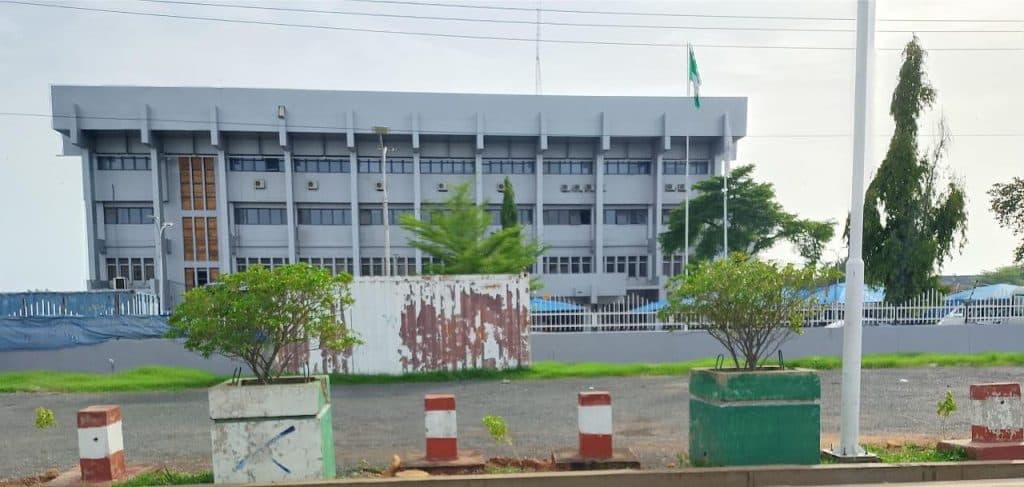
Nunaya David, a senior enrolment officer with NIMC in Adamawa, said the NIN is intended to serve as Nigeria’s official foundational identity number. Its primary goal is to establish a unique identity for every Nigerian and legal resident, serving as a central reference point across various platforms and services.
“The long-term goal is one person, one identity across all sectors,” he noted.
In theory, that would mean a citizen registers biometrics once, and authorised institutions securely verify identity digitally, rather than repeatedly capturing fingerprints and photographs. But in practice, the systems continue to function as separate databases.
Nigeria’s broader digital interoperability efforts are also coordinated by the National Information Technology Development Agency (NITDA), which has developed frameworks to improve secure data exchange and interoperability across government institutions. Through initiatives such as the Nigerian e-Government Interoperability Framework (Ne-GIF) and the Nigeria Data Exchange framework, NITDA seeks to enable Ministries, Departments, and Agencies (MDAs) to securely share and verify data across platforms rather than operate disconnected databases. The agency has repeatedly stressed that interoperability is essential to achieving Nigeria’s “One Citizen, One Identity” vision.
“The main reason citizens still repeat biometric registration is that most agencies still maintain independent databases and legal mandates,” Nunaya said. He identified several challenges affecting Nigeria’s digital identity systems, including varying database architectures, inconsistent data formats, outdated legacy infrastructure, network disruptions, and issues regarding data ownership.
“Many citizens have different names, dates of birth, or phone numbers across BVN, voter registration, passport, and NIN records,” he added, noting that minor spelling differences can prevent systems from recognising the same person.
Registration for a voter’s card through the Independent National Electoral Commission (INEC) also presents similar interoperability challenges. INEC officials in Yola told HumAngle that their biometric registration process serves a different purpose from the NIN database. Grace Akpan, an electoral officer in the state, said the electoral body is mandated to conduct its own biometric registration because the voter register is legally separate from the NIN and BVN databases. The commission also captures biometrics specifically for the Bimodal Voter Accreditation System (BVAS) used during elections.
“INEC currently does not use NIN as a mandatory verification requirement during voter registration,” Grace said.
Citizens can still register to vote without a NIN because the law allows other forms of identification, including passports, birth certificates, and driver’s licences. The official said that while discussions on collaboration exist between INEC and NIMC, real-time nationwide interoperability has not yet been achieved.
It is the same challenge of duplicated effort for Nigeria’s road safety administration. Samuel Danladi, an Assistant Corps Commander of the FRSC in Adamawa, said biometrics are collected during driver’s licence registration to prevent fraud and maintain unique driver records. Although most applicants already possess NIN or BVN records, the FRSC still performs separate biometric capture.
“Nigeria’s identity systems were developed independently by different agencies with separate mandates,” Danladi argued. “Systems are not fully interoperable, biometric standards differ, and agencies lack full real-time access to one another’s databases.”
Since December 2020, FRSC has made the NIN compulsory for driver’s licence applications and renewals, but citizens still submit fingerprints and photographs during the licensing process. “What exists now is mostly verification-based connectivity, not full data-sharing interoperability,” Danladi said.

The human cost
For ordinary Nigerians, however, the consequences go beyond inconvenience. The burden often falls hardest on people who depend on daily income and cannot afford to spend days correcting identity records. Mercy Barka, a caterer in Yola, encountered an issue while attempting to transfer money to a supplier via her bank’s mobile app. The transaction repeatedly failed despite sufficient funds in her account.
When she visited her bank branch, she was told that her account name did not exactly match the name attached to her BVN records. One database contained her full middle name, while another used an abbreviated version. “The bank told me I needed to correct the information with NIMC first or obtain an affidavit before they could update the records,” she said.
What appeared to be a minor discrepancy eventually took five days to resolve. The resolution required Mercy to shuffle between the bank, a court registry, and the NIMC enrolment centre. “I spent money on transport, affidavit fees, and photocopies,” she said. “The amount I spent trying to correct the problem was painful because I was only trying to access my own money.”
Identity mismatches do not merely create administrative inconvenience; they can interrupt business activities, delay transactions, and impose additional costs on already strained incomes. “It affects everything,” Jadon said quietly. “I lose workdays anytime I have to visit these offices. I spend money on transport, passport photographs, and photocopies.”
Throughout Nigeria, individuals frequently undertake long journeys to resolve discrepancies in records between various databases. This can occur due to a missing middle name, an incorrect birth date, or issues with fingerprint synchronisation during verification. Sometimes, entire systems may just go offline.
“Sometimes one office tells you their server is down after waiting for long hours,” Jadon said. “Other times, they say your information does not match another system. You keep moving from one office to another, trying to correct problems you do not even understand.”
For Charles Anthony, a student who secured a scholarship under the Adamawa State Government, the frustration came during the renewal of his passport. Although immigration authorities already possessed biometric records linked to his previous passport, he was required to submit fresh fingerprints and another facial photograph during the renewal process.
“I thought renewal meant they would simply verify the information they already had,” Charles said. “Instead, it felt like starting the registration process from the beginning.”
The repeated capture was not unique to passport services. Charles noted that he had previously submitted similar biometric information during NIN registration, voter registration, and banking enrolment. “Sometimes it feels like the offices do not know that they are dealing with the same person,” he said.
The privacy question
Beyond the interoperability problem facing Nigeria’s digital identity systems, a growing concern over data protection has also emerged among citizens and digital governance experts. Different government agencies now hold enormous amounts of biometric and demographic information about citizens, including fingerprints, facial scans, phone numbers, home addresses, and financial records. Yet many Nigerians remain uncertain about how securely that information is managed.
“I worry about it sometimes,” Jadon said. “Different agencies already have my fingerprints, face, phone number, and personal details, but nobody explains clearly how the data is protected or who can access it.”
Data protection experts say the concern is legitimate. Vincent Olatunji, the National Commissioner of the Nigeria Data Protection Commission (NDPC), believes that effective identity management requires “harmonised policies, secure technologies, and inclusive systems.” Vincent warned that identity systems must align closely with privacy and data protection frameworks to build public trust. He also said that disconnected databases can increase security vulnerabilities because agencies often duplicate sensitive information rather than securely verify identity through shared infrastructure. He noted that the risks include inconsistent records, unauthorised access, identity theft, and data breaches across multiple systems.
Mohammed Bello Buhari, a digital governance and democracy expert, noted that as Nigeria develops its Digital Public Infrastructure, the primary challenge is ensuring efficient information exchange across systems without repeatedly collecting the same personal data. Mohammed argued that the purpose of modern digital identity systems is not to create more databases but to enable trusted verification across institutions.
“The goal is not to collect more data about people, but to create trusted ways of verifying identity while minimising unnecessary data sharing,” he said, warning that when agencies continue collecting the same information independently, citizens are exposed to greater privacy and security risks because sensitive personal data is duplicated across multiple databases rather than verified through interoperable systems.
Alan Gelb, a senior fellow at the Centre for Global Development and a long-time researcher on identification systems, also argued that global digital identity systems create the greatest value when they are interoperable and trusted across sectors rather than operating as isolated databases. According to him, fragmented systems often increase costs for both governments and citizens while reducing the efficiency that digital identity programmes are meant to achieve.
TheWorld Bank’s Identification for Development (ID4D) programme advocates that trusted digital identity systems should be accompanied by strong safeguards for privacy and data protection. The World Bank noted that digital identity reaches its full potential when combined with secure data-sharing frameworks that allow institutions to verify information without repeatedly collecting it from citizens.
For Jadon, however, those debates remain far from everyday reality. His concern is that several government agencies already possess the same fingerprints, photographs, and personal records, yet he is still asked to provide them.
Learning from other countries
Countries around the world have faced similar identity challenges, but several have moved further towards interoperability. In India, the Aadhaar system allows citizens to authenticate identity across banking, telecoms, and public services through a shared digital identity infrastructure. In Estonia, a European country in the Baltic region, the digital identity ecosystem enables citizens to access healthcare, taxes, voting, and banking through interoperable platforms connected by secure data-sharing systems. The ID4D programme also encourages countries to build interoperable identity ecosystems as part of Digital Public Infrastructure.
As of early 2026, Nigeria had already issued more than 127 million NINs, according to figures released by NIMC, which shows the massive scale of the country’s digital identity expansion. Meanwhile, Nigeria aims to issue up to 180 million NINs by December 2026 and has begun upgrading its identity infrastructure under the NIMS 2.0 platform, which is supported by the World Bank.
Despite the current frustrations, officials across agencies agree on one thing: the future lies in interoperability.
“The key reform needed in Nigeria’s identity system is establishing the NIN as the single foundational identity across government services,” Samuel of the FRSC said, calling for stronger interoperability standards, reduced repeated biometric capture, improved digital infrastructure, and stronger cybersecurity protections.
The CBN official also told HumAngle that Nigeria would soon achieve interoperable digital systems. “There are major plans to move towards a single, unified identity system by December 2026,” the official claimed.
For citizens like Jadon, however, reforms cannot come soon enough. He says he is tired of standing in endless queues to repeatedly provide the same fingerprints. “If the government already has my information, why should I still start from the beginning every single time?” he asked.
This report is produced under the DPI Africa Journalism Fellowship Programme of the Media Foundation for West Africa and Co-Develop.
Support Our Journalism
There are millions of ordinary people affected by conflict in Africa whose stories are missing in the mainstream media. HumAngle is determined to tell those challenging and under-reported stories, hoping that the people impacted by these conflicts will find the safety and security they deserve.
To ensure that we continue to provide public service coverage, we have a small favour to ask you. We want you to be part of our journalistic endeavour by contributing a token to us.
Your donation will further promote a robust, free, and independent media.
Comments
0 comments
No comments yet.
Sign in to join the discussion.
Of course, we want our exclusive stories to reach as many people as possible and would appreciate it if you republish them. We only ask that you properly attribute to HumAngle, generally including the author's name, a link to the publication and a line of acknowledgement.