Hundreds Return to Kumalia After Terrorists Ban Farming
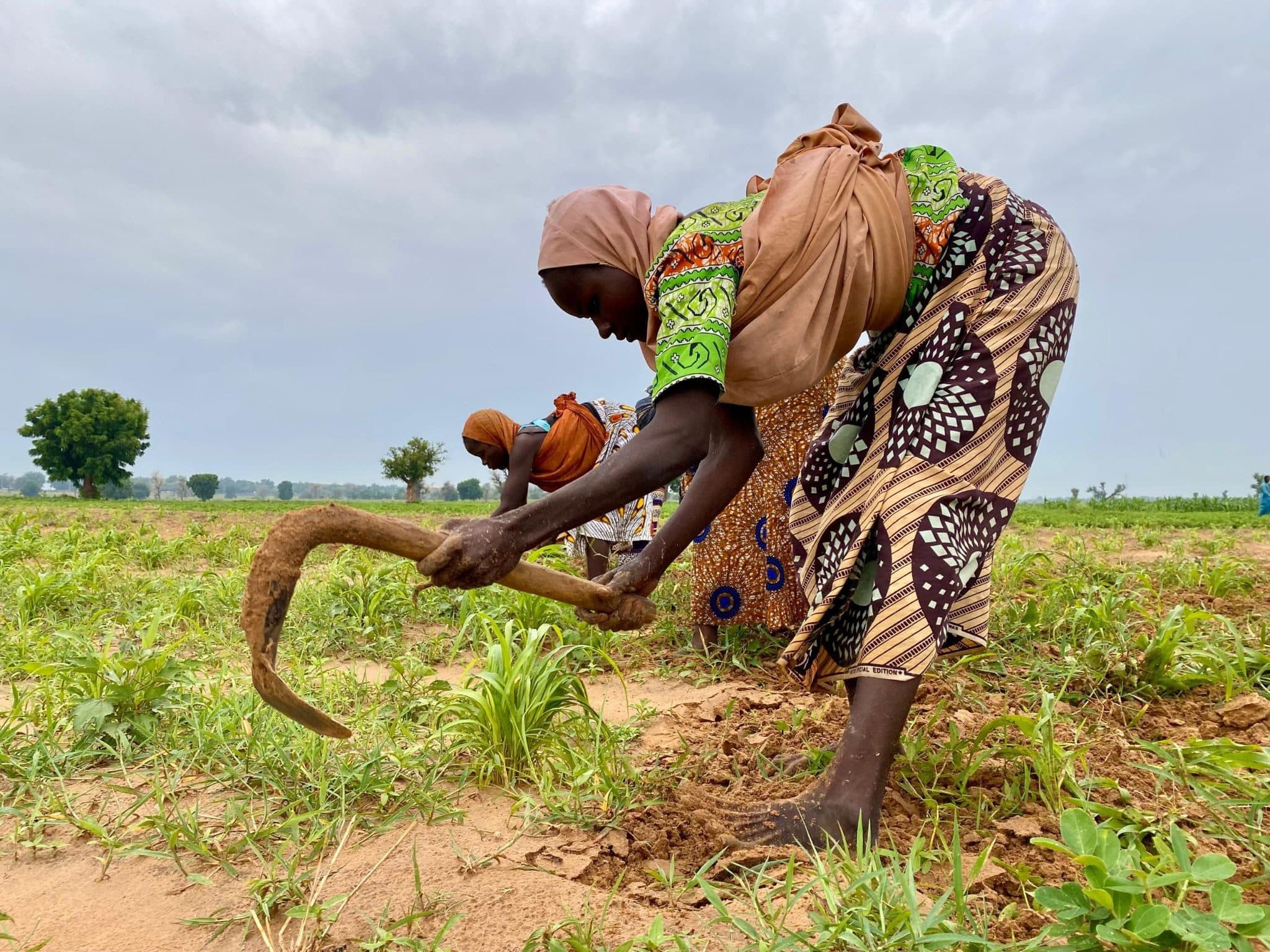
Across parts of Borno, ISWAP and JAS have ordered farmers to stop cultivating this season, threatening death for those who defy them. About 100 farmers have now moved to Kumalia, a town with no state presence nor security, in an effort to find land they can cultivate. The risks are enormous.
Listen to this story

1 Jul 2026
“I am temporarily relocating to Kumalia.”
When Kaka Ali said those words over the phone on June 8, I nearly asked him to repeat himself. I had been speaking to him about farming and survival in northern Borno for nearly two years. Kumalia was where he was born, but it was also a place that most people had long stopped calling home.
The community is located within Monguno Local Government Area (LGA) in Borno State, northeastern Nigeria. The Boko Haram insurgency had emptied it in 2016, forcing residents to flee to Monguno town and Maiduguri, the state capital. The government never formally reopened the community. In the years that followed, its name surfaced mostly in conversations about what the insurgency had taken.
“Why would you go back there?” I asked.
“The negotiations did not go through,” Kaka replied.
I did not fully understand what he meant until weeks later.
On June 21, I reached him again. I learnt that he had returned to Monguno to attend the funerals of four friends who were killed the previous day by suspected Islamic State West Africa Province (ISWAP) terrorists while working on a farm near Kartari, a remote settlement close to Cross Kauwa town in Kukawa LGA, on the shores of Lake Chad. Twelve other farmers were also killed in the incident.
The men had travelled to Kartari from different parts of northern Borno, drawn by the search for land to cultivate after farming had been disrupted closer to home. That same day, in Zabarmari, a farming community in Jere LGA, another 11 farmers were reportedly killed. By then, Kaka’s explanation about Kumalia finally made sense.
The warning had come months earlier at the onset of cultivation in February, when farmers across parts of northern Borno began receiving warnings from ISWAP terrorists not to farm this season. The message spread among returning farmers and community leaders through word of mouth.
“They approached farmers who had gone to Kartari and told them we must not cultivate this year,” said Musa Abubakar, a farmer from Cross Kauwa. “They also informed community leaders in villages close to them, and those leaders passed the message to us in other towns,” he said.
According to Musa, farmers who wished to cultivate were instructed to relocate with their families to terror-controlled territories, locally known as Daula , and farm there instead. Many initially assumed it was another extortion attempt because for years, cultivating in parts of northern Borno had meant paying terror groups for access to land. In 2024, HumAngle documented how farmers in the region paid millions of naira in levies and so-called farming permits to ISWAP. This season, farmers pooled their money together, some contributing at least ₦50,000 each, hoping to negotiate their way back to their fields. However, the effort failed, and the warning held.
So they began looking elsewhere. Some moved toward the Lake Chad region. Others returned to abandoned communities. More than 100 farmers from Monguno, according to Kaka, relocated to Kumalia, where they erected makeshift shelters from sticks and dry grass to plant their crops. They plan to stay until the harvest season in November or December.
The women were not left behind either.
“My sister is there,” Kaka, the 30-year-old father of two, said. “Many women went with their children. The older ones trekked with their parents. The younger ones are carried on their backs or transported in push carts.”
Kaka’s older sister, Yabusam Ali, travelled with one of her children and left the others with their grandmother in Monguno. Other women made similar calculations, weighing which children could endure the walk and which would be safer left behind. Yabusam said conditions remain basic but manageable.
“There is drinkable water there,” she told HumAngle.
For now, that is enough. Kumalia has no schools, no health facilities, and no visible state presence. It is a settlement held together by necessity. Over the coming months, the community will once again have residents, not because it is safe, but because it has become the least dangerous option left.
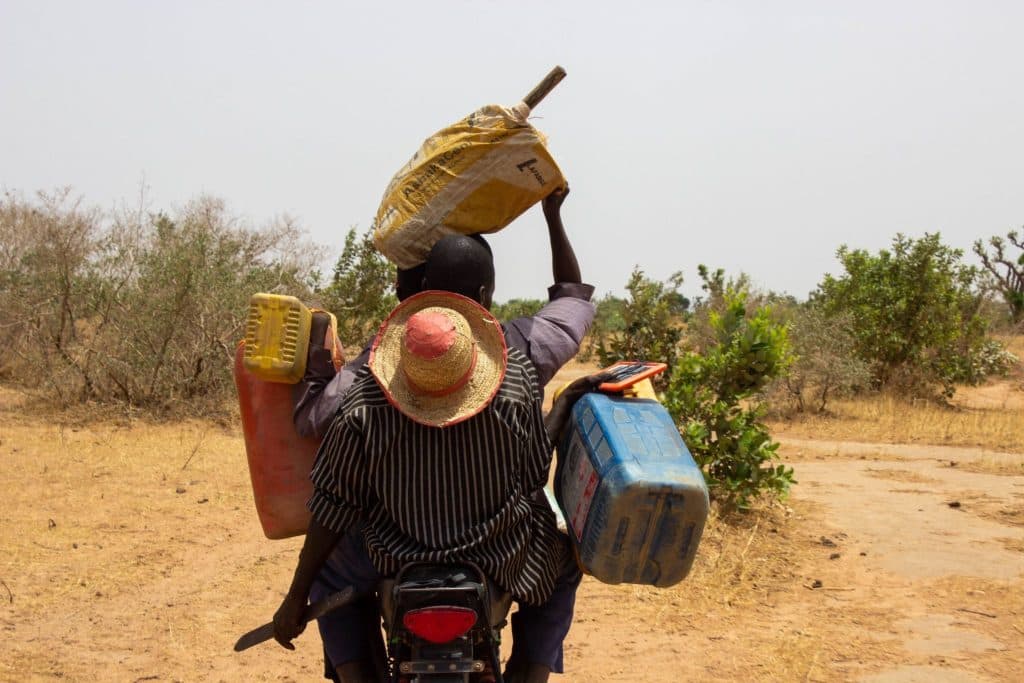
Across Borno, the farming ban, enforced through violence and the threat of it, is reshaping how rural families survive. Some have abandoned cultivation entirely. Others have confined themselves to plots within sight of military positions. A growing number are returning to communities the state had given up on, betting that the promise of a harvest is worth living beyond its protection. Together, these choices are accumulating into something larger than disrupted planting seasons: a food security crisis taking shape incrementally, in the daily calculations of people who can no longer be certain what the harvest will bring, or whether there will be one at all.
The consequences extend far beyond the communities where cultivation has been disrupted. Agriculture remains one of Nigeria’s largest employers and a critical source of food for millions of households. The World Bank estimates that nearly four in every five rural households in Nigeria depend on farming, while livestock rearing is especially common across the country’s northern regions. When insecurity forces farmers off their land, harvests decline, market supplies tighten, and food prices rise.
The Famine Early Warning Systems Network (FEWS NET), a food security monitoring and forecasting initiative, estimates that between 21 and 22 million people across northern Nigeria will require humanitarian assistance during the June-to-August lean season, driven by escalating conflict, lower-than-expected household food production, and constrained access to food. The Integrated Food Security Phase Classification (IPC) similarly projects that more than six million children across northern Nigeria will experience acute malnutrition this year, with conflict, displacement, and reduced access to food among the principal drivers.
Kaka had already made these calculations. “Are you not afraid of attack from the terrorists, or of being mistaken for one by troops?” I asked him. “We will die even if we don’t go,” he replied. “So, it is all the same.”
Flags on the farm
Just as Kaka mentioned, several farmers in northern and central Borno say the people who first heard the warnings were often those who had gone ahead of the rains to clear their fields.
In Monguno, Koso Abubakar said farmers preparing their land were approached and warned against cultivation. They returned to town carrying the news, and from there, the message spread from household to household. In Cross Kauwa, a farming and fishing community on the shores of Lake Chad, the warning reached those working near Kartari, a remote settlement under Kukawa LGA. Community leaders received it and relayed it to surrounding towns.
In Lassa, a farming community in Askira-Uba LGA in southern Borno, it arrived with violence. Andrew Adamu, a farmer there, said suspected terrorists attacked and flogged women they found working on their fields at the beginning of the season. “They said nobody should farm there,” he said. “They [the women] said they had mounted their flags on those lands.”
The flags, a territorial marker used by terror groups across the region to signal control, were understood immediately. Few people in Lassa are now willing to venture beyond the land immediately surrounding the town.
Musa, a farmer in Cross Kauwa, said the warning came with an additional condition in the northern Borno community. He said that farmers willing to cultivate were instructed to relocate permanently with their families to terror-controlled territories and continue to farm there while paying levies instead. The requirement to relocate permanently was new. The levies were not. But this time around, levy negotiations failed in some places.
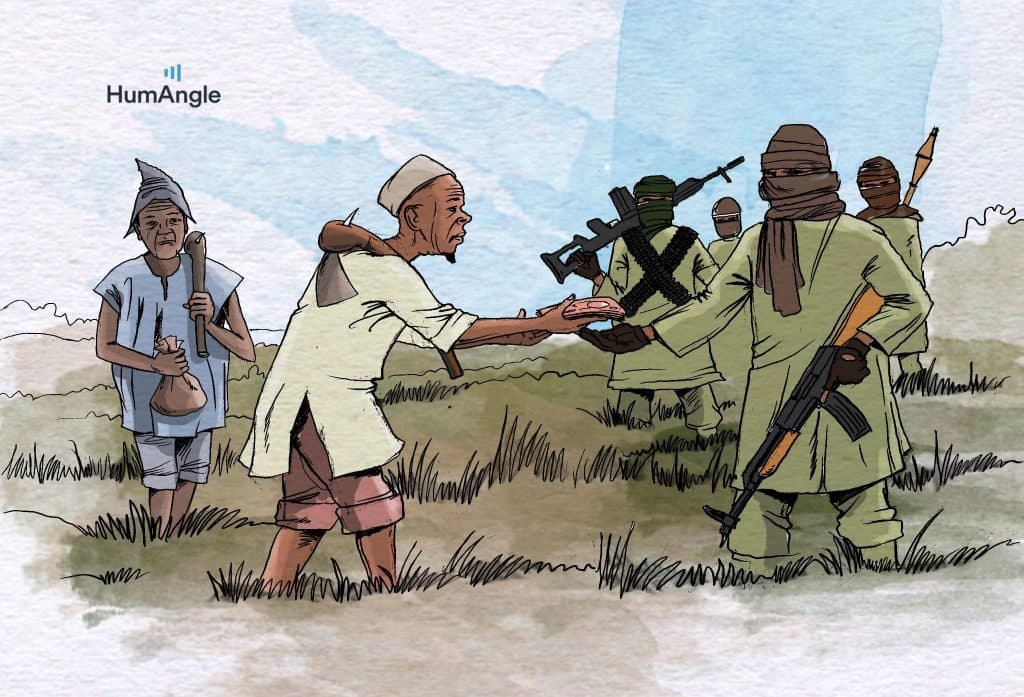
However, in parts of southern Monguno, some farmers were reportedly permitted to cultivate after paying ₦50,000 each. The inconsistency stirred speculation that the restrictions reflected internal disagreements among ISWAP commanders rather than a unified policy.
“It was said that two Amirs controlling two farming villages had a dispute over farming fees,” Kaka explained. “The Amir controlling where we farm said he would not allow anyone to farm this season. The other Amir said farmers were welcome to cultivate in his territory after paying this year’s levy.”
HumAngle could not independently verify the claim.
When negotiations collapsed, the consequences began to accumulate. In Lassa, Andrew said, women were beaten while working on their farms. In Auno, Konduga LGA, a 55-year-old farmer was attacked and killed while working on his land earlier in February, according to residents. News of his death, Aja Bukar, another farmer, said, spread quickly through surrounding communities, confirming what many had hoped was merely a threat.
Then, on June 20, 15 farmers were killed near Kartari while working on their fields. Bashir Suleiman, a farmer from Doron Baga, said the victims included four farmers from Monguno, six from Kukawa town, three from Baga, and two from Cross Kauwa.
In Cross Kauwa, Musa said most farmers have stayed away from their fields since. The few still cultivating have been permitted by the military to plant low-growing crops, such as beans and groundnuts, within a fixed distance of the community’s defensive trench. Beyond that line, he said, most no longer believe the harvest is worth the risk.
The return to Kumalia
For the first time in nearly a decade, Kumalia has residents again. Not many, and not enough to resemble the farming community it once was before the insurgency emptied it in 2016, but enough to bring movement back to a place which has long given up — children’s voices have returned. Smoke rises from cooking fires in the morning. The fields are being planted. And temporary shelters made from sticks, ropes, and dry grass stand across parts of the settlement.
Getting there, however, is not easy. According to Modu Baluye, a farmer who also relocated to Kumalia, reaching the settlement takes five hours of walking over terrain most vehicles cannot cross. “We travel by foot,” he said. “There is no means of transportation except push carts.” The shelters, he said, are simple: stick frames with dry grass roofing, which offers little protection from rain or wind, but they are enough to house families for the months between planting and harvest.
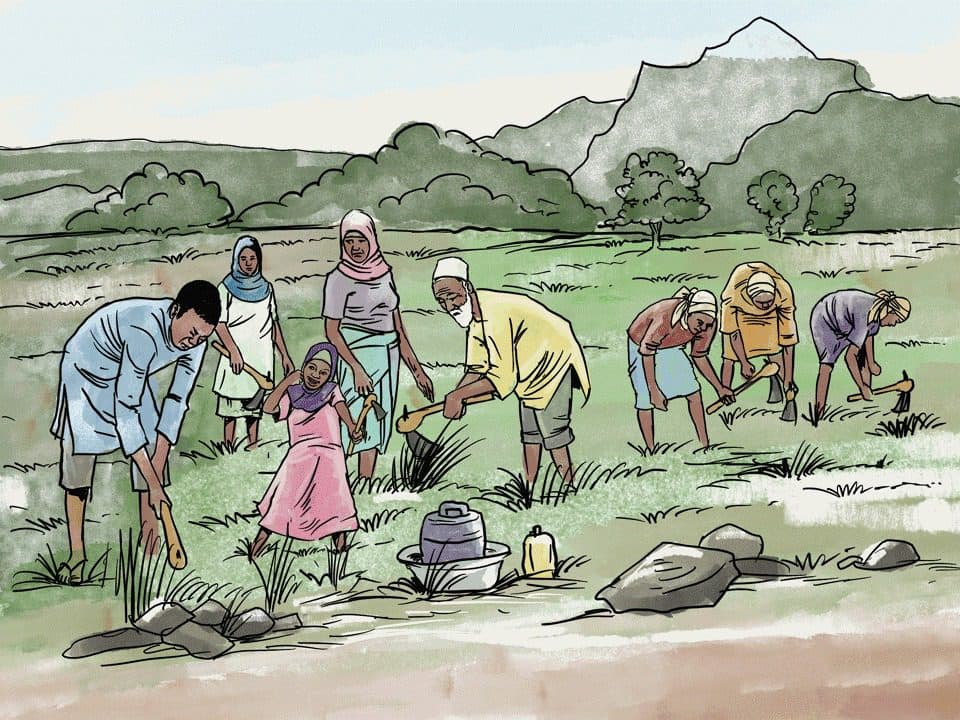
For years, displacement pushed families out of places like Kumalia and into towns where security forces could better protect them. Now, insecurity around farming is pushing some of those same families back, not into safety but into a different kind of exposure: too far from the state to be protected, yet close enough to armed groups to be noticed.
Communities across northeastern Nigeria have learned, often through grief, that living or farming in remote and ungoverned territories can attract a different kind of violence during military operations. Aerial surveillance, in vast terrains where terror groups move through civilian spaces, collect levies, and use local markets, must be able to distinguish between farmers and fighters. In places like Kumalia, unrecognised by the government, absent from any official resettlement record, populated by people living in makeshift shelters on cultivated open land, that distinction is not guaranteed.
In April 2026, reports showed that more than 30 civilians were killed when a Nigerian Air Force strike hit a village market in Jilli, a remote settlement between Gubio LGA in Borno State and Geidam LGA in Yobe State. Military authorities described it as an active terrorist enclave. Borno State Governor Babagana Zulum later acknowledged that the area’s market had been officially closed due to terrorist activity, yet civilians were among the dead. It was not the first such incident. In 2017, a military aircraft bombed a displaced persons camp in Rann, Kala-Balge LGA, killing more than 100 people including aid workers. And in 2024, HumAngle documented cases in which fishermen around Lake Chad were reportedly misidentified during military operations.
Farmers in Kumalia are aware of this history. It sits alongside the warnings from ISWAP, the distance from town, and the inadequacy of their shelters. It is part of what they weighed before they went.
The price of survival
Every morning before sunrise, Esther Danjuma sets up her stall on the roadside outside the Divisional Council Church (DCC) Internally Displaced Persons’ camp in Shuwari, Maiduguri. She heats cooking oil, prepares her bean paste, and waits for the first customers. By the time most people in Maiduguri are awake, she is already working.
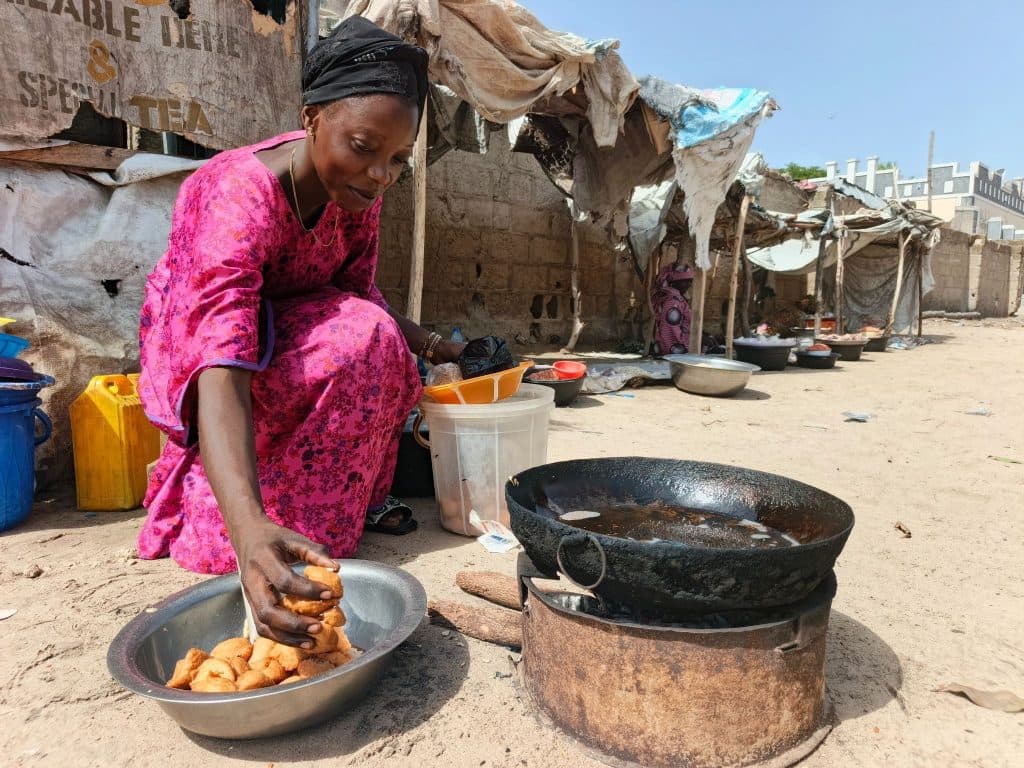
The 26-year-old was displaced from Amuda in Gwoza LGA years ago. Until recently, she measured time by farming seasons, not calendar months. Before the warning reached Chabbal, a farming community in Magumeri LGA where she and thousands of others from the DCC displacement camp cultivate each season, she grew sorghum, sesame, and groundnuts. Last year, she harvested five bags each of sorghum and sesame and three bags of groundnuts. This year, she planted nothing.
“I never thought I would sell kosai,” she told HumAngle. She earns at least ₦3,000 daily. This helps her care for herself and her elderly grandmother at the camp, she said.
A few shelters away from Esther lives Andrawus Yakubu. While Esther replaced farming with a small business, Andrawus has replaced it with whatever work presents itself each day. On some days, he works at construction sites. On other days, he digs pits, cuts logs, or takes on manual labour wherever opportunities arise. The work is irregular and physically demanding, but Andrawus says he cannot afford to be selective. “I will do whatever legal thing that my strength can do,” the father of nine told HumAngle.
For years, Andrawus supplemented his household income through farming in Limanti, a rural community in Konduga LGA. Like many displaced residents of the DCC Shuwari camp, he relied on the farming season to feed his family and reduce their dependence on the market. Last season, he cultivated four hectares of land, harvesting five bags of millet, 12 bags of groundnuts, and eight bags of beans. This season, however, the farming restrictions have forced him to abandon farming.
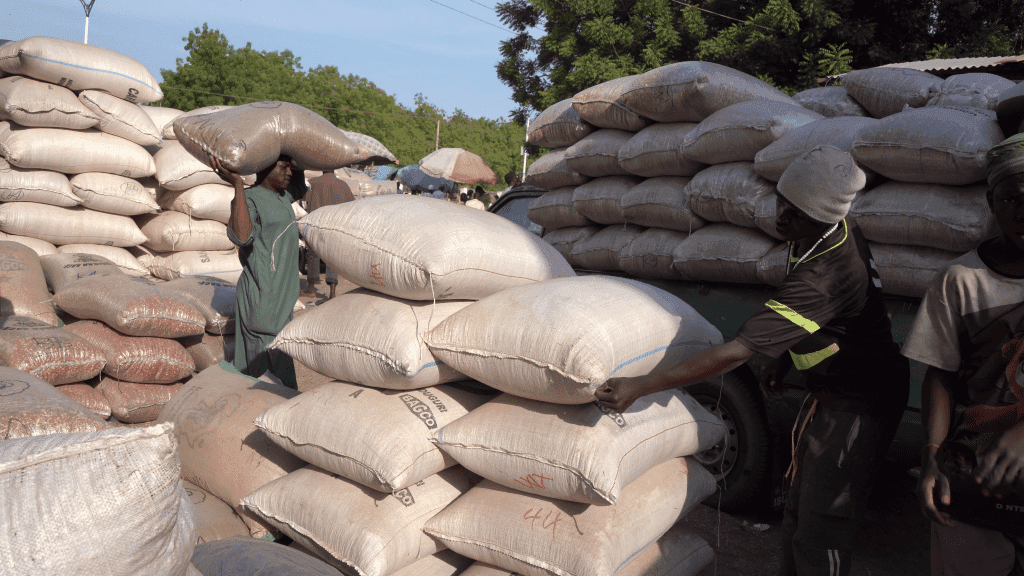
Others have chosen to leave Borno altogether. In Auno, Aja Bukar said the killing of a farmer earlier this year convinced many residents that remaining in the area was no longer worth the risk. Some households, including his, have since relocated to Damaturu in neighbouring Yobe State, hoping to find safer opportunities elsewhere.
These different responses – the roadside stall, the day labour, and relocation to another state – all lead back to the same question: what can replace a harvest, if anything?
Agriculture remains the backbone of rural livelihoods across Borno and the wider North East. In Borno, farming is not only an occupation but also a source of sustenance for families; it is how they feed themselves, pay school fees, buy medicine, and prepare for the long dry season. Yet years of conflict have steadily eroded that foundation, limiting access to farmland, disrupting markets, and deepening food insecurity.
When farmers abandon their fields, the consequences ripple far beyond the households directly affected: Harvests decline, local markets receive fewer supplies, and children and other vulnerable groups bear the greatest nutritional burden. The effects are felt not only in the villages where cultivation stops, but across communities that rely on those harvests for food and trade.
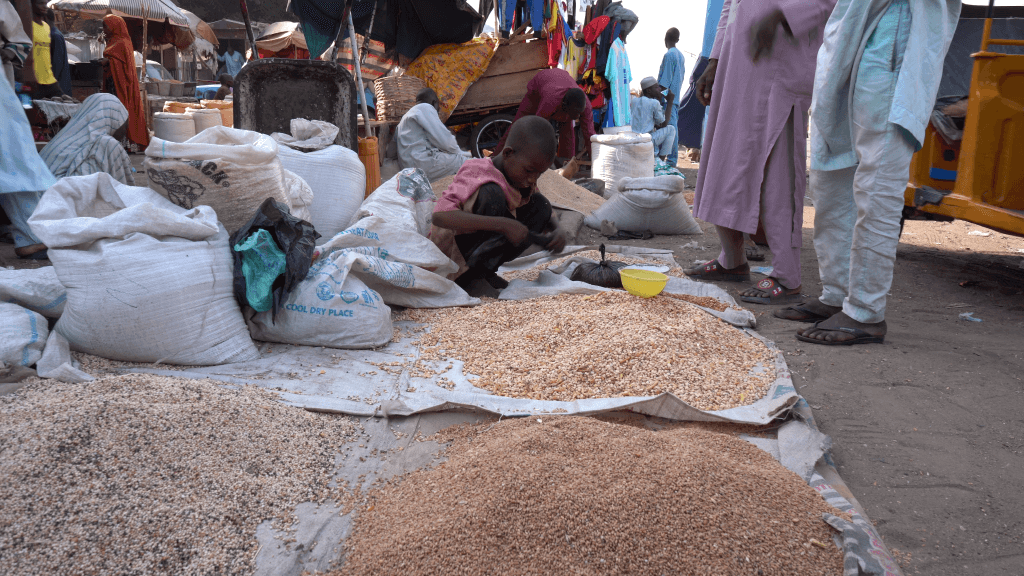
The region has been here before. In 2023, HumAngledocumented how repeated attacks on farming communities forced many residents to abandon cultivated fields, leaving crops worth millions of naira to wither or be destroyed. A year later, the trendpersisted, contributing to worsening food insecurity and malnutrition among vulnerable households, particularly children.
What is unfolding this season is not unique to Borno. Across the North West and North Central, terror groups have used similar tactics to control access to rural farmland, taxing farmers, threatening communities, and displacing those who resist. In Zamfara, HumAnglereported in June that farmers were displaced despite paying millions in levies. Another report the same monthshowed that 17 farmers were killed in Maradun while working their fields. In 2024, Reuters reported from Katsina that attacks on farmers were driving up food prices. According to SBM Intelligence, a Lagos-based consultancy, 1,356 farmers have been killed across Nigeria since 2020.
The scale of what is at stake is significant. UNICEF estimates that around three million children may require treatment for severe wasting in 2026, with conflict-affected northeastern states carrying a disproportionate share.
Across Borno, people are making decisions whose consequences they cannot yet fully see.
Support Our Journalism
There are millions of ordinary people affected by conflict in Africa whose stories are missing in the mainstream media. HumAngle is determined to tell those challenging and under-reported stories, hoping that the people impacted by these conflicts will find the safety and security they deserve.
To ensure that we continue to provide public service coverage, we have a small favour to ask you. We want you to be part of our journalistic endeavour by contributing a token to us.
Your donation will further promote a robust, free, and independent media.
Comments
0 comments
No comments yet.
Sign in to join the discussion.
Of course, we want our exclusive stories to reach as many people as possible and would appreciate it if you republish them. We only ask that you properly attribute to HumAngle, generally including the author's name, a link to the publication and a line of acknowledgement.